Reviewed · TOKYO TOURS
Let’s experience calligraphy in YANAKA, Taito-ku, TOKYO !!
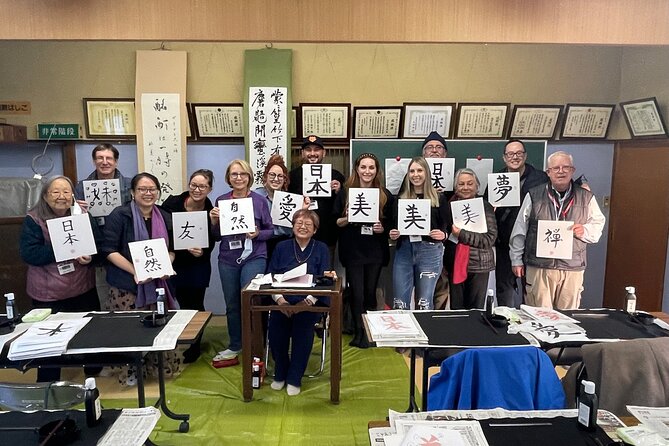
First time trying calligraphy can feel scary, then great. In Yanaka you get a guided, beginner-friendly brush lesson in a real downtown Tokyo setting, with time to practice and make something you will actually keep. I love how the studio feels like a converted old townhouse, not a staged classroom. You also get an easy win, a finished piece on shikishi that looks like real art.
My favorite part is the instruction style. Teachers like Chie and Saori are patient, step-by-step, and quick to correct your grip and stroke so you see progress during the hour. I also like that you do more than copy one example, you practice basic strokes, then choose a character and write it, so the result feels personal.
One consideration: this is weather-dependent and it is only about 1 hour, so you are not going to master calligraphy here. Plan to enjoy it for what it is, a focused taste of Japanese culture with a take-home souvenir.
Key highlights you should care about
- Yanaka Ginza location: you start near Yanaka Ginza Shopping Street, a great area to explore right before or after.
- Old townhouse studio: the lesson happens in a downtown, lived-in style space that matches the neighborhood.
- Beginner-friendly pace: you practice basic strokes first, then build to your chosen kanji.
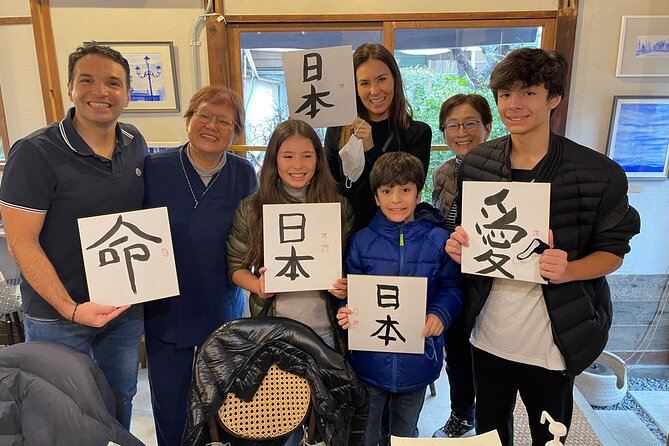
- Take-home art: you decorate and finish your work on shikishi paper, plus a related parting gift.
- Personal instruction and photos: teachers work with you directly and help capture your experience.
- Optional name on kanji T-shirt: you can make a wearable keepsake in kanji.
Yanaka is the smart backdrop for calligraphy
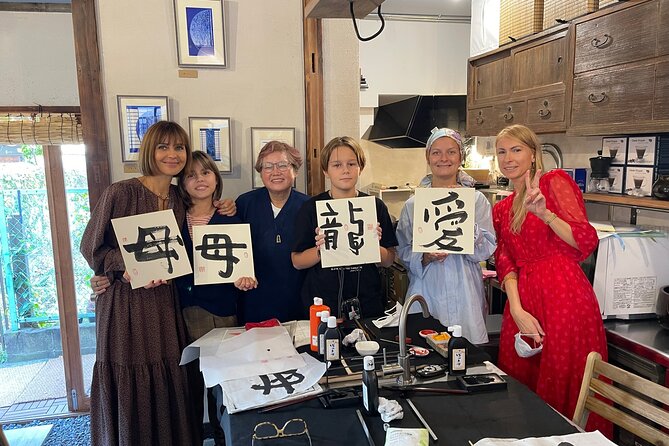
Calligraphy in Tokyo has a special advantage: you are not just learning strokes, you are learning them in a place where everyday life is visible. Yanaka has that older neighborhood feel, so the whole experience feels grounded. The lesson location is also set up for walk-in culture, start at the YANESEN Tourist Information and Culture Center area and keep strolling.
If you like experiences that give you a story, this works. You will leave with something you made yourself, and you will remember the teacher showing you how to control the brush. And yes, it is fun. You are not reciting rules, you are doing the motions, watching ink flow, then trying again.
A big plus for many people is that you can do it even if your Japanese is zero. The class structure supports beginners, and the teachers in the room are focused on helping you get a good result.
A few more Tokyo days worth comparing
- Mt Fuji and Hakone 1-Day Bus Tour Return by Bullet Train
★ 5.0 · 26,383 reviews - 1-Day Tokyo Bus Tour
★ 5.0 · 14,250 reviews - Tokyo: TOKYO SKYTREE® Admission ticket
★ 4.5 · 11,192 reviews
Starting near Yanaka Ginza, then settling into the studio
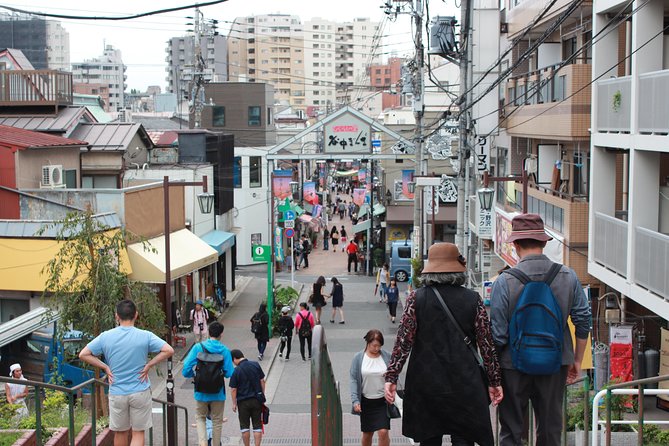
Your lesson begins at the YANESEN Tourist Information & Culture Center on Yanaka’s side of Taito City. From there, it is very close to Yanaka Ginza Shopping Street, roughly 100 meters away, about a 30-second walk. That matters because you can arrive, get oriented fast, and still have time to browse a bit afterward.
You also get an easy neighborhood rhythm. The studio sits in an old townhouse converted into a calligraphy space, so you will likely notice the details of downtown Tokyo as you move in and out. Next door you even have a coffee stop, Tokyo Roasted Coffee Shop ki_hi_ko_jo, so if you want a calm pre-lesson coffee or a post-lesson treat, it is convenient.
The class time itself is about 1 hour, so keep your schedule flexible. This is not a half-day wandering workshop. It is a short, well-guided session that helps you go home with a finished piece.
Meet your sensei in a converted old townhouse setting
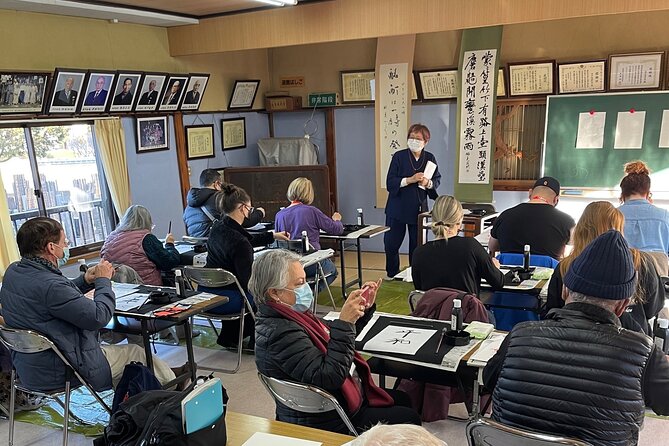
The studio setting changes the mood. In a converted townhouse, you feel like you stepped into a neighborhood workshop rather than a museum room. The teacher approach comes through immediately: friendly, hands-on, and willing to explain what to do next.
In real practice, the best lessons are the ones where you understand what went wrong. I like that the teachers are patient with mistakes and guide you through them while you are still holding the brush. Names you may hear include Chie and Saori (Saori-san). Both stand out for clear, encouraging coaching and for making time to take photos of you during the session.
There is also a practical advantage for photos and comfort: the class is designed for a small group experience, so you are not fighting for attention. And since it is your group only, it tends to feel less rushed than bigger group formats.
Basic strokes first, then your own character on the page
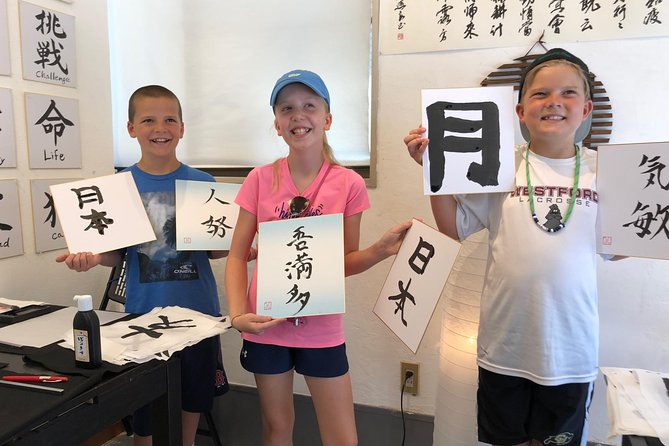
The lesson flow is simple, and that simplicity is why it works. You start with basic strokes, so your body learns the motion before you commit to a full kanji. Then you choose a character and write it while learning from the instructor. Practicing many times is part of the plan, which is key because calligraphy is more about control than talent.
What I think you will notice fast is how stroke direction and pressure change the result. The teacher can spot tiny issues, like how you angle the brush or where you pause, and correct them on the spot. That is where the hour becomes valuable: you are not just watching, you are actively adjusting.
Even without previous experience, you can end up with a piece you feel proud to display. The coaching is personalized enough that beginners typically get to see improvement during the lesson, not only at the very end.
Same corner of Japan, a different kind of day:
- Tokyo: teamLab Planets TOKYO Digital Art Museum Entry Ticket
★ 4.6 · 9,779 reviews - Mt Fuji & Hakone Cruise, Drum Show Bullet Train 1 Day from Tokyo
★ 4.0 · 7,413 reviews - Tokyo: Sumo Show Experience with Chicken Hot Pot and a Photo
★ 4.8 · 6,678 reviews - Tokyo: Shinjuku Food Tour (13 Dishes at 4 Local Eateries)
★ 5.0 · 6,603 reviews
Finishing your kanji on shikishi paper, plus a proper keepsake
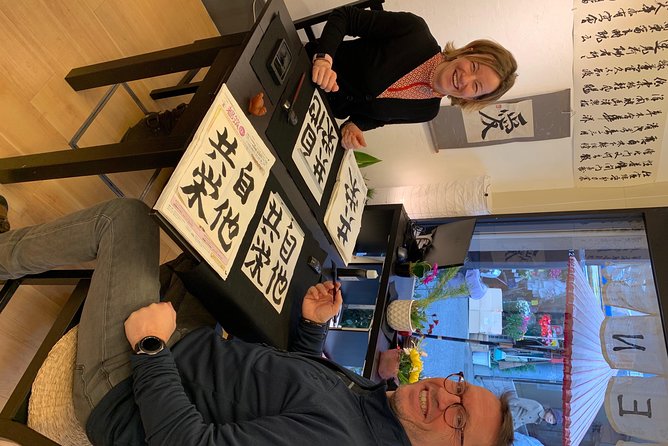
The final step is your decorated artwork on shikishi paper. This is the classic format for calligraphy, and it is why the results feel so “real.” You are not leaving with blank practice sheets. You are taking home a finished design you chose, and that changes the whole emotional payoff of the class.
You also receive a parting gift tied to the shikishi board, so the takeaway feels intentional. For souvenirs, that is a big deal. A lot of cultural activities offer photos or small trinkets, but this gives you a piece you can frame or display at home.
If you want your calligraphy to last and look good, handle the paper carefully and keep it flat after the class. Once you get it home, you can hang it where you can see it. The best part is that you will remember the specific strokes you learned, not just the fact that you took a class.
A wearable option, name in kanji on a T-shirt
One of the fun twists is the chance to make something more than wall art. The program includes the option to create a T-shirt with your name in kanji. This is not just a novelty. Having your name written in kanji turns the lesson into something you can wear and share.
Not every person wants wearable souvenirs, and not every day is great for an item like that. Still, if you like practical keepsakes, this option can be a memorable way to show people what you learned.
Just plan around the idea that you are making a personal item. That means you should think about what you want your name to look like, and be ready to follow the teacher’s guidance.
Price and timing: why this is good value for an hour
The price is $75.98 per person for about 1 hour. For Tokyo, that is fairly straightforward pricing for an art lesson where the teacher supplies instruction and you leave with a finished shikishi board. The value gets stronger because the time is tight and focused, so you are paying for coaching that actually results in an end product.
You are also in a place designed for exploring right around the corner. Since the studio is near Yanaka Ginza Shopping Street and the YANESEN center, you are not stuck traveling to a far suburb location. You can stitch the lesson into your Yanaka walk with minimal backtracking.
Another small value point is the convenience of a mobile ticket, plus group discounts. If you are traveling with family or friends, that can help keep the overall cost in check. Also, because your experience is only your group, it can feel more personal for the time you spend.
The only real timing drawback is that you may want more practice time once you start getting a feel for the brush. That is a good problem. Just remember this is a taste session, not a multi-session mastery course.
Who should book, and how to get the best result
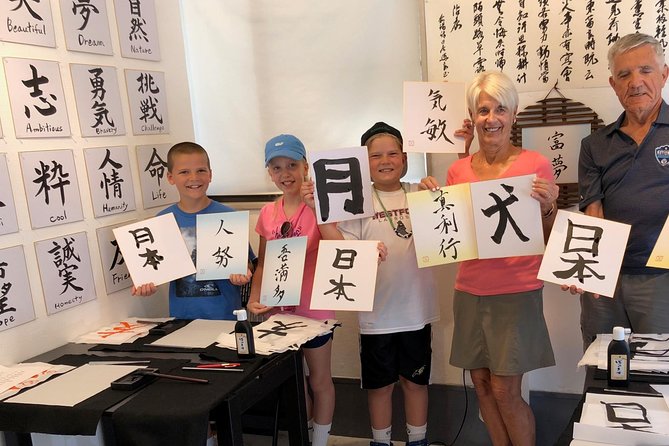
This is a great fit for people who want a cultural activity that produces a tangible souvenir, not just a performance. It works for children and adults, so families can do it together. It is also ideal if you are a solo traveler who wants a friendly, structured activity where someone will guide you from blank page to finished kanji.
I would especially recommend it if you enjoy hands-on learning and you like seeing improvement happen in real time. The teachers’ style, including patient correction and step-by-step explanations, is exactly what beginners need.
To get the best result, show up with a calm mindset. You will likely start with basic strokes, then move to your chosen character, and that sequence is meant to prevent overwhelm. Also, this experience needs good weather, so if you are planning for rainy days, keep your schedule flexible.
Should you book Yanaka calligraphy today?
Yes, if you want an authentic Tokyo neighborhood experience with a hands-on art lesson that ends with something you can frame or display. The combination of a short 1-hour format, friendly teachers like Chie and Saori, and a take-home shikishi board makes this one of the more satisfying “do it, make it, keep it” activities around.
Book it if you have even a little curiosity about Japanese writing, or if you want a memorable rainy-day alternative that is still active. Skip it only if you are looking for a long class, deep theory, or something that feels like a museum tour.
If you are in Yanaka anyway, this is the kind of activity that makes your photos make sense later, because you can point to what you made.
FAQ
How long is the calligraphy experience?
It lasts about 1 hour.
What will I make and take home?
You will practice basic strokes, choose a character to write, and finish your work on shikishi paper. You also receive a shikishi-related parting gift.
Is this class for beginners or people with no prior experience?
Yes. The program is designed so most travelers can participate.
Can children join?
Yes. Children and adults can enjoy the lesson.
Is transportation included?
No, private transportation is not included.
Is it a private experience?
It is a private tour or activity, so only your group participates.
Is a mobile ticket used?
Yes, it includes a mobile ticket.
Can I bring a service animal?
Yes, service animals are allowed.
What is the weather requirement?
The experience requires good weather. If it is canceled due to poor weather, you will be offered a different date or a full refund.
Fresh options around Tokyo
- Tokyo: Nikko Kegon Falls Lake Chuzenji Toshogu Temple & More★ 4.9 · 12 reviews
- Tokyo: Samurai History Walking Tour★ 5.0 · 12 reviews
- Harajuku: Kawaii Fashion and Pop-Culture Tour★ 4.7 · 12 reviews
- Tokyo: Mt. Fuji & Lake Kawaguchi Instagram Full Day Trip★ 4.1 · 12 reviews
- Shibuya Tokyo: Modern Kintsugi Workshop in Shibuya★ 5.0 · 12 reviews
- Tokyo: GTR Guided Daikoku Experience at Night★ 5.0 · 12 reviews
- Tokyo: Daikoku JDM Car Culture Tour★ 4.6 · 12 reviews
- Mt Fuji Private Day Trip from Tokyo with English speaking driver★ 5.0 · 13 reviews
Tokyo Tours, compared.

Mt Fuji and Hakone 1-Day Bus Tour Return by Bullet Train
Read our review →


teamLab Planets TOKYO Digital Art Museum Entry Ticket
Read our review →
Mt Fuji & Hakone Cruise, Drum Show Bullet Train 1 Day from Tokyo
Read our review →
Sumo Show Experience with Chicken Hot Pot and a Photo
Read our review →
Shinjuku Food Tour (13 Dishes at 4 Local Eateries)
Read our review →