Reviewed · FULL-DAY
Tokyo to Kyoto 1-Full Day Private Guided Tour
Kyoto in one day can feel like a sprint, in a good way. This Tokyo-to-Kyoto private guided day trip is built to save you planning time and keep you moving between the big-name sights. I especially like the way the day pairs iconic stops like Kinkaku-ji with classic Kyoto streets like Gion and Pontocho, all with a guide to connect the dots.
The biggest heads-up is the cost can climb fast if you are expecting everything to be included. The tour price covers guiding and tour management, but you will still pay for bullet train, local transportation (cash), and likely some site admissions and lunch, so read the fine print closely before you fall in love with the itinerary on paper.
Key things to know before you go
- Truly private for your group: no flag-waving, no waiting for a big herd to catch up.
- A fixed highlights route: bamboo, Golden Pavilion, Nishiki Market, Gion, and Fushimi Inari in one long day.
- Timing is the point: the schedule is designed to hit major sights without you doing the logistics math.
- Cash costs can surprise you: local transportation is listed separately, and Tokyo pickup has its own fee.
- Guide quality seems to be the differentiator: multiple guides (Ahmed, Midori, Mini, Yukari, Yuka) are praised for clarity, pacing, and history.
- Weather matters: poor weather can trigger a date change or refund.
Tokyo to Kyoto in a day, without the headache
A Kyoto day trip from Tokyo only works if you respect one simple fact: Kyoto is not a city where you casually wander for 9 hours and also see the top landmarks. This tour is for people who want the highlights, not a slow, neighborhood-by-neighborhood discovery day.
You start the day in Tokyo and head to Kyoto by bullet train, then spend your daylight hours moving through the city’s most famous zones. The appeal is that you swap the “What should we do next?” pressure for “Look at this and why it matters,” which is exactly what a guided highlights plan is supposed to do. If your Kyoto calendar is tight, this is a practical way to get that first, unforgettable impression.
What I like most is the range: nature plus temple gardens at the start, then market and street life in the middle, and finally the spiritual spectacle of Fushimi Inari at the end. That variety keeps the day from feeling like one long museum line.
A few more Tokyo days worth comparing
- Mt Fuji and Hakone 1-Day Bus Tour Return by Bullet Train
★ 5.0 · 26,383 reviews - 1-Day Tokyo Bus Tour
★ 5.0 · 14,250 reviews - Tokyo: TOKYO SKYTREE® Admission ticket
★ 4.5 · 11,192 reviews
The private format, and how the guide changes the day
“Private” here means your group only, not a shared experience where you are stuck matching someone else’s pace. In the reviews, Ahmed, Midori, Mini, Yukari, and Yuka show up again and again, and the common theme is that the guide is actively shaping your route and your timing.
That matters because Kyoto has two kinds of time traps:
- long waits in crowded areas (especially around the most famous gates and temples)
- decision fatigue (where you spend more time figuring out what to do than doing it)
A good guide helps you avoid both. In several accounts, guides are described as patient with slower guests and careful about staying punctual. That is not a small thing when you are cramming multiple districts into one day. If you have mobility concerns, it can also help to tell the guide upfront so stairs and slower walking segments are managed without stress.
Price and logistics, the part you must budget for
Let’s talk money like grown-ups. The price you see is $490 per group up to 10. That is the tour cost. Then the additional items kick in, and they can be significant depending on how you choose to travel.
Here is what the tour data explicitly flags as not included:
- Bullet train tickets (Tokyo to Kyoto and back), listed as depending on the ticket you choose, with a figure around ¥28,000 per person.
- Local transportation (cash) for the day in Kyoto. The tour notes: up to 5 travelers use ¥100,000, and more than 5 is ¥100,000 per booking (for your group size option).
- Tokyo pickup guide cost if you add pick-up at Tokyo Station, listed as ¥60,000 cash to the guide per booking.
- Lunch.
- Gratuities are appreciated but not required.
Now, here is the confusing part you should not ignore: the itinerary stop notes mark some admissions as not included (Kinkaku-ji, Gion, Fushimi Inari), while the “Included” section also mentions entrance fees. Because those statements conflict, treat this as a “confirm before you go” situation. Ask what is covered for each stop, not just what category the tour claims.
The travel reality is simple. If you only have one day and you want transportation and a guide without you figuring out stations, tickets, and routes, you pay for convenience. If you already know how to use Japan’s transit and you are comfortable buying tickets and navigating Kyoto on your own, you might feel this is expensive.
Stop 1: Bamboo Forest Street, Nonomiya Shrine, Tenryu-ji Garden
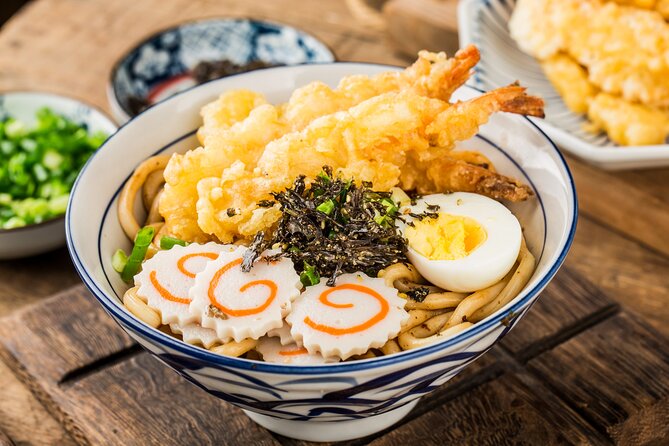
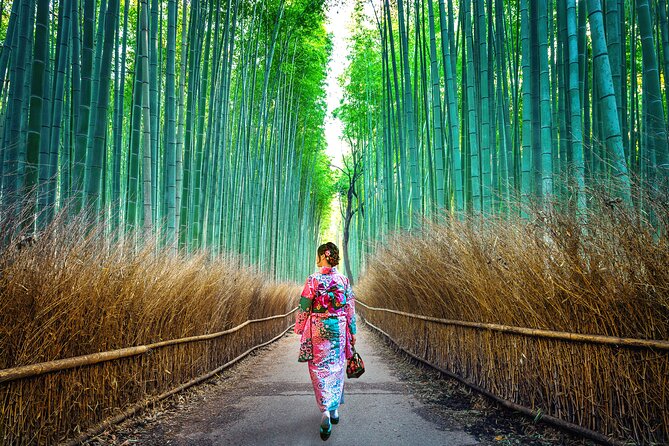
This is a strong start because it shifts you from the train-and-station world into Kyoto’s calmer pace. The Bamboo Forest Street segment is scheduled for about an hour, and it bundles Nonomiya Shrine and Tenryu-ji Temple Garden.
What to expect:
- The bamboo area is visually dramatic, and early in the day is usually when the light and crowd levels feel best.
- Tenryu-ji Garden is where you slow down. Gardens work differently than big halls, you notice details: stone, water, and how the path shapes what you see next.
- Nonomiya Shrine adds a more grounded “small Kyoto” feeling, compared with the larger headline temples later.
The trade-off is that bamboo zones can get busy quickly. If you like photographs, stand still for a minute before you walk through the densest sections, and let your guide steer you away from the worst congestion when possible.
Same corner of Japan, a different kind of day:
- Tokyo: teamLab Planets TOKYO Digital Art Museum Entry Ticket
★ 4.6 · 9,779 reviews - Mt Fuji & Hakone Cruise, Drum Show Bullet Train 1 Day from Tokyo
★ 4.0 · 7,413 reviews - Tokyo: Sumo Show Experience with Chicken Hot Pot and a Photo
★ 4.8 · 6,678 reviews - Tokyo: Shinjuku Food Tour (13 Dishes at 4 Local Eateries)
★ 5.0 · 6,603 reviews
Stop 2: Kinkaku-ji (Golden Pavilion) timing and entry
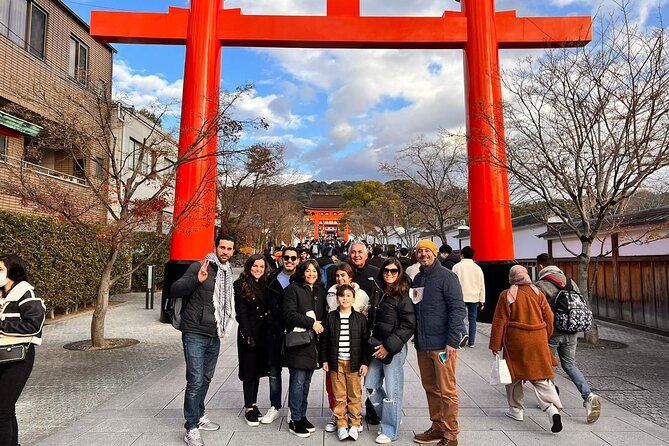
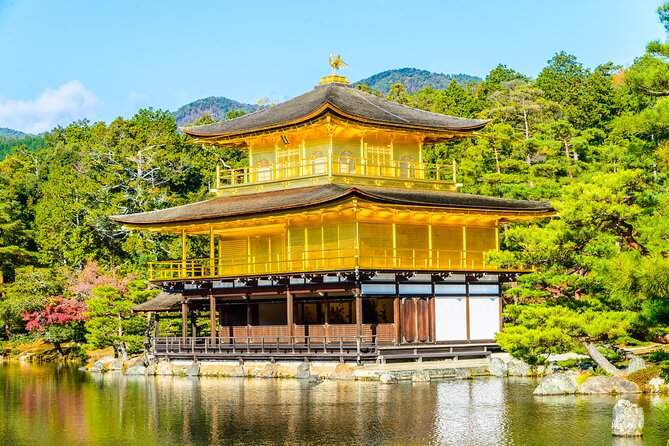
Kinkaku-ji is Kyoto’s most recognizable temple, and it gets the most attention for a reason. The schedule gives you about an hour here, which is enough to see the pavilion itself and walk the surrounding gardens at a comfortable pace.
A few practical notes:
- Expect crowds at peak times. Your guide’s job is to help you arrive when your group can actually enjoy it, not just pass through it.
- Admission is listed as not included for this stop in the itinerary notes, so plan on paying your own entry fee unless you confirm it is already covered.
This is also where a guide’s storytelling adds real value. You are not just looking at a pretty building. You are learning how temple art, garden design, and the setting around the pond work together to create the iconic reflection view people come for.
Stop 3: Nishiki Market, the Kyoto Kitchen idea
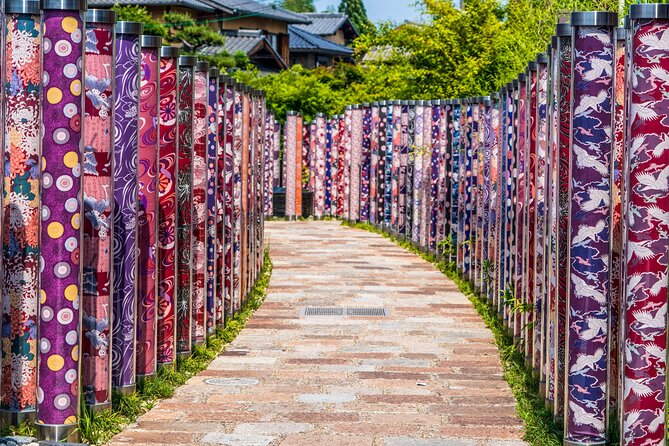
Nishiki Market is one of those places where you understand Kyoto in edible form. Your stop is about an hour, and it is a great mix of browsing and quick bites if you plan it right.
How to use the time well:
- Treat it like sampling, not a full meal. With limited time in Kyoto, you want snacks that are easy to eat while walking.
- Look for seasonal items and try a couple small things instead of one expensive plate.
- If you have dietary needs, you should be able to tell the guide and steer your choices. One review highlights that options and dietary needs were handled.
One downside to markets is that walking space can get tight. Shoes that work for stopping and starting will help. Also keep in mind that you will want energy later for Gion and Fushimi Inari, so do not blow your calories on a heavy lunch here.
Stop 4: Pontocho District, short and atmospheric
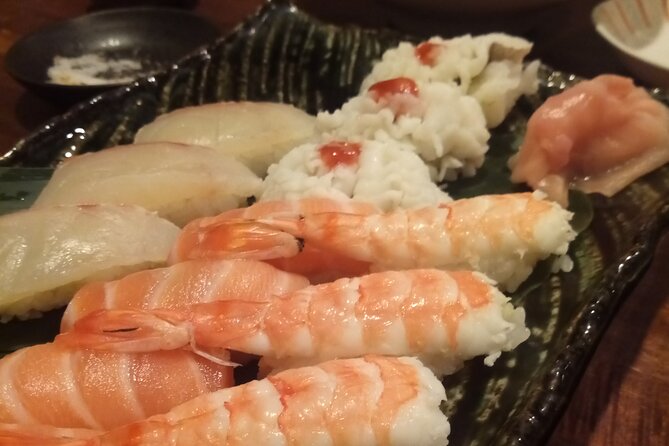
Pontocho is brief in the schedule, about 20 minutes. That is enough for the signature alley experience alongside the Kamogawa River, with those narrow lanes and traditional wooden structures.
What makes it special:
- It is one of the best places to feel Kyoto’s street-life vibe without committing to a long detour.
- Even in a short time window, you get a sense of the neighborhood rhythm.
The “consideration” is that 20 minutes disappears quickly if you stop for every photo. If you care about pictures, pick your top 2 or 3 spots and then keep moving so you do not end up rushing later.
Stop 5: Gion, traditional streets and geisha-area atmosphere
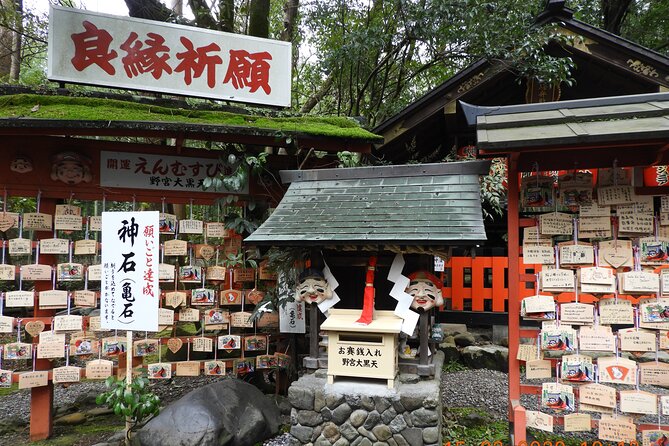
Gion is scheduled for about an hour. This is your chance to stroll the famous lanes and see the machiya townhouses and the teahouse district atmosphere.
A practical approach:
- Walk slowly, but do not block entrances or narrow sidewalks. The area is active, and it can feel crowded fast.
- Let your guide point out details like how the streets are laid out and why some buildings and facades are built the way they are.
Admission is listed as not included for this stop. In most cases, the attraction is being in the neighborhood, not buying tickets, but confirm anything special you might be doing at the time.
If you are new to Kyoto, Gion gives you that “this place has rules and layers” feeling, which makes the later Fushimi Inari experience hit harder.
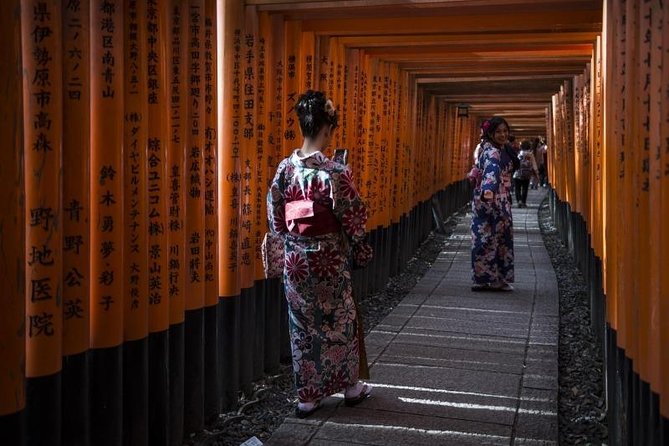
Stop 6: Fushimi Inari-taisha and the torii route
This is the closer, about an hour. The thousands of red torii gates create a corridor you walk through, and it is one of the few Kyoto sights that feels almost cinematic.
What to expect:
- Stairs and packed walking areas in parts of the route.
- A steady stream of people, with some clusters forming at the most photographed gate sections.
- You will want to move with purpose to avoid turning the torii walk into a never-ending time sink.
Admission is listed as not included for this stop. Plan on paying unless you confirm your ticket or admission is covered.
A useful trick: if you are prone to over-aiming for the deepest part of the route, set a point to turn back based on time. You will still get the full torii experience without ending your day late.
Getting from Tokyo to Kyoto and staying on schedule
This tour depends on two things going right: your bullet train timing and the guide’s ability to coordinate fast transitions between neighborhoods.
From the tour info and the way guides describe meeting guests, you can expect the guide to handle key logistics in stations. In multiple accounts, guides like Ahmed are credited with helping people pick the right train time, guiding them through the station, and getting everyone safely to the waiting car after arrival. That kind of help is valuable if you are new to Japan or traveling with family.
If you are using Tokyo Station pick-up, there is an extra cash fee for the guide. If you are not, the tour is still near public transportation, so you should be able to meet the guide with minimal stress, but confirm your exact meeting location and time once you book.
Also keep lunch in mind. Lunch is not included, so you need a plan for what you will eat and when. Markets can tempt you, and then later you realize you are hungry during the longest walking segments. Ask your guide for a practical lunch approach early in the day.
Finally, the tour requires good weather. If weather shuts it down, you should expect a date change or refund, not a last-minute miracle.
Which guides get mentioned most, and what that implies
Across the provided feedback, the same names come up repeatedly:
- Ahmed is mentioned for detailed history, helping with train timing, and being patient with the group.
- Midori is praised for fitting in a lot from 9:00 am to 7:00 pm and for accommodating requests for a local meal.
- Mini is highlighted for friendliness and turning the day into a memorable first Kyoto visit.
- Yukari and Yuka are noted for fun, local insights, and stories that make the sites easier to understand.
You should not treat this as a guarantee, but it does hint that the guiding is a major strength here. If you want the day to feel like more than just walking between famous buildings, prioritize a guide experience and plan to ask questions as you go.
Who this Tokyo-to-Kyoto day trip suits best
This tour makes the most sense if:
- you have limited time in Japan and Kyoto is on your must-see list
- you want the biggest Kyoto sights without the stress of building a route yourself
- you care about context, not just photos
- you prefer a set plan with a guide managing the flow
It might not be the best match if:
- you are trying to keep costs low and will be buying everything separately anyway
- you want a relaxed day with long breaks and lots of free wandering
- you dislike tours where time windows are tight
Kyoto in one day is a trade. You trade deeper neighborhoods for the satisfaction of saying you saw the core highlights.
Should you book it, or plan Kyoto on your own?
If your situation is: one day in Kyoto, you want temples, markets, and torii gates, and you would rather pay for the heavy lifting, I think this is a solid option. The structure is clear, the route hits the key zones, and the guiding is repeatedly described as the reason people feel it was worth it.
But I would not book this without doing two quick checks:
- confirm what admissions are actually included for Kinkaku-ji, Gion, and Fushimi Inari
- budget for the extra costs that come with transportation and bullet train tickets
If that math works for you, this is a fast, efficient way to get Kyoto’s “first hit” without wasting your day on logistics.
FAQ
How long is the Tokyo to Kyoto private guided tour?
It runs for about 9 hours.
Is this a private tour for only my group?
Yes. It is private, meaning only your group participates.
What are the main Kyoto stops on the itinerary?
The tour includes Bamboo Forest Street, Kinkaku-ji Temple, Nishiki Market, Pontocho District, Gion, and Fushimi Inari-taisha Shrine.
What is included in the tour price?
Guiding services and tour management are included, along with transportation arrangement. Entrance fee is also listed under included, but some itinerary stops note admission is not included, so you should confirm specifics.
What is not included in the price?
Lunch, bullet train tickets (Tokyo to Kyoto and back), and transportation are not included. Entrance fees are also listed as not included for some stops in the itinerary notes, and gratuities are not required.
How much is local transportation and when do I pay it?
Local transportation is listed as cash: up to 5 travelers is ¥100,000, and for more than 5 you are told to let them know the group and it is ¥100,000.00 per booking.
Is Tokyo pickup available?
Tokyo Station pickup is described with an extra guide cost of ¥60,000 cash to the guide per booking.
Do I need to worry about weather?
Yes. The experience requires good weather, and if it is canceled due to poor weather you will be offered a different date or a full refund.
What ticket method do I receive?
The tour uses a mobile ticket.
Fresh options around Tokyo
- Tokyo: Nikko Kegon Falls Lake Chuzenji Toshogu Temple & More★ 4.9 · 12 reviews
- Tokyo: Samurai History Walking Tour★ 5.0 · 12 reviews
- Harajuku: Kawaii Fashion and Pop-Culture Tour★ 4.7 · 12 reviews
- Tokyo: Mt. Fuji & Lake Kawaguchi Instagram Full Day Trip★ 4.1 · 12 reviews
- Shibuya Tokyo: Modern Kintsugi Workshop in Shibuya★ 5.0 · 12 reviews
- Tokyo: GTR Guided Daikoku Experience at Night★ 5.0 · 12 reviews
- Tokyo: Daikoku JDM Car Culture Tour★ 4.6 · 12 reviews
- Mt Fuji Private Day Trip from Tokyo with English speaking driver★ 5.0 · 13 reviews
Full-Day, compared.
Mount Fuji Full-Day Private Tour from Tokyo (Customizable)
Read our review →
Hiroshima / Miyajima Full-day Private Tour with Government Licensed Guide
Read our review →
Tokyo Private Full-Day Tour by Car or Van
Read our review →

5 Top Highlights of Kyoto Full Day Bike Tour (E-bike option)
Read our review →
Full Day Biking Tour Exploring the Best of Kyoto
Read our review →