
Reviewed · HIROSHIMA TOURS
Hiroshima: Peace Memorial Park and Atomic Bomb Dome Tour
Two hours, and Hiroshima hits hard. This Peace Memorial Park to Atomic Bomb Dome walk connects the symbols you see with the human stories behind them, guided by a PhD scholar-led team.
I love the live guide style, where English explanations include personal accounts and time for questions. I also love the built-in rituals, like ringing the Bell of Peace, so the message is more than museum viewing.
One drawback to plan for: this is a memorial walk with significant walking, and it is not suitable for people with mobility impairments or wheelchair users.
Key highlights
- PhD scholar-led interpretation that keeps the story clear and question-friendly across major memorials
- Peace ritual moments like the Prayer Fountain, Flame of Peace, and ringing the Bell of Peace
- Sadako Sasaki and the Children’s Peace Monument connected to hope, loss, and memory
- A wider remembrance scope including the Korean Atomic Bomb Victims Cenotaph
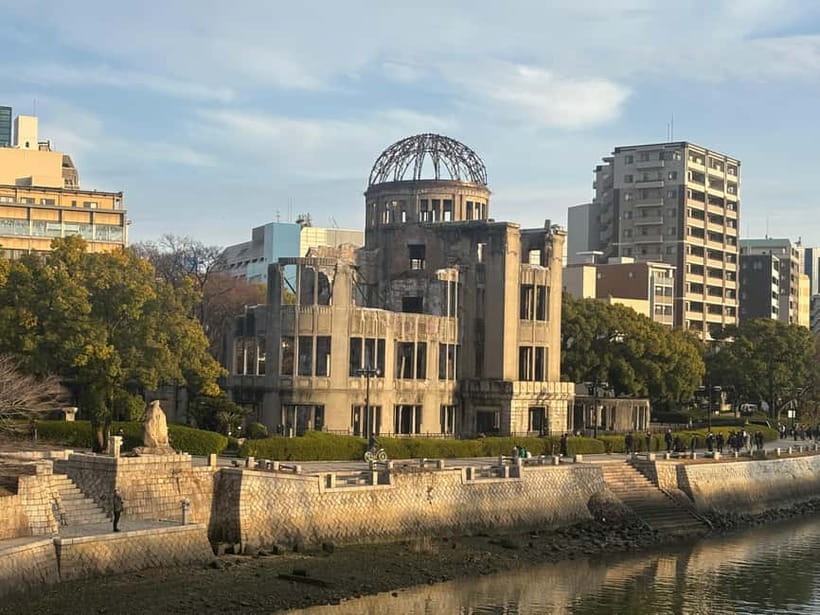
- Aioi Bridge viewpoints to the UNESCO Atomic Bomb Dome, explained for meaning, not just photos
- A strong finish at the Atomic Bomb Hypocenter Monument, tying you back to why this place matters
Meeting at Gates of Peace, then walking on purpose
Start at the Gates of Peace, in front of the Italian restaurant Mario. You begin with a short orientation, then you are on your feet fast, because this route is meant to be experienced as a walk, not a checklist.
This tour works because it sets a tone early. You are guided through a sequence of memorial spaces that each have their own role, from quiet contemplation to public commemoration.
You also get practical reminders that matter here: comfortable shoes, water, and weather-ready clothing. It operates in all weather conditions, so bring the kind of gear that keeps you steady on uneven sidewalks and in rain.
A few more Hiroshima days worth comparing
- Peaceful Hiroshima & Miyajima UNESCO 1 Day Bus Tour
★ 5.0 · 5,309 reviews - Hiroshima: Hiroshima and Miyajima UNESCO Sites 1-Day Tour
★ 4.9 · 2,330 reviews - Hiroshima / Miyajima Full-day Private Tour with Government Licensed Guide
★ 5.0 · 1,298 reviews
Prayer Fountain, then the park that asks you to slow down
The route moves from the Prayer Fountain toward the core of Hiroshima Peace Memorial Park. This is the stretch where the guide helps you understand what you are looking at, and why the memorial design is not random.
You spend a focused chunk of time in the park area, with guided stops that connect the big WWII framework to individual lives. One reason this tour is such a good value is that you do not have to piece the story together yourself while staring at plaques.
The tone stays respectful, but it is not vague. The guide’s job is to make the names and symbols readable, so you can follow what each location represents instead of just absorbing the emotional impact.
Flame of Peace and the Children’s Peace Monument for hope, not just sorrow
Next comes the Flame of Peace, a moment that feels like a pivot. You are still in a memorial space, but you are also being pointed toward what comes after the worst day, which includes Hiroshima’s rebuilding and the city’s shift into a global peace symbol.
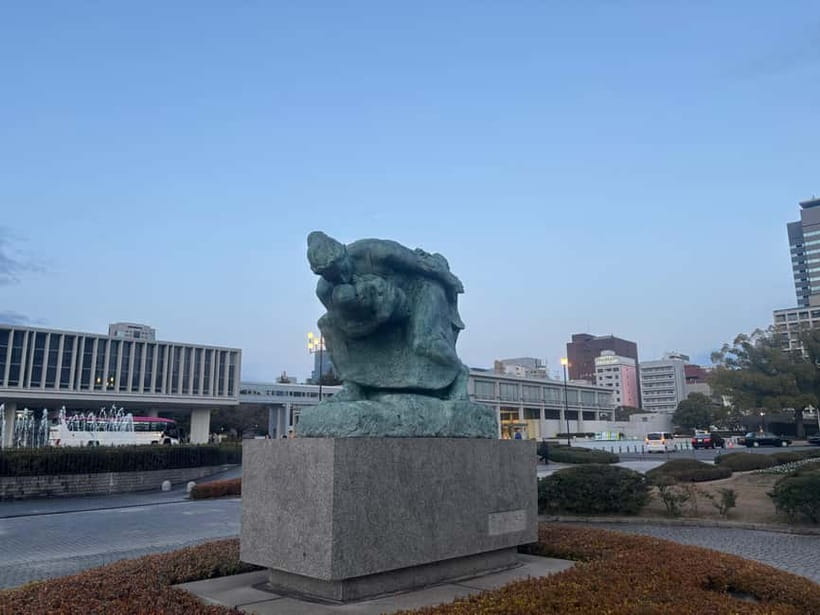
Then the tour goes to the Children’s Peace Monument and covers the story of Sadako Sasaki and the thousand paper cranes. This part matters because it is how the tour turns grief into something human-scale that you can remember later, not just something that feels heavy in the moment.
In short, this segment helps your brain hold two truths at once: the devastation was real, and remembrance can still point toward a different future.
Korean Atomic Bomb Victims Cenotaph and the Bell of Peace ritual
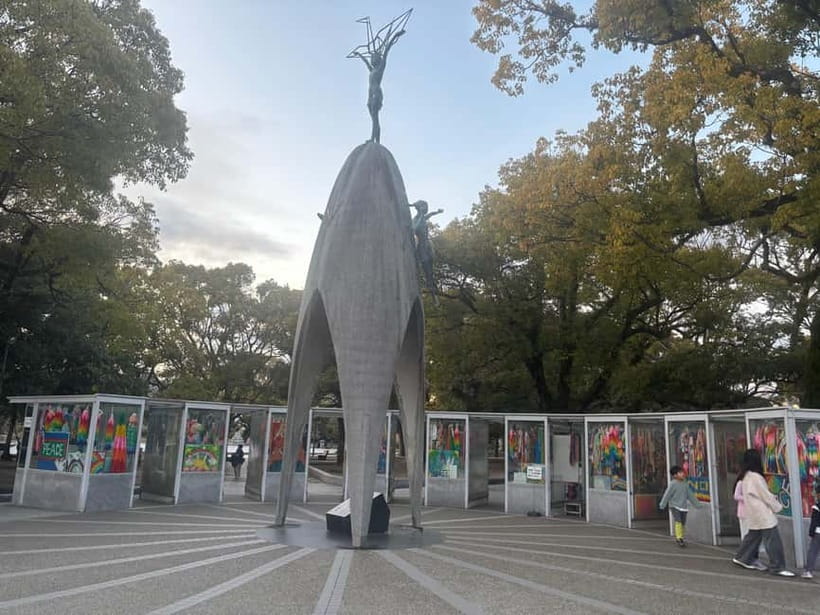
The route includes the Korean Atomic Bomb Victims Cenotaph, and it is important that it is not treated like a footnote. The guide explains these memorial references as part of the broader wartime impact on multiple communities tied to the event.
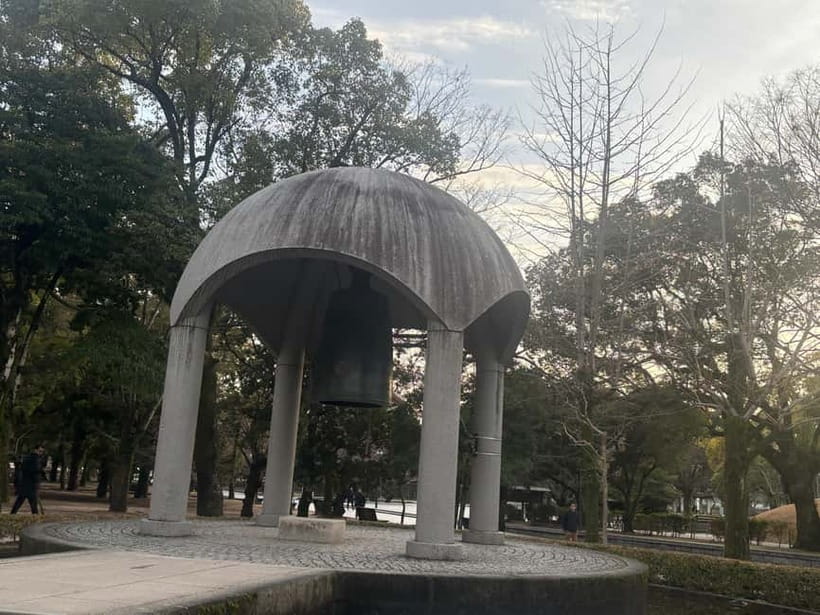
From there, the tour goes to the Bell of Peace. You get a short guided moment at the bell, and you can ring it as a symbol of hope and world peace.
This is one of the most talked-about parts of the experience because it gives you a specific action. Even if you are not the type who likes rituals, the structure here makes the bell feel grounded, not performative.
Same corner of Japan, a different kind of day:
- Hiroshima Historical Walking Tour – Why A-Bomb was Dropped
★ 4.8 · 893 reviews - Hiroshima Peace (Heiwa) Walking Tour at World Heritage Sites
★ 5.0 · 872 reviews - Hiroshima in a Nutshell: Morning Bike Adventure
★ 5.0 · 524 reviews - Hiroshima City 4hr Private Walking Tour with Licensed Guide
★ 5.0 · 437 reviews
Aioi Bridge to the UNESCO Atomic Bomb Dome, meaning behind the postcard
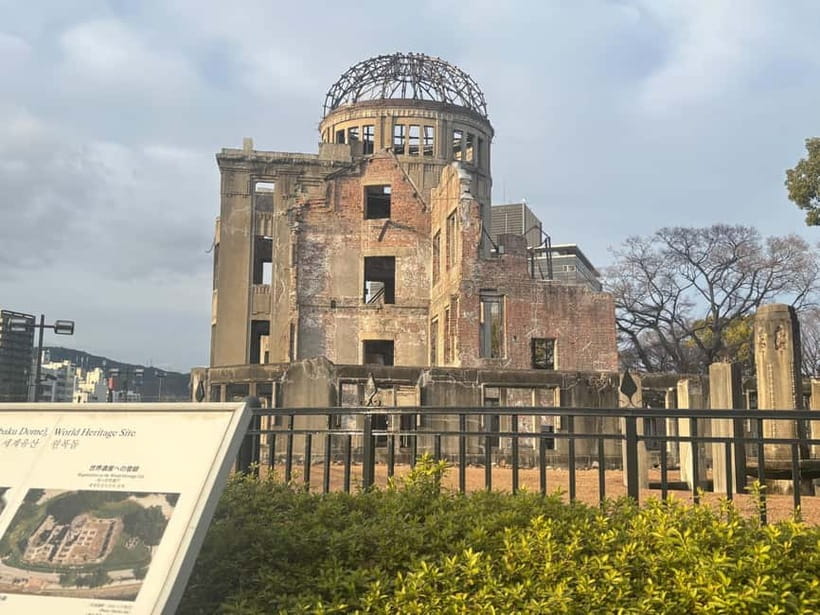
Then you hit one of the most recognizable views on the planet: Aioi Bridge, followed by the Atomic Bomb Dome, a UNESCO World Heritage Site. The dome is the star photo, but the guide makes the dome more than a background.
This is also where the tour’s contextual lessons show up. The highlight list includes why Hiroshima was chosen as a primary target, and you get that explanation so the site connects to the broader WWII story rather than staying stuck in single-event memory.
You will likely spend about 10 minutes at Aioi Bridge and another 10 at the dome area. The time is tight on purpose. You get a real view, you get guided context, and you do not get stuck in the trap of spending half an hour just trying to frame the perfect photo.
Finishing at the Atomic Bomb Hypocenter Monument, then seeing the city today
The tour ends at the Hiroshima Atomic Bomb Hypocenter Monument. Finishing here is smart, because the story closes at the reference point that helps you orient everything you just saw.
The route also builds toward Hiroshima’s post-war reconstruction and modernization, including how the city rebuilt itself from the ashes into a global peace symbol. You do not just hear the slogan version, you get the idea that peace work is built from choices, institutions, and long-term rebuilding.
And the tour does not keep you trapped in the past. It includes local culture and daily life elements, plus food tips at the end. One guest mentioned an okonomiyaki recommendation as a favorite follow-up, which fits the idea of ending with something warm and local after a heavy walk.
Memorial hall names you might miss on your own
The park is full of named memorials, and a good guided tour prevents you from skating past them like they are decoration. This route includes stops tied to Dr. Marcel Junod, Norman Cousins, and Hiroshima National Peace Memorial Hall.
Even if you do not know these names on arrival, the guide helps you place them into the story. That is one of the biggest differences between a guided route and walking independently: you do not just see information, you get the meaning behind it.
This is also where the guide style shows. In the reviews, guides like Syed (described as completing a PhD), Hussain, Shah, Aaze, and Khan are repeatedly praised for pacing, clarity, and answering questions without rushing people.
Price and 2-hour value, what you actually get for $23
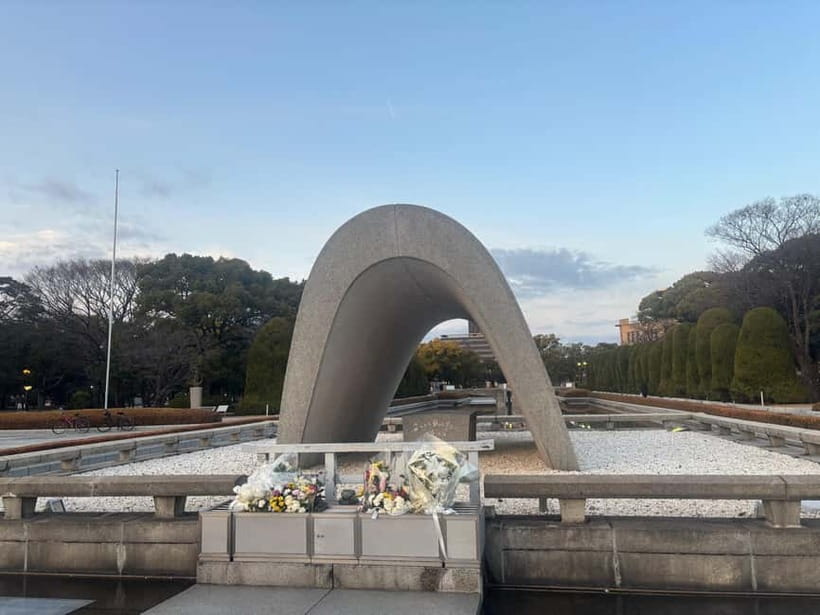
At $23 per person for about 2 hours, this tour is priced like a budget-friendly way to get real context at a high-impact site. You are paying for the guide’s ability to connect the dots across multiple memorial stops, instead of spending hours trying to interpret everything alone.
The value improves if you want your first visit to make sense fast. This is the kind of experience where it helps to have someone explain why the tour is laid out the way it is, especially when the memorial elements overlap in theme.
It also helps that you get live guidance in English, plus Urdu and Hindi. That language range matters if you are not fully comfortable reading every plaque at your own pace.
One more value point: the tour is rated 4.9 with 91 reviews. High ratings here are usually a sign of respect and good pacing, not just good storytelling.
Timing it right and packing like a pro for memorial walking
If you want a calmer atmosphere, consider doing the walk when crowds ease up. One review specifically recommended an evening slot because it feels easier to move and reflect.
You should also pack for weather. The tour runs in all conditions, so bring a light rain layer if needed and dress for the day, not for perfect skies.
For your carry list, the tour is clear: bring comfortable shoes, hat, camera, sunscreen, and water. Photography is allowed, but you should be respectful in memorial areas, which is the right attitude here.
Also note what not to do: no smoking. It is simple, but it is part of keeping the spaces dignified.
Should you book this Hiroshima Peace Memorial Park and Atomic Bomb Dome tour?
I think you should book this tour if you want structure, context, and a human guide to help you process what you are seeing. The best reasons are the live explanation style, the practical pacing across major stops, and the inclusion of multiple remembrance elements, including the Korean Atomic Bomb Victims Cenotaph and the Children’s Peace Monument.
Skip it, or at least think twice, if mobility is an issue. The tour involves significant walking and is not suitable for wheelchair users or people with mobility impairments. Also, if you expect a food-focused outing, plan differently because no food is served.
If your goal is a first-time visit that helps you understand the meaning behind the Atomic Bomb Dome and the surrounding memorial design, this is a strong, well-priced way to get there with a guide who keeps the story moving and your questions welcome.
FAQ
Where is the meeting point for the tour?
You meet at the Gates of Peace, front side of the Italian restaurant Mario.
How long is the Hiroshima Peace walking tour?
The tour lasts about 2 hours.
How much does the tour cost?
The price is $23 per person.
What languages are offered for the live guide?
The live guide offers English, Urdu, and Hindi.
What major places are included on the tour?
The tour includes Hiroshima Peace Memorial Park, the Atomic Bomb Dome, the Peace Bell, the Prayer Fountain, the Flame of Peace, and the Cenotaphs, plus memorial stops such as Dr. Marcel Junod and Norman Cousins.
Is food included?
No. The tour states that no food will be served.
Can I take photos during the tour?
Yes, photography is allowed, but you should be respectful in memorial areas.
What should I bring?
Bring comfortable shoes, hat, camera, sunscreen, and water.
Is the tour suitable for wheelchair users?
No. It is not suitable for people with mobility impairments or wheelchair users.
Fresh options around Hiroshima
- Hiroshima and Miyajima Full Day Private Tour★ 4.5 · 19 reviews
- 4 Hour Miyajima PRIVATE Tour★ 5.0 · 19 reviews
- Hiroshima Private Walking Tour with a Local★ 4.5 · 19 reviews
- Hiroshima Scenic Cycling Guided Tour★ 5.0 · 19 reviews
- Miyajima Guided Tour and Fresh Oyster Farm Tour★ 5.0 · 20 reviews
- Hiroshima: Atomic Bomb Dome and Peace Memorial Museum 3 hours★ 5.0 · 20 reviews
- Hiroshima: Tour of Atomic Bomb Dome & Peace Memorial Museum★ 5.0 · 20 reviews
- Hiroshima: City and Miyajima Bike and Boat Tour★ 5.0 · 20 reviews
Hiroshima Tours, compared.
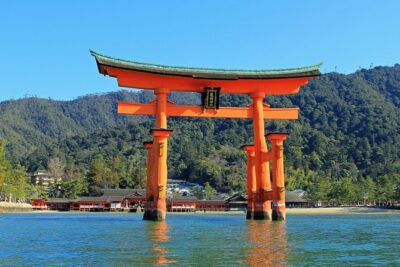
Peaceful Hiroshima & Miyajima UNESCO 1 Day Bus Tour
Read our review →
Hiroshima and Miyajima UNESCO Sites 1-Day Tour
Read our review →
Hiroshima / Miyajima Full-day Private Tour with Government Licensed Guide
Read our review →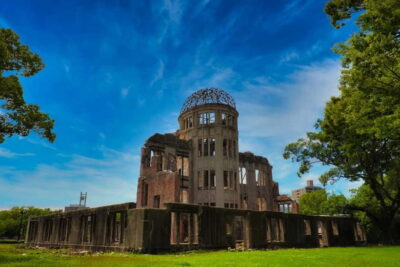
Hiroshima Historical Walking Tour – Why A-Bomb was Dropped
Read our review →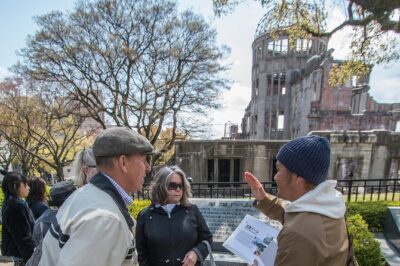
Hiroshima Peace (Heiwa) Walking Tour at World Heritage Sites
Read our review →
Hiroshima in a Nutshell: Morning Bike Adventure
Read our review →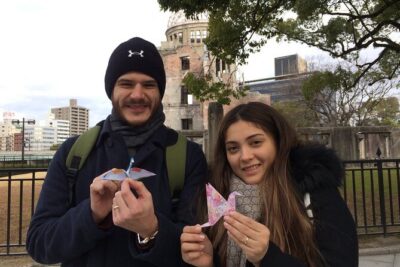
Hiroshima City 4hr Private Walking Tour with Licensed Guide
Read our review →
Browse the lists this tour appears in