
Reviewed · NAGOYA TOURS
Experience Japanese calligraphy & tea ceremony at a traditional house in Nagoya
Nagoya can feel like a quiet side street of Japan. Here you step into a real kominka house for calligraphy and a hands-on tea ceremony, tied to a Sengoku-era history chat.
I really like the way this experience is built in layers, history first, then making art, then learning the rhythm of tea. I also appreciate the small-group feel, max 6 people, plus friendly English support from your hosts. One thing to consider: you are crafting your own calligraphy in a guided format, so if you expect a long, sightseeing-style tour, this is more of a focused workshop.
Highlights You Should Know Before You Go
- A Sengoku history mini-lesson with easy visuals, before you pick up the brush
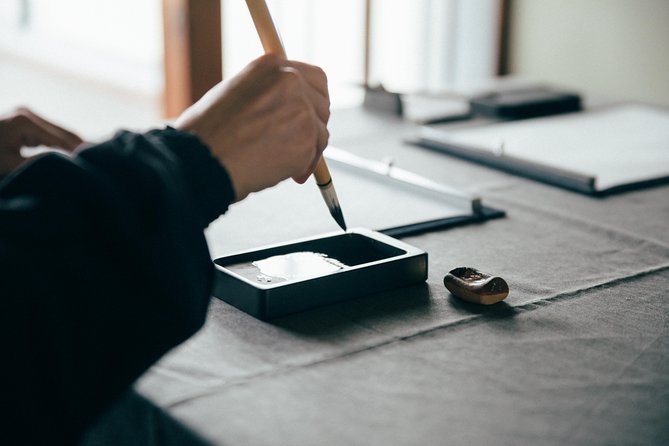
- Ink prep that feels ritual, water on the inkstone, then slow rubbing of the inkstick
- Choose your own symbol ideas from given samples, based on meaning and design
- Matcha first, then you serve, so you learn both etiquette and the practical flow
- Hosts in a lived-in traditional home, not a staged showhouse
- Maximum 6 travelers, which helps questions land fast and learning stay personal
Entering The Kominka House In Nagoya’s Samurai District
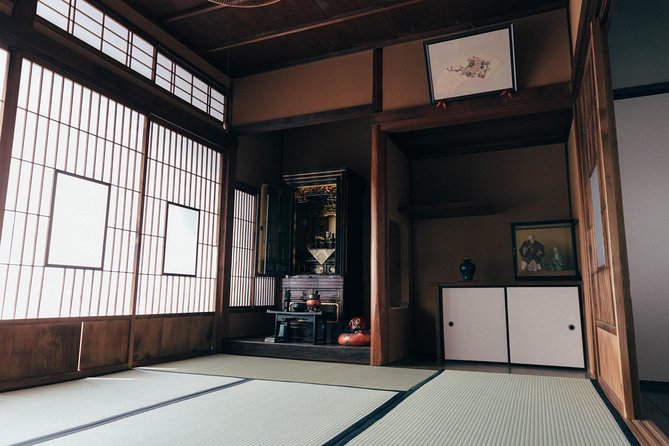
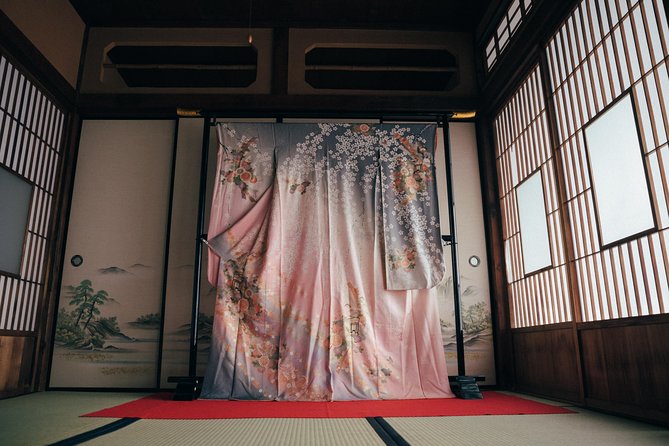
This experience starts in a traditional home in Nagoya, the kind of place you do not rush through. Once you step inside, you are looking at the old stuff that modern houses usually replace: tatami mats, shoji paper walls, and the calm presence of a traditional Japanese garden. The atmosphere matters because calligraphy and tea are not only skills. They are also a mood, quiet focus, and respect for materials.
The location is in Showa Ward, and the address is easy to plug into your map app. It is also near public transportation, which is a big deal in a city where you do not want your day to hinge on one taxi ride.
If you care about authenticity, this is a strong fit. The idea here is not to stare at objects in a museum. You are experiencing culture in the spaces where people actually lived.
More tea ceremonies in Nagoya:
- Nagoya: Japanese Traditional Sweets making and Tea Ceremony
★ 4.9 · 76 reviews - Kimono Rental and Tea Ceremony Experience in Inuyama
★ 5.0 · 15 reviews - Kyoto: Tea Ceremony in a Traditional Tea House in Kiyomizu
★ 4.9 · 3,519 reviews
The 15-Minute Sengoku Period Briefing That Changes How You See Everything
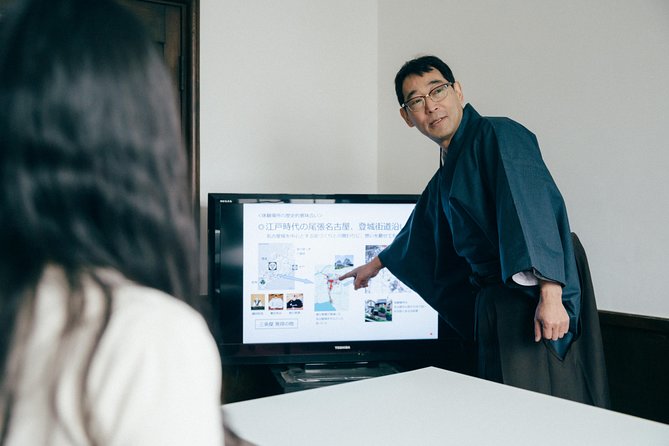
Before you start writing, you get a short history commentary, about 15 minutes, with an easy-to-follow slide show about Nagoya during the Sengoku period. If you have even a basic sense of Japanese history, this little briefing helps you connect the dots between the region and the cultural practices you are about to try.
You get context on why Nagoya and the Owari district mattered, especially in the 16th century when powerful feudal lords shaped political life. You hear names tied to that era, including Oda Nobunaga, Toyotomi Hideyoshi, and Tokugawa Ieyasu. Even if you know only a little, the talk puts the area in a framework you can remember.
Why it works: calligraphy and tea are often presented as timeless traditions. The history chat reminds you they also grew out of a real world of people, status, discipline, and etiquette. You will likely find it easier to pay attention during the workshop once you understand what kind of mindset these practices historically supported.
Calligraphy Workshop: Inkstone, Inkstick, and Controlled Calm
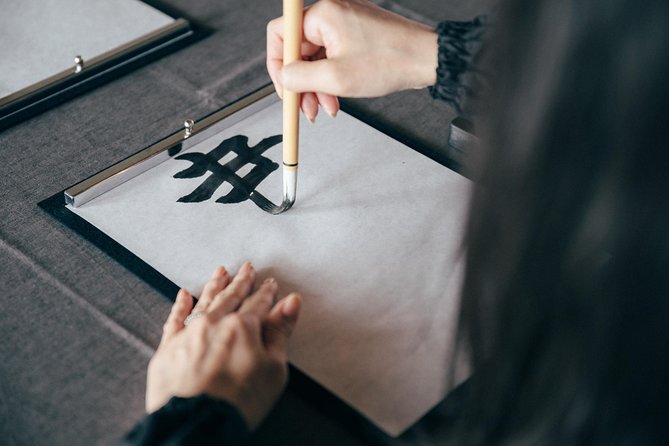
Then you move into Japanese calligraphy, step by step. The first part is tactile and slow. You drip water on the inkstone, then rub an inkstick down carefully. That step is not just preparation. It sets the pace for the entire session, because you can feel how physical and deliberate the process is.
In the quiet atmosphere of the house, you learn basics like how to hold the brush and how to move it. The goal is not to turn you into a professional. It is to help you understand the mechanics of the brush and the logic behind the strokes.
Picking Your Symbol and Writing on a Clean Copy
After learning the fundamentals, you choose symbols based on your favorite meaning and design samples. This is one of the best practical touches in the format. You get options, so you are not stuck writing something you did not really want.
Once you decide, you write on a clean copy. The work is then framed, so you can take home something that looks finished rather than just a sheet of ink.
A few more Nagoya days worth comparing
- From Nagoya: Gujo, Hida Takayama, and Shirakawa-go Day Tour
★ 4.4 · 398 reviews - Ghibli Park 1-Day Bus Tour from Nagoya
★ 4.5 · 277 reviews - From Nagoya: Hida Takayama & Shirakawa-go Tour w/Opt. Lunch
★ 4.5 · 256 reviews - Hiking the Historic Nakasendo Trail [1 Day Tour from Nagoya]
★ 5.0 · 104 reviews
The Small Detail I’d Plan For
Ink preparation is part of the ritual, and it can feel different from other art workshops you might have done. If you are sensitive to strong smells, the ink scent is a factor mentioned as part of the atmosphere. It is part of the experience, but it is still something to be aware of.
Tea Ceremony in the Tea Room: Matcha, Utensils, and Serving Practice
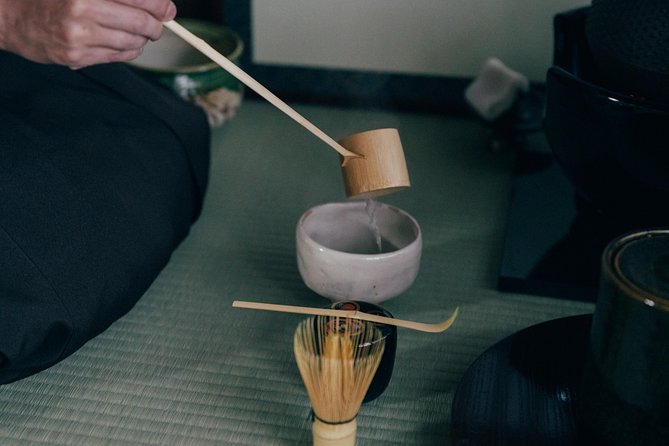
Next comes the tea ceremony in the tea room. Before you taste or move around, the host explains the tea room setting and the utensils. That is important for beginners. It helps you understand what you are looking at and why the actions matter.
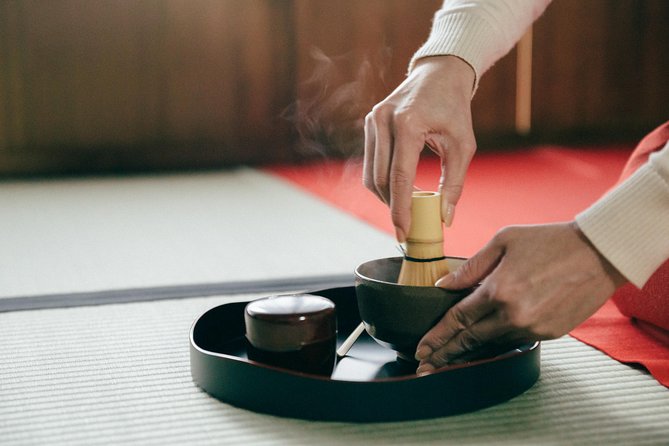
You start with matcha served by the host. Then, once you get used to the flow and the atmosphere, you try serving tea yourself.
That two-step structure is smart. The first cup teaches you how things feel. The second part gives you the chance to put etiquette and technique into action, not just observe.
Why Serving Yourself Is the Real Lesson
A lot of tea experiences stop at watching. Here, you actually take part. Serving tea forces you to slow down, coordinate your movements, and pay attention to small steps like how you handle the process from start to finish.
The hosts are a key part of this segment. In past sessions, people have mentioned warm hosting and a friendly vibe, including Yuzo Mori and his wife welcoming guests into their home. That kind of welcome matters because it lowers pressure when you are doing something unfamiliar.
What’s Included, What You Take Home, and What You Should Plan
You are not paying just for entertainment. You are paying for a hands-on cultural practice with materials and guidance.
Included:
- Matcha tea (plus coffee and/or tea)
- Some Japanese sweets
- All tools of Japanese calligraphy
Souvenirs:
- You are told souvenirs are not included, but you do frame your calligraphy work as part of the activity. So think of it as your crafted outcome rather than an extra packaged gift.
Food and allergies matter a bit here because sweets are provided. If you have allergies, it is best to tell the organizer in advance so the host can plan accordingly.
What to Bring (and What Not to Stress)
The activity is designed so most travelers can participate. Still, wear something comfortable. You will be doing a workshop style activity where you will sit and focus for the full session.
If you are the type who likes photographs, you may want to ask or watch for cues about where photos are appropriate. The experience relies on a quiet tone, and tea and calligraphy both do better when you do not rush around.
Price and Value in Nagoya: Is 179.63 Per Person Worth It?
At $179.63 per person, this is not a budget knockoff. You are paying for a few things that are hard to replicate cheaply.
First, it is a guided workshop with materials. All calligraphy tools are included, and you are guided through ink preparation, brush technique, and symbol selection. Second, you get a history context segment with slides, not just silent observation. Third, the tea ceremony is hands-on, with both tasting and serving practice, plus matcha and sweets.
Now, compare that to the kind of experience many travelers find when they are only offered a short show or a quick lesson. Here, the 2 hours 30 minutes duration is long enough to learn something real. The group limit of 6 also helps you feel less like a ticket number.
One possible drawback you should factor in when deciding: this price is for a focused activity, not a full-day tour with lots of extra stops. If your ideal Nagoya day is walking viewpoints and casual wandering all day, you might find this feels shorter and more task-based.
But if you want a memorable, personal craft plus tea etiquette in an actual home, the cost starts to make sense.
Logistics That Matter: Mobile Ticket, Timing, and Meeting Point
The experience uses a mobile ticket, which you can usually access in your phone. The duration is about 2 hours 30 minutes, which fits nicely between other sightseeing.
The start point is:
4-chōme-32 Yamawakichō, Showa Ward, Nagoya, Aichi 466-0063, Japan
It ends back at the meeting point.
Because it is near public transportation, you can keep your day flexible. I recommend planning to arrive a little early so you have a minute to settle in and transition into the calm workshop pace.
Also note the confirmation timeline: you receive confirmation at booking, unless you book within 7 days of travel, when confirmation comes within 48 hours subject to availability.
Who This Works Best For in Nagoya
This is a great choice if you want something cultural that is not just watching. It suits:
- First-time visitors who want a guided taste of Japanese traditions with English support
- People who like hands-on activities, especially art and ritual-based learning
- Travelers who prefer smaller groups and a calm pace over crowded attractions
It might be less ideal if:
- You want a sightseeing-heavy day with many different stops
- You are expecting a long self-guided museum style experience
- You dislike sitting and concentrating for over two hours
If you are traveling with curiosity rather than strict expectations, you will likely have a good time. The structure is clear, and the hosts guide you through each step.
Should You Book Japanese Calligraphy and Tea in Nagoya?
I think you should book this if you want a true Nagoya cultural moment, not just a quick activity. The best reasons are the pairing: history context, then calligraphy you make yourself, then tea ceremony you participate in by serving. Add in the small group size, and the fact that it happens in a traditional kominka home, and you get good value for the money.
Before you decide, consider your priorities. If you want quiet learning, guided making, and a calm break from constant walking, this fits perfectly. If you prefer busy routes and lots of external landmarks, you might want a different kind of Nagoya tour that focuses more on getting around the city.
FAQ
How long is the Japanese calligraphy and tea ceremony experience?
It lasts about 2 hours 30 minutes.
What is the price per person?
The price is $179.63 per person.
Is it a small group activity?
Yes. The maximum group size is 6 travelers.
What is included in the tour?
You get matcha tea and some Japanese sweets, plus all tools for Japanese calligraphy.
Are souvenirs included?
Souvenirs are listed as not included. Your calligraphy work is framed as part of the experience, but there are no extra souvenir items provided.
Where does the experience start and end?
It starts at 4-chōme-32 Yamawakichō, Showa Ward, Nagoya, Aichi 466-0063, Japan, and ends back at the same meeting point.
Is the location easy to reach by public transportation?
Yes, it is near public transportation.
Can I participate even if I have no experience?
Most travelers can participate.
What if I have food allergies?
Some sweets are provided. You should tell the organizer in advance if you have any allergies.
What is the cancellation policy?
The experience is non-refundable and cannot be changed for any reason.
If you tell me your travel dates and your comfort level with hands-on arts, I can also help you decide whether this is a perfect match for your Nagoya itinerary.
Fresh options around Nagoya
- Pub Crawl in Nagoya★ 5.0 · 15 reviews
- Kimono Rental and Tea Ceremony Experience in Inuyama★ 5.0 · 15 reviews
- Nagoya: 2026 Hida Takayama Shirakawa-go Light-up Winter Tour★ 3.5 · 16 reviews
- Nagoya: all-inclusive car tour to Korankei valley★ 5.0 · 19 reviews
- Nagoya : Private Nabana no Sato Tour : Illuminations & Shopping★ 5.0 · 21 reviews
- Nagoya: Toyota Commemorative Museum Guided Tour★ 4.7 · 22 reviews
- Private Full-day Nagoya City Tour★ 5.0 · 22 reviews
- Nagoya Samurai & Toyota Tour guided by a friendly local★ 5.0 · 24 reviews
Nagoya Tours, compared.

![Hiking the Historic Nakasendo Trail [1 Day Tour from Nagoya]](https://review-japan.com/wp-content/uploads/hiking-the-historic-nakasendo-trail-1-day-tour-from-nagoya-400x267.jpg)
Hiking the Historic Nakasendo Trail [1 Day Tour from Nagoya]
Read our review →
Nagoya Highlight Tour guided by a friendly local
Read our review →
Japanese Traditional Sweets making and Tea Ceremony
Read our review →
Magome-juku, Tsumago-juku & Ena-kyo 1d Bus Tour from Nagoya
Read our review →
Nagoya Full-day Private Custom Tour with National Licensed Guide
Read our review →Browse the lists this tour appears in