
Reviewed · NAGASAKI TOURS
Nagasaki Full Day Tour with Licensed Guide and Vehicle
Nagasaki feels personal on a private day. This Nagasaki full-day tour pairs a licensed local English-speaking guide with your own vehicle, so you can pick 3 to 4 priority stops and get the context you miss when you rush from signboard to signboard. I like that it’s genuinely flexible, including people who came from a cruise port and still needed the day to feel efficient. I also like the focus on big themes that shaped Nagasaki, from foreign settlement to Chinese and Christian communities and then the Peace Park. The main drawback is also the biggest one for this kind of tour: entrance fees and lunch are not included, so your final cost depends on which sites you choose.
If you want a checklist day, this will work. If you want a lesson built around your questions, it’s even better. Just go in with one consideration: some stops are short and focused, so you’ll get the most out of it if you decide your top priorities before you meet your guide.
Key points I’d plan around
- Licensed local English guide who can connect the dots, not just point at sights
- Private vehicle that cuts down the time wasted on transfers and walking between areas
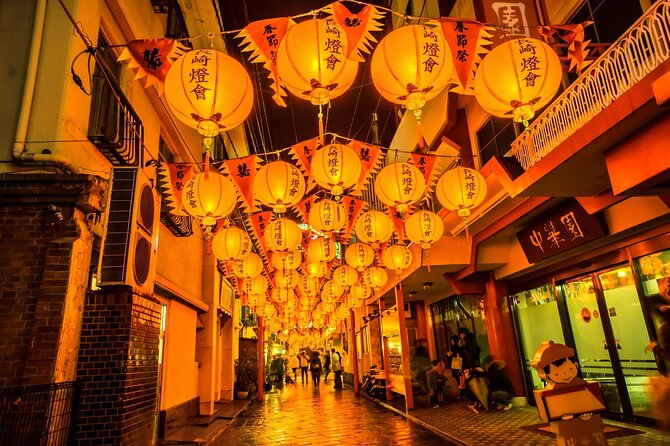
- Pick 3 to 4 core stops from a set of places tied to foreign history, Chinese temples, Christian churches, and peace sites
- Comfortable pacing that keeps you from feeling herded, especially at heavier sites like the Atomic Bomb Museum
- Local touches show up in small ways, like guides who have shared personal family stories and even brought peace-themed paper-crane gifts on past tours
A private day in Nagasaki, built around your interests
Nagasaki has always lived with outside influences, and that shows up in its streets, churches, temples, and even the layout of its waterfront. On this tour, you get to shape the day around what you care about. Your guide can keep the story coherent, moving from viewpoint and foreign settlement history to the Chinese-founded temple world, then into Catholic landmarks, and finally into the sites of the 1945 bombing and Nagasaki’s recovery.
I love that the experience is private, meaning it’s only your group in the car. That matters in Nagasaki because you often want to pause, ask one more question, or take a few extra photos when the light is right. The other thing I like is the licensed local guide part. Names you may encounter include Rikako, Yoshi, Hiromi, Minnie, Taiyo, Fumiko, Yoshiko, Yoko, and Norah, and the common thread in the way they lead is that they adjust to your interests rather than forcing a fixed script.
One more practical note: it’s a 6-hour day by design. That’s enough time to cover several meaningful places, but not enough to treat everything as deep museum time. If you want maximum time inside a specific exhibit, plan to make that one of your chosen core stops.
A few more Nagasaki days worth comparing
- Nagasaki Full-Day Private Tour with Government-Licensed Guide
★ 5.0 · 66 reviews - Nagasaki Half-Day Private Tour with Government-Licensed Guide
★ 5.0 · 53 reviews - Tokyo 6hr Private Tour with Government-Licensed Guide
★ 5.0 · 3,902 reviews
Price and what you really get for $598 per group
The price is $598.53 per group (up to 2) for about 6 hours. For many people, that’s the sweet spot where you can justify hiring a private guide instead of paying for multiple separate tickets or tours.
Here’s the value math that actually matters:
- You’re paying for a private vehicle, which saves time and keeps the day comfortable.
- You’re paying for a licensed local English guide, not an app-style interpretation.
- You’re also paying for customization: you choose 3 to 4 attractions that match your interests.
What’s not included is equally important:
- Entrance fees (for example at places like Glover Garden or the Atomic Bomb Museum)
- Lunch
- Other personal expenses
So yes, the base price looks high at first glance. But when you factor in private transport plus a guide who can explain why Dejima existed, what the Obaku temples mean, and why Nagasaki’s Christian sites carry such weight, the cost starts to make sense.
If your group is just two people, this is often a better deal than it looks on paper. If you’re traveling with more people, check whether your travel plan creates more costs anyway, because the tour pricing is per group up to 2, and you can’t combine multiple tour groups into one.
How the 6-hour format helps you avoid the Nagasaki time trap
Nagasaki is not huge, but it has pockets of interest that sit at different elevations and in different historical zones. That’s why a dedicated vehicle is more than comfort, it’s strategy. It helps you spend energy on the sites, not the logistics.
A typical day works best when you do this:
- Pick one viewpoint or orientation stop so the city makes sense.
- Pick one foreign history stop (waterfront and Western settlement ties).
- Pick one Chinese or Christian stop so you get cultural depth.
- Pick one reflective stop if you want the peace story to be a centerpiece.
Some groups have managed extra stops within the 6 hours by keeping each added site short. Still, don’t count on that. Treat 3 to 4 as your main plan, and use the guide’s flexibility to adjust within that structure.
Also keep in mind: the tour includes pickup offered and uses a mobile ticket. If you’re timing this around a cruise, tell your guide early. On past tours, guides have handled cruise-port days efficiently, with guides and drivers meeting people promptly at the terminal.
Foreign settlement stops: Inasayama views, Glover Garden, and Dejima
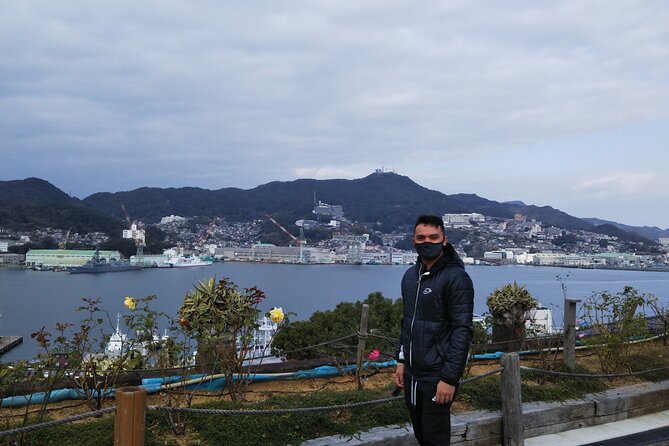
Start with altitude. The Inasayama Observation Deck (about 20 minutes) gives you a clean overview of Nagasaki, and it’s free at the deck itself. Even if you only take a short photo session, you’ll understand the city better once you’ve seen it from above. If you’re trying to make the most of limited time, orientation first is a smart move.
Then shift to the “foreign presence on Japanese soil” story.
Same corner of Japan, a different kind of day:
- Nagasaki: Private Walking Tour with a Local
★ 4.7 · 79 reviews - Visit Gunkanjima Island (Battleship Island) in Nagasaki
★ 4.0 · 32 reviews
Glover Garden (about 1 hour)
The Glover Garden is an open-air museum featuring mansions linked to Nagasaki’s former foreign residents. This is one of those places where the buildings do part of the explaining. You’ll get a feel for how Western merchants lived on hills near the port, and why Nagasaki’s international character began to shape daily life.
Entrance fees are not included, so if Glover Garden is important to you, budget for it. If it’s less of a priority, you can swap it for other port-area history stops and still get plenty of context.
Dejima (about 50 minutes)
Dejima is where the day gains an edge. This was a man-made island built in 1636 to segregate Portuguese residents from the Japanese population and control missionary activity. Walking through the site makes the controlled nature of cultural contact feel real, and it sets up later topics like how foreign influence was never simply “open trade,” it was supervised and restricted.
This is also a good choice if you want your guide to connect the dots between policy and people. On a private tour, you can ask your guide to explain how a small controlled island could have a big influence on what information and goods reached Nagasaki.
Chinese and Christian Nagasaki: Obaku temples to Oura Church
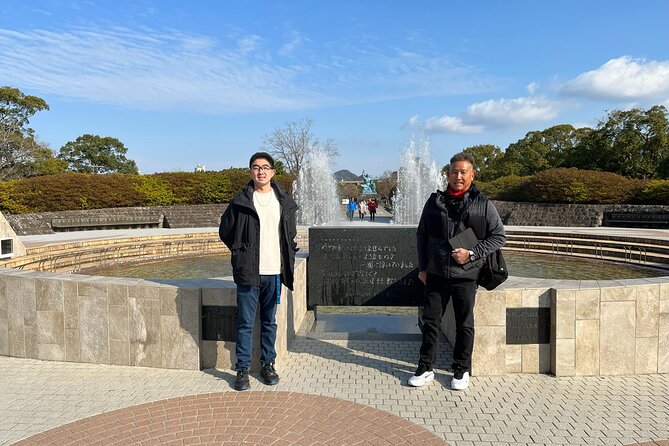
One reason Nagasaki stands out among Japanese cities is how clearly its Chinese and Christian communities shaped the cityscape. Your guide can stitch the story together across several stops, so the day stops feeling like a random set of monuments.
Sofukuji Temple (about 20 minutes)
Sofukuji is an Obaku school Zen temple, originally built in 1629 for Nagasaki’s Chinese residents. The temple’s Chinese arch-style architecture is part of what you’re looking at, but the bigger value is the human story: religious life carried across the sea, then adapted to its new home.
If you want a cultural stop that still feels tied to Nagasaki’s international connections, Sofukuji works well.
Kofukuji Temple (about 20 minutes)
Kofukuji is described as one of the oldest and most important Chinese-founded temples in Nagasaki, located in the Teramachi temple district. It’s also the birthplace of the Obaku school. Even with a short visit, you’ll get a sense of why Obaku mattered: it wasn’t just a style, it was a community anchor.
The Confucian Temple, plus the Chinese Museum of Successive Generations (about 15 minutes)
If you like history that isn’t only about battles or religion, the Confucian shrine area is worth it. The Confucius shrine is one of only a handful in Japan dedicated to Confucius, built in 1893. It’s a quick stop, so you’ll want your guide to tell you what to look for, not just where to stand for photos.
Urakami Cathedral (about 20 minutes) and Oura Church (about 20 minutes)
For many people, this is the emotional heart of the Christian side of the itinerary.
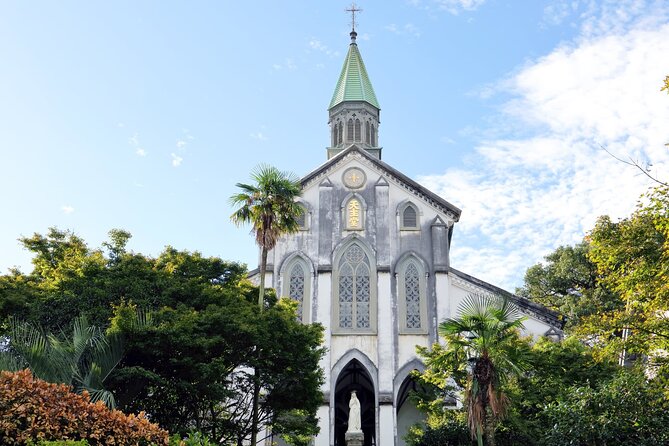
- Urakami Cathedral is a working Catholic church in a European-style red brick building. Its history carries tragedy, and it’s still active. That living, working element changes how the site feels.
- Oura Church (built in 1864 by a French missionary for a growing foreign merchant community) gives you a different angle on Catholic presence in the city.
If you’re picking only one Christian stop, ask your guide which one matches your interest more, the tragic historical arc at Urakami or the merchant community foundation at Oura Church.
Twenty-Six Christian Martyrs Monument (about 20 minutes)
This is focused and heavy. The monument and adjacent museum commemorate 26 Christians executed on February 5, 1597. If your day includes this, plan to move slowly through it. On private tours, guides often set the pace so the meaning lands without making it feel like a rush-and-grab photo stop.
Peace Park and the Atomic Bomb Museum: serious time, guided well
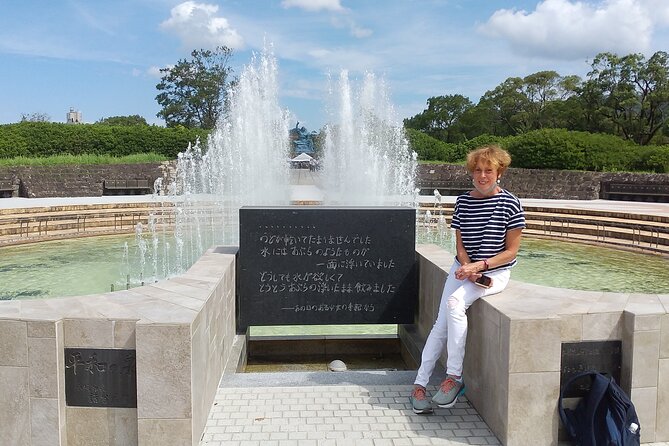
Nagasaki’s Peace Park and the Atomic Bomb Museum are where the tour becomes more than sightseeing. This is where your guide’s pacing matters, because you don’t want a guide to treat it like a checklist stop.
Peace Park (about 15 minutes)
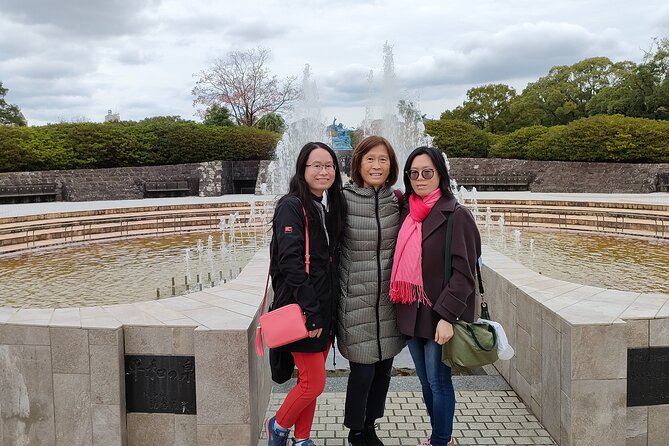
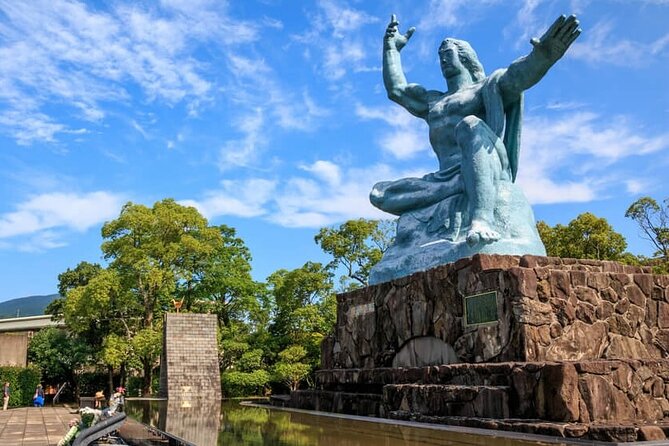
Nagasaki Peace Park is built near the atomic bomb hypocenter. It commemorates victims of the 1945 bombing and promotes global peace, with a central Peace Statue that symbolizes hope and remembrance. The park is free, and it’s a strong “in the moment” bridge between city life and what happened in 1945.
Atomic Bomb Museum (about 15 minutes, entrance not included)
The Atomic Bomb Museum documents devastation from the atomic bomb and Nagasaki’s recovery. Entrance fees are not included, so plan for that cost if it’s a chosen core stop.
One big positive factor from the tour experience is how guides handle the museum time. In past tours, guides explained the context clearly, and in at least one case, the group spent extra time at the museum with no sense of being rushed. That’s a major quality signal. If you care about getting the story straight, a licensed local guide is exactly what you want here.
Bring a little emotional stamina. And if you need a break, your guide can usually adjust the pace because it’s private.
Bridges, Dutch Slope, and downtown adds like Meganebashi
Not every stop needs to be long to be meaningful. Some are short, but they give the day color and a sense of how the city looked as foreigners arrived and settled.
Dutch Slope (Oranda-zaka)
Dutch Slope is a stone-paved street leading up a hillside where foreign traders resided after Nagasaki’s port opened to foreign trade in 1859. It’s a great “walk and feel the era” stop. If you’re already nearby after a major temple or port history moment, it’s a smart add because it takes less time than a museum and still connects to the city’s international story.
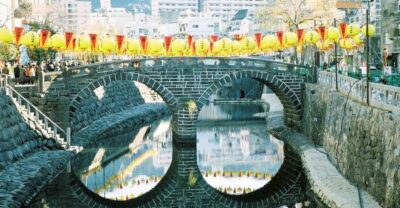
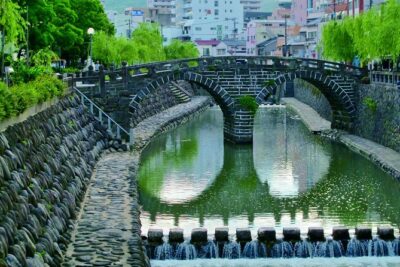
Spectacles Bridge (Meganebashi) (about 15 minutes, free)
Meganebashi gets its name because it resembles spectacles. It’s one of those small Nagasaki moments that makes the city feel specific rather than generic. It’s free, and it works well as a light break between heavier stops.
Nagasaki Museum of History and Culture (about 20 minutes, entrance not included) and Nagasaki Prefectural Art Museum (about 20 minutes, entrance not included)
If your group likes explanations in museum form, these two can balance the day. The History and Culture Museum is modern and designed to cover Nagasaki as one of Japan’s major international trade ports. The Prefectural Art Museum is modern and spacious by the port.
These can be good choices if you want more indoor time, but they compete with other priorities because they are not free and they are not short.
Tips to make your day smoother
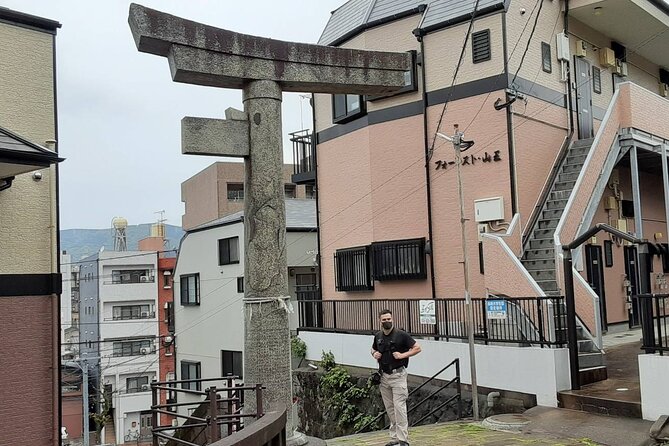
Here’s how I’d set you up for a better 6-hour experience in Nagasaki.
- Decide your top 3 to 4 sites before you go. The customization is the point, so tell your guide your priorities early.
- Budget for entrance fees. Some of the most important places on the list are not free, including Glover Garden and the Atomic Bomb Museum.
- Wear shoes that handle steps and slopes. Several stops involve hilly areas and temple approaches, and you’ll enjoy the walking more if your feet are happy.
- Have a weather plan. One past tour included unusual snow and sleet conditions, but the day still happened. Bring layers and a small rain layer if rain is on the radar.
- If you need child car seats, confirm ahead of time. There are only limited car seats and booster seats, rear-facing car seats are not available, and you have to contact directly if you need them.
- If you’re sensitive to heavy content, tell your guide. The Atomic Bomb Museum and related sites are serious. A good guide will adjust pacing so it stays meaningful.
One more small but real note: some guides have prepared peace-themed gifts like paper cranes for their group. Don’t count on it for planning, but it’s a nice bonus if it happens.
Should you book this Nagasaki full-day private tour?
Book it if:
- You want a private, guided day rather than a rushed group itinerary.
- You care about the story behind Nagasaki’s foreign settlement sites, Chinese temple tradition, and Catholic landmarks.
- You want the Peace Park and Atomic Bomb Museum handled with thoughtful pacing.
- You value having time to ask questions, not just see photos from a bus window.
Skip or rethink it if:
- You only want quick exterior photo stops and don’t care about explanations.
- Your schedule is so tight that you’d rather use a cheaper transfer-based plan.
- You’re not comfortable paying for entrance fees on top of the tour price, since most of the key stops have extra costs.
If you want my plain advice: this is a good match for couples and small groups who like history with context, and who want a guide who knows how to keep the day coherent across very different parts of Nagasaki. Choose your 3 to 4 priorities carefully, and you’ll leave with a much deeper understanding than a standard port tour can give.
FAQ
Is this tour private for only my group?
Yes. It is a private tour or activity, and only your group will participate.
How long is the Nagasaki full-day tour?
The duration is about 6 hours.
What is included in the price?
The price includes a licensed local English-speaking guide, a private vehicle, and a customizable tour where you choose 3 to 4 sites.
Are entrance fees included?
No. Entrance fees are not included, and lunch is also not included.
Do you offer pickup?
Yes, pickup is offered.
Do I receive a ticket on my phone?
Yes, the tour uses a mobile ticket.
Can I combine multiple tour groups into one booking?
No. You cannot combine multiple tour groups, and only one reservation per group is allowed.
What about car seats for children?
There are only limited car seats and booster seats. Rear-facing car seats are not available, and you must contact the provider directly if you need them.
What if I need to cancel?
You can cancel for a full refund if you cancel at least 24 hours in advance of the experience start time.
Fresh options around Nagasaki
- Taste Local Life: Nagasaki’s Historical Street Walking Tour★ 5.0 · 27 reviews
- Nagasaki: Private Walking Tour with a Local★ 4.7 · 79 reviews
- Nagasaki Full-Day Private Tour with Government-Licensed Guide★ 5.0 · 66 reviews
- Nagasaki Half-Day Private Tour with Government-Licensed Guide★ 5.0 · 53 reviews
- Visit Gunkanjima Island (Battleship Island) in Nagasaki★ 4.0 · 32 reviews
Nagasaki Tours, compared.
Nagasaki Full-Day Private Tour with Government-Licensed Guide
Read our review →
Nagasaki Half-Day Private Tour with Government-Licensed Guide
Read our review →
Visit Gunkanjima Island (Battleship Island) in Nagasaki
Read our review →
Taste Local Life: Nagasaki’s Historical Street Walking Tour
Read our review →Browse the lists this tour appears in