
Reviewed · KAMAKURA TOURS
When Emperors Reigned and Shoguns Ruled
Kamakura turns history into an easy walk. This 4-hour private tour is built around the Kamakura Period, with a professional photographer guide snapping photos as you stroll, and clear explanations of how the shogunate government, samurai, and the rise of Zen Buddhism shaped the area.
I also love the strong Kamakura Period storytelling, not just a checklist of famous sights. The only real thing to watch is that admission for Kotoku-in and Hasedera is not included.
You’ll meet at Kamakura Station and finish at Hase Station, so the route feels like a natural flow. And since it’s private for your group, you can ask questions and keep your pace without feeling rushed.
Key Points You Should Know Before You Go
- Choose your start time from several options, so you can line it up with your day
- Photo support as you walk, thanks to a professional photographer guide
- Kamakura Period focus, tying shrines and temples to shoguns, samurai, and Zen Buddhism
- Small-group set-up for up to eight people, which works well for solo travelers too
- Mixed free and paid admissions, with Kotoku-in and Hasedera requiring separate tickets
- Public-transport friendly route, starting at Kamakura Station and ending at Hase Station
A 4-Hour Kamakura Route Built Around Shogun-Era Meaning
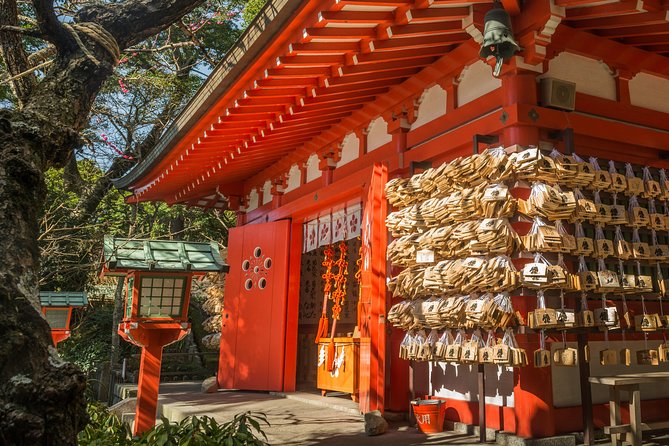
This tour hits the sweet spot for people who want Kamakura’s top sights without turning your day into a transport-only blur. You get a guided story that connects the places, so Wakamiya Main Street and Tsurugaoka Hachimangu do more than look pretty in photos. They’re framed in the context of the Kamakura Period, which ran from 1185 to 1333, when the shogunate, samurai culture, and Zen Buddhism helped shape the region.
Another practical win is how the tour is paced for a small group. You’re not racing. In the reviews, I saw a recurring theme: the guide stays flexible, even when weather is less cooperative or walking pace is slower than planned. That matters in Kamakura, where crowds can pile up.
Finally, the photographer angle is real. This is not a tour where you constantly have to ask strangers for photos. A photographer guide is there to snap images of you while you take in the sites.
A few more Kamakura days worth comparing
- Tokyo: Kamakura & Enoshima Day Trip including Temple Tickets
★ 4.5 · 1,375 reviews - From Tokyo: Kamakura & Enoshima 1-Day Bus Tour
★ 4.5 · 189 reviews - Kamakura Historical Walking Tour with the Great Buddha
★ 5.0 · 129 reviews
From Kamakura Station to Hase Station, Why This End Point Works
Meeting at Kamakura Station makes it easy to start your day without a complicated commute. And finishing at Hase Station is a smart way to close the loop. It turns the last temple visit into the end of the line, rather than a mid-day detour that forces you to backtrack.
If you’re planning the rest of your day, this matters. You can treat this as a satisfying half-day anchor: start near transit, finish near transit, then continue however you like.
Also, you’ll be walking through Kamakura’s main areas. That’s key for experiencing contemporary Japan alongside the historical sites. It’s not only temples and shrines, it’s also the everyday streets that make the town feel lived-in.
Wakamiya Main Street: A Scenic Warm-Up With Shrine-Start Energy
Stop 1 is Wakamiya Main Street, a short scenic walk toward the main shrine area. You’ll have about 20 minutes here, and because it’s early in the route, it works like a reset button. It’s a gentle start before the heavier history at Tsurugaoka Hachimangu.
What I like about starting here is that it gives you orientation fast. You get a feel for the flow of the area, and it’s easier to understand what you’re seeing once you arrive at the shrine.
Potential drawback: if you’re going on a peak day, main street areas can be crowded. That’s not a deal-breaker, but it can slow down photo moments. Plan on a patient vibe, especially if you’re also trying to take your own pictures between guide instructions.
Tsurugaoka Hachimangu Shrine: Free Entry With Big Historical Context
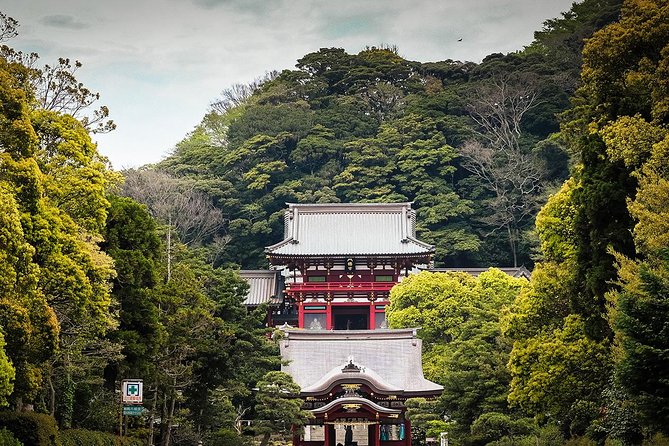
Stop 2 is Tsurugaoka Hachimangu Shrine. You’ll spend about 50 minutes here, and admission is free. This shrine is described as one of Japan’s three most important Shinto shrines, built in the 12th century by Minamoto Yoritomo, the first shogun.
That detail changes how you experience the place. You’re not just looking at architecture. You’re seeing a site tied directly to the shogun story, so the shrine becomes a reference point for why Kamakura mattered.
Practical tip: because you’re at a major shrine, you’ll want to keep your eyes open for photo angles, but also keep your pace smooth. The time is built into the schedule, so you should be able to wander thoughtfully without sprinting.
Same corner of Japan, a different kind of day:
- Kamakura Private Tour: Temples, Nature, and the Great Buddha
★ 5.0 · 121 reviews - Kamakura Walking Tour – The City of Shogun
★ 5.0 · 100 reviews - Kamakura: Private Guided Walking Tour with Local Guide
★ 4.8 · 60 reviews - Kamakura 4hr Private Trip with Government-Licensed Guide
★ 5.0 · 58 reviews
Komachidori: The Sweets-and-Souvenirs Break That Feels Like Real Kamakura
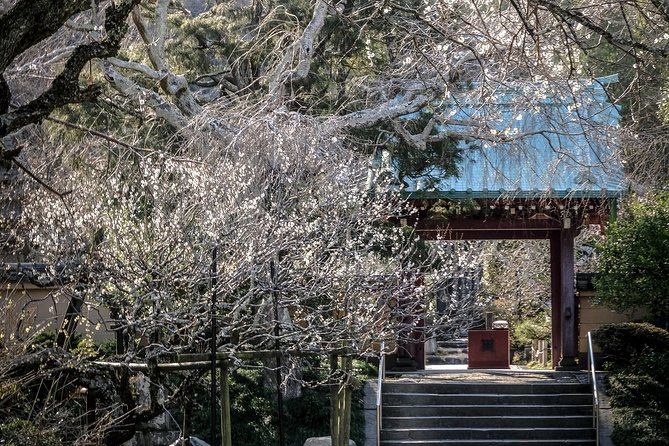
Stop 3 is Kamakura Komachidori, a famous shopping street with stalls and shops selling sweets, snacks, and souvenirs. You’ll get about 50 minutes here, again with free admission.
This is the part of the day that breaks up temple intensity. It’s where you’ll notice the town’s everyday character, not only its historical layers. In the reviews, people talked about grabbing things like matcha ice cream during or around this stretch, which makes sense because Komachidori is built for that kind of pause.
What to keep in mind: shopping streets can get busy, so it helps to be ready to move with the crowd. If you’re the type who likes to browse slowly, you’ll probably enjoy this stop most.
Kotoku-in (Great Buddha): Iconic 13th-Century Bronze and One Added Admission
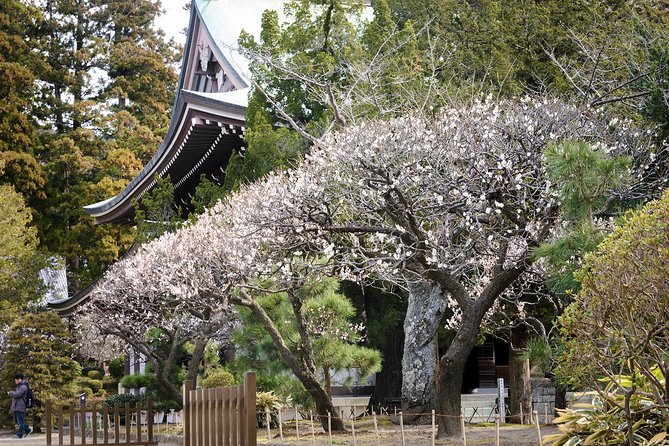
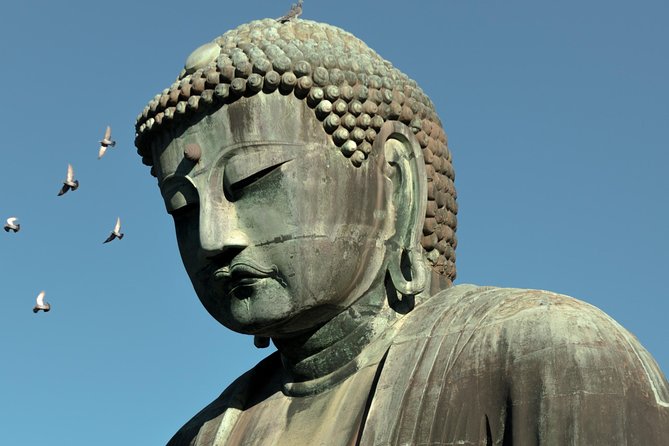
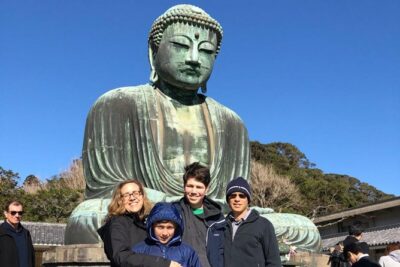
Stop 4 is Kotoku-in, with the famous Great Buddha of Kamakura. You’ll have about 40 minutes, and admission is not included. The statue is described as a centuries-old giant bronze figure of the Amida Buddha dating back to the 13th century.
This stop is worth planning for in your budget because the ticket is on you. It’s also a stop where timing helps. Even if you’re not trying to rush, you’ll want your camera ready because this is exactly the kind of subject that looks strong from multiple angles.
Also, since it’s a major photo point, you might feel a bit of pressure to line up your shot. The photographer guide can take care of the you-in-the-picture part, which makes the experience less stressful. You can focus on the statue and details, not on hunting for the right moment to ask someone to take your photo.
Hasedera Temple: Multiple Levels, Gardens, Ponds, Caves, and Kannon
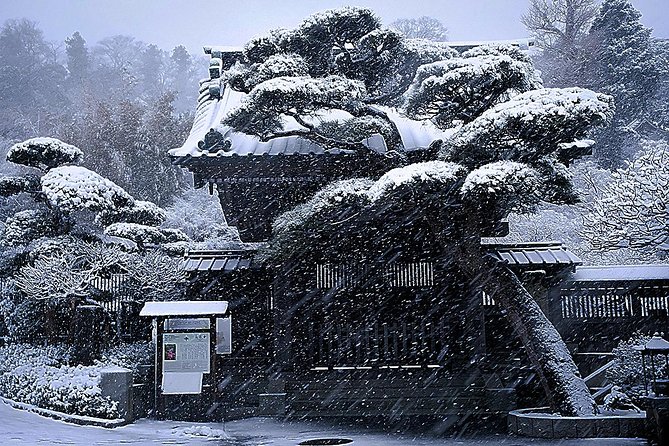
Stop 5 is Hasedera Temple, and it’s the longest stop at about 1 hour 20 minutes. Admission is not included here either. This is the stop where the tour shifts from shrine history toward temple atmosphere.
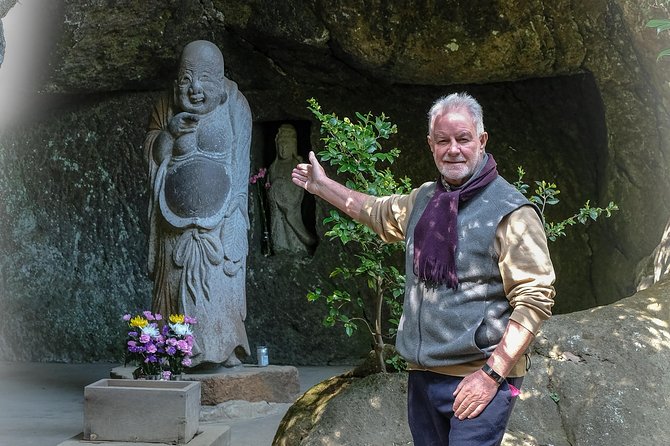
Hasedera is described as spread over multiple levels, with beautiful gardens, ponds, caves, and an ancient 11-headed statue of Kannon, the Goddess of Mercy. That combination is why people like this part of the route. It’s not only a single highlight. It’s a series of scenes.
Practical considerations: multiple levels can mean stairs and uneven walking. Wear shoes you actually like wearing, not just shoes you can tolerate. If it’s raining, take your time. One review mentioned a rainy afternoon, and the group still managed to complete all the sites, which suggests the schedule is designed to handle real weather, but you still need to move carefully.
And because Hasedera is usually quieter than the main street areas, it’s a good place to ask questions. You’ll often get the most thoughtful answers when the pace slows and you’re not surrounded by constant foot traffic.
Photographer Guide Time, How to Get Great Shots Without Wasting Your Moment
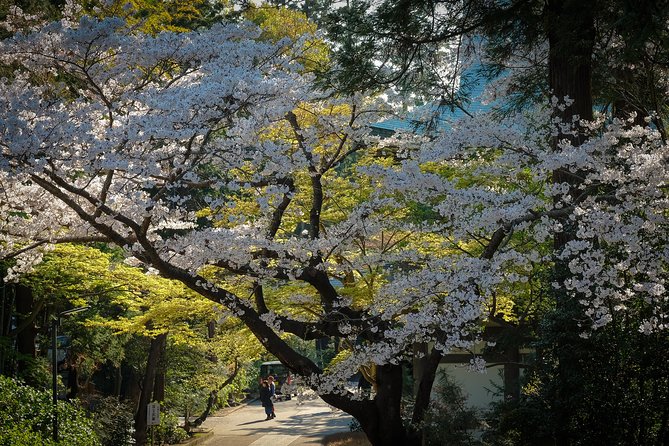
The photographer guide is one of the biggest reasons to pick this tour, and not just because it sounds nice. In the reviews, people repeatedly praised the guide for taking photos and being a great photographer while also acting like a history guide.
Here’s how to make that work for you:
- Stand where the light looks best before you pose, then let the photographer guide handle the timing
- Use the walk itself as part of the shot, not only the final stop photo
- Ask for a specific style if you like, like one with you and the statue, or one that includes the street behind you on Komachidori
One more nice detail: the guide is described as speaking English very well, and also Spanish. That can help if you’re more comfortable sharing questions in a second language, or if you’re traveling with someone who benefits from extra clarity.
Price and Value: What You’re Really Paying For
The price is $108.99 per person for about 4 hours. That’s not a cheap “wander on your own” day, but it does come with real value: you’re paying for a local guide, a professional photographer guide, and a tour escort/host.
The math is also more reasonable than it looks. You’re paying for four hours of guided routing plus the photo element, and you don’t have to worry about figuring out how to connect the major stops. You also get small-group attention, which is a big deal when you want questions answered and not just information dumped at each location.
On the cost side, there are two admissions you should expect to pay separately: Kotoku-in and Hasedera. Food and drinks are not included either, and transportation to and from the attractions is not included, so you’ll want to plan your train connections and meals.
How far in advance to book? The tour is often booked about 71 days in advance on average. If you’re traveling in busy seasons or on weekends, you’ll want to lock it in early.
Weather, Crowds, and Pace: What to Expect in Real Kamakura
Kamakura can be crowded on weekends and holidays. One review noted that even when the town was packed, the guide managed the route and kept the group on track. Another mentioned a rainy afternoon, and the schedule still worked out.
Still, it helps to pack smart:
- Bring a light rain layer if the forecast looks iffy
- Wear grippy shoes, especially around temple paths
- Keep some cash or a card ready for snacks, drinks, and the two ticketed sites
If you like a calm, structured walk with lots of context, this format is a good match. If you’re trying to cram in every possible side quest, you might feel like 4 hours is just not enough. But if you want the main pillars of Kamakura and you want the story behind them, it’s a strong use of time.
Should You Book This Kamakura Shogun-Era History and Photo Tour?
Book this tour if you want:
- A focused Kamakura route with Kamakura Period context, not just sightseeing
- A photographer guide so you actually get photos of yourself without slowing the group
- A small-group feel (up to eight people) that works well for solo travelers too
- A half-day plan that starts at Kamakura Station and ends at Hase Station, making transit easier
Skip or rethink if:
- You strongly prefer to wander without any guidance, because this is designed as a guided flow through key sites
- You don’t want to pay extra admissions for Kotoku-in and Hasedera, since those tickets are not included
If that all sounds like your kind of day, you’ll likely walk away with a clearer sense of how shogunate rule and Zen Buddhism fit into Kamakura’s geography and landmarks, not just the postcard version.
FAQ
How long is the Kamakura tour?
The tour lasts about 4 hours.
What start times are available?
You can choose your preferred start time from several available options.
Where do we meet, and where does the tour end?
You start at Kamakura Station (1-chōme-1-15 Onarimachi, Kamakura). The tour ends at Hase Station (2 Chome-14 Hase, Kamakura), described as being on the Enoden line.
What is included in the tour price?
The tour includes a local guide, a professional photographer guide, and a tour escort or host. Food and drinks, lunch, and transportation are not included.
Is the tour good for solo travelers?
Yes. It’s described as a great option for single travelers, and it runs as a private tour for your group, up to eight people.
What is the cancellation window for a full refund?
Free cancellation is available, and you can cancel up to 24 hours in advance for a full refund.
Fresh options around Kamakura
- Kamakura Bamboo Forest and Great Buddha Private Tour★ 5.0 · 12 reviews
- Tokyo Yokohama Night View Tour With Kamakura And Enoshima★ 3.5 · 14 reviews
- First time in Kamakura? Enjoy a Tour of All Must-sees!★ 5.0 · 15 reviews
- Kamakura and Enoshima: Private Guided Day Tour with Vehicle★ 3.9 · 17 reviews
- Kamakura Half Day Tour with a Local Expert Guide★ 4.4 · 23 reviews
- Your Own HANKO Name Seal Activity in Kamakura.★ 5.0 · 24 reviews
- Buddha, Bamboo & Zen – Bespoke Kamakura Private Walking Tours★ 5.0 · 25 reviews
- Kamakura: A Journey Through Medieval Japan★ 4.9 · 32 reviews
Kamakura Tours, compared.
Kamakura & Enoshima Day Trip including Temple Tickets
Read our review →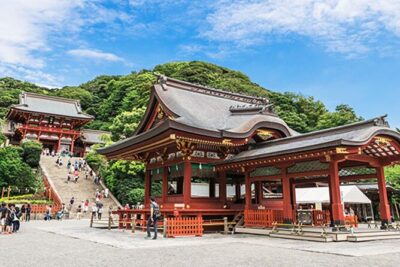
Kamakura Historical Walking Tour with the Great Buddha
Read our review →
Kamakura Private Tour: Temples, Nature, and the Great Buddha
Read our review →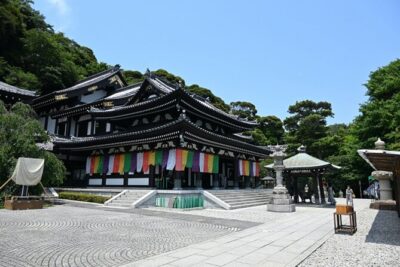
Kamakura: Private Guided Walking Tour with Local Guide
Read our review →
Kamakura 4hr Private Trip with Government-Licensed Guide
Read our review →
Kamakura Full Day Tour with a Local Expert Guide
Read our review →Browse the lists this tour appears in