
Reviewed · CYCLING TOURS
Private E-MTB guided cycling around Mt. Aso volcano & grasslands
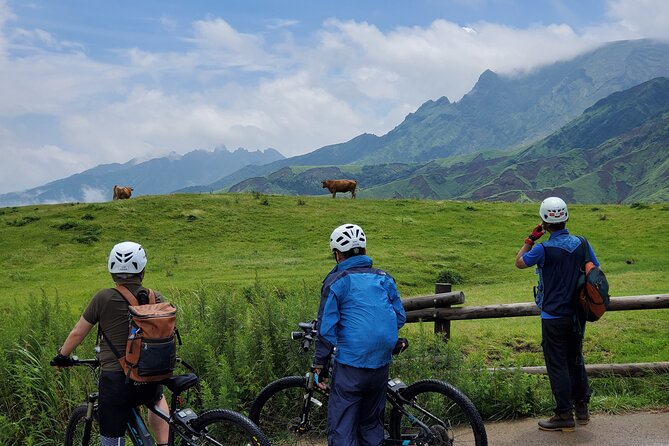
Mt Aso looks different when you pedal. This private e-MTB ride takes you through the Aso caldera and open grasslands with electric assist and guided stops you normally cannot reach as easily.
I love the fact that you get a real view of the crater zone, including the approach toward Mt. Aso Nakadake, plus the quiet, low-effort cycling that keeps the focus on the scenery. I also love that guides Joe-san and Fuji-san explain what you are seeing, and even help by taking pictures that get sent afterward.
One possible drawback: this route climbs from about 500m near Aso Station up to around 1,260 to 1,300m at the crater area, so you need moderate physical fitness, even with the motor doing the heavy lifting.
Key highlights you should care about
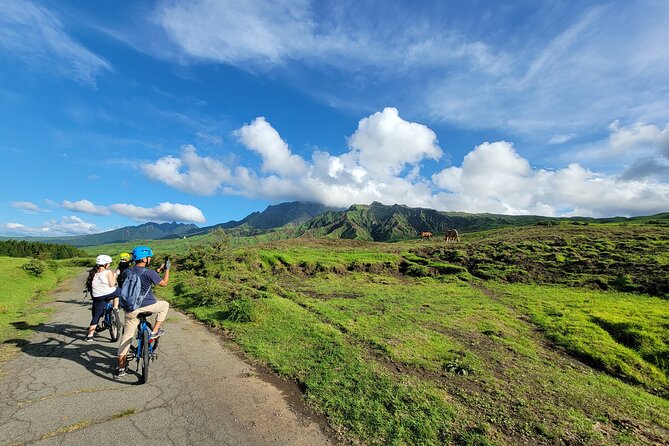
- Private group, so you ride at a pace that fits your comfort
- 800m elevation gain, made doable with electric assist
- Kusa no Michi, the weeds road, for a closer crater approach
- Millennium Grassland conservation focus tied to your ride
- Joe-san and Fuji-san take photos and share them after the tour
- Luggage storage and optional hot spring guidance after cycling
Why pedal-powered Aso feels special
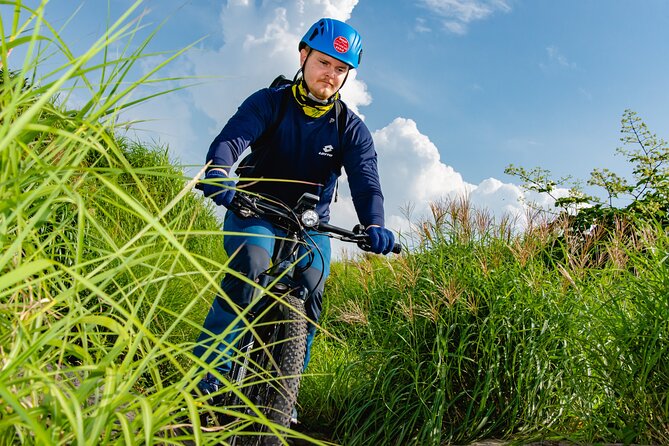
Aso is all about scale. From Aso Station, you start at the caldera floor, then work your way up toward the Nakadake crater while the grasslands spread out around you in wide, open views.
This tour is designed for people who want the outdoors without turning it into an all-day grind. Because it is electric-assisted, you still feel like you are cycling, but you are not forced into technical, high-risk riding to enjoy the big sights.
More bike tours in Aso:
- Hidden Kyoto E-Biking tour
★ 5.0 · 1,843 reviews
The price, and what makes it worth around $204
At $203.63 per person for a private, roughly 4-hour experience, you are paying for three main things: a guide, e-MTB equipment, and a practical logistics setup that reduces hassle.
What is included matters. You get the e-MTB itself, helmet and gloves, and an air-conditioned vehicle is part of the included package, with pickup offered. On top of that, a portion of your fee supports grassland conservation activities for the Millennium Grassland, so your ride has a direct purpose beyond sightseeing.
What is not included is equally important for planning: you will want to bring water and any snacks or drinks you prefer. The better you fuel up before you start, the more comfortable you will feel on the climb and during stops.
Starting at Aso Station, then learning the volcano first
You meet at the entrance of Aso Station in Kurokawa, Aso, Kumamoto, and the tour starts at 1:00 pm. Before you move far, you get an introduction to Mt. Aso and the grasslands around it, so the ride is not just scenery, it is context.
Then comes the gear step. You take the bikes for a test and you get the basics explained. Beginners are welcome, and the guide will help you understand the bicycle’s use, which is a big deal because electric assist changes how you plan your effort.
A quick reality check: even with support, you are still on a bike on real terrain. If you are worried about balance or starting and stopping, do not rush the test. Spend a little extra time practicing on flat ground with the guide watching.
Stop by stop, how the route works (and why each part matters)
1) Aso Geopark, where the trip gets its meaning
One of the first guided stops is Aso Geopark. This is your setup for understanding what you will be looking at as you move from the caldera floor toward the crater.
Why it matters: volcano country can feel overwhelming because it is all rock, slopes, and weather. A short, guided framework makes it easier to spot what is meaningful and to connect views to what is happening below the surface.
2) The climb zone, starting near 500m and aiming for around 1,260 to 1,300m
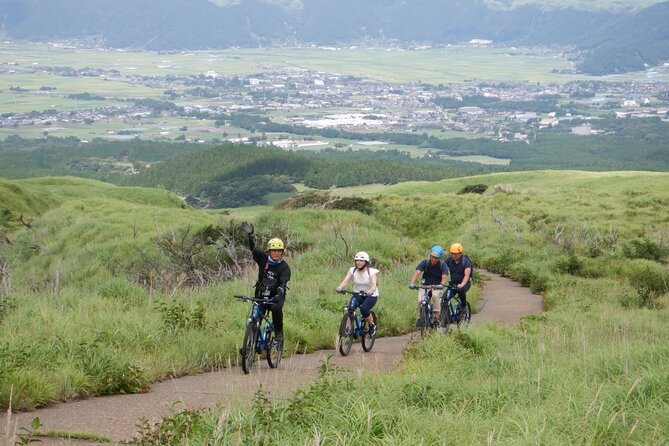
After the initial orientation and bike test, the tour builds toward the crater area. You start at about 500m above sea level at the bottom of the caldera, then you climb roughly 800m to the Nakadake crater area at about 1,300m.
This elevation difference is the core of the experience. It is also where the electric assist earns its keep. The motor support helps you take on the climb without feeling like you have to be a cyclist first and a sightseer second.
Practical tip: wear gloves if they are provided in your size options, and keep your hands relaxed on the bars. The bike test is not just formalities, it helps your body get used to how the assist engages.
3) Kusa no Michi, the weeds road, for a closer crater approach
As you head up, you ride up via the road called Kusa no Michi, which translates as the weeds road. This route was once a path for mountain ascetics, so you are following a track with a human story layered over the geology.
The payoff is the crater approach. You get up close to the area emitting smoke, which is one of those moments where words fall short and video recordings do not do justice to the scale of the scene.
Weather note from actual experience you can plan around: even if rain pops up, the ride may still include a close crater moment. In one account, the weather shifted, rain arrived suddenly, and then cleared enough for panoramic views afterward.
4) A view stop around Mt. Aso and the caldera opening
Once you reach the crater area, you return downhill and the caldera opens up in front of you. This is when the sense of space hits harder, because you get a view outward into the wider Aso nature rather than just up at the crater.
You will also have guided stops such as Mt. Aso and Aso-gun points along the way. The purpose is to give you both the peak experience and then the big-picture views as you descend.
5) Kusasenrigahama and the Millennium Grassland angle
As the route continues, you reach Kusasenrigahama, a grassland area where the grass dominates the view. This is where the tour’s conservation mission becomes personal.
A portion of your participation fee is returned to the grassland Association to fund conservation activities for the Millennium Grassland. That means your ride supports grassland upkeep, which helps maintain the kind of open, wind-swept scenery you came to see.
If you care about responsible travel, this is one of the stronger aspects of the tour. It avoids the common trap of a nature experience that treats the environment as purely scenery.
The electric bike factor, and what it changes for beginners
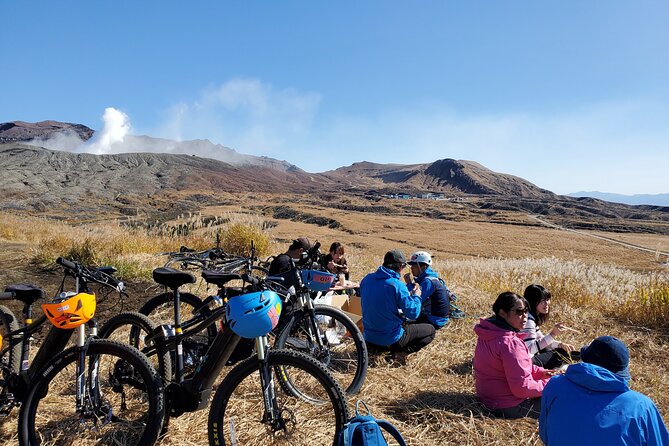
Because the bikes are electrically assisted, you do not need extreme cycling skills. That is the headline. The real question is how it feels on your body.
In practice, the motor support reduces fatigue and helps you stay comfortable enough to enjoy the stops. The guide also explains the bike’s use, so you can focus on riding safely instead of guessing how to manage the assist.
I especially like that the tour is explicit about beginners being welcome. If you have never ridden a powered bike, you will still get a test ride before the main climbing begins.
Quiet riding in Aso Kuju National Park, without exhaust and noise
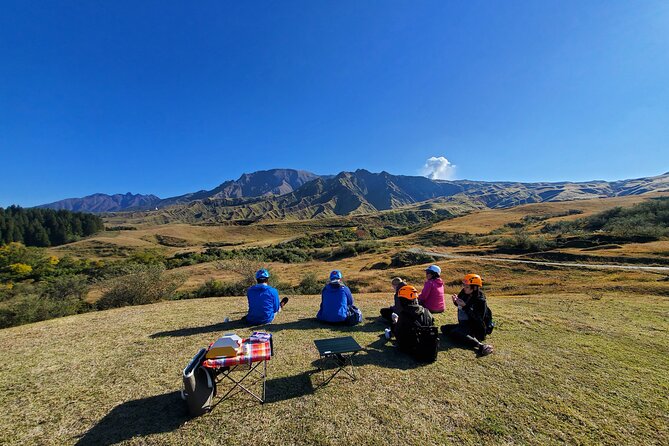
One of the unique pleasures here is how it feels to move through the area under your own power, with the noise and exhaust kept low. The tour emphasizes cycling in great nature without exhaust gas or noise, which matters when you are trying to hear wind and take in open space.
It also changes the tempo. You are not bouncing around in a vehicle every minute. You pause, look, and keep going in a way that makes it easier to absorb big views and smaller details.
Photos, hot springs, and the little comforts that matter
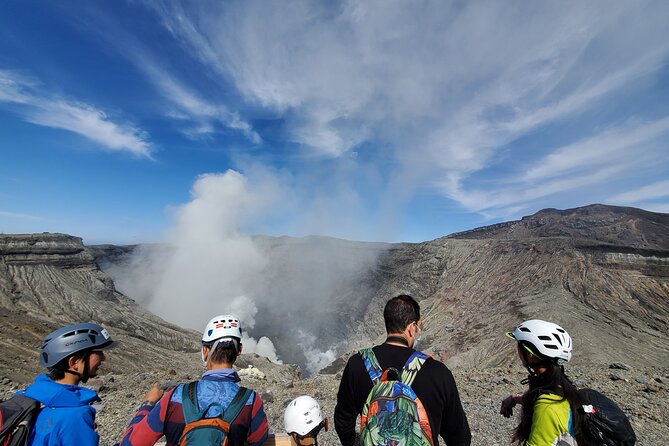
Guides Joe-san and Fuji-san are noted for being friendly and helpful, and they take lots of pictures during the ride. They also send the photos afterward, which is great if you are busy enjoying the ride and do not want to fight with a camera strap every time the view opens.
There is another comfort option. You can leave your luggage with the tour team so you can ride lightly and enjoy the grasslands without hauling bags.
After the ride, the guide can also help you with a hot spring. The idea is simple: you climb, you breathe volcano air, and then you unwind in the caldera area. It is not guaranteed as a formal included transfer, but it is a helpful add-on if you want a natural decompression plan.
Logistics that affect your day
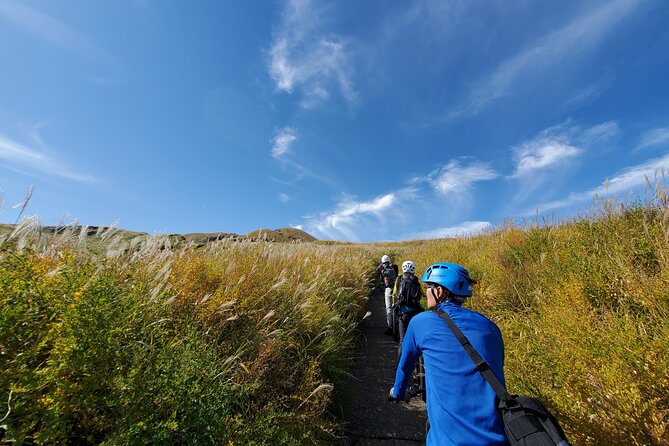
This is a private tour, meaning only your group participates. That typically helps with comfort on a route like this, because the guide can adjust pacing, stops, and bike help to your needs.
Pickup is offered, and the included air-conditioned vehicle can reduce the stress of getting from the station area to the starting point and back. You also end back at the meeting point, usually Aso Station JR area, unless you booked a ride to your accommodation.
Bring a simple plan for what you do if the weather turns. The experience requires good weather, but weather can change quickly in volcanic regions. If you want maximum comfort, pack a light rain layer and be ready for a cooler ride if the clouds roll in.
Who this tour fits best
This private e-MTB tour fits well if you want:
- Big crater views and grassland scenery in about 4 hours
- A route with real elevation, but not a brutal training session
- Beginners-friendly guidance and help with bike operation
- A conservation connection through the Millennium Grassland program
It may be less ideal if you dislike climbs entirely, or if you have mobility or balance concerns that make riding uncomfortable. The tour asks for moderate physical fitness for a reason, and the elevation gain is real even with electric support.
Should you book the private e-MTB around Mt. Aso?
Book it if you want a guided crater experience plus grasslands, and you value electric assist, photo help, and a private pace. At this price, the value comes from the full package of e-MTB gear, helmets and gloves, guided stops including the crater approach via Kusa no Michi, and conservation funding tied to your ride.
Consider skipping or looking for an alternative if you cannot manage the climb portion comfortably, or if you would rather do everything at a purely vehicle-based sightseeing level. Also keep the weather requirement in mind. Even though rain may not fully ruin the day, the tour is designed for good conditions.
FAQ
Where does the tour start?
The tour starts at the entrance of Aso Station in Kurokawa, Aso, Kumamoto, Japan.
What time does the tour start?
The start time is 1:00 pm.
How long is the tour?
It runs for about 4 hours.
Is this tour private or shared?
This is a private tour. Only your group will participate.
Is pickup available?
Yes, pickup is offered, and there is an air-conditioned vehicle included.
What is included with the tour?
The tour includes an E-MTB, helmet, and glove.
Is bottled water or food included?
No. Bottled water and any food or drinks are not included.
Is the tour suitable for beginners?
Yes. Beginners are welcome, and the guide explains how to use the bicycle. Electric assistance helps with the ride.
What’s the main elevation change during the ride?
You go from about 500 meters above sea level near Aso Station to around 1,300 meters at the Aso Nakadake crater area, an elevation difference of about 800 meters.
Can I store luggage during the tour?
Yes. You can leave your luggage with the tour team, so you can enjoy the grasslands more easily.
What if the weather is bad?
The experience requires good weather. If it is canceled due to poor weather, you will be offered a different date or a full refund.
Fresh options around Aso
- Private guided tour: Mt. Aso volcano, grasslands, Aso Shrine★ 5.0 · 19 reviews
Cycling Tours, compared.
3h Tokyo E-Bike Tour: Hidden Gems, and Local Life with guide
Read our review →
Arashiyama Bamboo Forest & Hidden Gems Bike Tour (Early Bird)
Read our review →
Hiroshima in a Nutshell: Morning Bike Adventure
Read our review →Browse the lists this tour appears in