
Reviewed · HALF-DAY
Tokyo: A Half-Day Trip Bus Tour in the Morning
Tokyo can feel like a lot. This half-day bus tour turns it into a short, clear route through the city’s biggest icons. You get Imperial Palace Outer Area views, Tokyo Tower panoramas, and Sensō-ji in one morning-style loop.
I especially like the pacing. Each stop has just enough time for photos and wandering, and the guide keeps the context flowing so the places make sense fast. It’s also a nice match if you want a guided plan without spending your whole day figuring out trains.
One drawback to know up front: you don’t enter the Imperial Palace itself, and there are a few steps when you board and exit the bus.
Key highlights you can plan around
- Efficient route: three major sights in about four hours, with built-in transit time
- Nijubashi Bridge area at the Imperial Palace grounds, plus a photo stop near Masashige Kusunoki
- Tokyo Tower main observatory around 150 meters up, with potential Mount Fuji views on clear days
- Sensō-ji with guided context plus free time to explore and shop on Nakamise
- English-speaking, nationally licensed guides on the tour, with helpful guidance throughout
- Hybrid bus comfort, with air conditioning called out by riders, especially in hot weather
A practical Tokyo shortcut, built for first-timers
This tour is designed for the day when you want the highlights, but your feet and brain need a break. You ride a hybrid bus and keep moving through central Tokyo instead of bouncing between neighborhoods on your own.
The value shows up in how the time is handled. In roughly 270 minutes, you cover the Imperial Palace Outer Area, Tokyo Tower, and Sensō-ji without doing the hard work of planning an efficient route. That matters in Tokyo, where travel time can surprise you even when you think you know where things are.
You also get an English-speaking guide, which changes the whole experience. You’re not just looking at famous places, you’re hearing what they are and how they fit into Tokyo’s story, from the meaning of shrine and temple traditions to what you’re seeing around each stop.
One more thing I appreciate: it’s approachable. It’s not one of those super-technical tours where you need special knowledge to enjoy it. The guide’s job is to get you oriented quickly, then help you make the most of your time at each location.
A few more Tokyo days worth comparing
- Mt Fuji and Hakone 1-Day Bus Tour Return by Bullet Train
★ 5.0 · 26,383 reviews - 1-Day Tokyo Bus Tour
★ 5.0 · 14,250 reviews - Tokyo: TOKYO SKYTREE® Admission ticket
★ 4.5 · 11,192 reviews
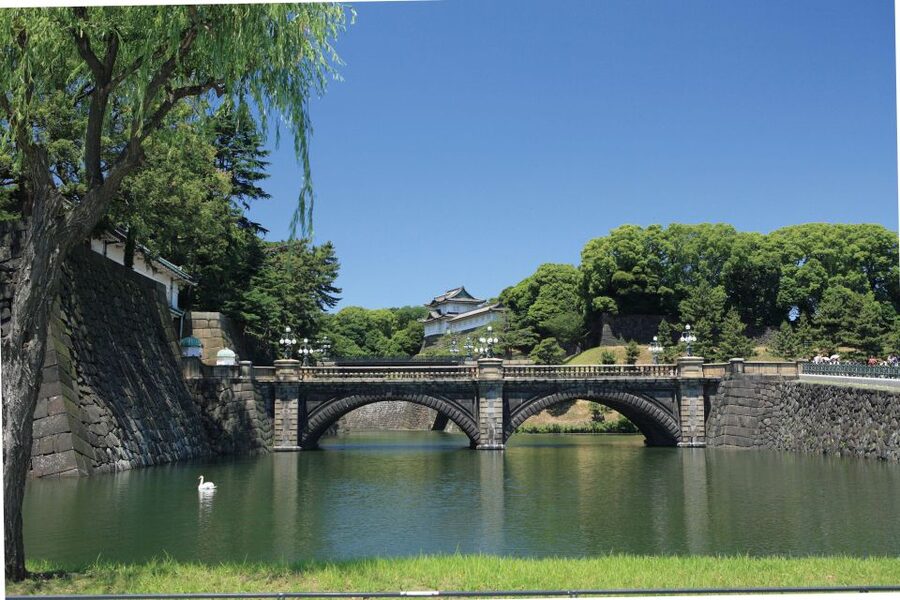
Imperial Palace Outer Area and Nijubashi Bridge, what you can actually see
You start near either Shinjuku Station or Tokyo Station (depending on which meeting point you book). Then you head to the Imperial Palace Outer Area, where the tour focuses on the best accessible viewpoints rather than trying to get inside restricted areas.
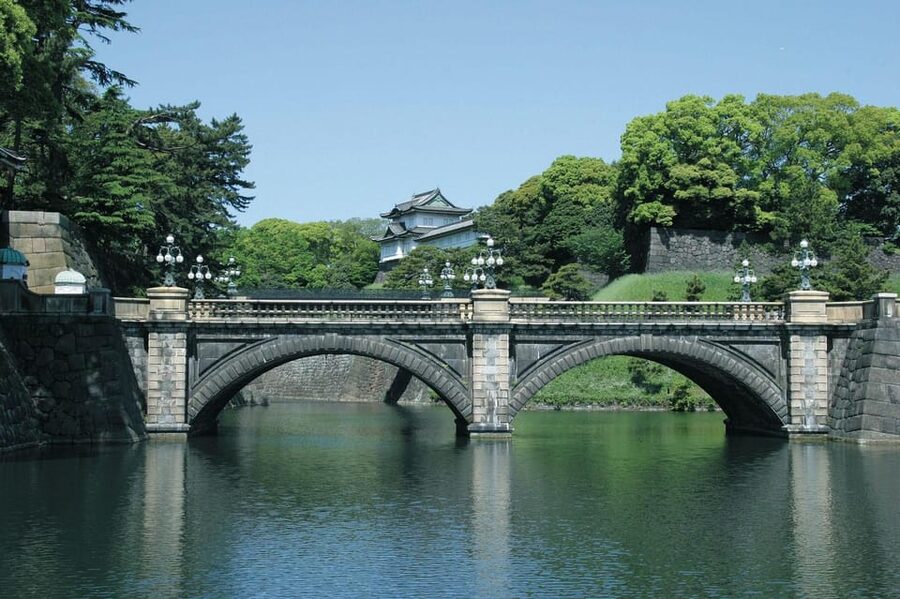
At this stop, you get a 40-minute block that includes a photo stop, sightseeing, and a walk. You’ll also see the statue of Masashige Kusunoki, then spend time around the Nijubashi Bridge area.
Here’s the key detail to plan for: you enjoy the historic architecture and scenic surroundings from the outer grounds, but entry into the Imperial Palace itself is not permitted. Also, the East Gardens are not included, so don’t build your day around that specific garden.
What I like about this approach is that it still feels meaningful. Nijubashi Bridge is one of those classic Tokyo views where you can see how the palace complex sits in the broader city. It’s especially useful if you’re visiting for the first time and want that mental anchor for where major power and culture have shaped Tokyo over time.
Also, there are a few steps when you get on and off the bus. So if your mobility is limited, take your time at the curb and let the guide know if you need extra seconds.
Tokyo Tower main observatory, 150 meters of city context
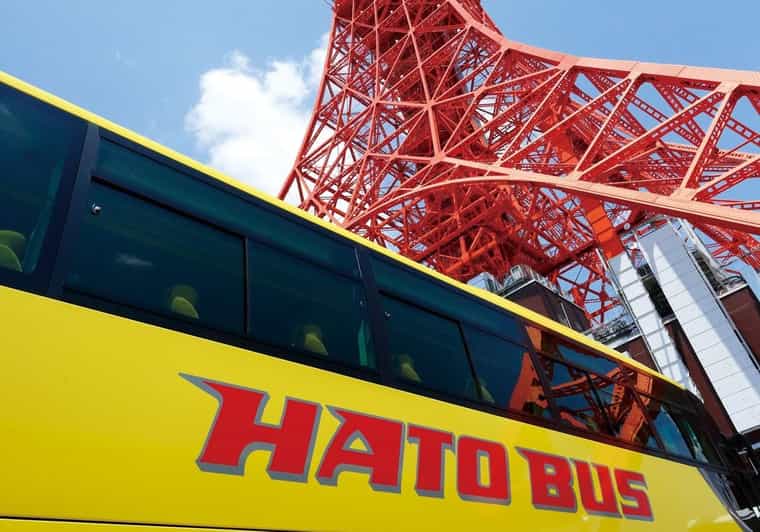
Next comes Tokyo Tower, the easy-to-love landmark that looks like it belongs on a postcard and still feels impressive in real life. You get another 40-minute stop that mixes guided sightseeing with time to breathe and look around.
The big draw is the main observatory experience. You’ll go up to around 150 meters above the ground, where the city layout starts making sense from above. If the weather cooperates, you may even be able to spot Mount Fuji in the distance.
Even if you don’t see Fuji, the value is still there. From Tokyo Tower you can get a clear sense of how dense neighborhoods are, how different districts connect, and where major landmarks sit relative to each other. It’s a fast way to build spatial awareness before you start exploring on your own later.
One practical tip: treat this as your photo-and-people-watching window. The tower area can be busy, so plan to enjoy the viewpoint rather than racing around trying to get the single perfect shot. A calm strategy works better than a frantic one, especially when you’re sharing space with lots of other visitors.
Also, this is a stop where you can pair the view with what you’ve already learned about Tokyo’s contrasts. A tower is modern Tokyo made visible, then you follow that with a traditional stop at Sensō-ji, and the change feels intentional instead of random.
Sensō-ji and Nakamise, where free time actually helps
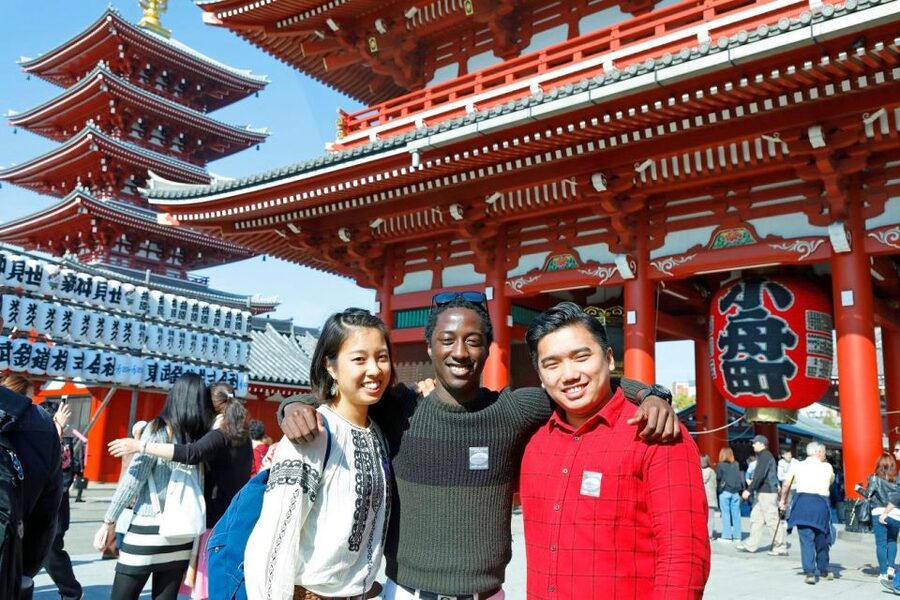
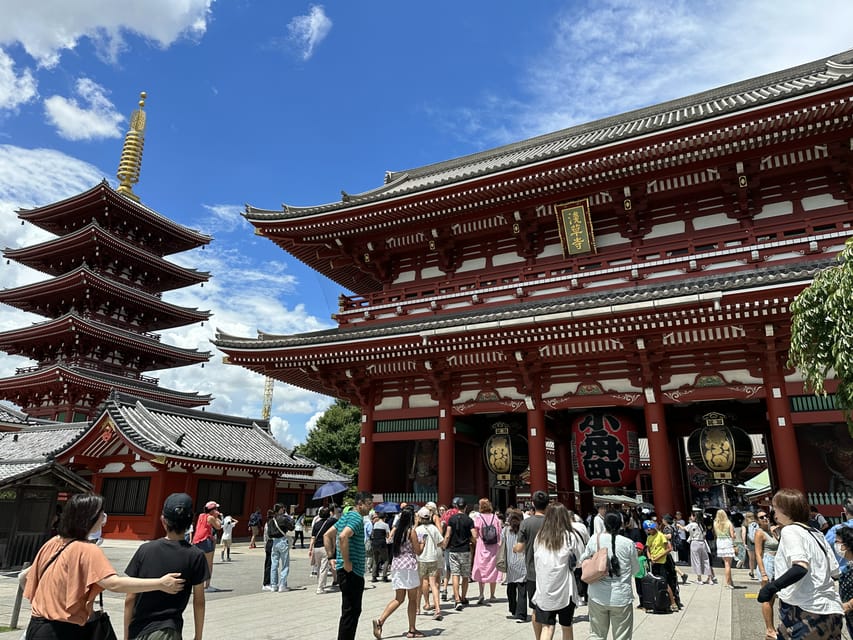
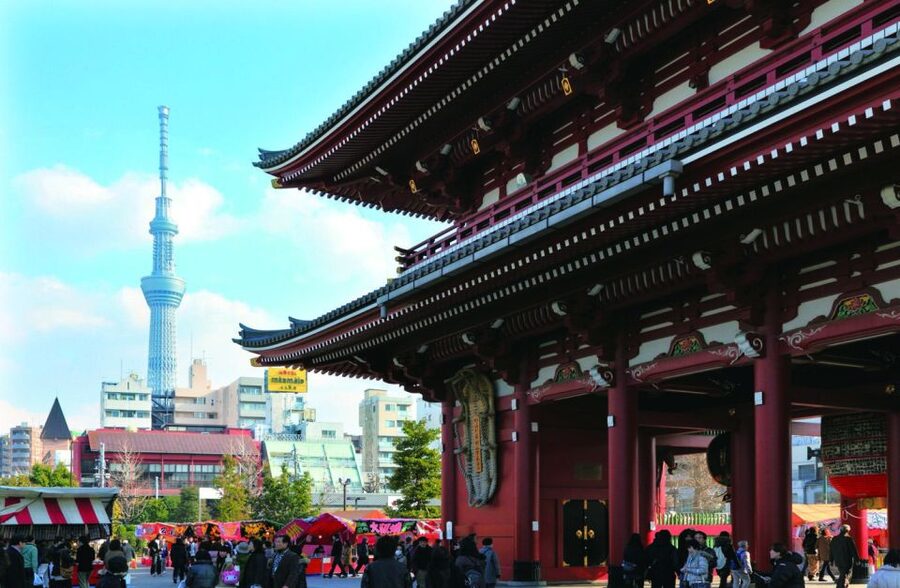
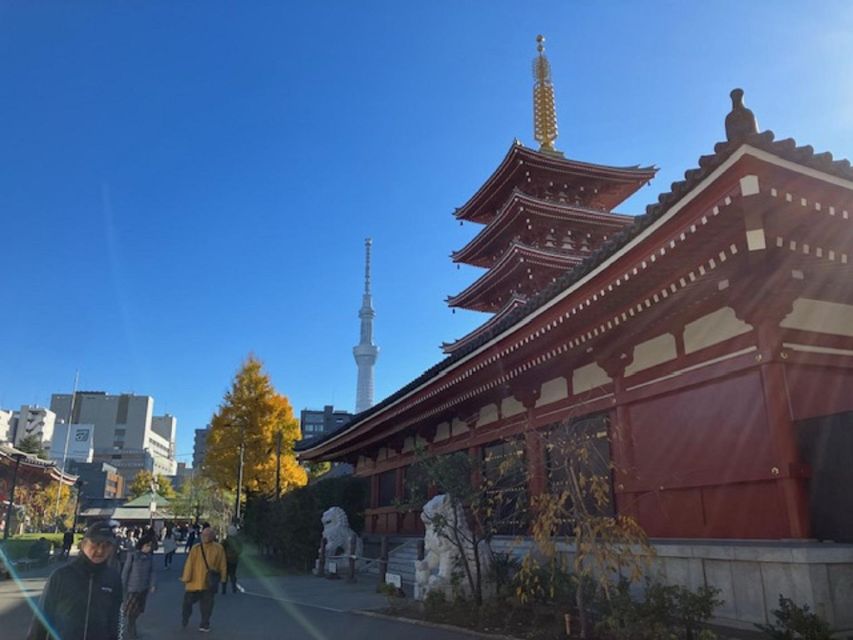
Then you roll into the heart of old Tokyo at Sensō-ji, also known as Asakusa Kannon Temple. This is the stop with the most time on the ground, about one hour, and it’s structured to give you both guidance and freedom.
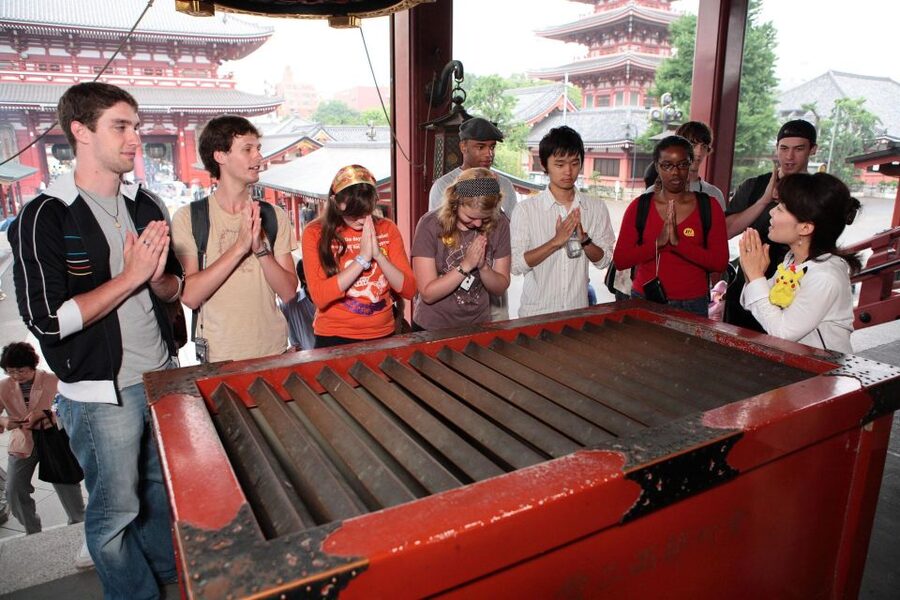
The tour includes a photo stop, a guided visit, and free time for shopping and sightseeing. Sensō-ji is the oldest temple in Tokyo, and the guide’s commentary helps you see details you might otherwise overlook, like the craftsmanship and the way the complex feels arranged for both worship and public life.
You’ll also pass through Nakamise, the long, traditional shopping street that’s about 200 meters. This is where the tour becomes fun in a very practical way: you can browse souvenirs, snack on local food, and decide what you actually want to buy without being pushed.
One useful reality check: places like this can be crowded, and your one hour goes fast if you treat every stall like a must-visit. I recommend a simple plan. Pick one direction to wander first, then choose a few snack stops instead of trying to sample everything.
And bring some payment flexibility. A note that comes up in rider feedback is that the market can be mostly cash-only, so having yen with you reduces stress when you find the snack or souvenir you want.
If you like temples for their atmosphere, Sensō-ji hits hard. The main area feels alive, and it’s easy to spend a little longer absorbing the scene, even if your guided block ends on schedule.
Same corner of Japan, a different kind of day:
- Tokyo: teamLab Planets TOKYO Digital Art Museum Entry Ticket
★ 4.6 · 9,779 reviews - Mt Fuji & Hakone Cruise, Drum Show Bullet Train 1 Day from Tokyo
★ 4.0 · 7,413 reviews - Tokyo: Sumo Show Experience with Chicken Hot Pot and a Photo
★ 4.8 · 6,678 reviews - Tokyo: Shinjuku Food Tour (13 Dishes at 4 Local Eateries)
★ 5.0 · 6,603 reviews
How the guide makes the whole loop click
A lot of Tokyo tours feel like a checklist. This one is closer to a guided route that helps you understand why each stop matters.
The tour includes a nationally certified English-speaking guide. In practice, that means you’re getting explanations as you go, not just at one stop. The guide also tends to manage group energy, especially around the busiest photo areas, which is a real quality-of-life upgrade.
You’ll also hear guide commentary that connects the dots. For example, at Sensō-ji you’ll get context about ancient craftsmanship and temple tradition, and at Tokyo Tower you’ll get helpful framing on what you’re seeing from the observatory level. That combination matters. Without context, famous sights can blur together. With it, you remember them as distinct experiences.
From rider feedback, the guide style can include small language and culture moments, which is a bonus if you enjoy learning practical bits you can reuse on your trip. One guide type includes teaching simple Japanese phrases so you can actually interact with staff and shopkeepers later.
Another thing I’m glad to see: patience and accommodations. Riders describe guides as calm and considerate, even in harsh weather like very hot days. If you’re traveling in peak summer, that kind of steady attention helps a lot.
Price and logistics, is $40 a good value?
At $40 per person for about four hours, this is one of the more budget-friendly ways to see three big landmarks without spending extra money on private guides or multiple paid transfers.
Here’s why it feels like value rather than just a low price. The tour includes all entrance fees, plus guided time at each main site. That matters because Tokyo sightseeing costs can add up quickly when you’re paying entry tickets repeatedly.
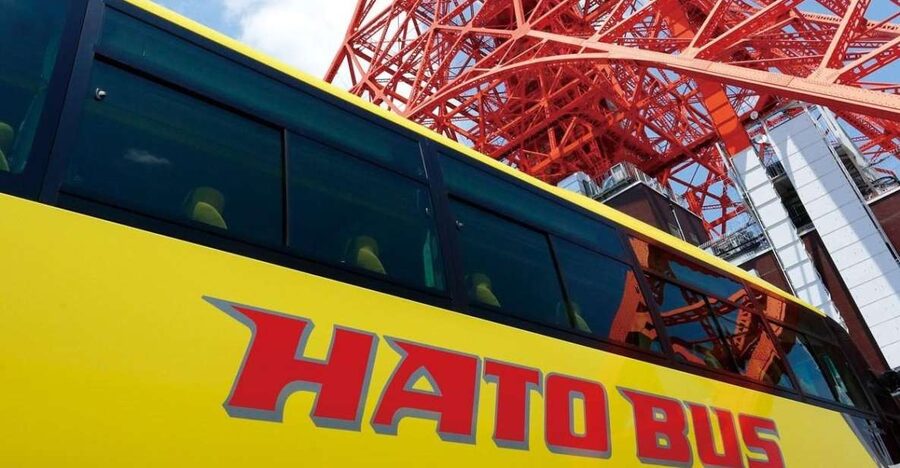
It also includes a structured, ride-based route on a hybrid bus, with comfort features like air conditioning called out in hot weather. For many people, the biggest hidden cost is energy. If you’re already tired from jet lag or a full day, being able to sit and move is worth something.
Now, what you should budget for yourself. The tour does not include hotel pickup and drop-off, so you’ll need to make it to the meeting point by your own means. The big meal and snack choices on Nakamise are also at your own expense, so decide what you want to spend before you arrive hungry.
Finally, notice the footprint of the day. You’re not doing a slow, museum-style Tokyo day. You’re doing a focused highlights sprint. If that fits your travel style, the price makes sense. If you want a deep, lingering day at one site, you might feel the pace is tight.
Who this morning bus tour suits best

I think this tour is ideal if you’re in one of these situations:
- It’s your first day in Tokyo and you want a quick orientation through iconic spots.
- You don’t want to wrestle with transit plans and prefer an organized route.
- You’re short on time, maybe only a few days in the city.
- You want traditional sites plus a modern viewpoint, in one balanced loop.
It also works well if your group wants structure. The pacing is designed to keep everyone together and moving, especially around busy areas like Sensō-ji and Tokyo Tower.
If you’re the kind of traveler who loves wandering with no schedule, you can still enjoy it. Use the guided time to learn the basics, then keep exploring after you’re dropped back at the starting area.
What to watch for before you go
A few practical points can make your experience smoother.
First, plan for steps when getting on and off the bus. The tour is listed as wheelchair accessible, but you should still expect some step navigation during boarding and exiting.
Second, remember the Imperial Palace itself isn’t included. You’ll see the outer grounds and the Nijubashi Bridge area, and you’ll get the historical framing that makes that view meaningful. But you won’t walk inside the palace.
Third, Tokyo Tower and Sensō-ji can both be busy. This is normal. Your job is to go with a calm mindset, take the photos you care about, and then enjoy the atmosphere rather than chasing emptier angles.
And last, if you’re pairing this with later exploring, treat it as a setup day. After the observatory viewpoint and the Asakusa stop, the city will start feeling easier to navigate.
Should you book this Tokyo half-day bus tour?
Yes, I’d book it if you want a smart first-pass through Tokyo. For $40 you get an English-speaking guide, entrance fees covered, and three headline sights handled efficiently in about 270 minutes. It’s a good deal when time is tight and you’d rather spend your energy sightseeing than route-planning.
Skip it only if your top priority is spending long hours at one place, or if you feel disappointed by the fact that you won’t enter the Imperial Palace itself. In that case, you might prefer a more specialized tour focused on one neighborhood or a longer temple experience.
FAQ
Where does the tour depart from?
Departure points can be from Hato bus Tokyo office or Hato Bus SHINJUKU STATION EAST EXIT, depending on the option you book.
How long is the tour?
The tour runs about 4 hours, or 270 minutes.
What sites are included in the half-day route?
You visit the Imperial Palace Outer Area (including the Nijubashi Bridge area), Sensō-ji (Asakusa Kannon Temple), and Tokyo Tower.
Can I enter the Imperial Palace?
You can view the historic surroundings and outer grounds, but entry into the Imperial Palace itself is not permitted.
How much time do I get at each stop?
You have about 40 minutes for the Imperial Palace Outer Area, 40 minutes at Tokyo Tower, and about 1 hour at Sensō-ji.
Is the Tokyo Tower observatory visit included?
Yes. The tour includes visiting the main observatory area at Tokyo Tower, around 150 meters up.
Are entrance fees included?
Yes. All entrance fees are included in the tour price.
Is hotel pickup and drop-off included?
No. Hotel pickup and drop-off are not included, so you’ll need to reach the meeting point yourself.
Is the tour wheelchair accessible?
The tour is listed as wheelchair accessible, but you should note there are a few steps when getting on and off the bus.
What about children?
Children aged 0 to under 6 can travel for free, but seats are not provided.
Is there free cancellation?
Yes. You can cancel up to 24 hours in advance for a full refund.
Fresh options around Tokyo
- Tokyo: Nagano Snow Monkeys and Zenkoji Tour with Temples★ 4.9 · 19 reviews
- Yokohama Port: Private Customizable Tour with Transfer★ 5.0 · 19 reviews
- Sushi Making with Interactive Samurai Experience at JIN-ASAKUSA★ 5.0 · 19 reviews
- Explore Unique Tokyo Streets / Learn with a Pro Photographer★ 5.0 · 19 reviews
- DAIKOKU excursion by car DRIFT automobile encounter★ 4.5 · 19 reviews
- Official Street Go Kart Tour Akihabara 2nd★ 5.0 · 19 reviews
- Cosplay Experience with Professional Makeup and Photo Shoot!★ 5.0 · 19 reviews
- Tokyo: Name Seal & Pouch or Tote Bag Making Experience★ 4.5 · 19 reviews
Half-Day, compared.
Kyoto Arashiyama Bamboo forest & Garden Half-Day Walking Tour
Read our review →
Miyajima Half-day Trip Historical Walking Tour
Read our review →

Naha, Okinawa: Kerama Islands Half-Day Whale Watching Tour
Read our review →
Himeji Half-Day Private Tour with Government-Licensed Guide
Read our review →

Miyajima Half-day Private Tour with Government Licensed Guide
Read our review →
Browse the lists this tour appears in