
Reviewed · RAMEN TOURS IN TOKYO
Shibuya: Ramen Dojo Tokyo | Make All 3 (Tonkotsu/Shoyu/Miso)
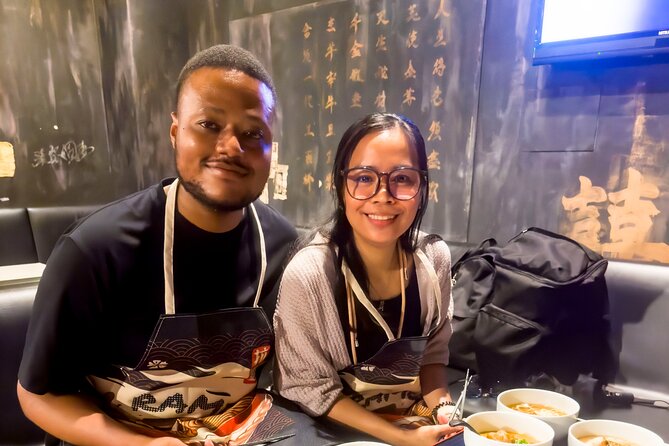
Ramen starts with your own hands. At Ramen Dojo Tokyo in Shibuya, you make fresh noodles and then taste three ramen styles, tonkotsu, shoyu, and miso, side by side in one 90-minute session. I like that you get the variety you usually have to hunt for, all in one focused meal.
You’ll also appreciate the small-group setup and English guidance that keeps things beginner-friendly. Instructors such as Kai, Kazuki, Kensei, and Arata are known for clear, step-by-step direction. One real consideration: the class uses wheat (gluten), egg, soy, chicken, and pork, so it is not a good fit for celiac or severe allergies.
Key points worth highlighting
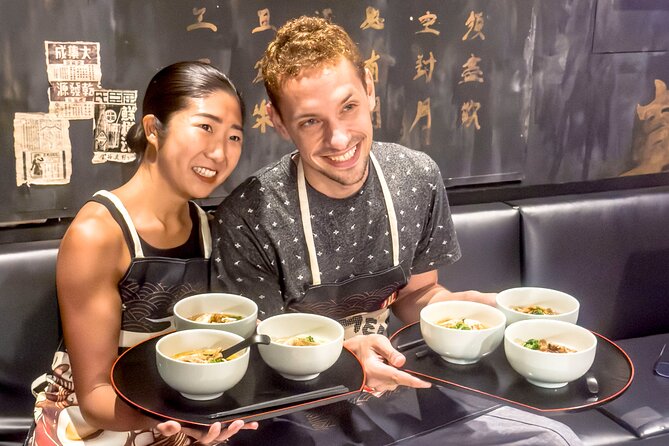
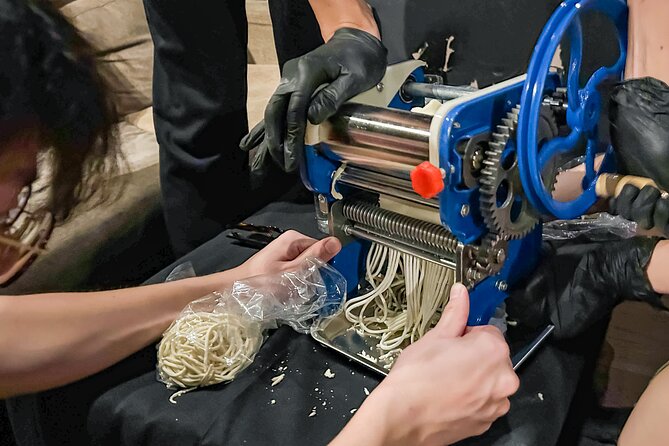
- You make fresh ramen noodles with a professional machine, then cut and shape them yourself.
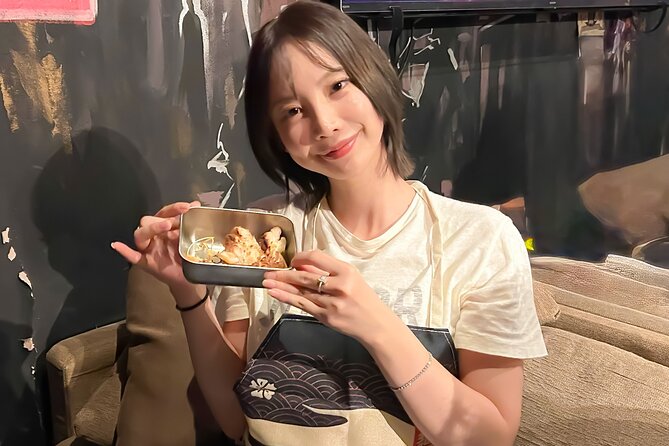
- Chicken chashu is part of the work, not just the tasting.
- You compare tonkotsu, shoyu, and miso in one sitting, so differences make sense fast.
- English instruction and small groups (max 8) keep the pace comfortable for beginners.
- It ends where it starts, so you can roll right back into Shibuya afterward.
- You get a digital recipe after class, which is useful for recreating the method at home.
Why Shibuya ramen classes feel more practical than “just eating”
Tokyo is full of places to eat ramen. This isn’t that. This is the kind of experience where you understand the dish, not just taste it.
The appeal here is simple: you work through the main ramen building blocks in one go. You knead and cut noodles, prep chicken chashu, and fine-tune soup base strength to your preference. Then you sit down and eat three mini bowls that directly compare tonkotsu, shoyu, and miso. For a first-timer, that format teaches you the “why” behind ramen flavors.
And Shibuya matters. You’re in one of Tokyo’s most convenient neighborhoods, with transit all around. After 90 minutes, you’re done and able to continue exploring. No wasting half a day getting to a cooking studio in the far suburbs.
More Ramen Tours in Tokyo
- Eat and Drink Like a Local: Tokyo Ueno Food Tour-Taverns&Ramen
★ 5.0 · 957 reviews - Ramen & Gyoza Cooking Class in Tokyo with Local Supermarket Visit
★ 5.0 · 823 reviews - Tokyo: Ramen Tasting Tour with 6 Mini Bowls of Ramen
★ 4.9 · 432 reviews
Price and value: what $64 really buys you
At $64 per person for 90 minutes, this is not a cheap snack. But it is also not “paying a lot for nothing.” You’re paying for instruction, equipment access, ingredients, and a meal that you actively make.
Here’s what that price covers:
- English-guided class time with a small group (max 8)
- Hands-on noodle making using a professional noodle machine
- Chicken chashu prep and finishing
- Soup base preparation and flavor adjustment
- Tasting of three ramen styles as mini bowls
- Apron loan plus a digital recipe after class
The value is in the combination. If you tried to recreate this day on your own, you’d likely spend time and money sourcing ingredients, figuring out techniques, and finding equipment. This class gives you a structured workflow and a repeatable method.
Also, the three-bowl tasting isn’t just fun. It’s practical training. You get to learn how changes in broth direction show up on the palate, without needing to plan three separate meals across town.
Getting to the studio near Shibuya Station, without losing time or patience
The studio is about a 10-minute walk from Shibuya Station. That is close enough to fit into your day, but far enough that you’ll want to treat it like a real appointment, not a stroll.
Plan your arrival around the door policy:
- Doors open 10 minutes before the start time
- Please do not arrive earlier than 10 minutes (no waiting area and no early entry)
- If you arrive 5+ minutes late, you may need to join in progress or be refused for safety and class flow
That might sound strict, but it actually helps the class run smoothly. A ramen workflow needs timing, especially for noodle handling and plating.
One more logistics note that matters: the studio is stairs only. If stairs are a problem for you, you may want to skip this and choose another format.
The 90-minute ramen workflow, step by step (and why it stays doable)
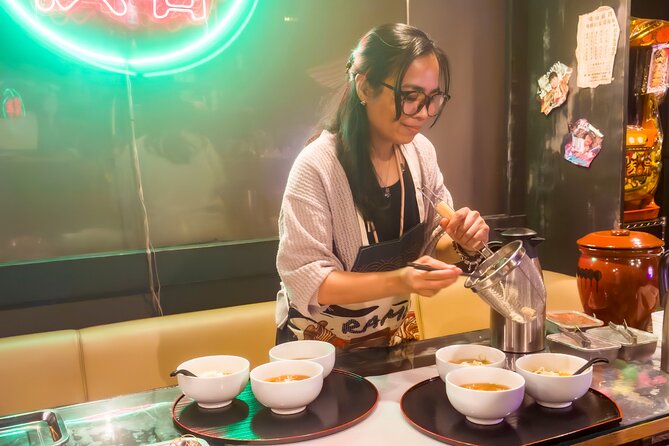
The class is designed to feel hands-on without feeling chaotic. The schedule runs like this:
A few more Tokyo days worth comparing
- Tokyo: Easy Ramen Cooking Experience in Kabukicho, Shinjuku
★ 4.6 · 321 reviews - Ramen and Sushi Cooking Class with Sake Pairing Set in Tokyo
★ 5.0 · 291 reviews - Professional Ramen & Gyoza with Ramen Chef in a restaurant!
★ 5.0 · 223 reviews - Shibuya: Ramen Dojo Tokyo | Make All 3 (Tonkotsu/Shoyu/Miso)
★ 5.0 · 214 reviews
Check-in and briefing (10 minutes)
You’ll get a rundown of what you’re making and how the stations work. This is when you also learn the pace, like how quickly you’ll move from noodles to broth prep to plating.
Chicken chashu prep (5 minutes)
This is your first taste of “cooking with purpose.” You’re prepping the chicken components for later finishing. Even early in the class, you’re doing real work, not only watching.
Noodle making with a professional machine (20 minutes)
This is the part people remember. You knead, roll, and cut fresh noodles using the studio’s noodle machine and cutter. You’re not just turning dough into something edible. You’re learning shaping steps that influence texture.
Also, flour will happen. Aprons are provided, and you should expect a bit of mess on your clothes. Wear something you don’t mind getting dusty.
Chicken chashu finishing (10 minutes)
Now you complete the chashu so it’s ready to top your bowls. This step helps you connect the meat element to the ramen experience, instead of treating it as an afterthought.
Boiling noodles and soup preparation (10 minutes)
This is where the class transitions from hands-on prep to the cooking phase that happens quickly for timing. You also adjust soup base strength to your preference, which helps you build confidence when you later try ramen at home.
Plating (5 minutes)
You assemble three mini bowls. The plating time feels short because it’s meant to keep everything moving, but it’s enough to put toppings where you want them.
Tasting and photo time (30 minutes)
You eat the ramen you made, and you’ll have time for photos. Photography is welcome, and posting with #RamenDojoTokyo is appreciated.
That long tasting window is a gift. It prevents the common “class ends and you barely taste your own food” problem.
The main event: tasting tonkotsu, shoyu, and miso side by side
Most people know ramen by label, but not by structure. Here, the structure is visible and logical.
You’re taught to make and compare three directions:
- Tonkotsu: rich, typically heavy-bodied feel
- Shoyu: soy-forward savory profile
- Miso: deeper, warmer umami notes
You also adjust broth base strength to match your taste. That matters because the “right” flavor level isn’t identical for everyone. One person likes a stronger punch, another prefers lighter clarity. You learn how strength changes how the broth carries seasoning.
One practical benefit: your palate gets a shortcut. Instead of remembering three separate meals weeks apart, you taste the trilogy in one session. The differences click faster.
And yes, some broth elements may be prepared in advance to keep the class on schedule. You still get the key experience, noodle making, chashu work, and flavor tuning, and you still do the side-by-side comparison that makes the learning stick.
Photo-worthy moments that don’t feel staged
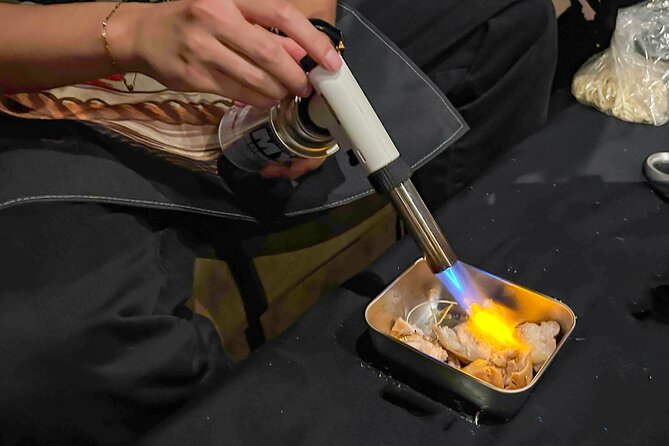
Ramen looks great in photos, but this class earns it. You’re building the noodle shape, assembling toppings, and plating three bowls, all within a controlled session.
A simple tip: plan your camera time for the tasting period, not during busy prep. You’ll enjoy the work more, and the food won’t be cooling while you hunt for the perfect shot.
If you care about creating a memory, this is one of those activities where your hands do the story, not just your phone.
Who this ramen workshop is best for, and who should choose another plan
This experience is ideal for:
- First-time visitors who want an activity beyond walking around
- Food lovers who like learning technique, not only eating
- Beginners who want English guidance and a small-group pace
- People who want a Shibuya-centered plan that still ends with a real meal
Kids are recommended for ages 6+. If you’re traveling as a family, the hands-on nature is a plus, and the group limit keeps attention manageable.
It may not be ideal if:
- You have severe wheat (gluten), egg, or soy allergies, celiac disease, or need strict dietary compliance
- You can’t manage stairs
- You have strong sensitivity to airborne flour (the noodle-making process can create flour in the air)
- You need more specialized substitutions than what advance inquiry can support (the class notes partial accommodation may be possible for no chicken/pork, vegetarian, and vegan with advance inquiry)
Also, go in hungry. You’re making and tasting three mini bowls, and that’s the whole point. If you’ve already eaten a full meal right before, you may miss the fun.
Your take-home win: a method you can repeat, not just a meal
The class includes a digital recipe provided after the workshop. That matters because ramen making is one of those cooking skills that can be frustrating without a structured reference.
What you’ll remember most is not a single secret ingredient. It’s the sequence:
- Noodles from scratch
- Chashu prep and finishing
- Broth base strength adjustment
- Build and taste
Even if you’re not trying to match the exact shop style at home, you’ll understand what to aim for. That’s a big difference from a typical restaurant meal, where you can taste but not reliably reproduce.
And it’s why this can be a “value” activity even for people who already love ramen. You end up leaving with a skill, not only a flavor memory.
Should you book Ramen Dojo Tokyo in Shibuya?
If you want the most practical Tokyo ramen experience in a compact time window, I’d book it.
Do it if you:
- want to learn noodle making and chashu basics, not just eat ramen
- like small-group instruction in English
- want to compare tonkotsu, shoyu, and miso in one session
Skip it if:
- your dietary needs are too strict for wheat, egg, soy, or you need guaranteed cross-contamination prevention
- stairs are a problem
- you want a low-mess, mostly observational experience
If you fall in the first group, this is one of those rare Tokyo activities where the meal feels earned, the learning is real, and you can walk out and keep exploring Shibuya right away.
FAQ
What’s the duration of the ramen workshop?
The class runs for 90 minutes.
Where is the studio located?
It’s near Shibuya Station at 1F, 2-16-29 Ohashi, Meguro-ku, Tokyo 153-0044, Japan.
How many people are in the group?
The group size is limited to a maximum of 8 guests.
What ramen styles do you make and taste?
You make and taste three styles: tonkotsu, shoyu, and miso.
Is the class taught in English?
Yes. The class is conducted in English.
What ingredients and allergens are used?
The class uses wheat (gluten), egg, soy, chicken, and pork. Cross-contamination cannot be guaranteed to be completely prevented.
Can the class accommodate vegetarian or vegan diets?
Partial accommodation may be possible for no chicken/pork, vegetarian, and vegan diets, but advance inquiry is required.
What should I wear?
Aprons are provided, but you may get flour on your clothes during noodle making.
Is photography allowed?
Yes, photography is welcome, and it’s appreciated if you use #RamenDojoTokyo.
Is there anything I should know about arriving on time?
Doors open 10 minutes before the start time. Do not arrive earlier than 10 minutes, and arriving 5+ minutes late may mean you join in progress or may be refused for safety and class flow.
Fresh options around Tokyo
- Tokyo: Nagano Snow Monkeys and Zenkoji Tour with Temples★ 4.9 · 19 reviews
- Yokohama Port: Private Customizable Tour with Transfer★ 5.0 · 19 reviews
- Explore Unique Tokyo Streets / Learn with a Pro Photographer★ 5.0 · 19 reviews
- Sushi Making with Interactive Samurai Experience at JIN-ASAKUSA★ 5.0 · 19 reviews
- DAIKOKU excursion by car DRIFT automobile encounter★ 4.5 · 19 reviews
- Official Street Go Kart Tour Akihabara 2nd★ 5.0 · 19 reviews
- Cosplay Experience with Professional Makeup and Photo Shoot!★ 5.0 · 19 reviews
- Tokyo: Name Seal & Pouch or Tote Bag Making Experience★ 4.5 · 19 reviews
Ramen Tours in Tokyo, compared.
Eat and Drink Like a Local: Tokyo Ueno Food Tour-Taverns&Ramen
Read our review →
Ramen & Gyoza Cooking Class in Tokyo with Local Supermarket Visit
Read our review →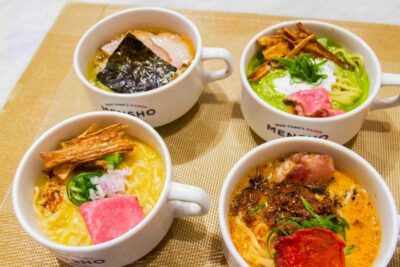
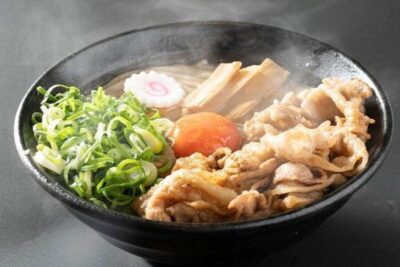
Easy Ramen Cooking Experience in Kabukicho, Shinjuku
Read our review →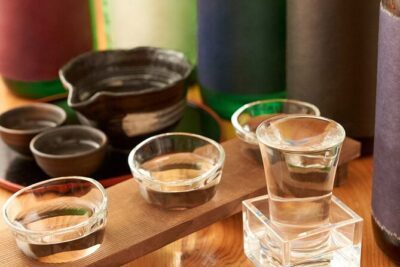
Ramen and Sushi Cooking Class with Sake Pairing Set in Tokyo
Read our review →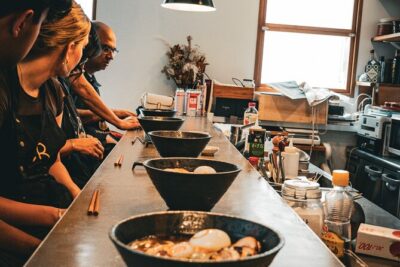
Professional Ramen & Gyoza with Ramen Chef in a restaurant!
Read our review →
Shibuya: Ramen Dojo Tokyo | Make All 3 (Tonkotsu/Shoyu/Miso)
Read our review →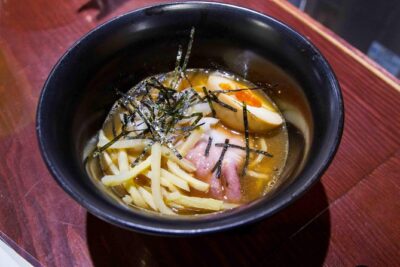
Browse the lists this tour appears in