
Reviewed · SAKE TASTING
10 kinds Sake Tasting Experience in Tsukiji with local!!
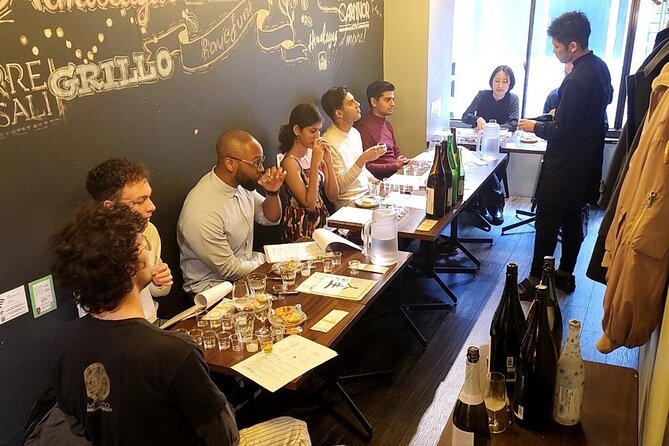
Sake gets way better with guidance. In Tsukiji, I like how you sample around 10 sake styles while a local enthusiast explains brewing, taste differences, and the simple rules for drinking like you belong. I also like the private, relaxed format, so the conversation stays natural and questions never feel like a disruption.
One thing to plan for, though: the meeting spot is a specific restaurant location, and it can be a little tricky to spot at first. Give yourself a few extra minutes and arrive ready to look for your guide.
Key takeaways
About 10 sake styles sampled in one session, with a clear focus on differences
Local-led education covering brewing basics, quality labels like Junmai and Daiginjo, and etiquette
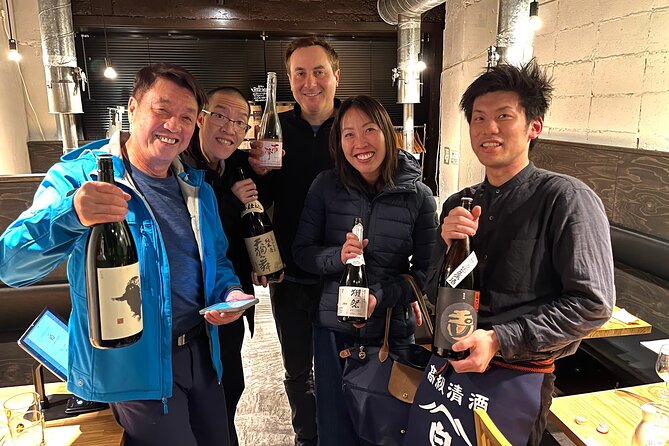
Private group experience, so you get help with language barriers in real time
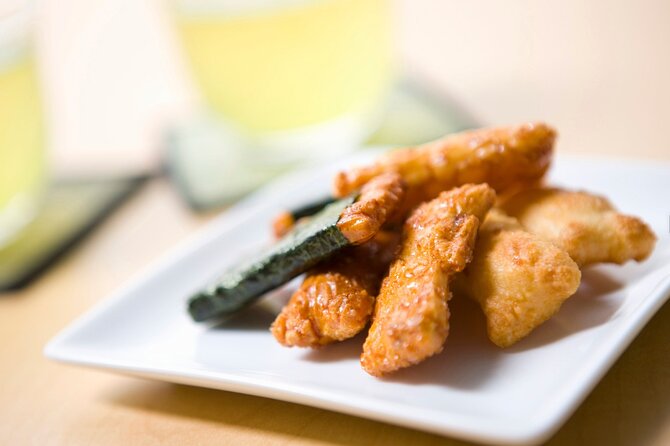
Snacks included, with notes of nuts and soy beans to pace your tasting
Short duration, about 1 hour 30 minutes, perfect for fitting into a busy Tokyo day
A one-and-a-half hour sake crash course in Tsukiji
This is the kind of Tokyo activity that makes you feel smarter fast. You come in thinking sake is sake, then you walk out noticing subtleties like rice polishing level, fermentation choices, and why two bottles can feel completely different in the cup.
I like that the session is designed like a guided tasting, not a lecture. You learn the basics of how to drink, then you taste repeatedly, so the ideas stick. You also get context on quality classifications such as Junmai and Daiginjo, and you connect those labels to what you actually taste.
If you want an easy win in Tokyo, this fits the bill. It is educational, but it stays casual. You are not stuck behind a podium, and you are not rushed. The goal is simple, learn and taste, then go back out and order with confidence.
More Food Tours in Tokyo
- Tokyo: Shinjuku Food Tour (13 Dishes at 4 Local Eateries)
★ 5.0 · 6,603 reviews - Tokyo Tsukiji Fish Market Food and Culture Walking Tour
★ 5.0 · 3,184 reviews - Tokyo: Shinjuku Food Tour (15 Dishes and 4 Eateries)
★ 4.9 · 2,033 reviews
Where you meet Niku-no-Himalaya and how to get oriented
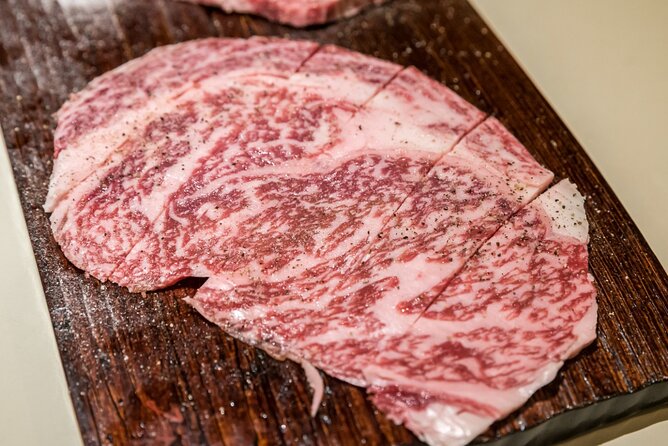
You start at Wagyu Yakiniku & Sake all-you-can-drink Niku-no-Himalaya, in Shintomi, Chuo City. That matters because this is not a standalone sake shop you can spot from one sign, it is part of a food venue.
Here is my practical advice. Before you go, zoom in on the map for street-level landmarks and save them offline. When you arrive, look for the meeting staff and confirm the group right away, because one review called out that the location can be hard to find.
The good news is that the meeting area is near public transportation, so you are not stuck on a long walk. Also, the experience ends back at the meeting point, which keeps logistics stress low.
What the private tasting actually looks like (and why it works)
The session runs for about 1 hour 30 minutes, and it is set up as a private experience, meaning only your group joins. That changes the feel instantly. You can ask direct questions, you can take a break if the flavors hit fast, and you can slow down when something clicks.
The content centers on both tasting and understanding. You will cover:
How to drink sake and basic etiquette
How quality classifications like Junmai and Daiginjo work
How sake styles can differ depending on region
The best part is the pacing. You are not tasting one random pour after another. Instead, you taste multiple varieties and build a mental map for what is changing. One review mentioned tasting moving from lower to higher quality, and I think that ordering helps you notice progression rather than getting overwhelmed early.
The around 10 sake samples, and the smart way you notice differences
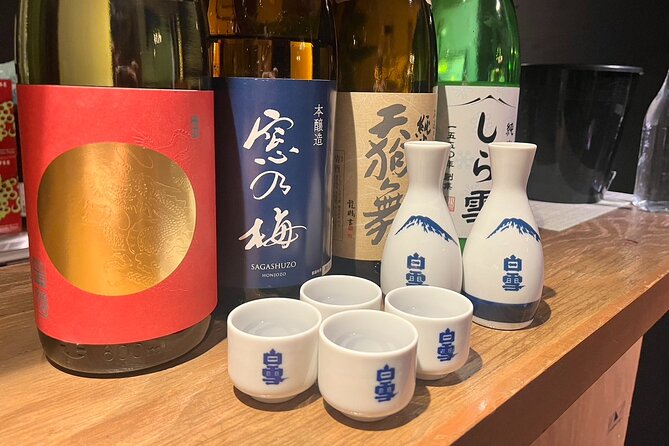
You should expect around 10 different sakes in the tasting. That is the heart of the value here. One or two tastings can be fun, but 10 creates a real contrast. You start picking up patterns, and you learn how to describe what you feel in the cup.
From what I see in the teaching style, the guide aims to connect the taste to the reason. When the sake changes, you learn what might be responsible, such as fermentation choices or how the rice is processed. That is how you go from simply liking something to understanding why it tastes that way.
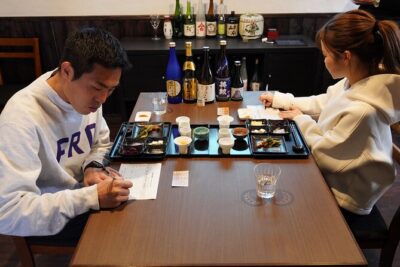
Snacks help keep your tongue fresh. Notes from previous participants mention nuts and soy beans between pours. That is useful because salty and crunchy bites reset your palate and keep the tasting from turning into pure alcohol-forward blur.
One more tip for you: treat this like a guided sampler, not a drinking contest. Even with snacks, 10 samples in 1 hour 30 minutes adds up. Plan to take it slow and enjoy the conversation while your tasting progresses.
More Market Tours in Tokyo
- Tokyo: Tsukiji Fish Market Food and Walking tour
★ 5.0 · 1,724 reviews - Tokyo: Tsukiji Fish Market Guided Walking Tour
★ 4.9 · 1,397 reviews - Tokyo Sushi Making Class in Tsukiji with Professional Chef
★ 5.0 · 1,177 reviews - Tsukiji Fish Market Guided Tour and Sushi Making with Pro Chef
★ 5.0 · 775 reviews
Junmai and Daiginjo explained in plain language you can use later
Sake labels can feel like a code, so I appreciate that this experience is built to make them readable. You learn the difference between categories such as Junmai and Daiginjo, and you connect those labels to taste.
Here is the practical context you likely need. In general terms:
Junmai often points to a style where the character is driven largely by the rice, with fewer added ingredients.
Daiginjo typically signals more refined rice polishing, which often translates to a lighter, more aromatic profile.
Your guide does not just throw these terms at you. The teaching connects labels to what is in the glass, so you can use the knowledge immediately when you are standing in a shop later.
If you are a food person, this is a good match. You learn like you would learn wine. You are not hunting for the one perfect sake, you are building a toolkit for what to buy based on flavor direction.
Brewing stories, rice wine culture, and what to listen for while you taste
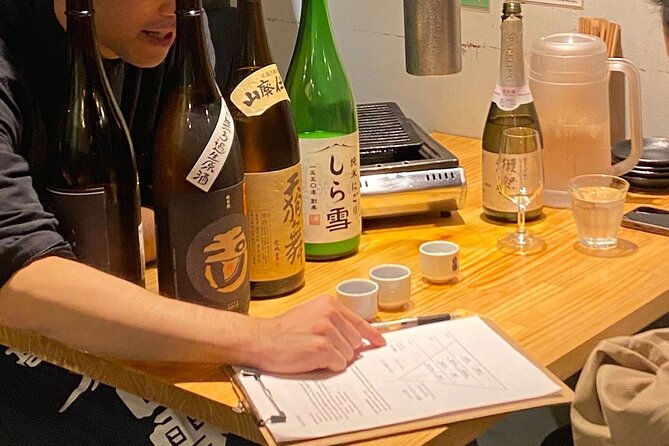
This session is not only about categories. It also covers brewing and sake culture, which is what turns tasting from random sips into a real experience.
Your local enthusiast walks you through:
Basic information about how sake is produced
How to interpret taste differences across styles
The etiquette around drinking, so you know what is normal and what is slightly different
I like this approach because it gives you something to do with your attention. Instead of tasting on autopilot, you are listening for explanations that match what you feel in the cup. And you keep getting small reminders of how sake fits into Japanese dining, from social pouring to proper manners.
One review mentioned that the guide used handouts and gave thorough explanations. That suggests you are walking away with something you can review later, not just a fleeting moment.
Sake etiquette basics, so you do not feel awkward ordering
Etiquette sounds formal until you see how simple it can be. This tour includes learning how to drink sake and the basics of sake etiquette. That is perfect if you feel unsure about how to handle cups or how to participate in a shared tasting.
You also learn drinking rituals as part of the overall culture. Even if you do not remember every detail, you will remember the main idea: sake culture values considerate pacing and respectful social behavior.
Practical takeaway for you: when you are in a Japanese restaurant or bar later, you will be less likely to freeze when someone offers sake. You will recognize the flow, and you will know what the guide likely taught you, even if you are only applying the basics.
Snacks, pacing, and why this is easier than doing it on your own
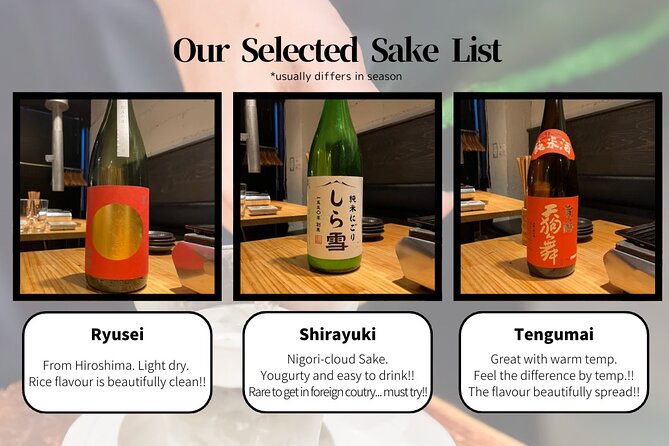
A tasting with snacks is more than a nice bonus. It is practical. It helps keep you comfortable during the tasting arc and makes the experience smoother.
Participants noted included snacks such as nuts and soy beans, served between pours. That kind of pairing works because it cleans the palate and balances the flavors. It also helps you taste more clearly, especially when you are moving across different styles.
Also, the private size means you are not stuck guessing how fast the group should go. If you need a moment, you can take one. And since the experience is only about 1 hour 30 minutes, you can still enjoy the rest of Tsukiji afterward.
This is a good advantage over DIY. If you try to do 10 tastings on your own, you have to choose where to stop, ask for help, and interpret labels without guidance. Here, the teaching is part of the flow.
Price and value: what $62.40 buys you in Tokyo
At $62.40 per person, you are paying for three things at once: multiple tastings, structured education, and a local guide who can explain the culture and label logic.
If you break it down, it is not just the price of drinks. It is the value of time and interpretation. In Tokyo, guided food and drink experiences can add up quickly, and this one stays focused. You get around 10 samples, a guided explanation of quality classifications, and etiquette basics, all in a tight session.
The other value piece is the private format. Since it is only your group, you are not sharing attention. That tends to make the conversation feel more personal and less rushed.
The result is that you leave with a usable understanding. That is what makes this a good buy. You are not just collecting sips, you are learning how to choose and how to act.
Your local guide, conversation, and what to expect when language is a factor
A key promise of the experience is that the guide helps with language barriers. In practice, that matters because sake vocabulary includes terms most travelers will not know. Without help, you might end up nodding through explanations you cannot fully understand.
One review highlighted that the guide spoke English very well, and another mentioned great conversation with the host. There is also a specific name in the feedback, Matsu, described as a chef at Nomuno, and praised for detailed explanations.
That chef connection matters. Chefs often explain food and drink in a way that connects process to flavor. So you are more likely to leave thinking, I get what to look for next time, not just I tasted a lot.
Who should book this Tsukiji sake tasting
This is a strong choice if you fit one or more of these:
You love food and want a guided way to learn sake categories
You want something small and personal in Tokyo, not a big group event
You feel unsure about sake etiquette and want confidence to order later
- You want a short activity that still feels meaningful
It also works well for culture-curious travelers who like learning how everyday traditions work. You will connect sake to dining behavior, not just to flavors.
If you are already a serious sake nerd with deep knowledge, you might find some of the material basic, but the tasting range still helps you calibrate your palate. For most people, the balance of education and sampling is just right.
Should you book this sake session? My honest take
Book it if you want a guided, practical sake introduction that actually changes how you order afterward. I like that it is private, it includes around 10 tastings, and you cover etiquette and label categories in plain terms. It is also short enough that you can keep your day moving.
Skip it if you want a long, slow wine-style seminar or you are uncomfortable tasting multiple pours in a single sitting. Also, if you are the type who hates finding places, plan extra time because the start location can be slightly hard to spot.
FAQ
How many sake varieties will I taste?
You will taste around 10 different sake varieties during the session.
How long does the experience last?
The experience lasts about 1 hour 30 minutes.
Is this a private tour or a shared group?
This is a private tour/activity, meaning only your group participates.
Where is the meeting point, and does it end nearby?
You start at Wagyu Yakiniku & Sake all-you-can-drink Niku-no-Himalaya in Shintomi, Chuo City, Tokyo. The activity ends back at the meeting point.
Do I need a mobile ticket?
Yes, the experience uses a mobile ticket.
When will I get confirmation after booking?
Confirmation is received within 48 hours of booking, subject to availability.
Is there free cancellation?
Yes, you can cancel for a full refund up to 24 hours in advance of the experience’s start time.
Is it easy to reach using public transportation, and is it suitable for most people?
The meeting area is near public transportation, and most travelers can participate.
More Drinking Tours in Tokyo
- Tokyo Bar Hopping Tour in Shinjuku (All-You-Can-Drink + Dinner)
★ 5.0 · 3,587 reviews - Best of Shinjuku: Izakaya Food Tour (4 Stops, 14+ Tastings)
★ 5.0 · 1,863 reviews - Tokyo: Shinjuku Local Bar and Izakaya Guided Walking Tour
★ 4.9 · 1,794 reviews - Shibuya Meltdown Nightlife Tour: All-You-Can-Drink Bar Hopping
★ 5.0 · 1,058 reviews
More Sake Tastings in Tokyo
- Ramen and Sushi Cooking Class with Sake Pairing Set in Tokyo
★ 5.0 · 291 reviews - Sake Tasting Masterclass in Shinjuku (8+ Varieties with a Pro)
★ 5.0 · 271 reviews - Sake Omakase in Tokyo: Guided Tasting by Certified Sommeliers
★ 5.0 · 239 reviews - Tasting All Types of Sake with Sommelier
★ 5.0 · 151 reviews
Fresh options around Tokyo
- Tokyo: Nikko Kegon Falls Lake Chuzenji Toshogu Temple & More★ 4.9 · 12 reviews
- Tokyo: Samurai History Walking Tour★ 5.0 · 12 reviews
- Harajuku: Kawaii Fashion and Pop-Culture Tour★ 4.7 · 12 reviews
- Tokyo: Mt. Fuji & Lake Kawaguchi Instagram Full Day Trip★ 4.1 · 12 reviews
- Shibuya Tokyo: Modern Kintsugi Workshop in Shibuya★ 5.0 · 12 reviews
- Tokyo: GTR Guided Daikoku Experience at Night★ 5.0 · 12 reviews
- Tokyo: Daikoku JDM Car Culture Tour★ 4.6 · 12 reviews
- Mt Fuji Private Day Trip from Tokyo with English speaking driver★ 5.0 · 13 reviews
Sake Tasting, compared.
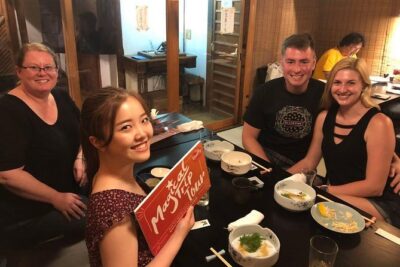
Kyoto Night Foodie Tour in Gion (9+ dishes + 6 Sake tastings)
Read our review →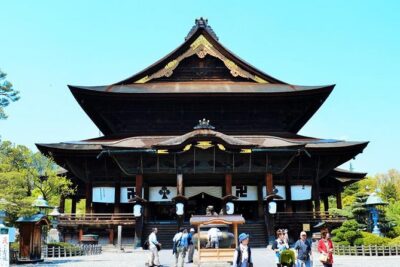
1-Day Snow Monkeys, Zenko-ji Temple & Sake in Nagano
Read our review →
3-Hour Kyoto Insider Sake Brewery Tour with Tastings & Pairings
Read our review →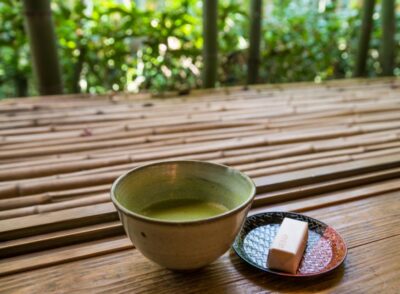
Arashiyama Bamboo, Temple, Monkeys, or Secret Sake Brewery
Read our review →
Nagano: Snow Monkeys, Zenkoji Temple & Sake Day Trip
Read our review →
Insider Sake Brewery Tour with Sake and Food Pairing
Read our review →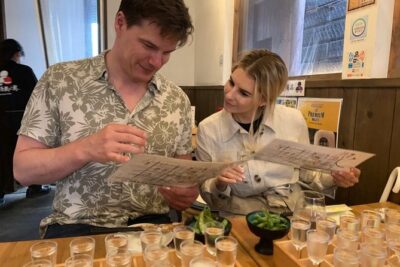
1.5-Hour Kyoto Insider Sake Experience with 7 Tastings & Pairings
Read our review →Browse the lists this tour appears in