
Reviewed · YOKOHAMA TOURS
Yokohama and Kamakura 6hr Private Trip Government-Licensed Guide
Kamakura temples and Yokohama views, fast. This private day trip strings together iconic shrine and temple moments with modern harbor life, all guided so you do not waste time sorting routes. The big idea is simple: you pick a few stops, then a local English guide leads the walking and explains what you are seeing.
I especially love the custom 3 to 4 site setup, because you can build the day around what you care about most, not what a fixed bus route forces. I also love the licensed English guidance, with real-world help that shows up in the way guides handle trains and pacing, like Mami planning support with IC cards and transport details, or Sami adjusting for fewer stairs.
One possible drawback: it is a walking-heavy temple day. Several stops sit on hills with steps and uneven ground, and while guides can adapt to your pace, you will still want comfortable shoes and a weather-ready plan.
Key highlights to notice before you go
- Custom 3 to 4 stops so you can prioritize Great Buddha, Enoshima, Zen temples, or Yokohama waterfront
- Government-licensed local English guide who provides context, not just directions
- A true temple rhythm that moves from shrine to temple to Zen gardens without you guessing what matters
- Enoshima as a sea reset right next to Kamakura for a change of pace
- Yokohama variety in one day from Sankeien Gardens to Chinatown to Minato Mirai
Six Hours, Two Worlds: What This Day Trip Feels Like
The sweet spot here is time. You have roughly six hours, and you are not trying to independently chain together a shrine, several temples, a coastal island, and then Yokohama’s modern waterfront. Instead, you get a guide who can keep the flow moving while you focus on the sights.
Kamakura brings a devotional feel, with places tied to samurai history, Buddhist traditions, and Zen practice. Yokohama adds a different vibe, where you can switch from temple grounds to city parks, historic gardens, and Chinatown streets. The trip also has a practical rhythm: the travel time between Yokohama and Kamakura is about 30 minutes one way, so you can actually fit both regions instead of only choosing one.
One more thing I appreciate: this is designed as a walking tour. That means you see the atmosphere as you move, not just from a vehicle window. If you like to “arrive” by foot, not by taxi, you will probably enjoy the pace.
A few more Yokohama days worth comparing
- Authentic Sumo Experience in Tokyo: Enter the Sanctuary
★ 5.0 · 603 reviews - EVO, WRX, Skyline – JDM Night Run to Daikoku Car Meet
★ 4.9 · 478 reviews - Tokyo: Best Price Daikoku Parking Area JDM Car Meet
★ 4.9 · 192 reviews
Picking Stops That Match Your Interests (Not Just the Map)
Your itinerary is customizable. The structure is basically a menu of landmarks where you choose 3 to 4 sites from the available list, and your guide shapes the order based on your choices.
That flexibility matters more than it sounds. If you want religious and historical anchors, you can build around Tsurugaoka Hachimangu Shrine and Kotoku-in (the Great Buddha). If you want scenery and calm, you can mix in places like Hokoku-ji’s bamboo grove or a Zen temple with garden-like grounds. If you are more modern-food-and-city curious, you can add Yokohama stops like Chinatown, Minato Mirai 21, or one of the ramen-related options.
Practical tip: when you message your preferences, decide what you want to spend your “energy budget” on. Kamakura can involve a lot of walking and steps, so if you include multiple hill temples, ask your guide to keep the order efficient. That is exactly the kind of tailoring praised in guides like Sami and Shinji, who were noted for adjusting to pace needs and handling slippery stairs with patience in rainy conditions.
Tsurugaoka Hachimangu: The Shrine That Sets the Kamakura Tone
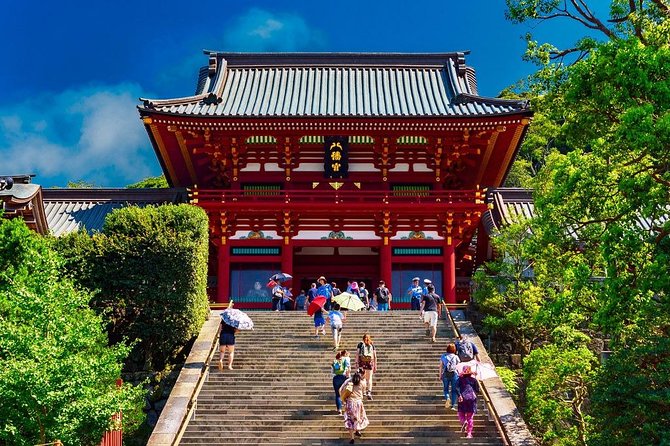
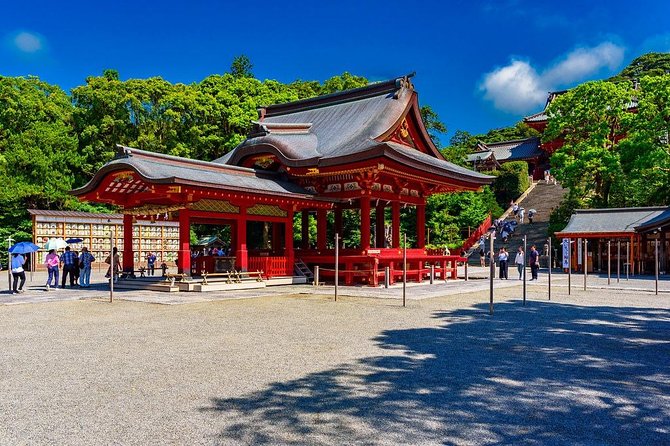
If your plan includes Tsurugaoka Hachimangu Shrine, you are stepping into Kamakura at its most symbolic. The shrine honors Hachiman, the patron god associated with the Minamoto family and samurai in general. It is one of those places that gives you instant context for why Kamakura mattered historically.
What I like about starting here is that it makes the rest of the day easier to understand. As you move from shrine to temple, the guide can connect themes like patron gods, Buddhist practice, and how different religious sites coexisted through the centuries.
One consideration: shrine grounds can involve walking paths that ramp up your step count early. If you are trying to protect your legs for later hill temples, tell your guide up front. Guides often use that info to order stops, which is why you will hear about careful pacing adjustments in day-of experiences.
Kotoku-in’s Great Buddha: Iconic, Photo-Friendly, and Worth the Time
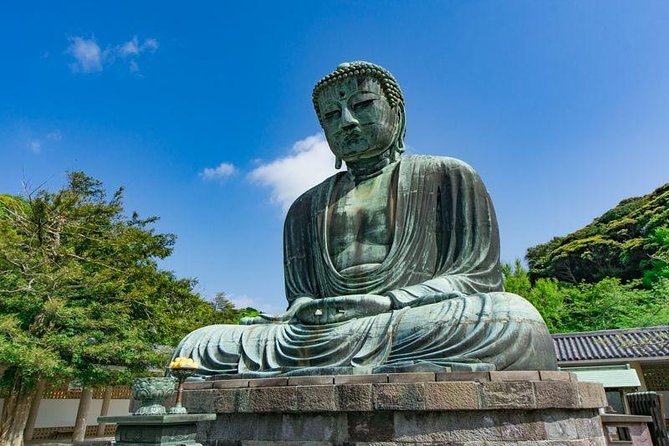
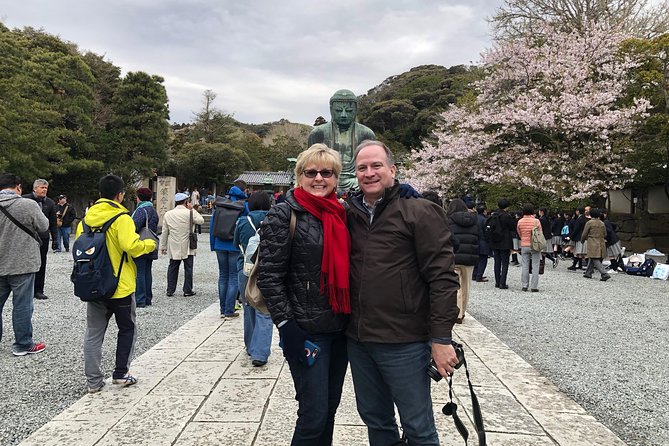
Kotoku-in houses the Great Buddha of Kamakura, a bronze statue of Amida Buddha. It is 11.4 meters tall, and it is one of those “you came to see this” sights that delivers even if you are not a hardcore Buddhist art person.
The main value is the scale. A lot of Buddha statues you see in museums are behind glass or indoors, but this one sits in the temple setting, so the atmosphere feels more lived-in. Your guide can also explain what the statue represents, which helps your photos feel more than just snapshots.
Drawback: admission is not included for this stop. In a short day, that can be easy to overlook in your planning, so keep a little cash or a card ready for the entry fees at places where they apply.
Same corner of Japan, a different kind of day:
- Daikoku & Tokyo Private JDM Tour by 700HP R34 GT-R
★ 4.9 · 101 reviews - Tokyo 8hr Private Tour with Licensed Guide from Yokohama
★ 5.0 · 94 reviews - Tokyo: Authentic Sumo Wrestling Experience with Lunch
★ 4.9 · 88 reviews - 【Tokyo】JDM Daikoku Parking Area & Nissan Facility Tour
★ 5.0 · 87 reviews
Hasedera, Bamboo at Hokoku-ji, and the Temple Grounds You Actually Remember
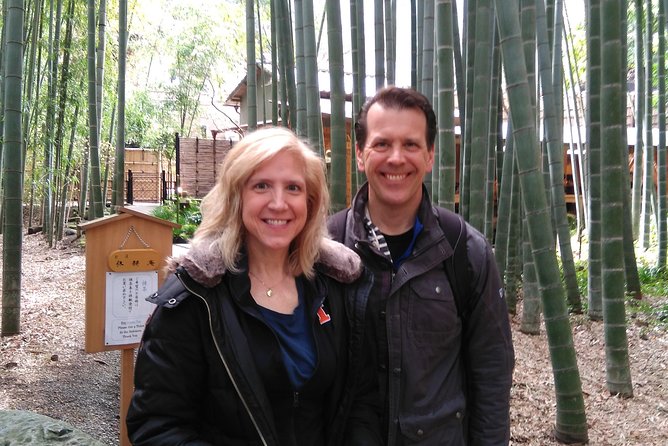
If your day includes Hasedera Temple, you are in for one of Kamakura’s best-known temple experiences tied to Kannon, the goddess of mercy. Hasedera is famous for its eleven-headed statue of Kannon, including a tall gilded wooden figure.
Then there is Hokoku-ji Temple, known for the small bamboo grove behind its main hall with more than 2,000 bamboo stalks. This is the kind of stop that gives you a break from “big landmark sightseeing” and turns your walk into something calmer. If you want one moment that feels like a mini reset during a busy day, choose Hokoku-ji.
How these help you: Hasedera leans spiritual and artistic. Hokoku-ji leans atmosphere. Mixing the two tends to make the day feel balanced, not repetitive.
One consideration for both: admission fees are not included for these temple stops. Also, they can be very popular, so arrive mentally ready for other visitors moving through the same paths.
Enoshima Island: The Easy Sea Change From Temples
Enoshima is a short ride west of Kamakura and feels like a pocket of seaside Japan. The island is connected by bridge to the mainland, and it offers shrine sites and scenic areas that feel like a break from hillside temple walking.
I like Enoshima in a day plan because it changes your “sense of place.” After temples, the sea air and coastal views help you recharge. Your guide can tie Enoshima into the broader region so it does not feel like a random detour.
Admission details: Enoshima is listed as free for this tour context, but you may still spend on personal items. Travel between Kamakura and Enoshima is also not spelled out as included, so expect to handle any ride costs yourself since transportation fees are not included in the price.
Zen Temple Circuit Time: Kencho-ji, Engaku-ji, and the Many Hillside Stops
Kamakura’s Zen temples are where the day can either become your favorite part or a leg-limited slog. The difference is choosing well and letting your guide sequence the hills.
Engaku-ji is one of the leading Zen temples in Eastern Japan and one of the five great Zen temples in Kamakura. Kencho-ji is the top of those five, and it is also the oldest Zen temple in Kamakura, founded in 1253. If you want a “big Zen hit” with strong temple credentials, those two are logical anchors.
Then you can expand with additional temple options that each bring a slightly different flavor:
- Meigetsuin, also called Hydrangea Temple, which is tied to hydrangea bloom seasons
- Zeniarai Benten Shrine, where people wash coins at the spring and visit for luck
- Jomyo-ji, a Zen temple in the hills associated with the Ashikaga family
- Zuisen-ji, in a narrow valley and wooded hills
- Myohonji, a Nichiren sect temple with a long connection to the region
- Ankokuronji, another Nichiren temple on the hills
- Jochiji, Tokeiji, and Jufukuji, all Zen-related stops tied to the Engaku-ji and Kencho-ji schools as described
- Eishoji, known as the only surviving nunnery in Kamakura, close to Tsurugaoka Hachimangu
How I would use this as a real traveler: pick based on your tolerance for walking. If you choose more than one hillside temple, ask your guide to group them logically, because stairs add up fast. You do not need to “see everything” to get a satisfying Zen day.
Also, many of these temples list admission as not included, so factor that into your mental budget. Even if you do not pay much at one stop, the total can creep up when you stack multiple sites.
Yokohama Starts After Kamakura: Sankeien Gardens to Minato Mirai 21
Switching from Kamakura to Yokohama can feel like stepping into a different country, especially if you choose to end with the harbor.
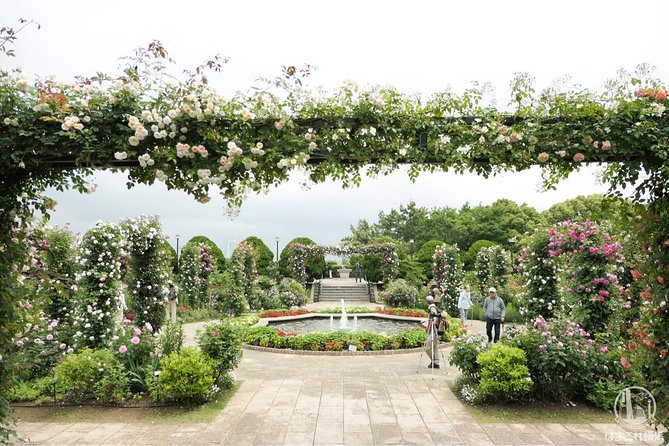
Sankeien Gardens is a spacious Japanese style garden in southern Yokohama, known for historic buildings brought together across Japan. It is a gentle way to transition from temple intensity to a more relaxed walking pace.
Next, Yokohama Chinatown gives you contrast. It is Japan’s largest Chinatown, packed into narrow streets with Chinese stores and restaurants. This is a good stop for a snack break or a meal plan reset, especially if you are hungry after temples.
Then comes Minato Mirai 21, a seaside urban area with large high-rises, including the Landmark Tower. It helps you round out the day by showing Yokohama’s modern identity. Even if you are not into skyline photos, walking near the waterfront can make the whole trip feel more complete.
Motomachi, Yamate 234ban, and the Neighborhood-Scale Yokohama Story
If your guide includes Motomachi Park and the Yamate 234ban Residence, you get a more specific Yokohama angle: the foreign presence that began to grow after Japan’s isolation ended in the 1850s. The tour notes these stops as tied to that shift, which helps you read the city beyond just shopping streets.
These stops can be a quiet win when you want something calmer than Chinatown crowds, and you like historical context. Expect these to be more “walk and look” than “stand and stare,” so keep your time flexible.
Admission is listed as not included for these stops, so again, think about cost stacking if you choose many Yokohama locations.
Yamashita Park and Osanbashi Pier: Harbor Walking That Pays Off
Yamashita Park stretches along the waterfront for about 750 meters and is mostly open green space. It is listed as free in this tour context, which makes it an easy, low-stress inclusion if you want a break for legs and eyes.
Osanbashi International Passenger Terminal, also known as Osanbashi Pier, sits between Minato Mirai and Yamashita Park. It is a “watch the harbor” stop, and it tends to make the day feel cinematic without needing extra tickets.
If you are traveling with anyone who gets tired easily, these waterfront stretches can be a good compromise. You get a scenic end to the day without the steep climbs found at many Kamakura temples.
Museums for Food Lovers: Cup Noodles and the Ramen Museums
If you enjoy Japan’s food culture, the ramen-focused stops can be more fun than they sound on paper.
The Cup Noodles Museum in Minato Mirai is described as interactive and focused on the history of instant ramen, connected to Ando Momofuku Hatsumei Kinenkan. Shinyokohama Ramen Museum is also listed as a ramen museum, centered on ramen history and Japan’s noodle culture.
One note for your planning: these are not included as free stops, since admissions are not included overall. Still, they are good “energy return” stops after walking through shrines and temple grounds. If you already know you want food-focused experiences, build the day around them and keep temple count lower.
Food advice from the lived experience: guides were noted for taking people to delicious ramen, including finding a quality shop that is not overly expensive. So even if you do not choose a museum, ask your guide for a simple lunch plan that fits your pace.
Price and Logistics: Is This $154.84 Private Guide Value?
At $154.84 per person for about six hours, you are paying for three things: a licensed local guide, time savings through a custom selection, and less hassle navigating between sites. You are not paying for the guide to cover transportation or entrance fees. That is how the value stays reasonable.
What you get included:
- Licensed local English speaking guide
- Customizable tour where you choose 3 to 4 sites
- Meet-up on foot within a designated Yokohama or Kamakura area
- Mobile ticket is mentioned
- Group discounts are mentioned
What is not included:
- Transportation fees
- Entrance fees
- Lunch and personal expenses
- Private transportation
My take on value: if you are going from scratch, trying to coordinate public transit, shrine hours, and the best order of Kamakura temples alone can swallow half your day in research and missteps. A guide compresses that. You also get commentary, which makes “seeing temples” turn into “understanding temples,” especially with the kinds of history explanations praised in guides such as Yoshi, Yuichi, and Yasuho Suzuki.
Logistics you should plan around:
- This is a walking tour, and pickup is on foot.
- It is near public transportation, so you will likely use trains or local transit, but you pay those ride costs yourself.
- Expect weather to matter. Rain showed up in at least one experience with careful step-by-step support from guides like Shinji.
Who Should Book This Private Trip, and Who Might Skip It
This works best for:
- Time-tight travelers who want Yokohama and Kamakura in one day
- People who enjoy religion and history but want a guide to explain what you are looking at
- Travelers who like customizing the day rather than being locked into a fixed itinerary
It may be less ideal if:
- You dislike walking or stairs. Even with good guidance, many Kamakura temple areas involve hills and steps.
- You want a full day of museums only. This tour leans shrine and temple culture plus a city-side finish.
The best sign you picked the right experience is if you care about pacing. In the feedback you provided, guides repeatedly impressed people with efficiency, kindness, and tailoring. Sami was praised for planning around fewer stairs, and multiple guides were described as calm and helpful even when the weather turned.
Should You Book This Yokohama and Kamakura Private Day?
Yes, if you want an efficient, human-guided day that mixes shrine, Buddha, Zen temples, and Yokohama’s waterfront. The biggest reason to book is the combination of custom stop selection and licensed English commentary, which turns a “see famous places” day into a “make sense of them” day.
I would book this especially if:
- You like Kamakura temples but do not want to spend your vacation hours comparing bus routes and train transfers
- You want Yokohama variety, from gardens to Chinatown to harbor views
- You value a guide who can adjust to your pace, including step counts and weather
I would hold off if you are very mobility-limited or if you only want flat, easy walking. In that case, consider a more single-region plan.
FAQ
How long is the Yokohama and Kamakura private trip?
It runs for about 6 hours.
Is the itinerary fixed, or can I choose stops?
It is customizable. You choose 3 to 4 sites from the available set of highlights.
Do I need to pay for transportation and entrance fees?
Transportation fees and entrance fees are not included, and lunch is also not included.
Is pickup included?
Pickup is offered, and the guide meets you on foot within a designated Yokohama or Kamakura area.
What area does the tour cover?
It covers Yokohama and Kamakura, with about 30 minutes one-way travel time between them.
Are any attractions free?
Some stops are listed as free in this tour context, such as Tsurugaoka Hachimangu Shrine, Enoshima Island, Zeniarai Benten Shrine, Yokohama Chinatown, Minato Mirai 21, and Yamashita Park.
Is there a licensed English-speaking guide?
Yes. The tour includes a licensed local English speaking guide.
What is the cancellation policy?
Free cancellation is available. You can cancel up to 24 hours in advance of the experience for a full refund.
Is this a private tour?
Yes. It is private, and only your group participates.
Fresh options around Yokohama
- Yokohama Private Tour with a Local: Highlights & Hidden Gems★ 4.4 · 13 reviews
- Yokosuka : Scenic Hidden Gem Hike and Naval Port Cruise★ 5.0 · 13 reviews
- Cup Noodles Museum Guided Tour in Yokohama★ 5.0 · 15 reviews
- Yokosuka: Boat Trip to an Uninhabited Island★ 5.0 · 16 reviews
- Guided History & Nature Exploration in the Yokohama Hill Area★ 5.0 · 17 reviews
- Yokohama Private Transfer: Tokyo City, Narita and Haneda Airport★ 4.5 · 18 reviews
- Yokohama Half Day Tour with a Local Expert Guide★ 4.0 · 20 reviews
- Tokyo/Yokohama: Private JDM Daikoku/大黒 Car Meet With Driver★ 4.7 · 20 reviews
Yokohama Tours, compared.

Authentic Sumo Experience in Tokyo: Enter the Sanctuary
Read our review →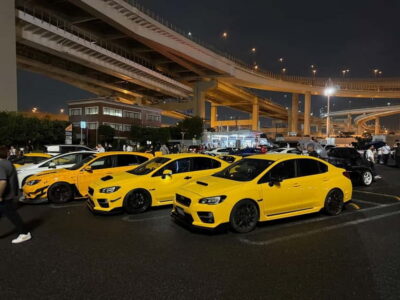
EVO, WRX, Skyline – JDM Night Run to Daikoku Car Meet
Read our review →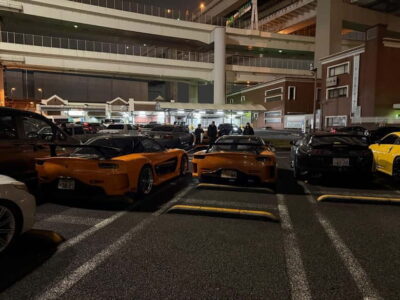
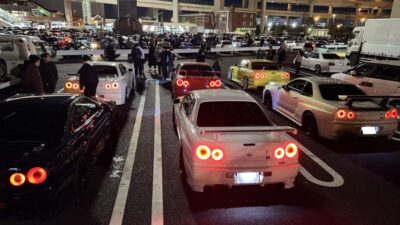
Daikoku & Tokyo Private JDM Tour by 700HP R34 GT-R
Read our review →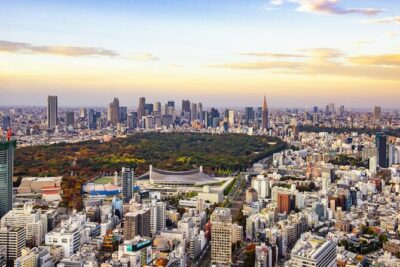
Tokyo 8hr Private Tour with Licensed Guide from Yokohama
Read our review →

【Tokyo】JDM Daikoku Parking Area & Nissan Facility Tour
Read our review →
Shuttle Van Transfer, Yokohama(Port)⇒Tokyo, Narita, Haneda, TDR
Read our review →Browse the lists this tour appears in