
Reviewed · FOOD & DRINK
Tokyo Tsukiji Food & Culture 4hr Private Tour with Licensed Guide
Tokyo markets can feel impossible alone. This private, half-day food tour strings together Toyosu and Tsukiji with Asakusa and Ueno shopping streets, plus customizable stops so you can move at your pace. I like that the guide keeps things practical, so you spend time eating and shopping, not hunting for entrances.
I also like the guide focus on how to navigate the area. One possible drawback is timing and closures, since Toyosu can be shut on specific days, and with only about 4 hours, extra transit can squeeze your number of stops.
Key Points That Matter Before You Go
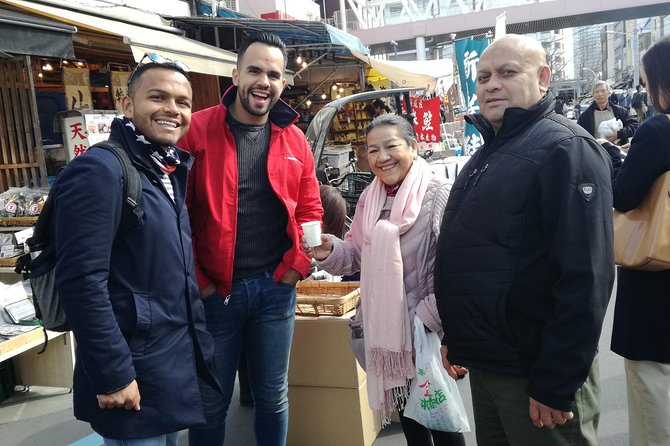
- Private, licensed English-speaking guide who helps you plan the route and keeps you from getting lost in market chaos
- Toyosu plus Tsukiji pairing for both the modern market experience and the classic fish-market vibe
- Choose 2 to 3 sites from the provided area list, so the day feels targeted, not rushed
- Food and shopping chemistry at Asakusa and Ueno, including kitchenware shopping in Kappabashi
- Walking tour with on-foot pickup near public transit, so comfy shoes matter more than anything
- Weather and market schedules affect what you see, especially for Toyosu
Toyosu to Tsukiji: Why This Food Route Works in Real Life
If you have only a few hours in Tokyo, fish markets plus shopping streets is a smart combo. You get the food side first, then you get the souvenir side right after, while the smells and flavors are still fresh in your head.
What makes this tour work is the mix of places. Toyosu and Tsukiji cover two different eras and atmospheres. Then Asakusa and Ueno add the human scale, with temples, snack stops, and stalls where people actually buy stuff. It is not just sightseeing. It is the story of how Japanese food culture shows up in daily life, from market sampling to everyday kitchen shopping.
Because it is private, your guide can shape the flow. In real examples, guides have steered the day toward additional nearby sights like Hama Rikyu Garden, or even added big-photo stops depending on what a group wanted. That flexibility is one of the big reasons this tour rates so well.
More Food Tours in Tokyo
- Tokyo: Shinjuku Food Tour (13 Dishes at 4 Local Eateries)
★ 5.0 · 6,603 reviews - Tokyo Tsukiji Fish Market Food and Culture Walking Tour
★ 5.0 · 3,184 reviews - Tokyo: Shinjuku Food Tour (15 Dishes and 4 Eateries)
★ 4.9 · 2,033 reviews
Price and Logistics: Paying for a Guide, Not a Random Walk
At $109.01 per person for about 4 hours, you are paying for time with a licensed local English-speaking guide and a route that saves you from trial-and-error.
A few practical points matter for value:
- You do not get a private vehicle. Transportation fees are not included.
- It is a walking tour, and pickup is offered, but it is described as pickup on foot, with you meeting the guide within a designated area.
- Entrance fees and lunch are not included. Food purchases at stalls are also on you.
So the cost makes sense if you want someone to handle the hardest part, which is timing, navigation, and knowing where to go for the experience you actually want. Several guides in the stories focused on practical help like metro routing and avoiding wasted time.
One warning from the experience style of this tour: you only have around 4 hours. If your plan relies on lots of back-and-forth transit, you may end up with fewer stops than you hoped. The listing itself is clear that you should expect 2 to 3 sites from the selection, and the best use of time is to choose nearby areas.
Toyosu Market Stop: What You See Depends on the Day
Toyosu is the modern market symbol, and it is a key reason this tour is called food and culture, not just shopping. But you need to respect the reality of market schedules.
Here is what you should know:
- Toyosu Market is closed on Wednesdays and Sundays, and it can also close on other irregular days.
- The listing notes that many shops in Tsukiji may also be closed if Toyosu is closed.
- Toyosu Market entry is labeled as admission ticket not included, so you should assume you may pay separately depending on what is available.
In practice, this means you should treat Toyosu as your anchor, but not your only plan. A good guide will adjust if the day is limited, either by shifting emphasis to Tsukiji and the surrounding food streets, or by selecting additional nearby options from the list.
If fish-market energy is your top priority, ask your guide a simple question before you commit to your choices: how many of the market stalls and streets will likely be operating on your specific day? That one question can prevent a lot of disappointment.
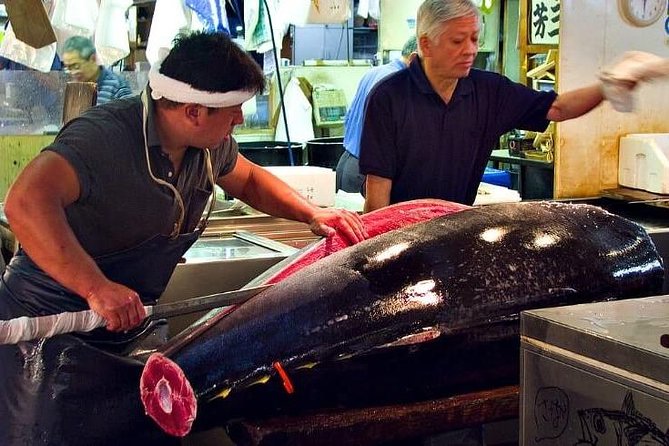
Tsukiji Fish Market: How the Best Visits Become Sampling, Not Shopping
Tsukiji is the classic fish-market name, and the tour keeps it short and focused. The Tsukiji stop is listed as 30 minutes, with admission labeled as free for that part.
But what makes Tsukiji worth your time is not the building. It is the sampling plan and the order of operations. In the guide stories, you can see a pattern: the guide leads you through key areas, points out what to try, and helps you pick food that matches what you like.
A few examples from real guidance you can use as a mental model:
- One guide, Toru Higaki, led people through a long list of stalls, including items like sushi and sea urchin, plus other seafood and meat-based choices.
- Another guide, Maki, used a selection approach, pointing out different types of foods, how they get prepared, and which lines were shorter.
- Masa focused on how the auction system works first, then moved into the public market sampling.
Even if you are not the type to eat everything, the guide structure helps you avoid the most common market mistake, which is spending energy walking in circles. When you have a licensed guide, you are not just buying snacks. You are learning how to read the market.
More Market Tours in Tokyo
- Tokyo: Tsukiji Fish Market Food and Walking tour
★ 5.0 · 1,724 reviews - Tokyo: Tsukiji Fish Market Guided Walking Tour
★ 4.9 · 1,397 reviews - Tokyo Sushi Making Class in Tsukiji with Professional Chef
★ 5.0 · 1,177 reviews - Tsukiji Fish Market Guided Tour and Sushi Making with Pro Chef
★ 5.0 · 775 reviews
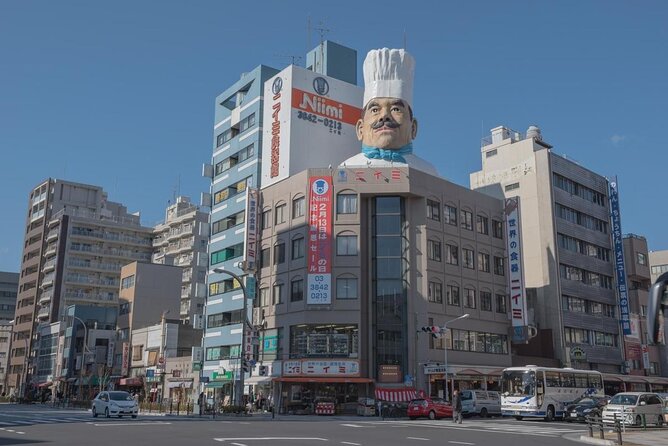
Asakusa Temple Lane: Senso-ji and Nakamise for Snacks and Souvenirs
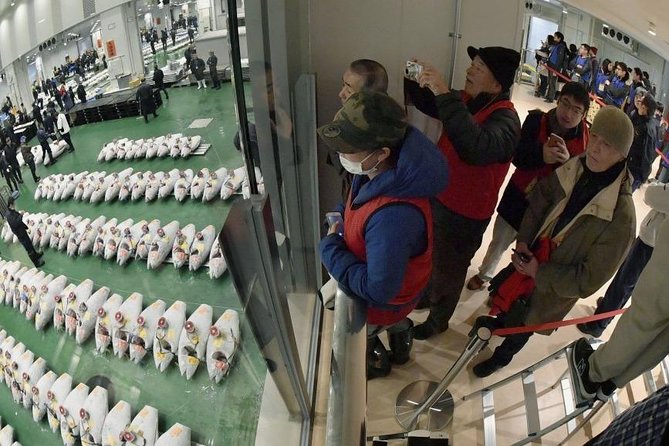
After the fish-market energy, Asakusa slows things down in a good way. You get a world-famous temple setting and the shopping street that feeds it.
The tour includes:
- Senso-ji Temple (listed as 30 minutes), known for the Kaminarimon gate and its big red lantern.
- Nakamise Shopping Street (listed as 30 minutes), a 250-meter approach lined with shops selling traditional souvenirs, snacks, and other small treats.
This is where the tour becomes fun for people who care about food culture but also want to leave with tangible memories. You can pair temple photos with snack stops. You can also buy simple items that connect back to eating, like small food souvenirs or kitchen-related goodies sold along the street.
One practical tip: if you care about photos, go in with a plan for which angles you want. With only about 30 minutes here, you do not want to spend the whole time deciding.
Ueno Kitchenware and Market Streets: Ameyoko and Kappabashi
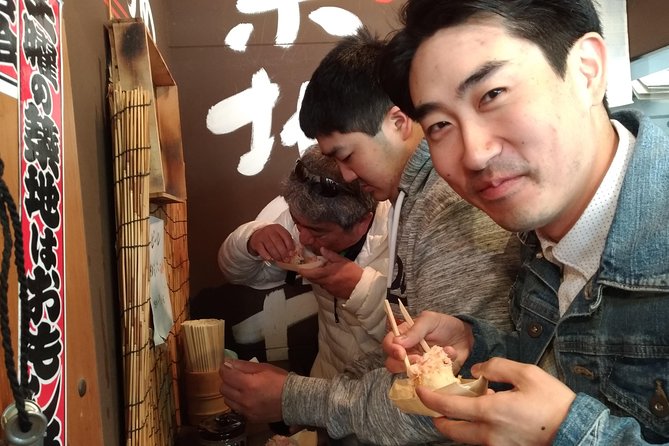
If you have ever wanted to bring home something that feels like it belongs in a real Japanese kitchen, this is your section.
The tour includes:
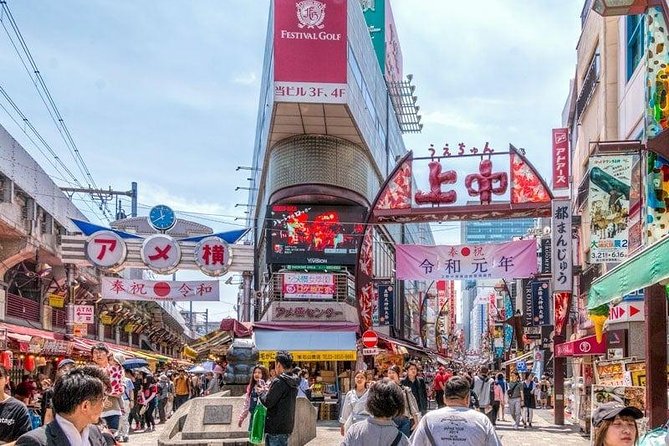
- Ameyoko Shopping Street (30 minutes), known as a favorite hangout for shopping and deals in the Ueno area.
- Kappabashi Street, also called Kappabashi Dogugai (30 minutes), described as a kitchenware wonderland with dozens of stores that supply restaurant operators.
Kappabashi is ideal if you like functional souvenirs. Not just fridge magnets, but things you can actually use when you cook again at home. The listing frames it as a street of tools for people running restaurants, which usually means better chances of finding real, usable items.
Ameyoko adds the other side of food culture: the shopping street feel where you can browse and grab smaller bites if you want. If you are traveling with someone who loves food but also loves browsing, this combination works well.
Tsukishima Monjya Street and Yanaka Ginza: Slower Old-Town Energy
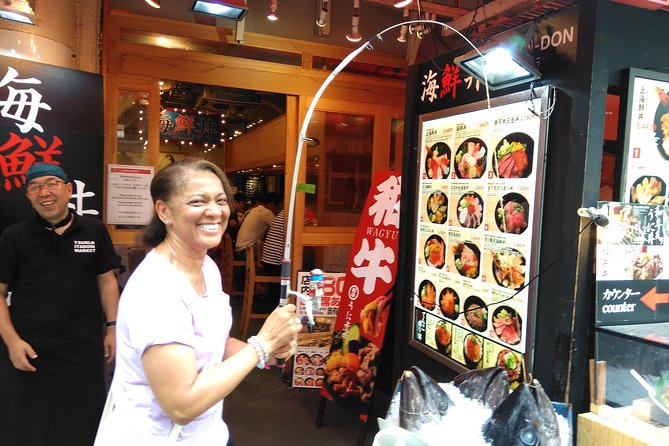
Not every stop here is about seafood. That is the point. Tokyo’s food culture shows up in side streets too, and this tour gives you at least two options that can change the mood of the afternoon.
Tsukishima Monjya Street (30 minutes) is included as a possible stop, with admission ticket not included noted. The tour description highlights monjayaki, described as a liquid-like, hot dish that may look unappealing at first, but tastes better once you focus on the substance. If you want something that feels unmistakably Tokyo, this is the flavor direction.
Yanaka Ginza Shopping Street (30 minutes) is the other option, described as one of Tokyo’s best shopping streets with a preserved old-town Shitamachi atmosphere. This is where you can get away from the louder, more famous zones and feel like you are walking through an older neighborhood rhythm.
If your group wants fewer crowds and more wandering, ask your guide to weigh Yanaka Ginza higher. If your group wants bolder food experiments, Tsukishima Monjya Street is the better bet.
Customization With Your Licensed Guide: Where the Day Gets Better
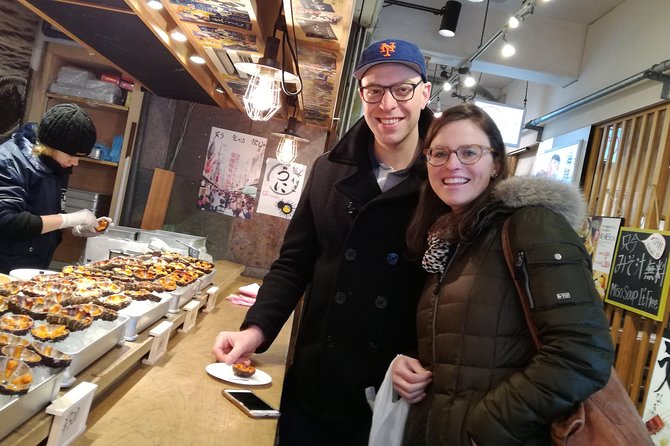
This tour is built around customization. The listing says you pick 2 to 3 sites from the tour options, with your guide helping you tailor the itinerary. That is a big deal because Tokyo is big, and half-day tours either feel excellent or feel cramped depending on how the route is built.
What to do to make customization work:
- Tell your guide your must-do priorities before you start walking.
- Decide whether you want food sampling to be the main event or shopping to be the main event.
- Ask how much time transit between your chosen stops will take that day.
The best stories show guides actively adjusting. For example, Shuji was described helping a family customize for teenagers. Koji was described as responsive and able to include both fish markets and a temple. Sally was praised for making Senso-ji memorable. Hideki and others added practical tips that carried forward after the tour.
The downside stories point to what can go wrong: if timing is off for the markets, or if you spend too much time moving between far-apart areas, you can end up with fewer stops than you hoped. One negative example described a start time that left the auction over and many stores closed, and that is a real risk if you expect the early market rush but the schedule is later.
If market food is your top goal, ask your guide about timing expectations up front. You can also set a realistic target for your day: two market-focused stops plus one food or shopping neighborhood is usually the sweet spot.
What You Can Learn From the Guide, From Metro to Market Basics
The guiding style seems to be one of the highest-rated parts of this experience. A lot of the praise centers on practical help, not just narration.
Here are examples of what different guides emphasized:
- Hiromi helped people navigate the metro and made sampling feel fun at Tsukiji.
- Goreilo helped explain how train tickets work, a small detail that can save you from confusion later.
- Nori guided people through Tsukiji’s maze and steered them toward the best sushi spots.
- Hideki focused on history plus tips that helped during the rest of the trip.
- Kay was described as warm and friendly while still covering the right key spots.
- Yumiko still worked hard on a rainy day and explained what you were looking at while moving through Tokyo.
Even if your guide is different from the ones above, that mix of skills is what you should expect. You want someone who can translate what you are seeing into food culture, then help you move to the next place without wasting minutes.
Value Check: Is $109.01 Worth It for a Private 4-Hour Tour?
This is the question that decides everything.
For the price, you are buying:
- a licensed local English-speaking guide,
- a private route for your group only,
- and a planned set of areas that connect markets with food streets and shopping.
You are not buying:
- included transportation between neighborhoods,
- included entry fees in general,
- or included lunch.
So the value depends on how you travel. If you are comfortable navigating Tokyo’s subway and you already know exactly where to go, you could DIY. But you would be trading away the guide advantage, which is the ability to avoid wrong turns, pick the right stalls, and manage time within the markets.
Given the overall rating data (4.8 based on 79 reviews) and the strong recommendation percentage, the pattern is clear: people feel the guide makes the day better, especially for first-timers who do not want to guess their way through Tsukiji’s layout.
My rule for value here is simple. If you want a smooth afternoon with sampling and shopping, this usually pays off. If you want an itinerary with a long list of stops, you may feel the constraint of the 4-hour format.
Who Should Book This Tour (And Who Might Not Love It)
This tour is a good match if you:
- want fish-market food culture plus shopping streets in one afternoon,
- prefer a private guide over a group bus plan,
- enjoy learning how Japanese food shows up beyond restaurants,
- want help navigating neighborhoods like Asakusa and Ueno.
It may not be your best fit if you:
- expect a lot of stops in 4 hours and do not want to prioritize,
- are strongly tied to a very early market auction experience,
- or hate walking and moving between close neighborhoods.
Because it is walking-focused, your comfort level matters. Bring shoes you can stand in. Tokyo’s streets and market areas do not care about your blister schedule.
Should You Book This Private Food and Culture Tour?
Book it if you want a guided Tokyo afternoon where food culture leads and shopping supports it. The best reason to choose this specific format is the combination of private customization and licensed guidance through market complexity and neighborhood movement.
Before you book, do two things:
- Plan around Toyosu schedule realities, since it can close on Wednesdays and Sundays.
- Set expectations for a 4-hour day, aim for 2 to 3 sites, and let your guide handle the timing so you do not lose time to transit.
If you do that, you will likely leave with the two things that matter most from a Tokyo food tour, confidence about where to go next and a stack of food and kitchen memories you can actually use.
FAQ
How long is the Tokyo Tsukiji food and culture private tour?
The tour lasts about 4 hours.
How much does the tour cost per person?
The price is $109.01 per person.
Is this tour private, and can I customize what we see?
Yes, it is private, only your group participates. You can customize the itinerary to include 2 to 3 sites from the listed options.
Is hotel pickup included?
Pickup is offered, and this is described as a walking tour where pickup is on foot. You meet the guide on foot within a designated area.
Are market or entrance tickets included?
Toyosu Market is listed as admission ticket not included. Entrance fees are listed as not included overall. Tsukiji Fish Market is listed as free for admission.
What is the cancellation policy?
You can cancel for free up to 24 hours in advance for a full refund. If you cancel less than 24 hours before the start time, the amount paid is not refunded.
Fresh options around Tokyo
- Tokyo: Nikko Kegon Falls Lake Chuzenji Toshogu Temple & More★ 4.9 · 12 reviews
- Tokyo: Samurai History Walking Tour★ 5.0 · 12 reviews
- Harajuku: Kawaii Fashion and Pop-Culture Tour★ 4.7 · 12 reviews
- Tokyo: Mt. Fuji & Lake Kawaguchi Instagram Full Day Trip★ 4.1 · 12 reviews
- Shibuya Tokyo: Modern Kintsugi Workshop in Shibuya★ 5.0 · 12 reviews
- Tokyo: GTR Guided Daikoku Experience at Night★ 5.0 · 12 reviews
- Tokyo: Daikoku JDM Car Culture Tour★ 4.6 · 12 reviews
- Mt Fuji Private Day Trip from Tokyo with English speaking driver★ 5.0 · 13 reviews
Food & Drink, compared.
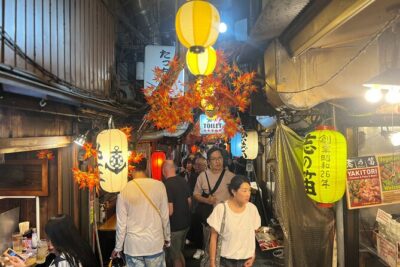
Shinjuku Food Tour (13 Dishes at 4 Local Eateries)
Read our review →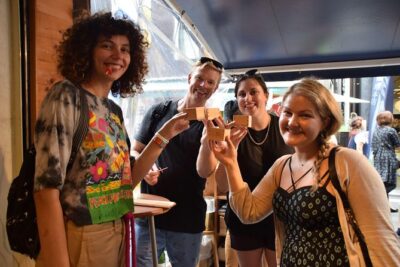
Tokyo Tsukiji Fish Market Food and Culture Walking Tour
Read our review →
Shinsekai Food Tour with 13-15 Dishes at 5 Eateries
Read our review →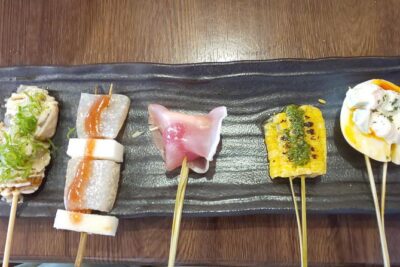
Osaka Food Tour: 13 Dishes at 5 Local Eateries
Read our review →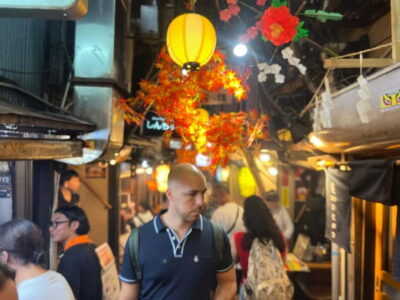
Shinjuku Food Tour (15 Dishes and 4 Eateries)
Read our review →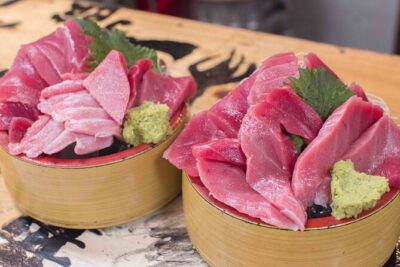
Best of Shinjuku: Izakaya Food Tour (4 Stops, 14+ Tastings)
Read our review →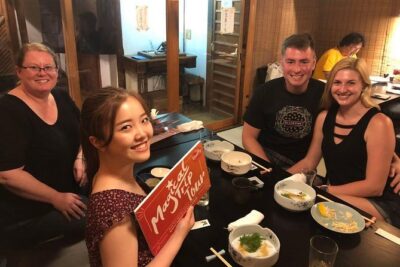
Kyoto Night Foodie Tour in Gion (9+ dishes + 6 Sake tastings)
Read our review →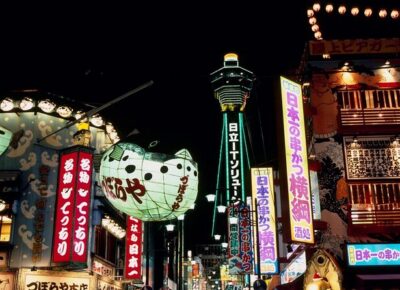
Hungry Osaka Street Food Tour:15 Tastings & 3 Drinks with a Local
Read our review →Browse the lists this tour appears in