
Reviewed · FOOD & DRINK
Sapporo: Sumo Show Experience with Japanese food & Photo
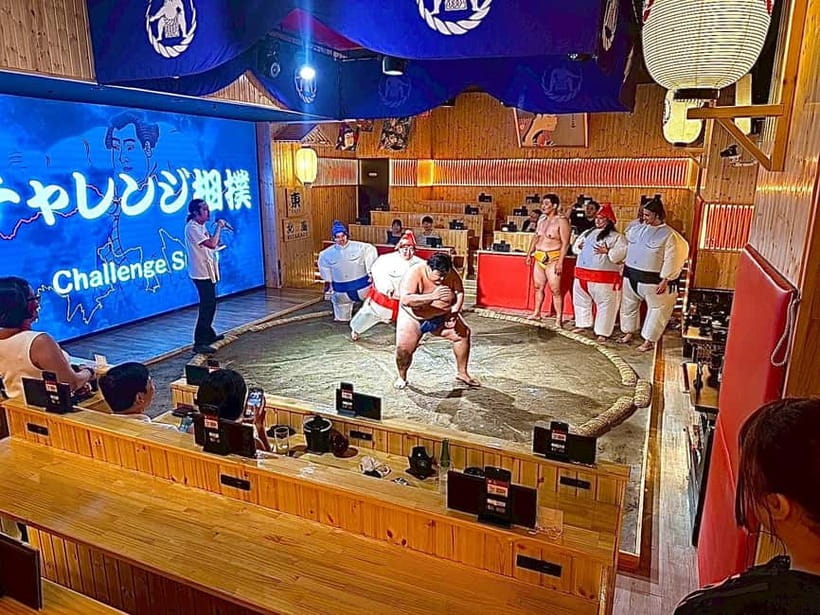
Sumo in Sapporo, with dinner and laughs. What makes this show fun is how clearly it explains sumo rituals and how the whole experience ends with a real “you were there” keepsake. I especially liked the bilingual guidance, so even first-time fans can follow what matters and why it matters.
I also like that you get to see the wrestlers as entertainers, not museum pieces. The show is anchored by former rikishi in serious matches, while still keeping the mood upbeat for kids. One possible drawback: if you came hoping for hours of tournament-style bouts, the format is shorter, so the action comes in focused bursts.
This is a 2-hour package (often starting with the meal) at the basement floor of the Minami 4-Nishi 2 building in Hokkaido. At about $77 per person, you’re paying for a guided show, included meal, one drink, and the end-of-show photo and souvenir handout, not just seats for a performance.
Key points before you go
- Bilingual sumo guidance that helps you understand rituals, rules, and what you are watching
- Former wrestlers in real ring action, with a best-of-3 tachiai-style battle segment
- A meal that starts the evening, typically centered on sukiyaki or hot pot plus Japanese sides
- Interactive moments that can include mochi hammering and even guest sumo in a fun format
- Photo and souvenir gift bag at the end, so the night feels complete
A Sapporo sumo show built for first-timers and families
If you only know sumo from TV, this is the kind of night that makes the sport click. The biggest win is the pacing: you learn just enough to follow the ring action, then you are pulled into the atmosphere with short demonstrations and crowd participation.
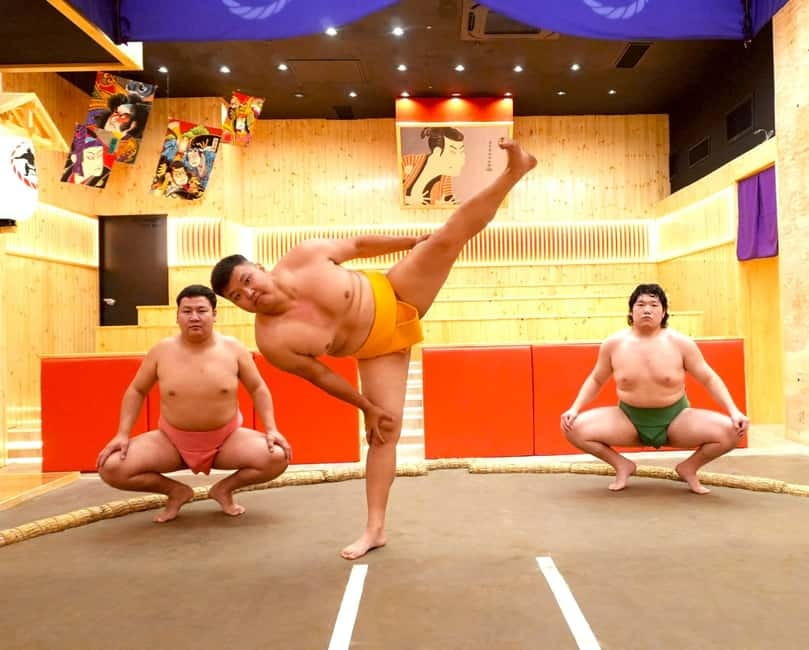
This show is also designed to be easy on adults and kids. Expect a proper stage performance feel, not a rushed lecture. And because the matches are done by retired wrestlers, you get that mix of “this is serious skill” and “this is entertainment.”
The program is endorsed by big names in the sumo world, including the 63rd Yokozuna Asahifuji and the 70th Yokozuna Harumafuji. That matters, because it hints the production has real respect for the traditions, not just the costumes.
More sumo experiences in Tokyo:
- Sapporo Sumo Show Experience with Japanese Food and Photo
★ 4.5 · 38 reviews - Tokyo: Sumo Show Experience with Chicken Hot Pot and a Photo
★ 4.8 · 6,678 reviews - Tokyo: Sumo Show and Dining Experience
★ 4.8 · 2,742 reviews
Where the show happens, and what that means for your experience
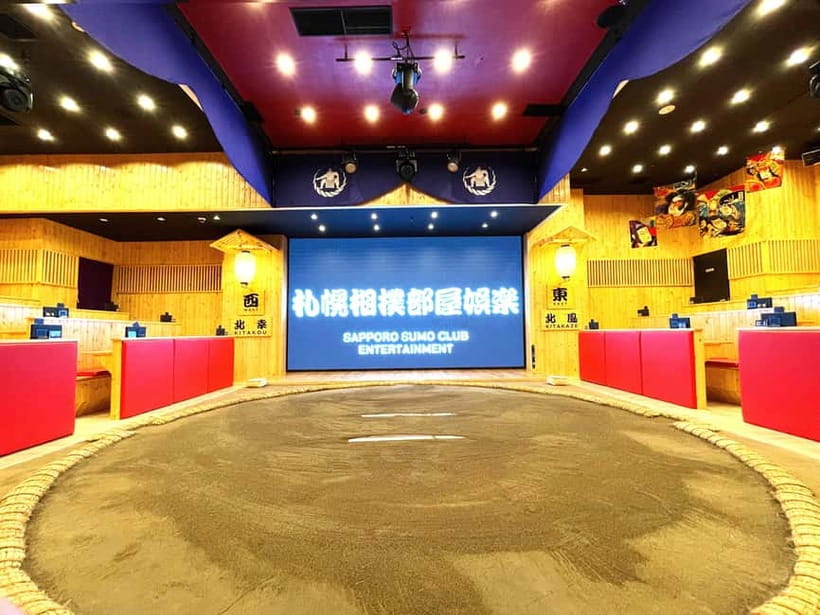
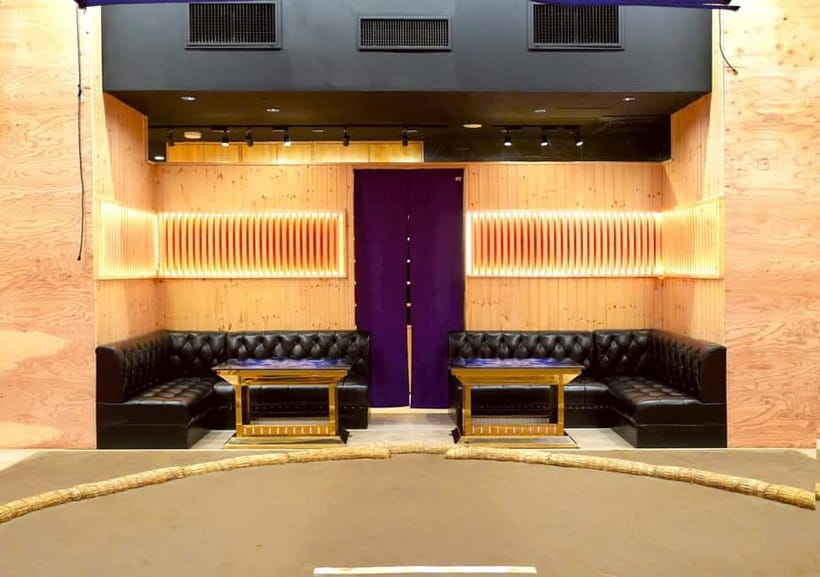
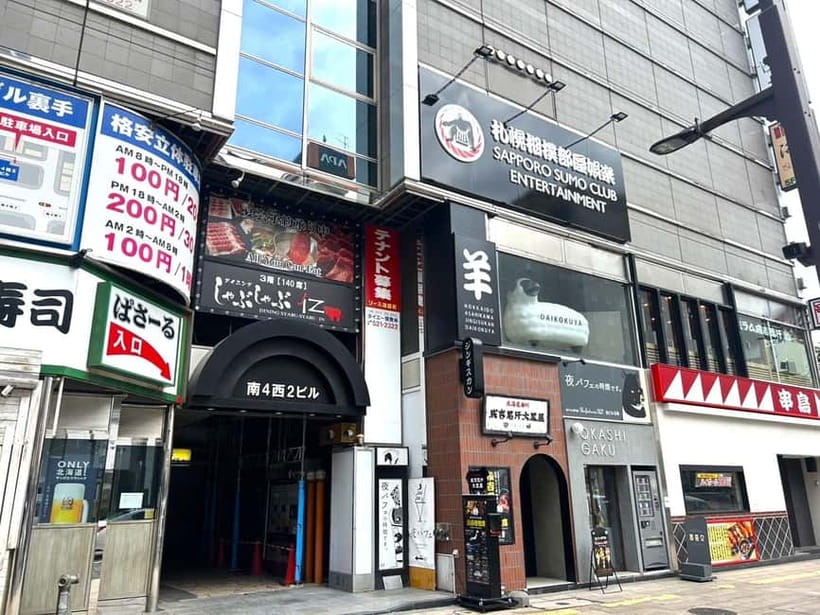
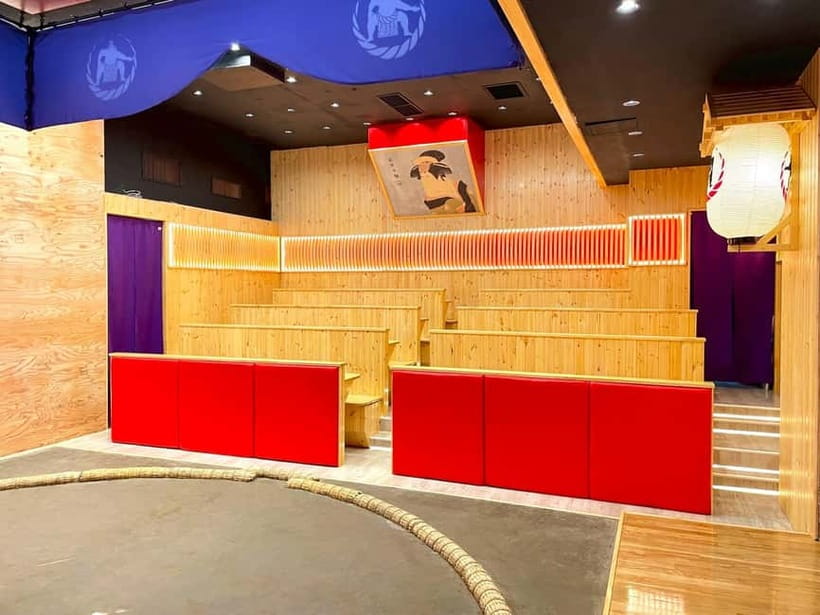
The experience takes place on the basement floor of the Minami 4-Nishi 2 building. Basements can sometimes feel cramped, but here the layout is meant for close viewing, with seats arranged so you feel connected to the dohyo.
That closeness is one of the reasons this works for small-group travel. You can actually see details during the matches and during the pre-show explanations, instead of watching everything through the blur of distance.
If you care a lot about proximity, there is an option to upgrade to front row seating. Not every reservation includes that, so if you are a “see it clearly” person, it is worth asking when you book.
The 2-hour flow: dinner, explanations, then ring action
The evening is structured to last around 2 hours. In many shows, the meal and educational visuals happen first, and then the main sumo segment kicks in later, with audience participation woven in.
Here is the typical rhythm you should expect:
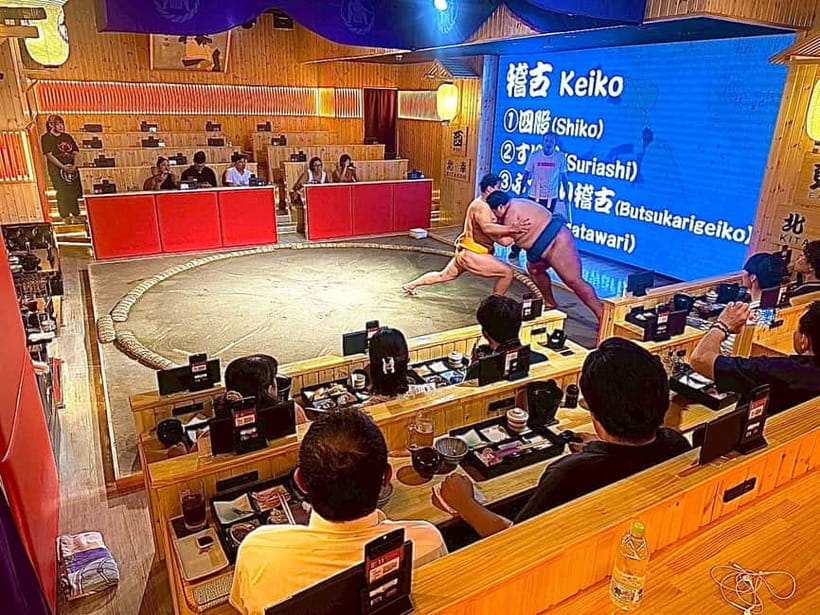
- You start with your included meal, while the moderator explains what you will see.
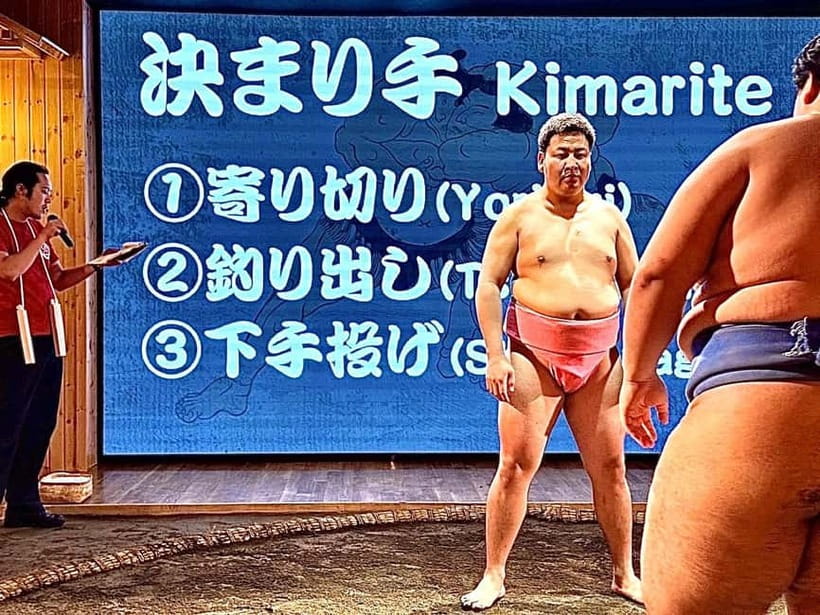
- There are demonstrations of key parts of sumo culture, including morning exercises (asa geiko) and technique categories (kimarite), plus the do’s and don’ts you might miss if you just show up blind.
- The show culminates in a best-of-3 competition format (tachiai), featuring former wrestlers.
- Toward the end, you get interactive guest moments and then the keepsakes.
One detail I liked from feedback is that the show starts with more than just sumo. There is often an opening performance, including a maiko dance segment, which sets a “Japan evening” tone right away. Even if you focus on sumo, the extra culture makes the time feel fuller.
Learning sumo rules without getting stuck in a textbook
Sumo looks simple from far away, but it has rituals and rules that explain everything. This show helps you understand the basics without drowning you in jargon.
The moderator provides bilingual commentary (English and Japanese), walking you through:
- why certain movements happen before a bout
- what to watch during grappling and pushing
- how techniques are grouped (kimarite) and what different outcomes mean
This is also where the show earns its family-friendly reputation. Kids can enjoy the movement and spectacle, while adults get meaning. You leave knowing enough to recognize key moments the next time you see sumo on TV.
One more thoughtful touch: the moderator typically keeps the tone light, using humor to keep the room relaxed. That matters, because sumo has deep tradition, and a serious room can make it harder for newcomers to ask questions.
More food tours in Sapporo:
- Sapporo Bar Hopping Food Tour
★ 5.0 · 232 reviews - Tokyo: Shinjuku Food Tour (13 Dishes at 4 Local Eateries)
★ 5.0 · 6,603 reviews - Tokyo Tsukiji Fish Market Food and Culture Walking Tour
★ 5.0 · 3,184 reviews - Osaka: Shinsekai Food Tour with 13-15 Dishes at 5 Eateries
★ 4.8 · 2,204 reviews
Watching former wrestlers: real power, but timed for the room
The heart of the experience is “real ring action,” not only staged pantomime. You will see serious matches between former sumo wrestlers, presented as entertainment while still respecting the skill involved.
Before the main bout, the show usually covers technique highlights and ring etiquette. Then comes the competition segment, in a tachiai-style format, with a best-of-3 structure.
Because the event is only about 40 minutes for the main show portion in many time slots, you do not get a full tournament length experience. That is the trade-off. You are paying for an easy entry into sumo plus a complete evening, not a long, uninterrupted bout marathon.
If your priority is “as many bouts as possible,” go in with that expectation. If your priority is “understand sumo and enjoy it,” the pacing is a big plus.
The interactive parts: mochi hammering and a chance to join
This is not a sit-and-watch-only show. You can participate in fun ways, and the host keeps it moving so the audience does not get bored.
A few interactive moments you might see included:
- mochi hammering during a demonstration
- guest sumo in a playful format, such as costumes or inflatable suit style challenges
- a guest “challenge sumo” segment in the ring
For the challenge segment, participation is limited. If there are too many applicants, each group may have a representative chosen, or challengers may be drawn by lot. So even if you want in, plan to be flexible about timing and selection.
I like this approach because it keeps the ring clear and keeps the crowd energy high. It also makes the moment special, not something everyone tries to crowd into at once.
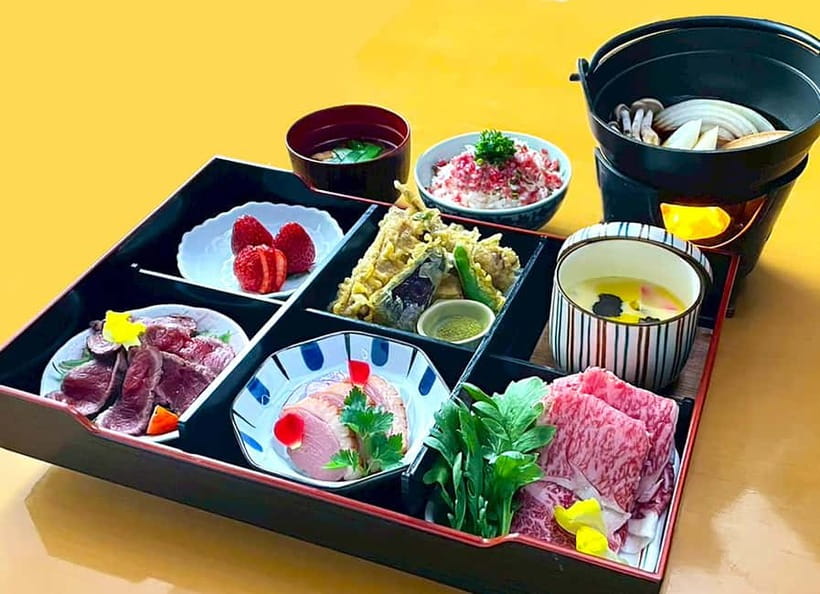
The meal: hot pot, sukiyaki, shabu shabu, and Japanese sides
Dinner is part of the show, not an add-on. Your package includes one drink, and your meal is built around a Japanese set with an included hot pot or equivalent centerpiece.
The standard menu is described as Wagyu beef sukiyaki and tempura. If you choose crab shabu shabu, the set changes accordingly. There is also mention that the show commonly includes a chicken hot pot element as part of the Japanese set.
In other words, the meal works as a warm lead-in to the performance. It also helps families, since everyone has something to do and look forward to before the ring action starts.
Choosing your option
When you book, you are asked to select:
- beef sukiyaki
- crab shabu shabu
- or vegetarian options (available by request)
Vegetarian and vegan meals must be requested at least 2 days prior to your reservation date. Also, there is no gluten-free and no halal meal option provided, though you can bring your own food if needed.
How the food stacks up
Most feedback is very positive about the meal being enjoyable and satisfying, and the experience feels good value when dinner is included. One balanced caution from a food perspective: a smaller number of comments note that some dishes were not served hot enough, and a couple items seemed prepped earlier.
So, I would treat the meal as “included Japanese comfort food paired with a show,” not as fine-dining perfection. If you are sensitive to food temperature, you might want to set your expectations.
The photo, gift bag, and souvenirs that make the night feel complete
This is one of the most consistently praised parts: the end-of-show souvenir moment. You get a framed photo of you and your group with the wrestlers, plus printed photo items for adults.
There is also a gift bag after the show. In feedback, people mention items like pins, stickers, and small samples such as mochi. It is not just a generic brochure bag. The whole handout feels tied to the performance you just watched.
If you like having something tangible to bring home, this is where the experience earns its “worth it” reputation. It also helps justify the total price because you are getting the show plus a packaged memory.
Price and value: what $77 really buys you
At around $77 per person for a 2-hour experience, you are not just paying for seats. You are buying:
- bilingual guidance during the show
- serious matches by retired wrestlers
- included meal (with chosen option)
- one drink
- souvenir photo and gift bag
That can feel steep if you compare it to a free attraction. But if you compare it to other dinner-and-performance packages in Japan, the structure is pretty sensible. You are getting guided context, participation, and a full evening output.
The only time it might not feel like great value is if you are the kind of sumo fan who wants long, uninterrupted bouts in the style of major tournaments. This show is entertainment-forward, with learning built into the flow.
Who should book this Sapporo sumo show
I think this is a strong match for:
- families with kids who can enjoy audience participation and stage performances
- first-time sumo fans who want rules explained in plain language
- people who want a full evening in Sapporo, not just a short “look and leave”
- travelers who appreciate bilingual hosts and clear structure
It is less ideal for:
- wheelchair users, since it is not suitable for wheelchair access
- babies under 1 year
- visitors who expect a behind-the-scenes view of modern sumo stable life, because this is a fun show by retired wrestlers, not a beya practice tour
Also, if you are a strict “food must be top-tier” traveler, keep in mind the meal is included but not guaranteed to satisfy every picky preference.
Should you book the Sapporo sumo experience?
If you want a night that mixes sumo, culture, and included dinner without needing prior knowledge, I would book it. The bilingual explanations, close seating setup, former wrestlers in action, and souvenir photo and gift bag combine into a complete experience.
If your main goal is to watch the maximum number of bouts possible, you might feel slightly hungry for more. In that case, consider balancing your trip with a longer sumo event elsewhere.
Overall, this is one of the easiest ways to get a real sense of sumo in Hokkaido, with just enough tradition explained and just enough silliness to make it memorable.
FAQ
How long is the Sapporo sumo show experience?
The experience is about 2 hours.
Where do I meet for the show?
It is located on the basement floor of the Minami 4-Nishi 2 building.
What is included in the price?
The package includes bilingual commentary, serious matches between former sumo wrestlers, an included meal (chicken hot pot and Japanese set meal depending on your selected option), one drink, and a printed souvenir photo taken with a former sumo wrestler for adults.
Can I participate in sumo inside the ring?
You can participate if you choose the sumo experience option, but participation is limited. If there are more applicants than spots, representatives may be assigned or challengers may be chosen by lottery.
What languages are used during the show?
The show includes live guidance and commentary in English and Japanese.
Are vegetarian or vegan meals available?
Yes, vegetarian meals and vegan options are available, but you must request them at least 2 days prior to your reservation date. You also select your meal option during booking (including beef sukiyaki or crab shabu shabu).
Is gluten-free or halal food available?
No, gluten-free and halal meals are not provided, but you are welcome to bring your own food.
Is the venue wheelchair accessible and suitable for infants?
Wheelchair users are not suitable for this activity, and babies under 1 year are not suitable.
Is there a cancellation option?
Yes. You can cancel up to 24 hours in advance for a full refund.
Fresh options around Sapporo
- Sapporo: Furano Lavender & Biei Blue Pond Tour with Lunch★ 4.6 · 13 reviews
- Authentic Sapporo: Nijo Market Seafood Lunch & Local History Tour★ 5.0 · 13 reviews
- Penguin Fun & Snowmobile : Sapporo Winter (Asahiyama Zoo)★ 4.8 · 14 reviews
- Sapporo Highlights: Golden Route Morning Walking Tour★ 4.5 · 14 reviews
- Hokkaido Asahiyama Zoo Ningle Terrace Day trip★ 5.0 · 14 reviews
- Lake Toya and Noboribatsu Hell Valley Private Day Trip★ 5.0 · 15 reviews
- Snowshoe Hike Tour from Sapporo include hotel p/up & drop off★ 5.0 · 16 reviews
- Nopporo Forest Mountain Bike Tour from Sapporo, presenting a retro Cycle cap★ 5.0 · 16 reviews
Food & Drink, compared.
Shinjuku Food Tour (13 Dishes at 4 Local Eateries)
Read our review →
Tokyo Tsukiji Fish Market Food and Culture Walking Tour
Read our review →
Shinsekai Food Tour with 13-15 Dishes at 5 Eateries
Read our review →
Osaka Food Tour: 13 Dishes at 5 Local Eateries
Read our review →
Shinjuku Food Tour (15 Dishes and 4 Eateries)
Read our review →
Best of Shinjuku: Izakaya Food Tour (4 Stops, 14+ Tastings)
Read our review →
Kyoto Night Foodie Tour in Gion (9+ dishes + 6 Sake tastings)
Read our review →
Hungry Osaka Street Food Tour:15 Tastings & 3 Drinks with a Local
Read our review →Browse the lists this tour appears in