
Reviewed · SHIZUOKA TOURS
Private Sightseeing Tour from Shimizu Port /Small Bus
Fuji views, shrine steps, and tea time. I like the tight small-bus flow that packs top Shimizu sights into one half-day, and I like the licensed English-speaking guide who can explain what you are seeing as you go. The one caution is time and terrain, ropeway lines can form if you start late, and reaching Kunozan Toshogu includes stone steps.
This is a private tour sized for up to 15 people, and it runs about 4 hours 30 minutes. You will use a mobile ticket, and while many stops are free admission, the Nihondaira ropeway plus Kunozan Toshogu Shrine have a set ticket cost (¥1,950 per person) that is not included. If you want a smooth port day that ends back at the same meeting point, this format fits well.
Guides such as Kiyo, Rie (and Yukio), Miyuki, and Robert have been praised for clear communication and steady pacing for groups up to 13. If you enjoy a guided plan where the viewpoints actually happen on schedule, this is the kind of tour style that tends to work.
Key highlights you will care about
- Early ropeway strategy to reduce line stress while you chase Mt Fuji visibility
- Ropeway link between Nihondaira and the Toshogu area for efficient sighting
- Kunozan Toshogu Shrine focus on Tokugawa Ieyasu’s revered mausoleum
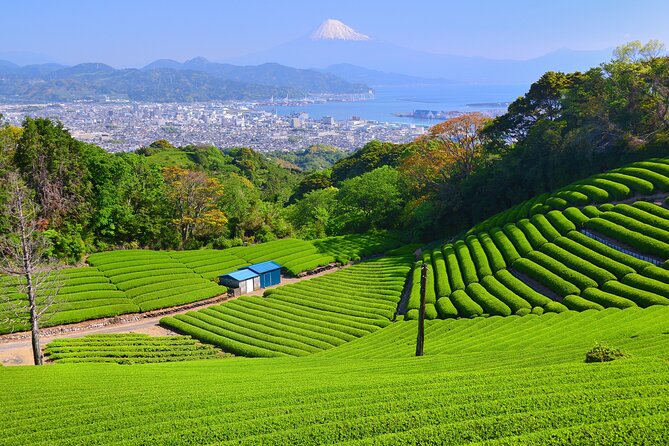
- Photo time over the green tea fields at Nihondaira Ochakaikan when skies cooperate
- Miho no Matsubara viewpoints with the pine grove and the black-sand beach vibe
- A culture center that helps even on cloudy days with Miho legend storytelling and film
A half day from Shimizu Port built for Mt Fuji moments
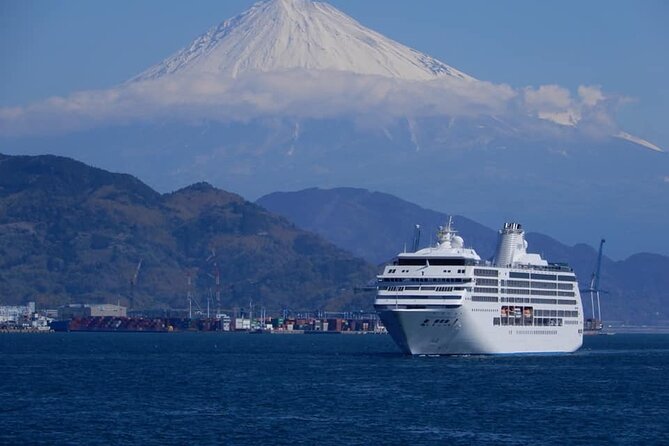
If you are basing yourself around Shimizu Port, this tour gives you a structured way to chase Mt Fuji views without spending your whole day figuring out trains, transfers, and ticket queues. You start at Shimizu Port, then move into the hills toward Nihondaira, and later down to the Miho no Matsubara area. The pacing feels designed for a limited sightseeing window, about 4 hours 30 minutes total.
I especially like that the big views come more than once. You get perspective from the Nihondaira area, including a ropeway ride over Suruga Bay, and then you reach the Miho coastline where the pine grove and black-sand beach are famous for that classic Japan postcard look. That is a practical approach: if Fuji is shy in one location, you still have another chance later that day.
One more smart choice is the guide-led structure. This is not just a ride and a drop. With a licensed English-speaking guide, you should get context for why each place matters, from Tokugawa Ieyasu to the Miho legend tied to Hagoromo. Even if you are not a “history-only” person, explanations help you look better, not just stare longer.
A few more Shizuoka days worth comparing
- Private sightseeing tour from Shimizu Port / Van Taxi
★ 5.0 · 114 reviews - Shizuoka/Shimizu Mt Fuji View 6 hr Private Tour: Guide Only
★ 5.0 · 80 reviews - Private Sightseeing Tour from Shimizu Port / Sedan Taxi
★ 5.0 · 25 reviews
Value and price math for a private group of up to 15
The price is $1,058.19 per group for up to 15 people, and it is a private tour with your own licensed English-speaking guide. That matters because the cost is grouped, not per person. If you fill close to 15 seats, the math works out to roughly $71 per person before the extra admission ticket at the ropeway and Toshogu.
That extra set ticket is ¥1,950 per person, and it covers the Nihondaira ropeway plus admission to Kunozan Toshogu Shrine. Everything else on the itinerary is listed as free admission at the stop level, including the observatory, tea shop, and the Miho coastline stops. So, in a realistic day, your “paid sights” are basically concentrated into that one key area.
Also, the tour is capped at a maximum of 10 group bookings per day. In plain terms, that usually means less chaos and more consistent timing. It does not guarantee Fuji, but it does support a tour day that runs without constant scrambling.
I would call this a good value if you are traveling with at least a few people who can share the group cost. If you are two people only, you might feel the price more. But if you are time-constrained, want a guide, and prefer fewer moving parts, the “private bus + guided plan” combination can still feel worth it.
Shimizu Port pickup and the way the day stays on schedule
Your meeting point is at Shimizu Port, specifically “清水港FT(エスパルスドリームフェリー)” in Hinodechō. The tour ends back at the same meeting point, which is useful if your day is tied to a port departure or another booked activity.
The day starts with a 30-minute drive from Shimizu Port to the Nihondaira area. That is a nice buffer. You get in the vehicle right away, so you are not burning prime sightseeing time waiting for everyone to arrive, and you start the “view chase” while the light is still working.
Communication is also part of the appeal. Guides have been noted for strong ahead-of-time coordination, which helps if you are trying to keep a cruise day calm and predictable. If you like knowing where you are going next, and when you will be back, this kind of organization makes the day feel easier.
One small practical point: the tour uses a mobile ticket, so have your phone ready for check-in instructions. It is a minor thing, but in a port setting, it saves you from digging for paper after you are already standing in the right place.
Nihondaira Ropeway timing: start early to reduce ropeway line stress
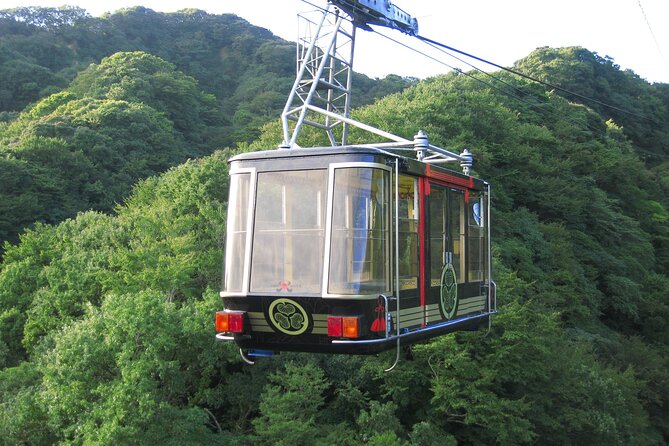
This is the “one ride, big payoff” segment. The ropeway connects Nihondaira and the Kunozan Toshogu Shrine area in about 5 minutes. That sounds short, and it is, but the tour also notes waiting time and riding time for a round trip of about 20 minutes.
The key strategy is simple: start early to reduce the risk of lineup for the ropeway. If you wait until later in the day, you can lose precious time, and with only a half-day plan, every minute matters. I like that the tour itself encourages an early approach because it is honest about how the day can shift with crowds.
While you are in the ropeway zone, you are also getting Suruga Bay views. That is not just scenery for the sake of scenery. The coastline and bay setting help you understand why Nihondaira is an “elevation lookout” spot, and why the later Miho coastline views feel connected rather than random.
If you are sensitive to queues, this is the part to treat seriously. Bring water if you need it, and be ready to board when your turn comes. Your guide’s job here is to manage timing, but your job is to be flexible when the line moves at a pace you cannot control.
Same corner of Japan, a different kind of day:
- Full Day Tour to Mount Fuji in Spanish
★ 5.0 · 279 reviews - Fuji Highlights Group Car Tour by Shimizu Port with Local Guide
★ 5.0 · 57 reviews - Mt.Fuji area Tour from Shimizu Port / Van Taxi
★ 5.0 · 41 reviews - Mount Fuji Full-Day Private Tour from Shimizu Port (Customizable)
★ 5.0 · 23 reviews
Kunozan Toshogu Shrine: Tokugawa Ieyasu and the climb
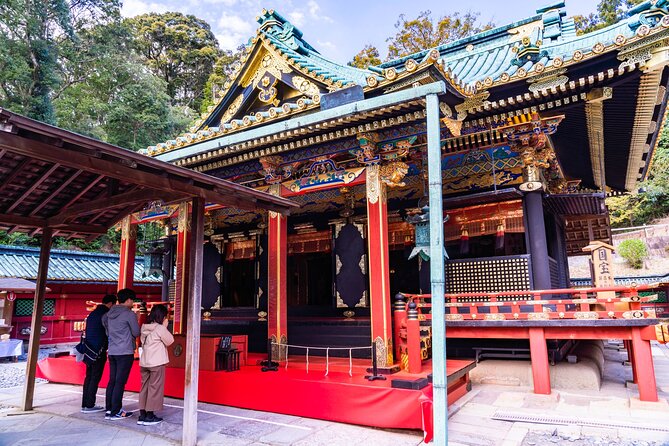
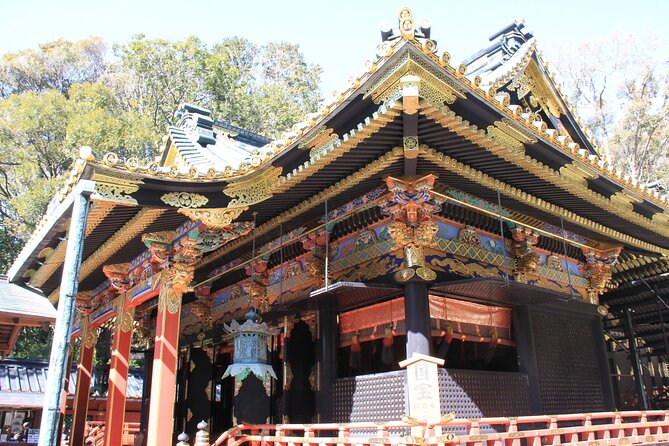
Kunozan Toshogu Shrine is the major cultural anchor of the tour, with about 1 hour on site. It is described as a national treasure shrine, and it is strongly associated with Tokugawa Ieyasu, the first shogun of the Edo period. The mausoleum of Tokugawa Ieyasu is part of what you come to see.
There is also a real-world logistics detail you should plan for: to get to Kunozan Toshogu Shrine, you need to climb up stone steps after getting off the ropeway. That means this is not a flat stroll. If your mobility is limited, or you are traveling with a stroller, this is where you will feel it.
I like that the tour tells you this upfront. It is better to know before you show up, because the shrine is worth the effort if you pace yourself. But it also means you should not assume you can “power through” without any strain, especially if you arrive when the ropeway line has eaten into your timing.
Once you are at the shrine, you are not just looking at buildings. You are stepping into a place designed around reverence, and your guide can connect the visual details to the Tokugawa legacy. That guided context is what turns “nice shrine” into “I get why this matters.”
Nihondaira Observatory and Ochakaikan: views plus tea-field photo time
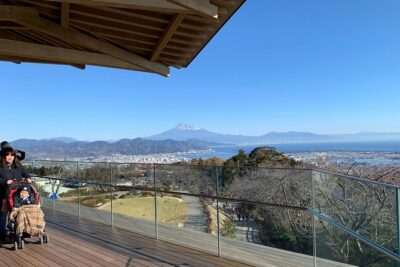
After the ropeway and shrine portion, the itinerary pivots back toward viewpoints and photo time around Nihondaira. First comes the Japan: Nihondaira Kanko Tembun Center (observatory) with about 20 minutes. It is a newer observatory opened in November 2018, and it lists views including Mt Fuji, Shimizu Port, Izu Peninsula, and the Southern Alps on clear days.
This is the “zoom out” moment. Standing at an observatory tends to help you interpret what you saw below from the bay and coastline. You can put the coastline on the map in your head, then later appreciate why Miho no Matsubara has that distinct viewpoint angle toward the ocean.
Next is Nihondaira Ochakaikan, also about 20 minutes. This stop includes a Japanese tea shop and green tea field. If weather conditions are fine, you can take photos of Mt Fuji over the green tea field. Even if Fuji is not visible, the tea-area setting gives you a calm break in the middle of a busy port day.
If tea is your thing, this stop gives a natural cultural pause. If it is not, it still works because it is one of the better opportunities for “Mt Fuji framing with foreground texture,” which is hard to replicate on the fly.
Miho no Matsubara: pine grove, black-sand beach, and the rhythm of the coast
Then you head to Miho. The drive from Nihondaira to the Miho Pine Tree Grove area is about 30 minutes, and it sets up the coastline segment that most people remember most.
You have a Miho Seacoast stop, specifically Miho no Matsubara Beach (Miho no Matsubara is part of the Mt Fuji World Heritage listing). The emphasis here is on the view of Mt Fuji from the pine grove area, plus the overall coastal scene: green pine trees, black sand, white waves, and blue sky when conditions are right. The allotted time is about 40 minutes.
I like this segment because it is paced for photos, walking along the beachfront edges, and then a chance to just look. With only 4 hours 30 minutes total, you still get enough time to linger a bit without pushing you into an exhausting “keep moving” schedule.
Then you also add the Miho Seacoast to Mihoshirube culture center segment. After your time by the beach, you get about 20 minutes at the Shizuoka City Miho no Matsubara Culture and Creativity Center (Mihoshirube). It is listed as opened in March 2019, and it includes history and storytelling such as the Hagoromo legend, plus a short movie about Miho no Matsubara.
That combination is smart. If Mt Fuji is hidden by clouds, you have a meaningful backup activity. If it is visible, you get to contrast “what we see” with “why people have valued this place.”
Getting around: transport time, footsteps, and what to wear
The itinerary is efficient, but it still involves real movement. You will ride a private bus between major zones, with set drives of about 30 minutes for the Nihondaira to Miho transfer and another 30 minutes returning from Miho to Shimizu Port. Those transport windows are predictable, which helps you avoid the jitter of public transit.
The main physical consideration is at Kunozan Toshogu, where stone steps are required after the ropeway. The tour lists a moderate physical fitness level for that reason. If you are planning to bring a stroller or use a wheelchair, the tour asks you to let the operator know the number and size. Even then, you should expect steps to be the sticking point.
Clothing-wise, I suggest wearing comfortable shoes with traction. This is a coastal and hillside route, so surfaces near viewpoints and shrine approaches can be uneven. Bring a light layer too, since the port area and higher Nihondaira elevation can feel different in temperature.
Also consider that the ropeway segment includes waiting time plus riding time, about 20 minutes total for a round trip. That means you should be ready to stand for a bit, even if you are not planning to do much walking.
Guide-led value: what a great English guide changes in a port day
A big part of why this style of tour is worth it is the guide quality. In this program, English-speaking licensed guides have been praised for fluency and for giving plenty of context, not just explanations while everyone is still seated. People have also highlighted guide patience during larger group moments.
You might be paired with guides such as Kiyo, Rie (sometimes with Yukio), Miyuki, or Robert, each noted for being welcoming, helpful, and good at communicating clearly. When that happens, you get more from the time at each stop, especially at Kunozan Toshogu where the Tokugawa connection can otherwise feel like a blur of names and dates.
I also like the “drop-off back at the meeting point” structure. It reduces day-end stress. When the tour is built around staying on schedule, you can focus on enjoying the sights instead of constantly checking apps and wondering if you are going to miss your next connection.
Best weather expectations for Mt Fuji views, and how to plan for Plan B
Nothing here is guaranteed, but the tour is set up to maximize chances. Mt Fuji viewing opportunities are built into multiple stops: the Nihondaira observatory time, the tea field photo moment at Nihondaira Ochakaikan, and the Miho no Matsubara viewpoint approach.
Because Fuji visibility depends on clouds and haze, I treat this as a “stack your odds” plan. The itinerary gives you more than one viewpoint layer, so even if one stop is socked in, another may open up.
Plan B is also part of the design. The Miho Culture and Creativity Center includes legend and film, so you still leave with understanding even if you cannot get a clean mountain silhouette. That matters because it is easy to end a cloudy day feeling like you wasted time, when really you can still come away knowing the place.
If you want the best odds at the ropeway area too, follow the tour’s own advice: start earlier to cut down on ropeway lineup risk. Early timing helps you protect the whole day, not just one viewpoint.
Who should book this Shimizu small-bus private tour
This tour is a strong fit if you want:
- A compact 4 hours 30 minutes port day with a guided plan
- Multiple chances to see Mt Fuji around Nihondaira and Miho no Matsubara
- A private setting sized for up to 15 people with a licensed English-speaking guide
- A mix of shrine culture, tea-field viewpoints, and coastline scenery in one loop
It is not ideal if you dislike stone steps, need completely step-free routes, or hate waiting in any kind of line. Also, because the price is per group, it is usually more cost-effective when you have enough people to share the group cost.
Should you book this Shimizu private sightseeing tour?
I’d book it if you are prioritizing efficiency, guided context, and that classic Fuji-and-coast combo, especially if you are working with a limited port window. The value is strongest when your group can fill seats, and the experience style feels well suited to people who want less uncertainty and more structure.
Skip it or reconsider if you cannot handle the stone steps at Kunozan Toshogu, or if you know you will not enjoy any ropeway waiting time. Also, since lunch is not included, plan your timing so you are not hungry when your tour ends back at Shimizu Port.
If your goal is a guided “best of Shimizu and Fuji region viewpoints” day that stays calm and organized, this private small-bus tour is a very sensible way to do it.
FAQ
How long is the private sightseeing tour?
It runs for about 4 hours 30 minutes.
Where does the tour start and end?
The meeting point is at Shimizu Port at 清水港FT(エスパルスドリームフェリー), and the tour ends back at the same meeting point.
Is this tour private, and what is the maximum group size?
Yes, it is private, and it can accommodate a maximum of 15 people per tour.
What is included in the tour price?
The price includes private transportation and a licensed English-speaking guide.
What costs extra for the Nihondaira ropeway and Kunozan Toshogu Shrine?
Admission fees for the ropeway plus Kunozan Toshogu Shrine are not included. The set ticket is ¥1,950 per person.
Do I need to pay for every stop?
No. The tour lists admission as free for several stops, including the observatory, Nihondaira Ochakaikan, and the Miho no Matsubara beach and culture center. The ropeway and Kunozan Toshogu are the part with the set ticket fee.
Is lunch included?
No, lunch time is not included in this tour.
How hard is the walk at Kunozan Toshogu Shrine?
To reach Kunozan Toshogu Shrine, you need to climb up stone steps after getting off the ropeway, so plan for some uphill steps.
Do I use a mobile ticket?
Yes, the tour includes a mobile ticket.
What is the cancellation window for a full refund?
You can cancel up to 24 hours in advance for a full refund.
Fresh options around Shizuoka
- Shizuoka Shore Excursion: Zen, Matcha & Calligraphy Shimizu Port★ 5.0 · 14 reviews
- Port Pick-Up: Shizuoka Tour with Licensed Guide and Vehicle★ 5.0 · 15 reviews
- Mount Fuji Full-Day Private Tour from Shimizu Port (Customizable)★ 5.0 · 23 reviews
- Private Sightseeing Tour from Shimizu Port / Sedan Taxi★ 5.0 · 25 reviews
- Mt.Fuji area Tour from Shimizu Port / Van Taxi★ 5.0 · 41 reviews
- Private sightseeing tour from Shimizu Port / Van Taxi★ 5.0 · 114 reviews
- Fuji Highlights Group Car Tour by Shimizu Port with Local Guide★ 5.0 · 57 reviews
- Shizuoka/Shimizu Mt Fuji View 6 hr Private Tour: Guide Only★ 5.0 · 80 reviews
Shizuoka Tours, compared.
Private sightseeing tour from Shimizu Port / Van Taxi
Read our review →
Shizuoka/Shimizu Mt Fuji View 6 hr Private Tour: Guide Only
Read our review →
Fuji Highlights Group Car Tour by Shimizu Port with Local Guide
Read our review →
Mt.Fuji area Tour from Shimizu Port / Van Taxi
Read our review →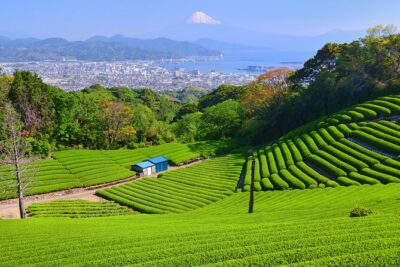
Private Sightseeing Tour from Shimizu Port / Sedan Taxi
Read our review →
Mount Fuji Full-Day Private Tour from Shimizu Port (Customizable)
Read our review →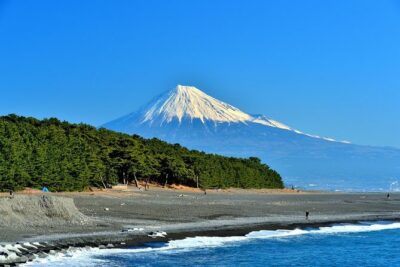
Port Pick-Up: Shizuoka Tour with Licensed Guide and Vehicle
Read our review →Browse the lists this tour appears in