
Reviewed · SHIZUOKA TOURS
Full Day Tour to Mount Fuji in Spanish
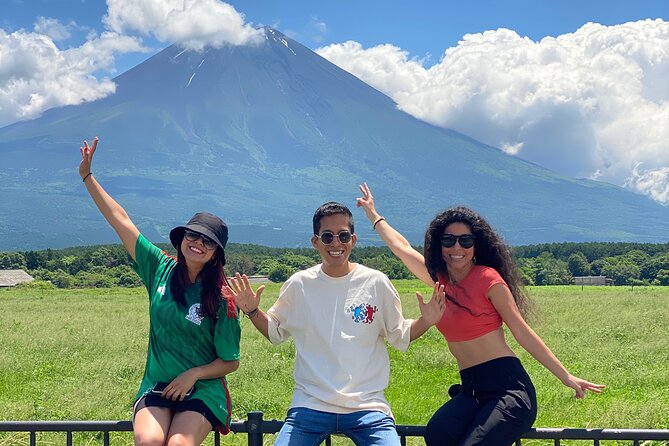
Fuji day trips hit different when explained in Spanish. You get a tight loop around Mt. Fuji with Spanish-guided context at each stop, plus a max 9-person group so the day feels like hanging out rather than being herded. I love how the guides keep the stories practical, and I also like that the route adjusts to weather and daylight so you chase the best possible views. One possible drawback: it is a long 10 to 11 hour day, and lunch is not included.
If you want a smooth day with fewer decisions, this works. You start at the Tokai Bus Mishima Information Office at 8:00 am, and you travel between major Fuji-area sites efficiently, with snacks and drinks included. The tradeoff is that your time at each spot is relatively short, so you have to be ready to move, look, and take photos fast.
Key things I’d pay attention to
- Spanish explanations built into every stop, not just at the big viewpoints
- Small group size (max 9), which makes Q and A actually work
- Route flexibility based on conditions, so the day can pivot if Fuji hides
- A well-rounded mix, from Shiraito Falls to shrines, lakes, and the Fugaku Wind Cave
- Most entry is free, while Saiko Iyashi no Sato Nemba and Fugaku Wind Cave have included admissions
Entering the Fuji Loop from Mishima at 8:00 am
Your day starts at 8:00 am at the Tokai Bus Mishima Information Office in Mishima, Shizuoka. That early start matters because the Fuji region is all about light, clarity, and timing, and you want those conditions on your side.
This is also one of those tours where logistics are part of the value. Instead of figuring out trains and buses between lakes and viewpoints, you ride to each stop with the group. You do not have to play schedule detective, and that keeps the day calm.
More Mt Fuji tours from Tokyo:
- Shizuoka/Shimizu Mt Fuji View 6 hr Private Tour: Guide Only
★ 5.0 · 80 reviews - Fuji Highlights Group Car Tour by Shimizu Port with Local Guide
★ 5.0 · 57 reviews - Mt.Fuji area Tour from Shimizu Port / Van Taxi
★ 5.0 · 41 reviews
How the Day Stays Fun: Pacing, Weather, and a Small Crew
The tour runs about 10 to 11 hours, with multiple stops along the Mt. Fuji area. The biggest practical win is the pacing. Each stop is long enough to appreciate what you came for, but short enough that you do not spend the whole day stuck in one place.
The second win is weather awareness. You are not promised perfect visibility, and the plan can shift depending on daylight hours and conditions. That is not a gimmick. In this region, visibility is everything, and the guide approach is built around finding the best odds.
With a maximum of 9 travelers, you also get a more human feel. It is easier to hear explanations, and questions do not get swallowed by a crowd. If you like learning while you walk, this format suits you.
Stop 1: Shiraito Falls, Fuji Water from Past Eruptions
You begin with Shiraito Falls, a waterfall linked to past eruptions of Mt. Fuji. What makes this stop more than a quick photo stop is the story behind the water: it is formed by volcanic activity, and the flow is fed by clear water from the Fuji area.
You get about 30 minutes here, which is ideal for a calm walk and a few angles of the falls without feeling rushed. Admission is free, so you can focus on the experience rather than thinking about tickets and lines.
The only consideration is practical: waterfalls are not about staying long, they are about observation. Plan to arrive ready to look carefully and take photos quickly, because the tour moves on.
Stop 2: Motosuko Lake, Recognizable from the ¥1,000 Note
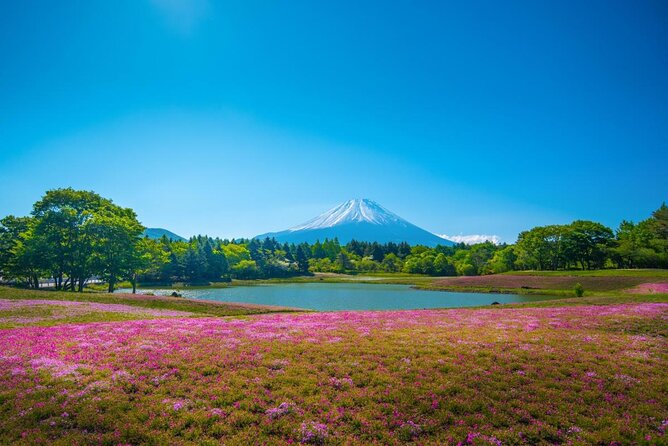
Next up is Lake Motosu, famous because the view appears on the back of Japan’s ¥1,000 banknote. Even if you have seen the image before, being there in person changes it. The lake’s position gives you that classic Mt. Fuji framing when the weather cooperates.
You have 30 minutes at this stop, and entry is free. That short time works here because the goal is viewpoint satisfaction. You will likely want to test a couple angles, especially if clouds pass through.
This is also a good early moment to start paying attention to the day’s visibility. If Fuji is clear today, this is the kind of stop that makes the rest of the route click into place.
Same corner of Japan, a different kind of day:
- Private sightseeing tour from Shimizu Port / Van Taxi
★ 5.0 · 114 reviews - Private Sightseeing Tour from Shimizu Port / Sedan Taxi
★ 5.0 · 25 reviews - Mount Fuji Full-Day Private Tour from Shimizu Port (Customizable)
★ 5.0 · 23 reviews - Port Pick-Up: Shizuoka Tour with Licensed Guide and Vehicle
★ 5.0 · 15 reviews
Stop 3: Saiko Iyashi no Sato Nemba, Old Homes Rebuilt
Now you shift from “viewpoints only” into living culture. Saiko Iyashi no Sato Nemba is an ancestral village, Iyashi no Sato, located between mountains. The key detail is that it was destroyed and later rebuilt over decades.
You get 1 hour here, and admission is included. That extra time makes sense because this is not just a scenic pull-over. You can slow down and absorb the atmosphere of traditional-style homes and the way the community is presented today.
If you enjoy history, religion, and everyday Japanese culture, this stop is where your brain has time to catch up. The drawback is simple: you will be on your feet for that hour, so it is not a “sit and coast” stop.
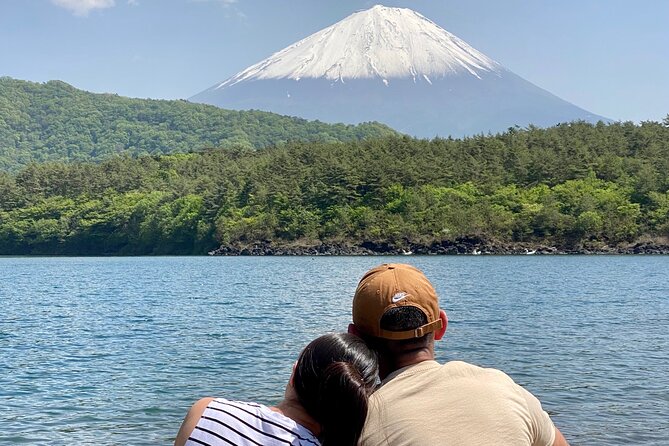
Stop 4: Saiko Lake Beside Aokigahara’s Edge
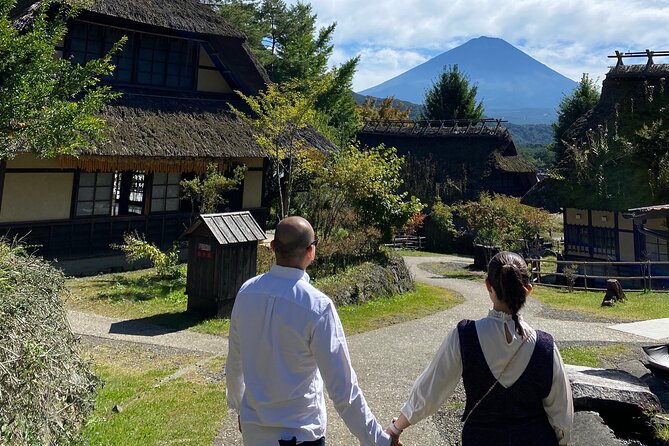
After the village, you head to Saiko Lake, positioned on the side of the Aokigahara Forest. This one is about atmosphere and proximity. It is a lake stop that also helps you understand where this famous forest fits into the broader region.
You have about 30 minutes, and admission is free. Because the tour keeps moving, your best approach is to treat it like a reset. Take in the view, notice the forest’s presence in the background, and then get ready for a heavier stop soon after.
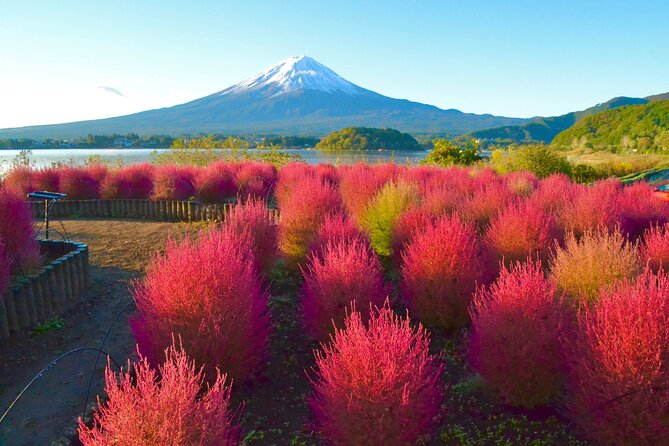
Stop 5: Lake Kawaguchiko, Two Fuji-Focused Spots
At Lake Kawaguchiko, the tour plan includes time for two places that the guide begins exploring and then shares with participants. You are given 50 minutes total here, and admission is free.
This stop is practical for two reasons. First, Lake Kawaguchiko is one of the best-known bases for Fuji sightseeing. Second, the guide uses that time to go a bit beyond the obvious. You get more than just one standard postcard angle.
If you want more variety in your photos, this is where you often feel the value of a guided route. You can spend the time testing different compositions, rather than guessing where the best view is.
Stop 6: Oshino Hakkai, Shops, Food, and the Fuji Story Circle
Oshino Hakkai is an ancestral town area where you find vendors selling typical Japanese food and local items. This stop is 45 minutes, with admission free.
What makes Oshino Hakkai work on a full-day tour is the blend of scenery and easy browsing. You can snack, wander, and soak in the atmosphere without having to commit to a long sit-down meal.
One consideration: because it is a town stop with shops, it can feel more active than some of the quiet nature stops. If you hate crowded shopping areas, you may want to focus on quick wandering and moving toward calmer spots around the water.
Stop 7: Aokigahara Forest, A Place With Heavy Stories
Then comes Aokigahara Forest, often associated with the theme of suicides. This is not a “scenic only” destination. The tour frames it as a place with many stories, while still functioning as a forest you would recognize as nature.
You get about 45 minutes, and admission is free. The right mindset here is respect. You are visiting a setting with difficult associations, so keeping your focus on quiet observation, calm walking, and respectful behavior is the best approach.
If you prefer light and airy sightseeing, this is the emotional tonal shift of the day. It is not meant to be sensational, but it is meant to be honest.
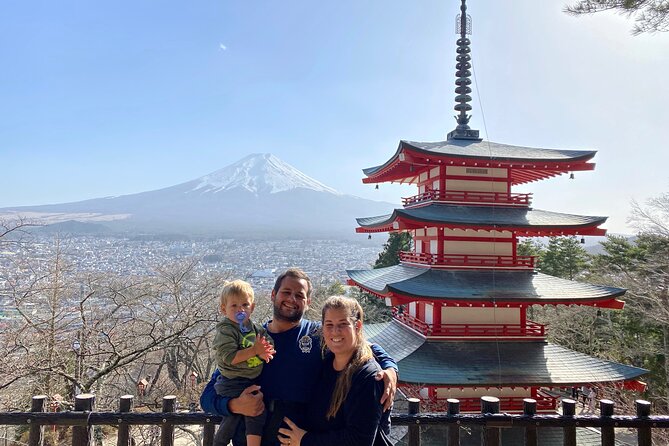
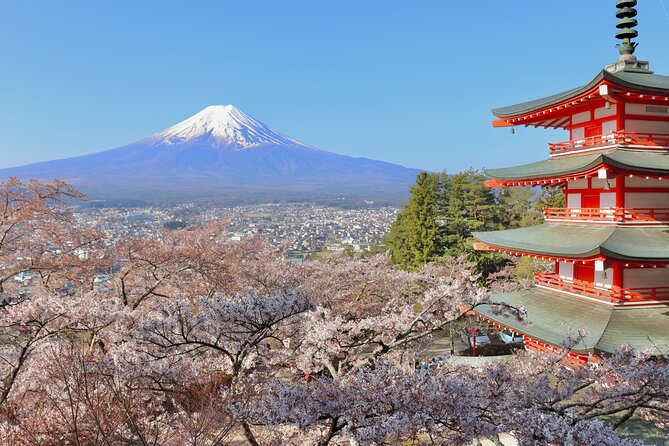
Stop 8: Chureito Pagoda, The Japan-Calling Fuji View
Chureito Pagoda is the kind of viewpoint you see in many tourist guides because it is so iconic. This is a representative image tied to the people of Fujiyoshida, and it’s exactly the sort of stop that can turn a “nice day” into “I remember this forever.”
You have 45 minutes, admission is free. In practice, what you do with this time is simple. You pick your best viewing spot, take your photos, and then enjoy the Fuji alignment if it is visible.
This stop is also a reminder that Fuji visibility is never fully controllable. If clouds move through, you still get the pagoda scene. But if the sky clears, the payoff is real.
Stop 9: Kitaguchi Hongu Fuji Sengen Jinja, Where Climbing Starts
Next is Kitaguchi Hongu Fuji Sengen Jinja Shrine, dedicated to Mt. Fuji and its climbers. The key detail is that it is treated as a starting point, with the idea of climbing toward Mt. Fuji.
You have 30 minutes, and admission is free. This time window is perfect for seeing the shrine setting and understanding its role in the spiritual side of climbing culture.
If you are the type of traveler who likes why places matter, this is a strong stop. It helps connect the day’s photos to the meaning behind the mountain.
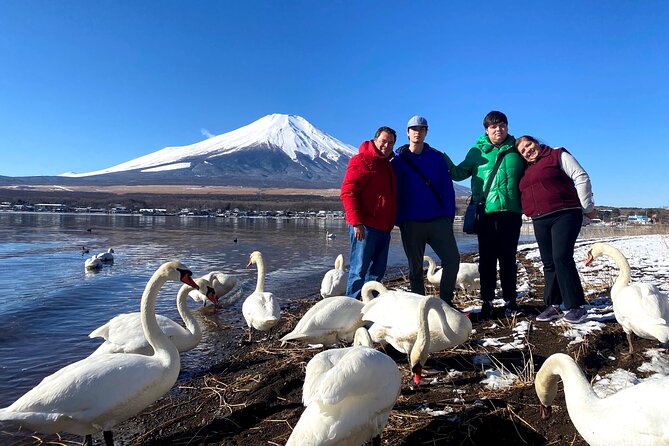
Stop 10: Yamanakako-mura, Swans, Koi, and Bird Feeding
You finish the natural loop at Yamanakako-mura, tied to Lake Yamanakako, the largest of the five lakes around Mt. Fuji. You get 30 minutes, and admission is free.
This stop has a calmer, family-friendly feel. In the lake area you can see swans, koi, and other birds, and you can come to feed them. It’s a nice contrast after shrines and forests, and it gives the day a gentle landing.
Because time is short, you will want to decide quickly what you want to do. If you care most about feeding, focus on that and keep moving. If you prefer photos, find a stable angle and enjoy the view while you can.
Stop 11: Fugaku Wind Cave, Volcanic Time Underground (Included)
The final stop is Fugaku Wind Cave, a natural underground formation created by centuries of Mt. Fuji volcanic activity, with volcanic lava still present. This is an included admission stop, and you have 30 minutes.
This is a smart closer because it expands the day’s Fuji theme beyond what you see from above. You are experiencing the mountain’s geology in a direct, tangible way.
It is also a practical choice for the end of a long day. Caves can be a welcome break from the open air, and the time window is enough to see what you came for without exhausting yourself.
What You Learn When Guides Explain the Why in Spanish
The best part of this tour is not any single viewpoint. It is the way the day’s places connect: water tied to volcanic history, lakes tied to famous images, shrines tied to climbing culture, and villages tied to community memory.
Guides often bring a Japanese-Peruvian background and explain Japanese culture and religion in Spanish, with explanations kept at a pace that does not drag. The goal is not a lecture. It is just enough context so you feel what you are looking at.
I also like the photo-friendly guidance mentioned by participants. The guides know where people usually stand, how the best angles form, and how to get Fuji alignment when possible. Even if you are not trying to be a professional, that attention saves time and frustration.
Price and Value: What You Get for $96.17
At $96.17 per person, the value comes from the mix of transportation plus paid access. Snacks, drinks, and all fees and taxes are included, and most stops list admission as free.
The admissions that are specifically included are Saiko Iyashi no Sato Nemba and Fugaku Wind Cave. That matters because those are two of the experience-heavy parts of the day, not just quick outdoor lookouts.
Lunch is the one obvious missing piece. Since it is not included, you will want to plan around that in your own way. If you rely on tour-provided meals to keep your schedule easy, this tour asks a little more flexibility from you.
Who This Spanish Fuji Day Trip Is Best For
This tour is best for you if you want a full day focused on Mt. Fuji area highlights without spending hours researching transport. It is also ideal if Spanish is your comfort zone and you want explanations that make the stops feel meaningful, not random.
It also fits well if you like group travel but still want breathing room. With a maximum of 9 travelers, the day stays conversational, and the guide can adjust when conditions change.
If you prefer ultra-independence, like wandering longer on your own or skipping heavier stops, you might find the fixed time blocks limiting. This is a structured loop, and it expects you to go along with the rhythm.
Should You Book This Full-Day Mount Fuji Tour in Spanish?
Yes, I would book it if your priority is a high-quality one-day Fuji overview with Spanish guidance and less planning stress. The strongest reason is the thoughtful blend of stops: waterfall, lakes, village culture, shrine meaning, a heavy forest stop, classic views, and a volcanic cave.
Book it with realistic expectations. Fuji views depend on weather, and the day is designed to adapt. If the sky cooperates, you get a postcard-type day. If it does not, you still get a tour full of places that teach you why this mountain matters.
If your schedule is tight and you want a lot of Fuji context in one shot, this is a very strong match.
FAQ
How long is the Mount Fuji full-day tour from Mishima?
The tour lasts about 10 to 11 hours.
What time does the tour start, and where do I meet?
It starts at 8:00 am. You meet at Tokai Bus Mishima Information Office, 17-1 Ichibanchō, Mishima, Shizuoka 411-0036, Japan.
How many people are in the group?
This tour has a maximum of 9 travelers.
Is lunch included in the price?
No. Lunch is not included.
What is included, and are any entrance fees covered?
Snacks and drinks are included, along with all fees and taxes. Admission tickets are free for most stops, and admission is included for Saiko Iyashi no Sato Nemba and Fugaku Wind Cave.
Is the tour in Spanish?
Yes. This experience is described as a full day tour to Mount Fuji in Spanish.
What happens if the weather is poor, or if I cancel?
The tour requires good weather. If it is canceled due to poor weather, you will be offered a different date or a full refund. You can cancel up to 24 hours in advance for a full refund.
Fresh options around Shizuoka
- Private Sightseeing Tour from Shimizu Port /Small Bus★ 5.0 · 13 reviews
- Shizuoka Shore Excursion: Zen, Matcha & Calligraphy Shimizu Port★ 5.0 · 14 reviews
- Port Pick-Up: Shizuoka Tour with Licensed Guide and Vehicle★ 5.0 · 15 reviews
- Mount Fuji Full-Day Private Tour from Shimizu Port (Customizable)★ 5.0 · 23 reviews
- Private Sightseeing Tour from Shimizu Port / Sedan Taxi★ 5.0 · 25 reviews
- Mt.Fuji area Tour from Shimizu Port / Van Taxi★ 5.0 · 41 reviews
- Fuji Highlights Group Car Tour by Shimizu Port with Local Guide★ 5.0 · 57 reviews
- Shizuoka/Shimizu Mt Fuji View 6 hr Private Tour: Guide Only★ 5.0 · 80 reviews
Shizuoka Tours, compared.
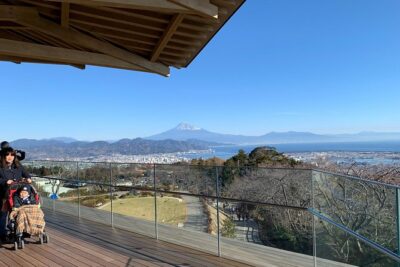
Private sightseeing tour from Shimizu Port / Van Taxi
Read our review →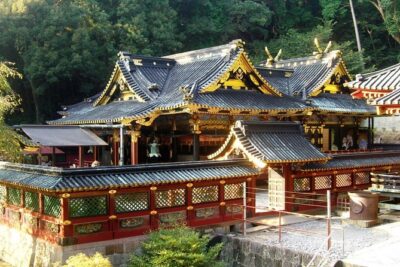
Shizuoka/Shimizu Mt Fuji View 6 hr Private Tour: Guide Only
Read our review →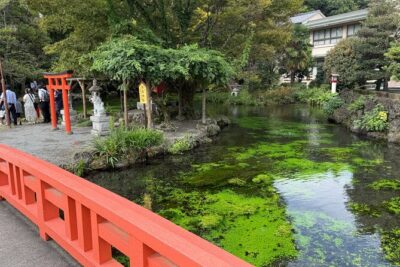
Fuji Highlights Group Car Tour by Shimizu Port with Local Guide
Read our review →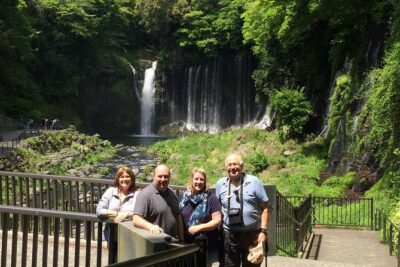
Mt.Fuji area Tour from Shimizu Port / Van Taxi
Read our review →
Private Sightseeing Tour from Shimizu Port / Sedan Taxi
Read our review →
Mount Fuji Full-Day Private Tour from Shimizu Port (Customizable)
Read our review →
Port Pick-Up: Shizuoka Tour with Licensed Guide and Vehicle
Read our review →
Shizuoka Shore Excursion: Zen, Matcha & Calligraphy Shimizu Port
Read our review →Browse the lists this tour appears in