
Reviewed · KANAZAWA TOURS
From Kanazawa: Shirakawa-go, Gokayama and Wood Carving Art
Three mountain villages in one day, worth it. You get the rare combo of Inami woodcarving and washi paper making, then finish with UNESCO Shirakawa-go’s thatched roofs. The schedule is full, and Shirakawa-go can get busy, so expect a bit of hustle in the later stop and dress for cold or wet weather.
I like that the day has a clear story. You move from craft masters, to rural paper traditions, to the famous gassho farmhouses, all with an English-speaking guide keeping the meaning behind what you see.
Key highlights in plain terms
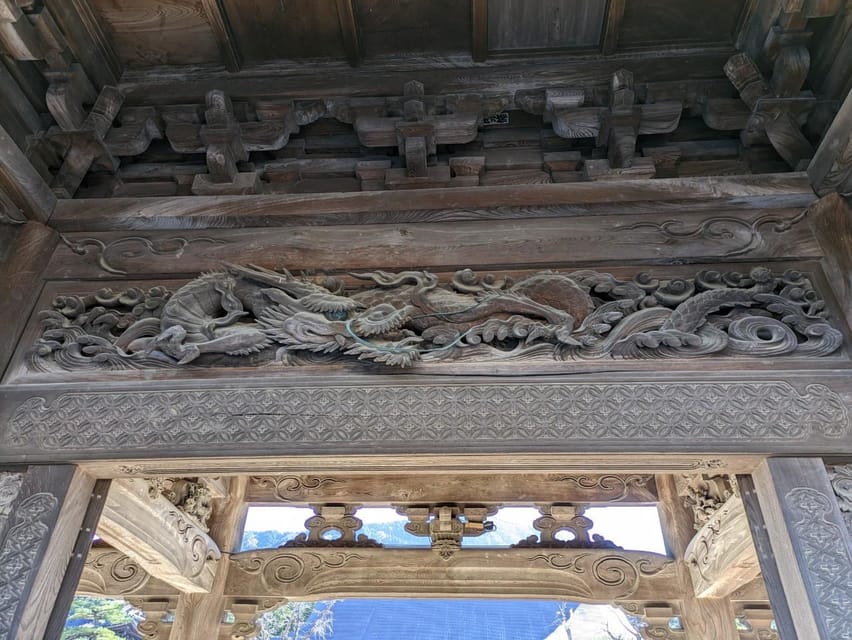
- Inami wood-carver town with temple carvings and hidden cat details along the main street
- Zuisenji Temple with giant walls and centuries-old carvings featuring animals like dragons and elephants
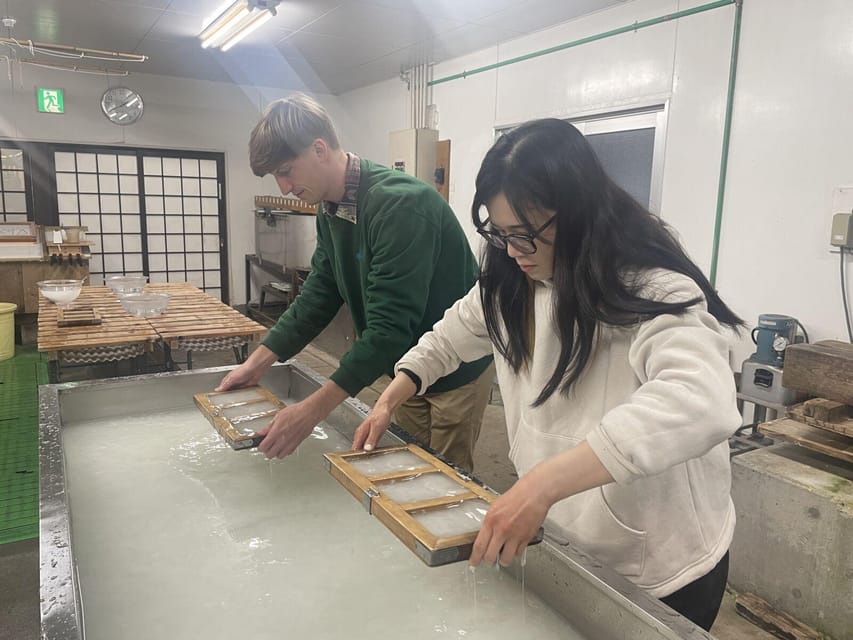
- Ainokura (Ai-no-kura) washi paper workshop where you get your hands wet with traditional methods
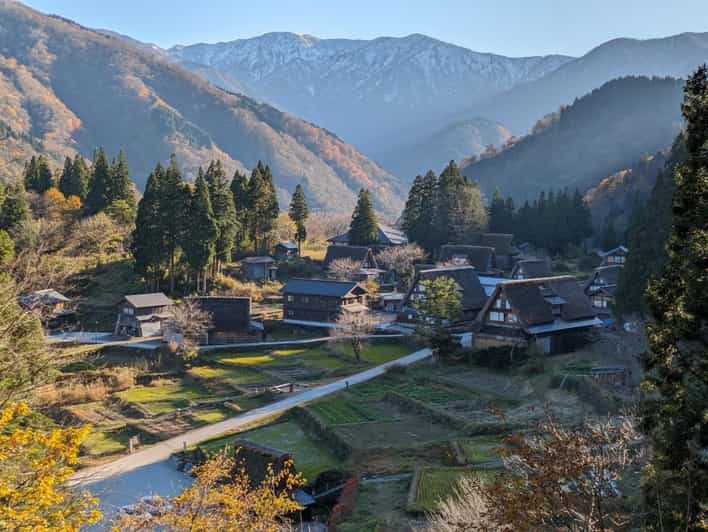
- Gokayama UNESCO villages split into two distinct experiences, not just one repeat town
- Shirakawa-go UNESCO time with guided walking plus time to wander your way
- Optional small-group feel, sometimes calm enough to ask lots of questions
From Kanazawa: how this day trip really works
This is a true mountain day trip, built around bus rides plus three meaningful stops. You leave Kanazawa Station at 9:00 A.M., or at 8:30 A.M. starting June 1, then head out into the Hokuriku region.
The meeting point is at Kanazawa Station, near the Information Center by the Shinkansen Ticket Gates. Your guide meets you there, and you board a bus from the terminal on the Kanazawa Port side of the station.
You’ll be on the move for most of the day, and the timing reflects that. Expect roughly an hour to reach Inami, then additional rides of 35 minutes to Gokayama, 40 minutes to Shirakawa-go, and about 80 minutes back to your drop-off point.
Two drop-off options are offered based on booking. You may return to Kanazawa Station, or you may finish at Takayama Station instead, which is handy if you’re stitching together a longer route through central Japan.
A few more Kanazawa days worth comparing
- World Heritage Shirakawa-go and Experience Tours from Kanazawa
★ 5.0 · 4,049 reviews - Kanazawa: Kenrokuen Tea Ceremony Experience
★ 4.8 · 1,139 reviews - Kanazawa Half Day Tour (Private Guide)
★ 5.0 · 361 reviews
Inami’s wood-carvers and Zuisenji Temple, where the craft is the show
Inami is the kind of place where “shopping” turns into something closer to walking through a living craft neighborhood. The area is known for woodcarving, with over 100 traditional woodcarvers working there.
Once you arrive, the day starts with a break plus time to explore. You follow the main street toward the town’s centerpiece, Zuisenji Temple, and you’ll notice woodcarving examples displayed on and above many shop fronts.
One of the fun, very visual details here is the cat spotting. The town association says there are 32 cats tucked around the area, and shops have also made their own cat carvings in interesting spots. It’s the sort of small scavenger hunt that keeps everyone paying attention while you walk.
Then comes the big moment: Zuisenji Temple. The approach can feel like entering a castle, because the walls look enormous. The temple was originally built in the 1300s, burned in 1735, and was rebuilt with a famous woodcarver from Kyoto brought into the project.
What you’re looking at is not decoration for decoration’s sake. The carvings include patterns on gates plus animals spread across the grounds, including dragons, lions, elephants, and other figures. It’s a good stop if you want to understand how woodcarving shows up in real daily space, not only in museum cases.
Practical consideration: in Inami, the craft focus means you might be doing more walking than in a typical “scenic viewpoint” stop. Wear shoes you trust, especially if weather turns damp.
Ainokura and Gokayama: paper-making you can hold in your hands
After Inami, the ride heads to Gokayama, and the first main village stop is Ainokura (Ai-no-kura). This is one of the best preserved villages in the area, and it feels more tucked in than the better-known postcard towns.
The guided part helps you connect the village to the bigger reason it survived. Ainokura was economically important not only for agricultural products and sake production, but also for gunpowder and paper manufacturing. That matters, because you’re not just making paper as a craft lesson, you’re making paper in the place where paper once played a role in survival and trade.
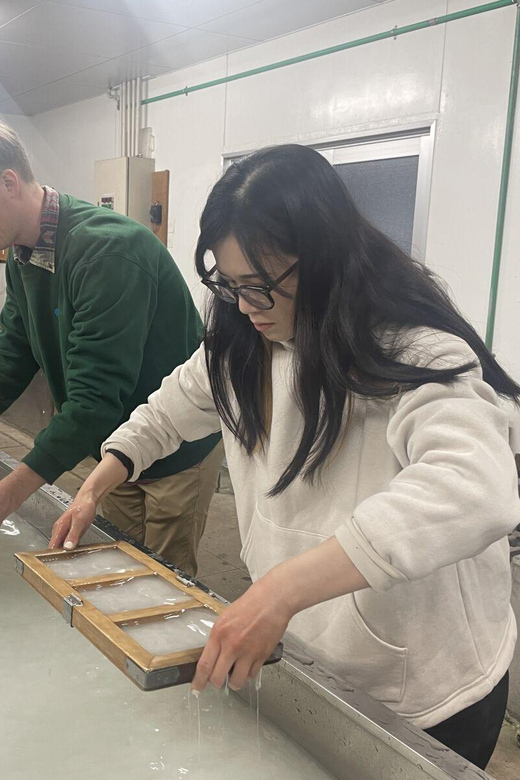
The hands-on experience is the highlight here. You’ll do traditional Japanese paper-making, and you literally get your hands wet making washi. The workshop time is set at about 75 minutes, so you’ll have enough chance to do the process instead of watching from the edge.
This is also where the day slows down in a good way. You’re not chasing photos, you’re creating something small and real. And it becomes a souvenir that feels earned, since you’ve made it step by step.
Lunch timing can vary. Usually you’ll have time for lunch in Ainokura, but depending on circumstances it may happen in Inami instead. If food options are a concern for you, bring your own lunch or snacks, because you may not have much flexibility at every point.
Seasonal note: the papermaking experience does not run from December 27 to January 3. If you’re traveling right then, you’ll want to plan your expectations around that.
Shirakawa-go UNESCO time: guided walking plus breathing room
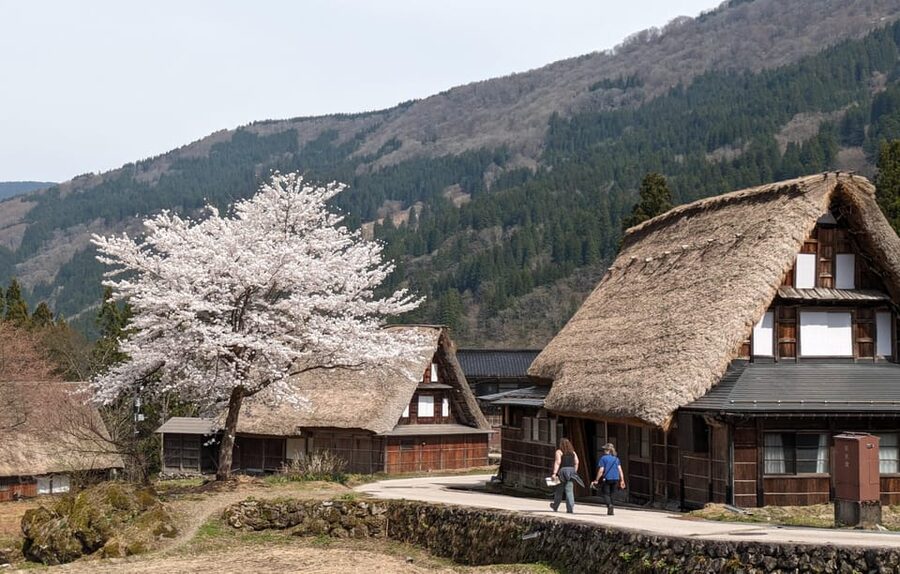
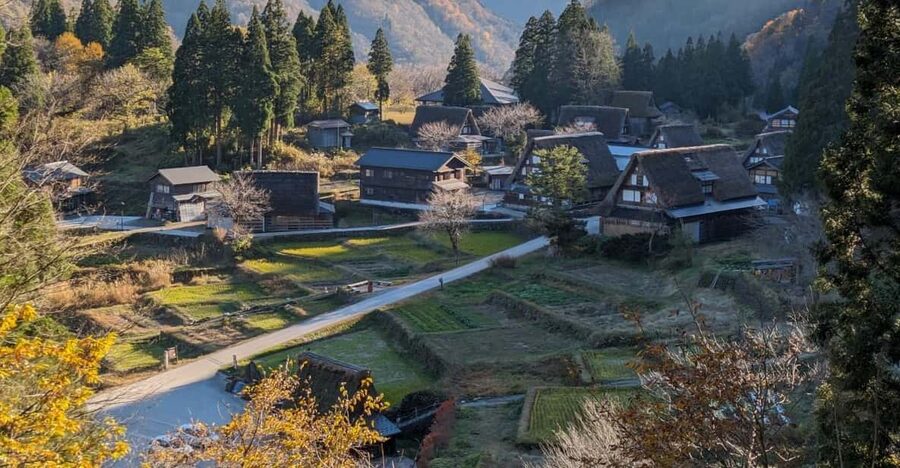
By the time you reach Shirakawa-go, you’re in the most famous part of the circuit. This UNESCO World Heritage site is known for its picturesque townscape and the distinctive gassho farmhouses with steep thatched roofs.
You start with guided walking from the main street. The tour includes entering one of the thatched-roof houses, which is a key difference from simply looking at exteriors.
Then you get free time, about 2 hours, which is enough to do three things well: take photos without feeling trapped in a group line, browse a few shops and stops at your pace, and decide whether you want a short extra stroll.
One honest caution: Shirakawa-go can be crowded. The upside is that it’s also the easiest place to get your bearings, because the town layout makes it clear where you want to walk. The downside is that you may feel the pace shift later in the day, especially after the earlier countryside stops.
If you’re the type who likes quieter moments, you’ll probably appreciate the contrast. Inami and Ainokura often feel calmer, and the later UNESCO stop can feel louder by comparison. Plan your patience for the last segment.
Same corner of Japan, a different kind of day:
- Kanazawa Full Day Tour (Private Guide)
★ 5.0 · 323 reviews - [One-day bus tour departing from Kanazawa Station] Shirakawa-go and Gokayama – Two World Heritage Villages Enjoyable Bus Tour
★ 5.0 · 253 reviews - 1 Day Private Charter Tour to Shirakawa-go & Takayama
★ 4.5 · 253 reviews - World Heritage Shirakawa-go Perfect Guided Tour from Kanazawa
★ 5.0 · 220 reviews
The Shima matcha moment: a small cultural break built in
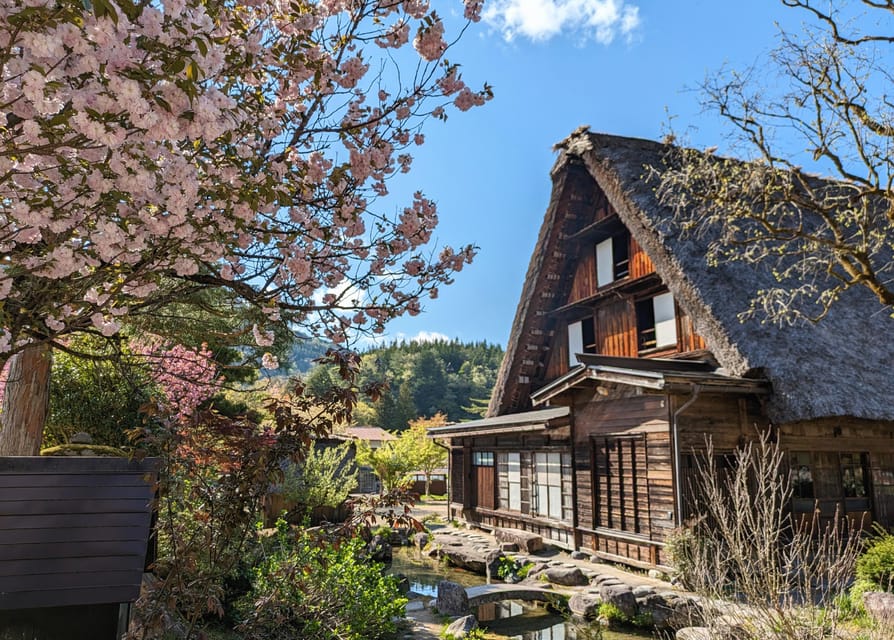
The experience list also includes a matcha experience at Shima, described as a heritage site with classic architecture. Since the details provided for this part are limited, I’d treat it as a short cultural break rather than a full meal stop.
If you’re the kind of traveler who values small taste moments, this likely helps break up the long ride rhythm with something local and easy to enjoy. If you’re chasing only major sightseeing, you may want to keep your expectations realistic about how much time you’ll spend here.
Price and value: what $180 is buying you on a one-day schedule
At $180 per person for a full day, this is not a budget excursion. You are paying for an organized, English-guided day that links multiple rural areas that are hard to stitch together on your own without planning.
Here’s what you do get in the price:
- Transportation to and from Shirakawa-go and the other destinations
- An English-speaking guide
- Entry fee at Zuisenji Temple
- Guided tours at Inami and the UNESCO area
- A Japanese paper-making experience fee
What you don’t get:
- Lunch
- Accommodation
So the real value question is whether the included experiences match your priorities. If you care about woodcarving beyond “look and buy,” Zuisenji in particular is more than a photo stop. If you want something tactile, the washi paper workshop adds real substance to the day.
There is also time value. The day trip handles the bus logistics and routing, which can be a big deal if you’re trying to reach Shirakawa-go from Kanazawa without dealing with sold-out seat problems on your own. (Some people book exactly for that reason.)
One drawback worth acknowledging: a smaller number of travelers felt the day was overpriced and that vehicle comfort could vary when the group fills up. If you’re sensitive to cramped rides, consider that a day trip like this is designed to move many bodies efficiently, not to feel like private car comfort.
Timing, bus comfort, and how to pack for mountain weather
The itinerary is timed tightly, but the structure is designed to keep the day from collapsing. You have guided time blocks, then you have gaps to browse or take photos, and the day ends with a return ride back to your drop-off.
The end of the day back to Kanazawa lands around 6:00 to 6:30 P.M., depending on traffic. That’s late enough to feel like a full day, but early enough that you can still connect to your evening plans.
Comfort-wise, the driving has been praised, including smooth handling despite harsh weather. Getting back to a warm vehicle after browsing in cold conditions is a big practical win.
Packing advice that actually fits this route:
- Layers you can remove if the bus warms up
- A waterproof outer layer, because you might be outside at temple grounds and in village streets
- Comfortable shoes for walking and uneven village surfaces
- A small snack stash, especially if you’re picky or you’re traveling with dietary needs, since lunch is not always guaranteed to be simple
Also, keep an eye on dates. From June 1, the start time shifts to 8:30 A.M., so plan your morning buffer and breakfast timing.
Should you book this day trip from Kanazawa?
If your goal is to see UNESCO Shirakawa-go without treating the whole day as a crowded line-fest, I think this tour is a smart choice. You get guided context, plus two quieter rural stops that feel more personal, including Inami’s woodcarving and Ainokura’s washi paper workshop.
Book it if:
- You want hands-on culture, not only sightseeing
- Woodcarving and traditional craft are a real interest for you
- You prefer guided clarity over trying to figure out mountain transfers on your own
- You want a structured day with enough free time to breathe in Shirakawa-go
Skip or reconsider if:
- You’re very sensitive to long bus days and cramped seating
- You’re only interested in Shirakawa-go and don’t care about the craft stops
- You’re traveling between December 27 and January 3, since the papermaking experience will not run then
If you want my simple take: this is one of the better ways to experience rural Japan from Kanazawa because it pairs the famous thatched village with craft stops that explain how those rural communities worked.
FAQ
What time does the tour start in Kanazawa?
It starts at 9:00 A.M., and from June 1 the start time changes to 8:30 A.M.
Where do I meet the guide?
You meet your guide at Kanazawa Station near the Information Center by the Shinkansen Ticket Gates.
How long is the tour?
The tour is 1 day.
How much time do I get in Shirakawa-go?
You get free time for about 2 hours in Shirakawa-go, along with guided time there as well.
Is lunch included?
No, lunch is not included.
Is the paper-making workshop included?
Yes. A Japanese paper-making experience fee is included, but it does not run from December 27 to January 3.
Do I pay for entry at Zuisenji Temple?
No. The entry fee at Zuisenji Temple is included.
Is transportation included?
Yes. Transportation to and from Shirakawa-go and all other destinations is included.
Does the tour end in Kanazawa or Takayama?
It can end at either Kanazawa Station or Takayama Station, depending on the drop-off option for your booking.
Can I cancel for a refund?
Yes. You can cancel up to 24 hours in advance for a full refund.
Fresh options around Kanazawa
- Kanazawa Like a Local: Private & Personalized Experience 2-3 hrs★ 5.0 · 19 reviews
- Kanazawa Full Day Private Tour to Top Highlights with Local Guide★ 5.0 · 19 reviews
- Kanazawa: Private Custom Tour with Local Guide★ 4.9 · 20 reviews
- Shirakawa-go, Gokayama & Takayama Private Tour From Kanazawa★ 4.7 · 21 reviews
- Kanazawa: Samurai Swordsmanship Lesson at a rented temple★ 5.0 · 21 reviews
- Day Tour from Kanazawa OR Toyama: Snow Wall and Mysterious Valley★ 5.0 · 22 reviews
- Private Ring Craft Experience in Kanazawa★ 5.0 · 22 reviews
- Private Tour of Shirakawago from Kanazawa (Half Day)★ 5.0 · 24 reviews
Kanazawa Tours, compared.
World Heritage Shirakawa-go and Experience Tours from Kanazawa
Read our review →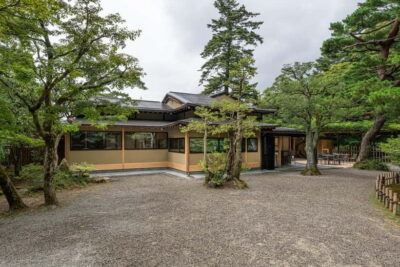
![[One-day bus tour departing from Kanazawa Station] Shirakawa-go and Gokayama – Two World Heritage Villages Enjoyable Bus Tour](https://review-japan.com/wp-content/uploads/one-day-bus-tour-departing-from-kanazawa-station-shirakawa-go-and-gokayama-two-world-heritage-villages-enjoyable-bus-tour-400x267.jpg)
[One-day bus tour departing from Kanazawa Station] Shirakawa-go and Gokayama – Two World Heritage Villages Enjoyable Bus Tour
Read our review →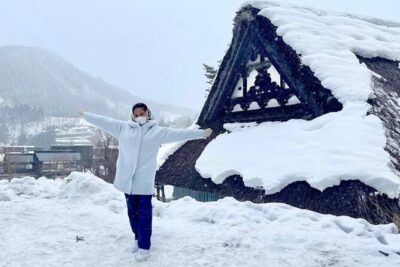
1 Day Private Charter Tour to Shirakawa-go & Takayama
Read our review →
World Heritage Shirakawa-go Perfect Guided Tour from Kanazawa
Read our review →
Kanazawa Night Tour with Local Meal and Drinks
Read our review →Browse the lists this tour appears in