Reviewed · FULL-DAY
Tokyo Full-Day Private Tour (Customizable)
A private Tokyo day feels manageable. You get private vehicle comfort and a day that you can customize to match what you care about. It is a smart way to hit five major neighborhoods without wrestling train transfers.
I like how the English-speaking driver keeps the story clear, adding history and local context as you go.
One thing to watch, though, is that Tokyo Skytree observatory tickets cost extra, and lunch is on your own, so build that into your budget.
Key highlights worth planning for
- Private car, real rest time between busy sights
- Customizable route so the day fits your interests and pace
- English-speaking driver who explains what you are seeing, not just where to go
- Five big stops in one day without complex navigation
- Skytree costs extra but the option makes the itinerary flexible
Why a private full-day route beats self-guided hopping
Tokyo is big, and a full day can evaporate fast if you are switching lines, recalculating routes, and trying to time entrances. This private tour is built for momentum. You get a driver and a car, so you can spend your energy on the places, not on figuring out how to get between them.
The itinerary is also well chosen for first-timers. You cover a food-and-market area (Tsukiji), a major cultural landmark (Senso-ji), an iconic view stop (Tokyo Skytree), and a youth-fashion shopping street (Takeshita). Add in the Imperial Palace East Gardens and Edo Castle ruins, and you get contrast in scenery and mood, not just another temple-photo loop.
I also appreciate that this is truly private, meaning your group only. That matters when you want time to browse, ask questions, or slow down for something small that catches your eye.
A few more Tokyo days worth comparing
- Mt Fuji and Hakone 1-Day Bus Tour Return by Bullet Train
★ 5.0 · 26,383 reviews - 1-Day Tokyo Bus Tour
★ 5.0 · 14,250 reviews - Tokyo: TOKYO SKYTREE® Admission ticket
★ 4.5 · 11,192 reviews
Price and value: $354 for up to 5 people
At $354 per group for up to 5 people, this can be very reasonable if you are traveling as a small family or a group of friends. The math gets better the moment you compare it to paying for separate taxis plus the time cost of trying to manage transport yourself.
Think of what you are really buying:
- A dedicated driver for about 8 hours
- Air-conditioned private transportation
- English interpretation and context at each stop
- A route that hits five top sights without you mapping the day
Yes, there are extra costs. Tokyo Skytree observatory tickets are not included, and lunch is not included. But you still come out ahead in convenience, and the pacing tends to feel smoother than a rush job with transit.
If you are traveling solo and do not want to pay for a full private vehicle, you might compare against shared tours or train-based day plans. But for a group of two to five, this is often a good deal.
How the day runs, from pickup to the last stop
The start time is 9:00 am, and the total duration is about 8 hours. The tour includes round-trip transportation from your accommodation with pickup offered, plus an air-conditioned car. You also get a mobile ticket, which is practical for keeping everything simple.
Your day is structured into five main stops with set time blocks. That is important because it prevents the classic Tokyo problem, where you arrive early, wander too long, miss your next entrance window, and then spend the afternoon stressed.
That said, the tour is customizable. If you care more about shopping than views, or more about temples than markets, you can often adjust the emphasis within the overall flow. The driver can also help you make better choices about where to spend your limited time.
And for comfort, do not underestimate the value of breaks in transit. Between Tsukiji, Asakusa/Senso-ji, and Harajuku, the walking time can add up. The car gives you breathing room.
Stop 1: Tsukiji Fish Market, modern action in about an hour
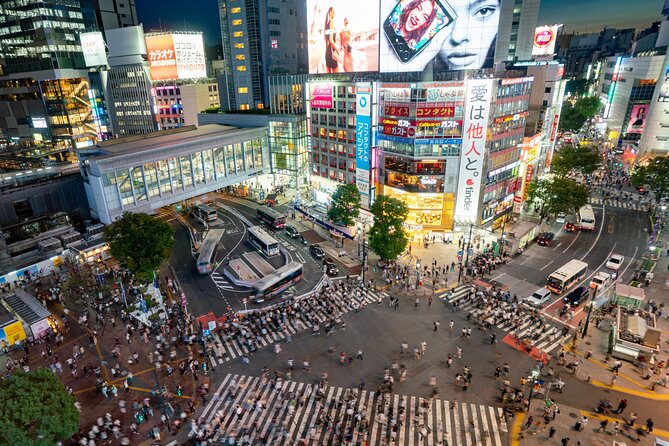
Tsukiji is one of those Tokyo stops people either love or find overwhelming, mostly because it can be chaotic if you are just following the crowd. Here, you get a focused visit built for an hour, so you can see the market energy without turning it into an all-day commitment.
Admission for this stop is free, and the area you visit is the modern market complex that took over from the aging Tsukiji wholesale setup. What that means in practice is that you are not only looking at traditional retail stalls. You also get a sense of how the market works now, plus many places to eat inside the larger premises.
In one hour, you should aim to:
- Watch what is happening around the food counters
- Pick one or two snack-style bites rather than trying to do a full meal
- Use your driver’s context to understand what you are looking at
Possible drawback: if you want a deep dive into food culture, one hour can feel short. But for a first visit, it is a great sampler that sets up the rest of the day.
Same corner of Japan, a different kind of day:
- Tokyo: teamLab Planets TOKYO Digital Art Museum Entry Ticket
★ 4.6 · 9,779 reviews - Mt Fuji & Hakone Cruise, Drum Show Bullet Train 1 Day from Tokyo
★ 4.0 · 7,413 reviews - Tokyo: Sumo Show Experience with Chicken Hot Pot and a Photo
★ 4.8 · 6,678 reviews - Tokyo: Shinjuku Food Tour (13 Dishes at 4 Local Eateries)
★ 5.0 · 6,603 reviews
Stop 2: Imperial Palace East Gardens and Edo Castle ruins
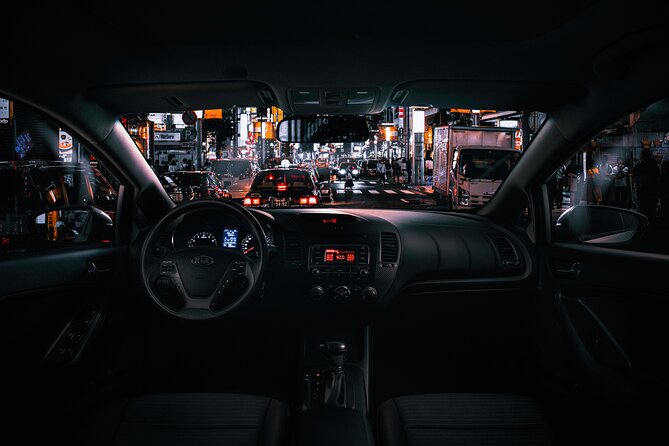
This is the palate cleanser. After the market, you shift to open space and historic layers. The East Gardens area includes remnants connected to the Edo Castle ruin, including the remains of a main tower, plus garden paths with seasonal plants like roses, bamboo, cherry blossoms, and tea trees.
Admission is free for this stop, and you get about an hour. That timing is good. In smaller gardens, an hour gives you time to walk slowly and still make it to the next big highlight without feeling rushed.
What I like here is the contrast. You go from commerce and street noise to a calmer landscape with classical plantings and a broader sense of place. It also helps you understand Tokyo beyond its modern skyline. You start seeing it as a city built on older spaces and careful use of land.
Possible drawback: if the day is extremely hot or rainy, garden time can feel slower. Still, having a car ready means you are not stuck waiting around outside for long.
Stop 3: Senso-ji Temple, color and meaning in Asakusa
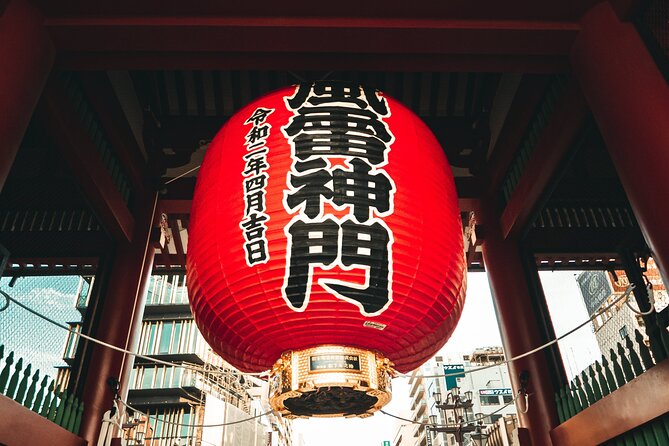
Senso-ji is Tokyo’s famous temple, and it does not pretend to be quiet. It is one of the most colorful and popular temples in the city, and you get about an hour here with free admission.
The legend adds a strong hook for what you are seeing. The story says that in the year 628, two brothers fished a statue of Kannon, the goddess of mercy, out of the Sumida River. That legend helps you connect the visuals to a longer narrative, not just a photo spot.
Here is how to make the hour work:
- Walk with intention, especially on the approach and main grounds
- Spend time looking at details, then take your photos quickly
- If crowds feel tight, let your driver help you choose the smoothest route through the area
Possible drawback: Senso-ji can be crowded, especially if you are in the thick of peak hours. The benefit of having a private driver is that you are not wasting time stuck at every bottleneck deciding what to do next.
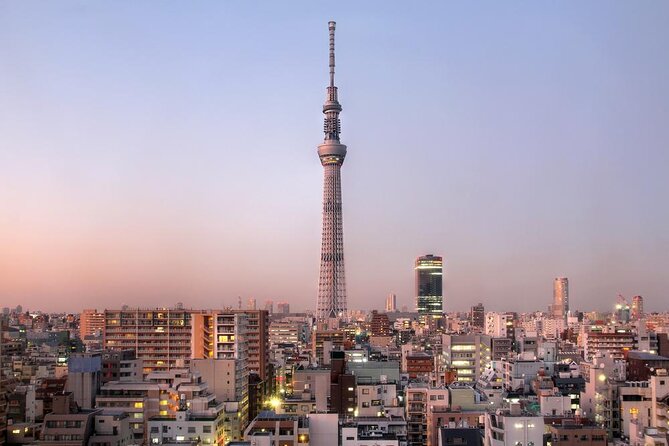
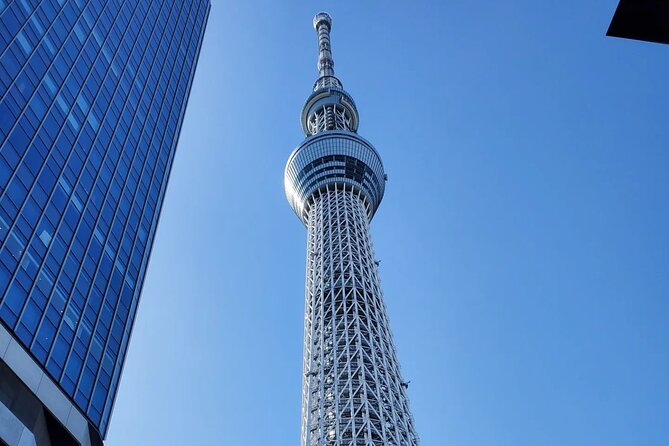
Stop 4: Tokyo Skytree, the view option with extra ticket cost
Tokyo Skytree is the iconic “look up” moment. The stop includes about an hour, but Skytree observatory admission is not included. The pricing runs roughly from 2,100 to 2,300 yen for the First observatory, and about 3,100 to 3,400 yen if you choose both observatories.
You should treat this as a decision point. If you love skyline views, plan to pay for at least one observatory level. If you are more interested in shopping and streets, you might still go for the area and skip the full climb, though that would change the experience from what most people aim for.
Why one hour is enough for most visitors:
- You can reach the observatory, take photos, and enjoy the view
- You do not have to turn Skytree into an all-afternoon commitment
Possible drawback: because the observatory ticket is separate, your total cost is higher than the headline price. Also, you will want to stay flexible about timing depending on lines and weather, since visibility can affect how long you want to linger.
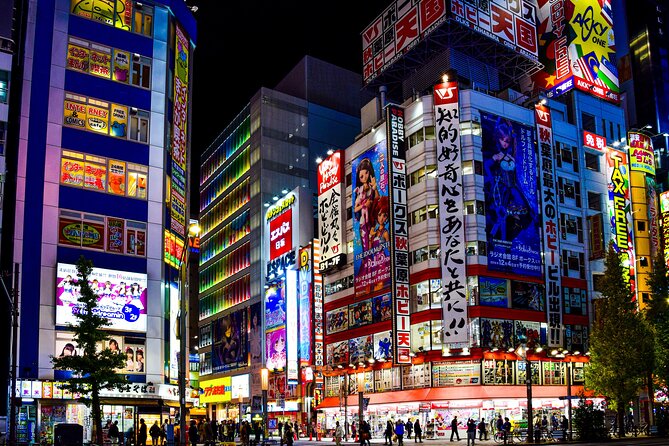
Stop 5: Takeshita Street in Harajuku, 45 minutes of high-energy shopping
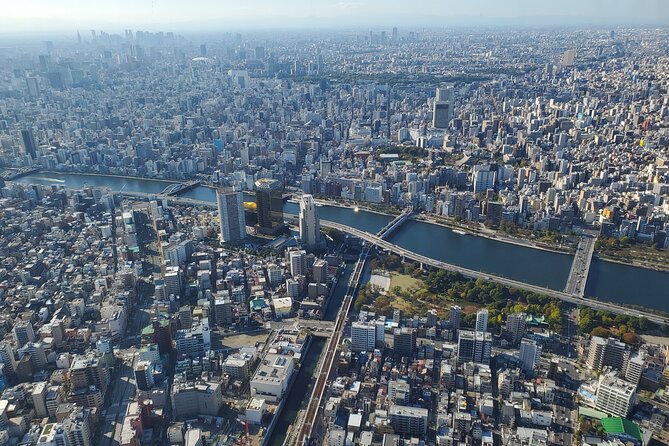
Takeshita Street is short, but it packs in people, fashion, snacks, and quick stops. You get about 45 minutes, and admission is free. It is famous for trendy boutiques, cafes, and street-food stalls, so it is the place to spot the look of contemporary Tokyo.
In 45 minutes, you will not do everything. That is fine. The best move is to choose one or two “missions”:
- A snack stop you will actually eat
- One fashion or accessory browse that matches your taste
- A quick walk-through for photos, then move on
The practical value here is that the rest of your day already gives you the major sights. Takeshita is the fun, playful finish, and you do not need more time than that.
Possible drawback: it can get packed. That is not a flaw in the tour, just a feature of Harajuku. If you hate crowds, you can ask for a route adjustment, but you will still be in the general area.
The real difference: the English-speaking driver and smart pacing
This tour is only as good as the person behind the wheel. And the names that stand out are Ryu and Mukarram Muhammad. Both are described as friendly, prepared, and genuinely good at explaining what you are seeing, including Japanese history, culture, and even politics.
I also like that the driver does not sound like a robot reciting facts. In the experience, they help you connect the dots, and they can handle requests. If your group wants more time at a stop, or you suddenly realize you prefer one area over another, you are not stuck with a rigid script.
Another practical plus is pacing. Reviews highlight that the tour runs smoothly and does not feel like a sprint. You also get food and shopping recommendations. That is the kind of advice you can use right away, after you leave the main sights.
And in terms of comfort, the car is described as clean and well maintained, with air-conditioning. On a long day that matters more than you think.
Best fit: who should book this Tokyo private day
This is ideal if you:
- Are visiting Tokyo for the first time and want a compact highlights plan
- Prefer comfort over constant train transfers
- Want a driver who can explain context, not just point directions
- Are traveling with 2 to 5 people and want to spread the cost
It is also a strong option if your group has mixed interests. The day includes markets, temples, gardens, a major skyline view stop, and street fashion, so you are not forcing everyone into the same type of experience.
Who might skip it? If you love routing yourself and you are comfortable with public transit and crowds, you may find a cheaper DIY plan. But you will likely trade away the smooth pacing and the “one person handles it all” convenience.
Should you book this Tokyo private full-day tour?
If you want an efficient Tokyo day with real comfort, this is a solid choice. The value improves when you have a group of up to five, and the best part is the driver, especially with guides like Ryu and Mukarram Muhammad bringing clear context and helpful recommendations.
The main reason to hesitate is cost add-ons. Tokyo Skytree observatory tickets are extra, and lunch is not included. If you already know you will pay for the view and you do not mind finding your own meal, you are set.
I think this tour works best as a first or second Tokyo day. You get a strong sense of the city’s range, then you can build the rest of your trip around what you liked most.
FAQ
How long is the Tokyo Full-Day Private Tour?
It runs for about 8 hours.
How many people can fit in the private group?
The price is per group of up to 5 people, and it is private for your group only.
What is the tour price?
It is $354.00 per group (up to 5).
Is pickup included?
Yes, pickup is offered, along with hassle-free round-trip transportation from your accommodation.
What does the tour include?
You get an air-conditioned vehicle, private transportation, and an English-speaking driver.
Are entrance fees included?
Some stops are free, but Tokyo Skytree observatory tickets are not included. The observatory costs are about 2,100 to 2,300 yen for the First observatory, or about 3,100 to 3,400 yen for both observatories.
Is lunch provided?
No, lunch is not included.
What time does the tour start?
The start time is 9:00 am.
What if the weather is poor?
The tour requires good weather. If canceled due to poor weather, you will be offered a different date or a full refund.
Fresh options around Tokyo
- Tokyo: Exclusive Geisha Dinner Experience★ 5.0 · 14 reviews
- Enjoy plus size Kimono★ 4.5 · 14 reviews
- Private Mt. Fuji Custom Tour from Tokyo★ 3.5 · 14 reviews
- Tokyo Disneyland Round Trip Shared Transfers with Admission Tickets★ 4.0 · 14 reviews
- Tokyo: Mt Fuji Lake Kawaguchiko Tour & Arakuyama Sengen Park★ 4.0 · 14 reviews
- Dinner Cruise with Show, Beef Sukiyaki, Drink, Tokyo Tower Option★ 4.5 · 14 reviews
- Mt.Fuji Trekking 1 Day Tour up to the summit★ 5.0 · 14 reviews
- Fuji Speedway Self Drive & Mt. Fuji Private Tour pickup & dropoff★ 5.0 · 14 reviews
Full-Day, compared.
Mount Fuji Full-Day Private Tour from Tokyo (Customizable)
Read our review →
Hiroshima / Miyajima Full-day Private Tour with Government Licensed Guide
Read our review →
Tokyo Private Full-Day Tour by Car or Van
Read our review →

5 Top Highlights of Kyoto Full Day Bike Tour (E-bike option)
Read our review →
Full Day Biking Tour Exploring the Best of Kyoto
Read our review →