Reviewed · TOKYO TOURS
Tokyo: Calligraphy Experience at Japanese Room in Shibuya
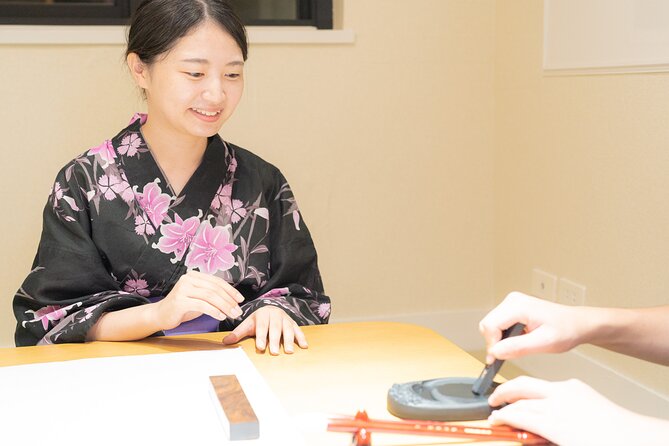
Write one calm kanji in Shibuya. This hands-on Japanese calligraphy workshop is interesting because you slow down with real tools, learn the basic etiquette, then end by producing a take-home keepsake you can’t really get from a souvenir shop. I like that it teaches both craft and manners, and I like that the final piece is personalized. One possible drawback: it’s only about 1 hour, so you get a focused character, not a long, multi-piece project.
In the Shibuya Japanese Room setting, the experience feels relaxed, and the small group size (up to 8 people) keeps it from turning into a rushed “watch and go” class. In past sessions, the instructor Sowa, also called Soba in some notes, is praised for being friendly and for explaining the logic behind kanji and stroke order, with cultural context along the way.
Key Things You’ll Do and Remember
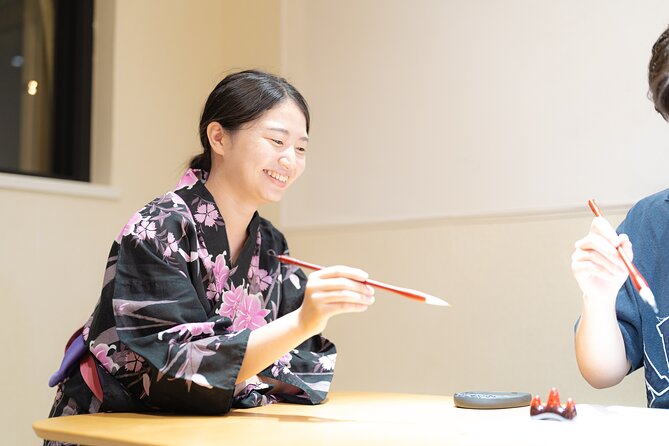
- Grind and mix ink the traditional way using an inkstone before you write
- Practice strokes first, so the final character feels doable
- Learn etiquette and tool handling, not just how to copy a shape
- Choose a character from a list or base it on your own name
- Finish with one decorative paper keepsake you can take home
- Stay in a small group (max 8), with guidance as you go
Japanese Calligraphy in Shibuya: The Real Reason This Hour Feels Worth It
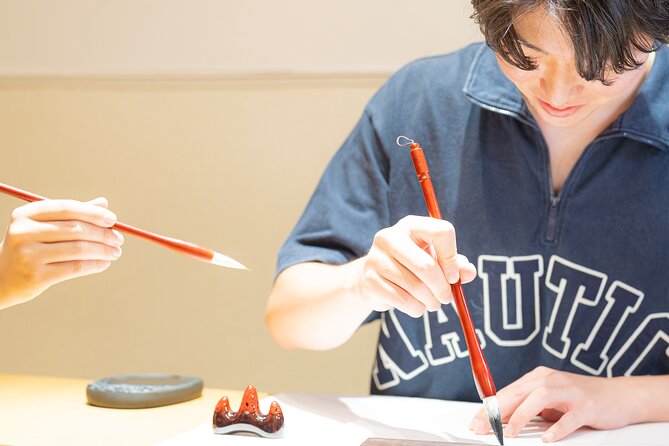
Tokyo can be loud. This class is the opposite. In about an hour, you do a skill that forces you to slow your hands down, and then you take the result home. That combination is why this experience sells well, and why so many people rate it so highly.
The first big value is the start: preparing ink with an inkstone. Most calligraphy experiences jump straight to writing. Here, you learn that the process begins before the brush ever touches paper. You’ll mix the ink correctly, and you’ll understand why the texture and rhythm matter.
The second big value is the way the class is paced. You don’t just get shown one perfect example and expected to mirror it. You’re guided through basic techniques and etiquette, then you practice strokes at your own pace in a calm setting. The final character is a payoff, not a test.
One thing to keep in mind is that the workshop is centered on a single character written on decorative paper. If you’re hoping for something like a full poster, a multi-line composition, or a longer calligraphy session, you’ll need to know this is a focused session.
A few more Tokyo days worth comparing
- Mt Fuji and Hakone 1-Day Bus Tour Return by Bullet Train
★ 5.0 · 26,383 reviews - 1-Day Tokyo Bus Tour
★ 5.0 · 14,250 reviews - Tokyo: TOKYO SKYTREE® Admission ticket
★ 4.5 · 11,192 reviews
The 1-Hour Flow: What Happens From First Minute to Last
Here’s the typical rhythm, in plain terms, so you know where you’re headed.
1) Welcome and tools basics
You’ll start with an introduction to Japanese calligraphy and the tools used in the practice. This matters because brush work depends on tool handling. If you’ve never used a brush for calligraphy, you’ll appreciate getting basic guidance early.
2) Traditional ink prep on an inkstone
Next comes the traditional step. You prepare the ink using an inkstone, and you learn the correct way to grind and mix it. This is the part that turns the workshop from a craft demo into a real workshop. The ink prep gives you something tangible to do right away, and it sets the pace.
Same corner of Japan, a different kind of day:
- Tokyo: teamLab Planets TOKYO Digital Art Museum Entry Ticket
★ 4.6 · 9,779 reviews - Mt Fuji & Hakone Cruise, Drum Show Bullet Train 1 Day from Tokyo
★ 4.0 · 7,413 reviews - Tokyo: Sumo Show Experience with Chicken Hot Pot and a Photo
★ 4.8 · 6,678 reviews - Tokyo: Shinjuku Food Tour (13 Dishes at 4 Local Eateries)
★ 5.0 · 6,603 reviews
3) Etiquette and basic technique
Then your instructor guides you through basic techniques and proper etiquette. Expect instruction on strokes and how to approach the writing calmly and correctly. Because the class is described as relaxed and paced so you can practice at your own speed, it’s not about speed or perfection.
4) Stroke practice
After the basic instruction, you practice strokes before you do your final piece. That step is a big deal for beginners. Your hand gets used to the brush, and your mind learns the idea of consistent pressure and direction.
5) Choose your character and write the final piece
Finally, you choose a character. You can pick one from a prepared list, or you can choose one based on your own name. You then write your chosen character on decorative paper. This finished work becomes your keepsake.
6) Done, back to the start point
The experience ends back at the meeting point. The whole thing is listed as about 1 hour, so plan your day around a quick, meaningful block.
Inkstone to Ink: Why This Start Matters More Than You Think
Grinding and mixing ink with an inkstone might sound like a prelude, but it’s actually part of the lesson. In calligraphy, the ink consistency and how you load the brush affects what the stroke looks like. Learning that process helps you understand what you’re seeing and trying to reproduce.
Also, it’s a fun way to get over the beginner hurdle. You don’t have to know kanji to be successful at the start. You just follow the instructions for ink prep, and suddenly you’re participating in the craft.
From the way the class is described, you’ll be taught the correct way to grind and mix. That reduces guesswork. You’re not left to figure out tool handling alone.
There’s also a calm, almost zen-like quality to doing ink work slowly. One write-up praises the experience as zen-like and points out that practice time is built in before the final piece. That lines up with the structure here: you’re given time to try strokes, then you produce the keepsake.
Etiquette and Stroke Technique: What You Learn Beyond the Character
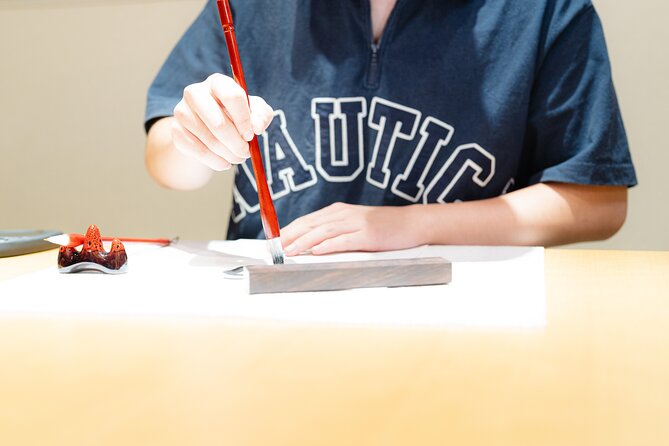
This is not just about drawing a symbol. You’ll learn etiquette and basic technique. That includes how to use the tools properly and how to approach writing with care.
Why does that matter for you as a visitor? Because Japanese calligraphy is culturally specific. If you only copy a shape, you miss the point. Learning etiquette gives you a framework, so your work looks more consistent and you feel less like you’re just doodling.
From notes about instructor Sowa, the teaching style is described as friendly and encouraging, and also clearly structured. People mention step-by-step explanations and cultural references, including kanji context. Some mentions even highlight starting with the building blocks of characters, like basic radicals, and then working up toward understanding the full character.
Even if you’re not chasing a deep study of kanji, those kinds of explanations help you write with more confidence. You’re less likely to feel lost when the instructor says to focus on the logic of the strokes rather than just the final appearance.
Choosing Your Character From a List or Your Name
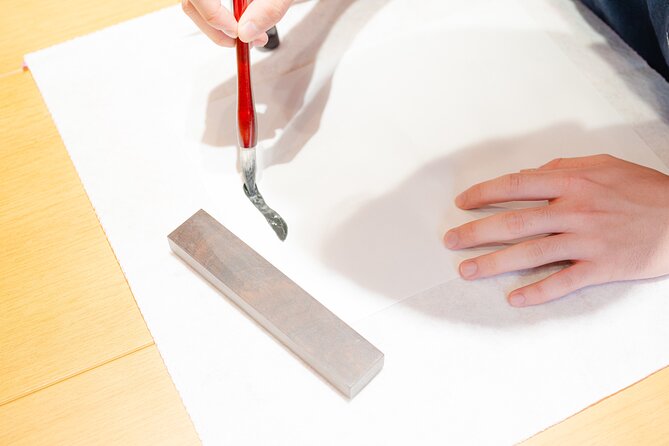
This workshop gives you two personalization paths, and it’s worth deciding early which one you want.
1) Choose from a prepared list
If you want something easy and stress-free, choose a character from the options provided.
2) Choose based on your own name
If you want something more personal, you can choose a character based on your own name.
Either way, you’ll write one character on decorative paper as your final output.
Important practical note: because the class centers on writing a single character, you’ll want to pick something you actually want to live with. It’s your keepsake. If you’re thinking of something symbolic, plan a moment before you arrive, or review your options quickly once you’re there.
Your Take-Home Keepsake: What You’ll Actually Leave With
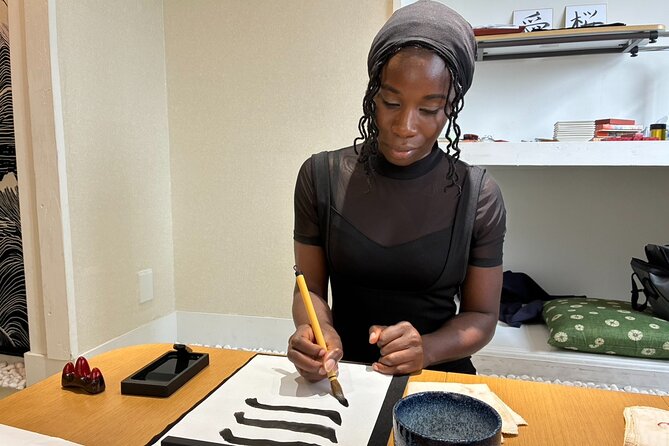
The end result is a calligraphy piece written on decorative paper. You take this work home, and that’s a major part of the value of the class.
A finished piece is not the same as a photo. Photos are flat. Your calligraphy work has texture and ink character. The session also helps because you’re not just buying an item, you’re making one with guidance. That makes it more meaningful, and it’s easier to remember later.
If you plan to gift it, consider timing. Since it’s a one-hour workshop and you return back to the meeting point, it’s designed for a quick in-and-out experience. You can place your calligraphy piece into a folder or flat bag once you leave, so it stays smooth.
Location and Logistics in Shibuya: Easy to Fit Into a Tokyo Day
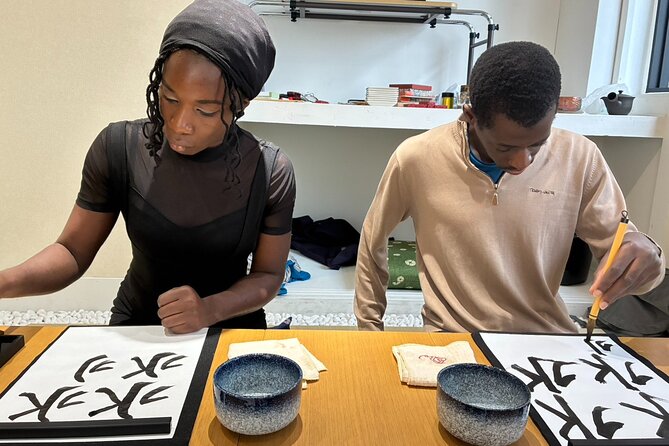
The meeting point is listed as 2-chōme-14-13 Shibuya, Tokyo 150-0002, Japan. The activity is near public transportation, so you’re not stuck with a complicated route.
It also starts and ends at the same place, which keeps the friction low. You can plan this as a pause in a busy sightseeing day.
Two more practical logistics points matter:
- You receive a mobile ticket.
- There’s a maximum of 8 travelers.
The small group size is where you get the “teacher is actually talking to you” feeling. If you ask a question about strokes or tools, you’re less likely to get lost in a crowd.
Price and Value: Is $32.84 a Good Deal for This Hour?
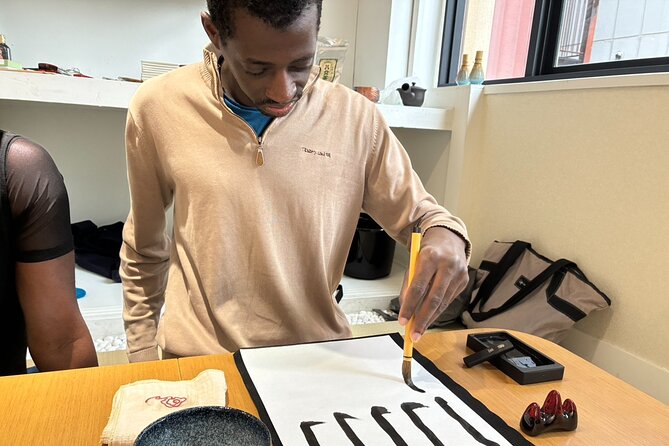
At $32.84 per person, this workshop is priced like a short, high-instruction experience. You’re not paying for a bus ride or a long museum visit. You’re paying for:
- Traditional inkstone ink preparation
- Guided etiquette and technique
- Practice time before the final character
- A take-home keepsake on decorative paper
- Instructor time in a small group setting
For me, the value comes from the combination of craft and personalization. If you just wanted a souvenir kanji, you could get one anywhere. But when you grind ink, practice strokes, then write your own selected character, the money buys experience you can’t fake.
Also, the class is set up so that most people can participate. That lowers the risk if you’re traveling with limited Japanese. You’ll still get something you can finish.
Who This Workshop Suits Best (And Who Might Want Something Else)
This is a strong fit if you:
- Want a calm break from Tokyo crowds
- Like hands-on activities more than passive sightseeing
- Want to learn basic kanji or at least understand stroke logic
- Prefer small group instruction
- Want a take-home item that feels personal
It may not be ideal if you:
- Expect a long course or multiple completed works
- Want a strict sightseeing itinerary instead of making something
- Have a very limited schedule and can’t spare about an hour
If you’re traveling with kids, there’s a note about returning with children, and that makes sense because you practice before the final step. The workshop is structured for beginners, and the final output is achievable.
Tips to Get More Out of Your Calligraphy Hour
You’ll enjoy this more if you treat it like a mini workshop, not a performance.
- Arrive a few minutes early so you can settle in. The experience begins with introductions and tool basics.
- Think about your character choice before you go. If you want something based on your name, have that name ready in mind.
- Don’t worry about making it perfect. The session is designed around practice and guidance, with a final keepsake at the end.
- Watch what the instructor is doing with ink and brush handling. The inkstone step affects your experience more than you might expect.
- If you feel stuck, ask a question. In a group of up to 8, you’re more likely to get direct help.
One more practical tip: since you’ll be writing with ink, plan to keep your hands and clothes in mind. The workshop is about calm control, and you’ll want to stay comfortable so your strokes stay steady.
FAQ
How long does the Japanese calligraphy experience take?
It lasts about 1 hour.
Where is the meeting point for the Shibuya calligraphy workshop?
The meeting point is 2-chōme-14-13 Shibuya, Tokyo 150-0002, Japan.
Is the workshop ticket delivered on a mobile device?
Yes. It includes a mobile ticket.
What happens first in the workshop?
You begin with an introduction to Japanese calligraphy and the tools, then you prepare ink using an inkstone.
Do I practice strokes before writing the final character?
Yes. You’ll learn techniques and practice strokes in the guided session before making your final work.
Can I choose what character to write?
Yes. You can choose from a prepared list or choose a character based on your own name.
What is the group size limit?
The workshop has a maximum of 8 travelers.
Is it near public transportation?
Yes, it’s near public transportation.
Is there a take-home item at the end?
Yes. You write your chosen character on decorative paper and you can take the finished piece home.
What is the cancellation policy?
You can cancel for free up to 24 hours in advance for a full refund. If you cancel less than 24 hours before the start time, the amount you paid is not refunded.
Should You Book This Shibuya Calligraphy Workshop?
If you want a short, meaningful cultural activity in Tokyo that produces a real keepsake, I think this one is a solid booking. The inkstone start, the guided etiquette, and the practice-before-final structure make it friendly for beginners. Add the small group size, and you get a calmer experience in the middle of a busy city.
I’d book it if you like hands-on learning and you’d rather make something than just look at it. I’d skip it if you’re hoping for a long, multi-character calligraphy session. For one hour, though, this hits a sweet spot: craft, culture, and a finished piece you can actually take home.
Fresh options around Tokyo
- Daikoku JDM Car Meet Private Tour★ 5.0 · 20 reviews
- Mt. Fuji 5th Station, Owakudani Ropeway, Pirate Ship plus Outlet shopping!★ 4.5 · 20 reviews
- Tokyo: Karate Experience with Former All-Japan Champion★ 5.0 · 20 reviews
- Tokyo Bike Tour: Shibuya, Harajuku & Hidden Gems★ 5.0 · 20 reviews
- Wagyu & Sake 8 Course Tasting Dinner in Shinjuku★ 4.9 · 20 reviews
- Private homevisit for whole cultual experience, 20min from Tokyo★ 5.0 · 20 reviews
- Tokyo:Celebrate Unique Japanese New Year Tradition Festivity★ 3.9 · 20 reviews
- Tokyo: Making a Lantern Workshop in Asakusa with a Craftsman★ 5.0 · 20 reviews
Tokyo Tours, compared.

Mt Fuji and Hakone 1-Day Bus Tour Return by Bullet Train
Read our review →


teamLab Planets TOKYO Digital Art Museum Entry Ticket
Read our review →
Mt Fuji & Hakone Cruise, Drum Show Bullet Train 1 Day from Tokyo
Read our review →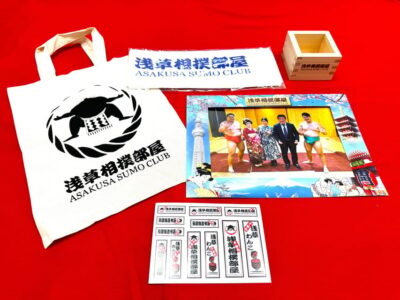
Sumo Show Experience with Chicken Hot Pot and a Photo
Read our review →
Shinjuku Food Tour (13 Dishes at 4 Local Eateries)
Read our review →