
Reviewed · NARA TOURS
Perfect Nara Park Half-Day Bus Tour with English Speaking Guide
Nara rewards slow attention, even on a half day. This tour is a smart way to see UNESCO World Heritage highlights with an English-speaking guide who helps you make sense of what you are looking at. You get a tight route, clear timing, and enough structure that first-timers do not feel lost.
I especially like the chance to do the iconic Nara moments in an organized way, from rice crackers for the deer to a deer fortune you can read in English. The one thing to consider is that it is only about 4 hours, and lunch is not included, so you will want to plan for snacks before or after.
Key things that make this tour work
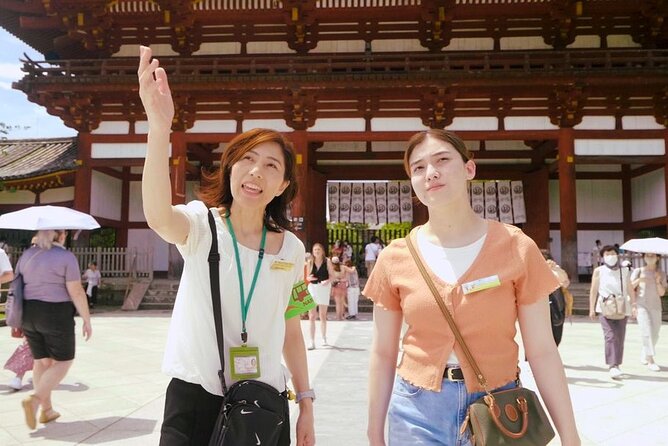
English guide with practical storytelling so you are not just standing in front of famous sights.
Time-saving route that combines Todai-ji, Kasuga Taisha, and Mt. Wakakusa in one efficient half day.
Included deer feeding and fortune materials (rice crackers and the fortune paper) so you can participate without guessing costs.
World Heritage scenery en route with the Kasugayama Primeval Forest drive area on the itinerary.
The bus pass extends the value with a Nara-Yamatoji 2-Day Pass for extra local rides after the tour.
4 hours in Nara: an easy rhythm for first-timers
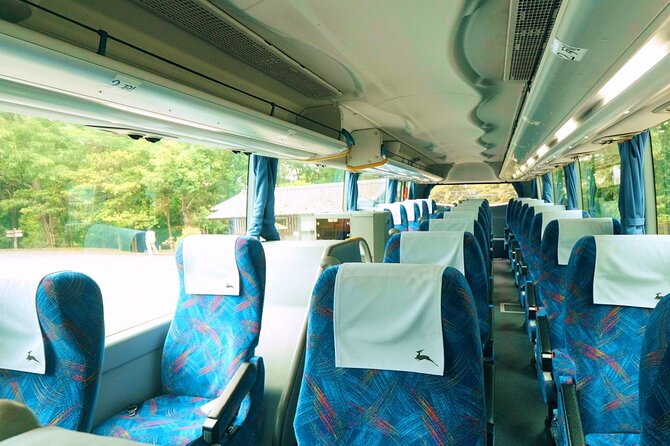
This is a half-day bus tour designed to keep things simple. Expect about 4 hours total, on an air-conditioned vehicle, with an English-speaking guide throughout. The group size is capped at 25 travelers, which usually means you get enough attention without feeling like you are stuck with a giant crowd.
The schedule is built around entry times and site viewing, not just driving. That matters because Nara’s famous sights can take longer than people expect, especially when you want to actually understand what you are seeing. The tour also includes the transportation time in the total duration, so you do not have to mentally subtract transit when judging your day.
There is one practical note before you go: it’s best to dress for comfort. You should have moderate physical fitness, mainly because temple areas and walking to viewpoints add up. Also, the tour requires good weather, so if conditions compromise safety, visits and timings can shift.
A few more Nara days worth comparing
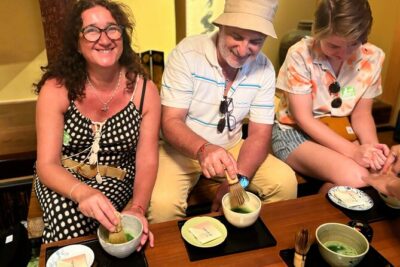
- World Heritage Kyoto & Nara Uji Authentic Matcha Experience
★ 5.0 · 1,573 reviews - Nara Half Day Trip Walking Tour (Private Option Available)
★ 5.0 · 937 reviews - Nara Early Morning Tour (Kyoto or Osaka Departure Available)
★ 5.0 · 676 reviews
Todai-ji: Nandaimon gate and the Great Buddha Hall
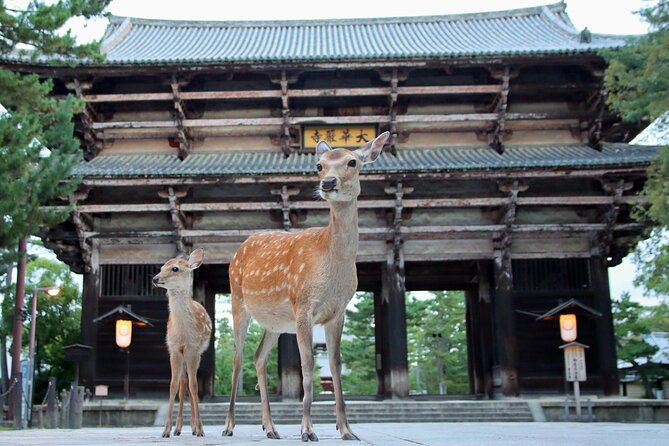
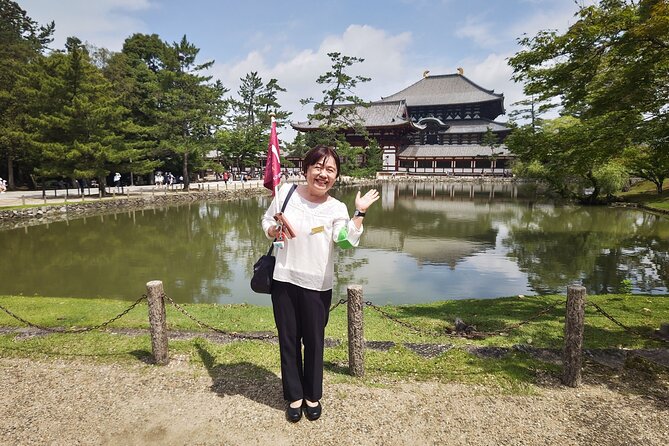
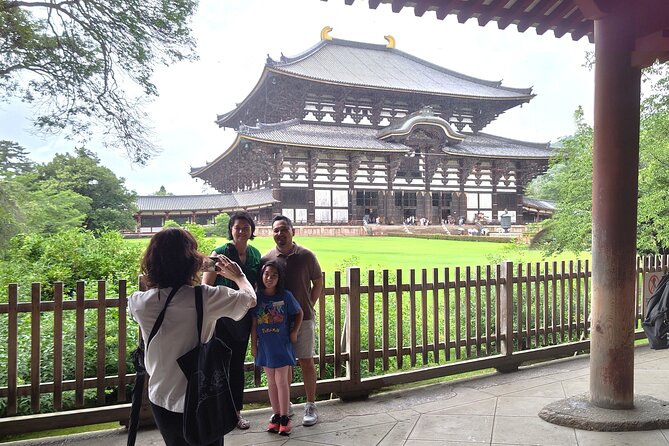
Your first stop is Todai-ji Temple, with about 1 hour 10 minutes on-site. This is the kind of place where “famous” does not even cover it, because Todai-ji is a major reason Nara earned its UNESCO reputation. You get specific highlights here: Nandaimon and the Great Buddha Hall.
What I like about doing Todai-ji with a guide is the way your brain can sort the place into parts. You are not just taking in scale; you learn what you are seeing, and why it matters. That turns a big, complex temple into something you can actually remember, instead of a quick photo stop.
Admission and viewing fees are included, so you do not waste time at the entrance figuring things out. The time also gives you room to look around without feeling rushed the moment you step inside. If you like structure, this is a good first anchor stop, because it sets the tone for everything you will see later that day.
Possible drawback: Todai-ji is huge, and even with the included time, you may not be able to slow down everywhere. If you want maximum quiet time in every corner, this may feel slightly fast. But for first-timers who want the core experience, it is a strong match.
Kasuga Taisha: main shrine time plus an English deer fortune
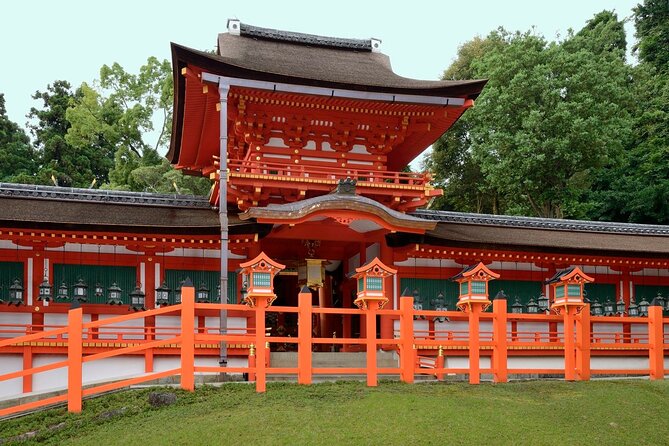
Next up is Kasuga Taisha Shrine, with about 1 hour scheduled. This stop is registered as UNESCO, and the itinerary focuses on the main shrine, which is the place most visitors want to understand first.
Here is a detail I really appreciate: you can draw a deer fortune, and it’s available in an English version. That turns one of Nara’s most common visitor rituals into something you can participate in without translating on the fly. The cost for the deer fortune paper fee is included, so you can just go for it.
The guided part matters again. Shrines can feel like a blur of plaques, paths, and rituals if you arrive without context. With a guide, you can follow along with the basic flow of what to do and what the offerings or actions mean. That makes the experience feel respectful, not random.
One more practical upside: admission is included here too. It’s one less variable during a half day when you want everything to run cleanly.
Kasugayama Primeval Forest drive: Nara Okuyama Driveway en route
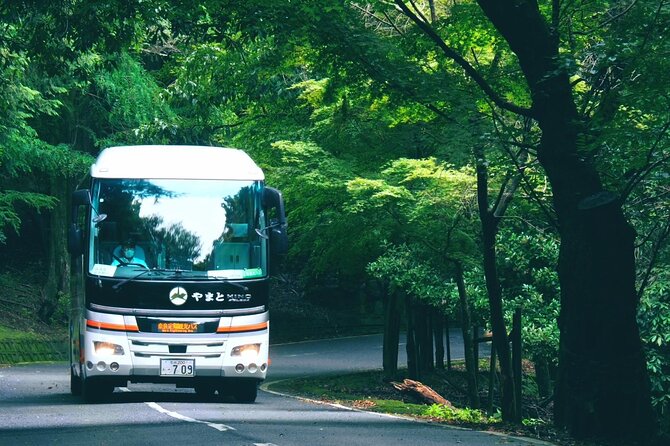
Between the main shrine area and Mt. Wakakusa, you have time connected to Nara Okuyama Driveway in the Kasugayama Primeval Forest, which is also listed as a World Heritage Site. This is not just “time in the bus.” It’s a scenic, heritage-connected segment that helps the day feel more rounded.
Even if you are mostly traveling by vehicle here, the takeaway is that Nara is not only about temples. The natural setting is part of the UNESCO story, and this route gives you a chance to see that side without having to plan extra transport on your own.
If you get car-sick easily, you might want to sit where you feel safest and bring any usual motion-sickness support. The tour info does not promise a quiet route, but it is a standard bus format with an air-conditioned vehicle.
Same corner of Japan, a different kind of day:
- Osaka: Nara and Uji Day Trip with Deer Park and Hot Spring
★ 4.4 · 302 reviews - Kyoto/Osaka: Kinkakuji, Bamboo Forest, and Nara Deer Park
★ 4.4 · 265 reviews - Nara 6hr Private Tour with Government-Licensed Guide
★ 5.0 · 219 reviews - E-Bike Nara Highlights – Todaiji, Knives, Deer, Shrine
★ 4.8 · 186 reviews
Mt. Wakakusa summit views, then deer feeding at Nara Park
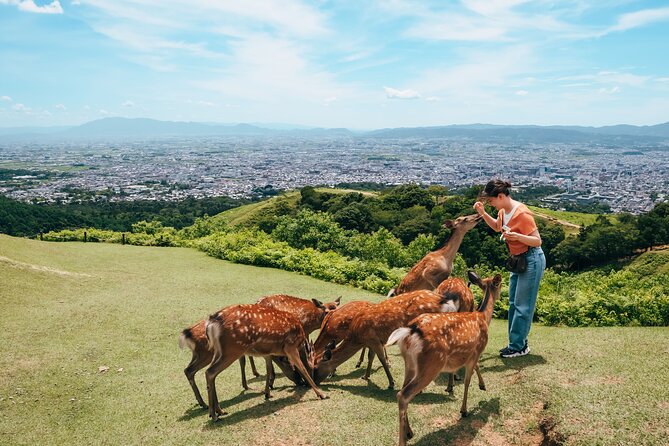
The final major activity is Mt. Wakakusa, with about 40 minutes at the summit area. You are promised a panoramic view of Nara city, and this is one of those moments where even a short visit feels worth it because of the big-picture perspective.
Then you move into the signature Nara experience: Nara Park deer time. The tour includes the deer cracker fee, so you can feed the deer by offering rice crackers. It’s one of the most “only-in-Nara” activities you can do, and having it built into the schedule means you do not have to scramble to find where you should go or what you should buy.
A key consideration: the tour requires good weather. Since summit time and open areas can be affected by conditions, keep your expectations flexible. If it’s cloudy or rainy, you may get a different experience than the clear-view promise. That’s normal in Japan, and this tour explicitly prepares for that reality by offering adjustments or refunds depending on the weather outcome.
This is also where you will feel the time limits most. Forty minutes at the summit sounds short, and it is. But for a half-day tour, it’s a fair trade: you get the view moment without eating your entire day.
The Nara-Yamatoji 2-Day Pass: what you actually gain after the tour
One of the best value touches is the included Nara-Yamatoji 2-Day Pass. This gives you unlimited rides on local buses within the designated area, plus an original handkerchief as an extra.
Why this matters: Nara’s sites are spread out, and bus routes can be confusing if you are navigating solo. Even if you are comfortable using public transit, the pass removes friction and helps you take spontaneous detours. After your guided half day ends, you can keep exploring without worrying about paying each ride separately.
Think of the tour like the guided “starter kit,” and the pass as your follow-up access. You can use it to visit nearby areas you might have skipped because you only had one afternoon planned.
One caution: the pass is valid for the designated area, so it won’t necessarily cover every single destination outside the zone. But within the area it covers, it can be a practical way to stretch your time.
Price and included costs: does $66.05 feel fair?
At $66.05 per person, this tour sits in the mid-range for a guided half day in Nara. The price feels more reasonable when you look at what’s included rather than just the headline number. Your tour includes:
- Air-conditioned vehicle
- English guide
- Temple entrance and viewing fees
- Deer fortune paper fee
- Deer cracker fee
- Consumption tax
- The Nara-Yamatoji 2-Day Pass
Lunch is not included, so you are still responsible for that meal part of your day. But when you compare self-guided planning, the included entry fees and the deer-related costs are exactly the small expenses that add up quickly.
Also, the guide is not just a voice. The strongest praise in the feedback centers on explanations, interaction, and help with questions. That type of guidance can turn a visit to Todai-ji and Kasuga Taisha from “I saw it” into “I understand what I saw.” In Nara, that difference is often the real value you pay for.
Comfort note: the tour is designed to be easy and comfortable, and the vehicle is air-conditioned. If you prefer avoiding transfers and ticket lines across multiple sites, this format is a win.
Timing, drop-offs, and how to plan the rest of your day
The tour runs about 4 hours, and the flow is built around predictable on-site time blocks. You start with Todai-ji, then Kasuga Taisha, and finish with Mt. Wakakusa and the Nara Park deer experience.
There is also a useful scheduling detail near the end. You are scheduled to arrive at Kofukuji at 16:20, and you can choose to leave on-site if you prefer. After that, the tour is scheduled to arrive at the Kintetsu Nara Station drop-off point at 16:25, and it also mentions a JR Nara Station drop-off later in the schedule.
So if you are trying to connect to dinner plans, this tour can work well because it ends near major stations. The key is that it is still a half day, so you’ll want to reserve time for a meal soon after if you need something more substantial than snacks.
One more tip: you should head to the bus stop and show your boarding pass about 10 minutes early. That small buffer helps you avoid last-minute stress.
Who this tour suits best
I think this tour is a strong fit for:
- First-time visitors to Nara who want the top UNESCO hits without piecing it together
- People who value an English-speaking guide and clear explanations
- Travelers who want the deer feeding experience but would rather not figure out logistics mid-day
- Small-group style travelers who prefer a cap around 25 people
If you are the type who wants long, quiet time in each temple and hates group pacing, you might feel the schedule is a little tight. But if your priority is seeing the highlights in one clean route, it does that job well.
Should you book this Nara half-day bus tour?
If you want a structured Nara afternoon, this is an easy yes. The biggest reason is that you are not only visiting famous sites, you’re also getting the practical guidance that makes Todai-ji and Kasuga Taisha feel meaningful. The included deer activities, plus the English deer fortune option, are simple perks that make the experience feel less touristy and more personal.
The main reason to hesitate is the pace and the lack of lunch. This is built for a half-day reset, not for lingering all day. If you plan your next meal and you are okay with a moderate level of walking, you will likely find it a good value at $66.05 because the entry fees, fees for deer-related activities, and the bus pass are folded into the price.
FAQ
How long is the Nara Park half-day bus tour?
The tour lasts about 4 hours.
What are the main stops on the itinerary?
You visit Todai-ji Temple, Kasuga Taisha Shrine, and then Mt. Wakakusa. The schedule also includes an arrival near Kofukuji and a drop-off at stations after the tour.
Does the tour include an English guide?
Yes. The tour includes an English-speaking guide.
Are temple admission fees included?
Yes. Temple entrance and viewing fees are included.
Is lunch included?
No. Lunch is not included.
Do I get to feed the deer?
Yes. You can feed rice crackers to the deer, and the deer cracker fee is included.
What is included with the deer fortune?
You can draw a deer fortune at Kasuga Taisha, and the deer fortune is available in an English version. The deer fortune paper fee is included.
What is the Nara-Yamatoji 2-Day Pass?
It allows unlimited rides on local buses within the designated area for 2 days, and it comes with an original handkerchief.
How many people are on the tour?
The maximum group size is 25 travelers.
What if the weather is bad?
The tour requires good weather. If it is canceled due to poor weather, you will be offered a different date or a full refund.
Fresh options around Nara
- Sushi Making Experience Luxury Course in Nara★ 5.0 · 36 reviews
- Nara: Private Walking Tour with a Local★ 4.3 · 36 reviews
- Private Nara Tour and Sake Tasting (Departing from Kyoto/Nara)★ 5.0 · 40 reviews
- Nara: Bike Tour in Ancient Capital UNESCO World Heritage★ 5.0 · 43 reviews
- Discover Ancient Nara: Private Car Tour from Kyoto or Osaka★ 5.0 · 52 reviews
- Hammer a Pattern on Your Ring Workshop★ 5.0 · 57 reviews
- Nara: Great Buddha, Kasuga Shrine & Deer Park Tour★ 4.8 · 62 reviews
- Nara: Private Tour with Private Guide★ 4.8 · 66 reviews
Nara Tours, compared.
World Heritage Kyoto & Nara Uji Authentic Matcha Experience
Read our review →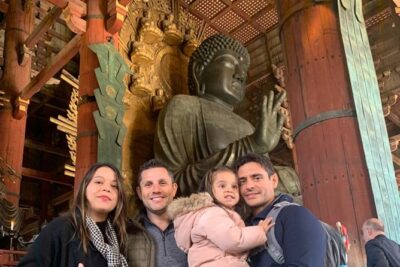
Nara Half Day Trip Walking Tour (Private Option Available)
Read our review →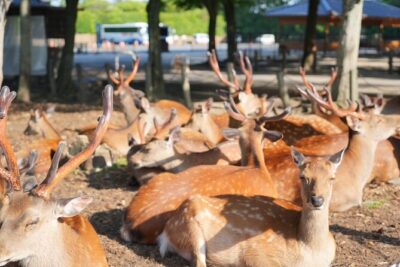
Nara Early Morning Tour (Kyoto or Osaka Departure Available)
Read our review →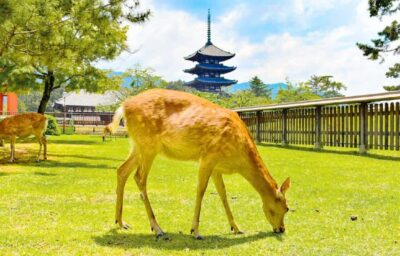
Nara and Uji Day Trip with Deer Park and Hot Spring
Read our review →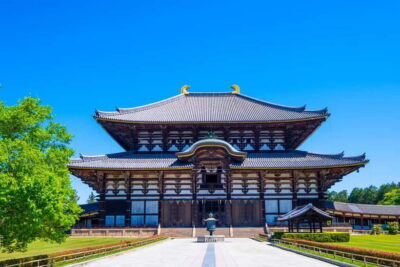
Kyoto/Osaka: Kinkakuji, Bamboo Forest, and Nara Deer Park
Read our review →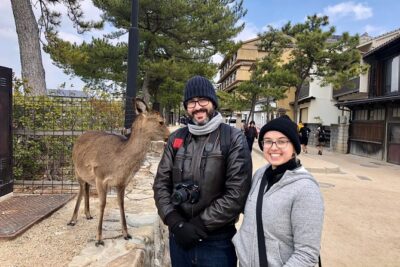
Nara 6hr Private Tour with Government-Licensed Guide
Read our review →
E-Bike Nara Highlights – Todaiji, Knives, Deer, Shrine
Read our review →
Nara Early Bird Tour (Kyoto Departure Option Available)
Read our review →Browse the lists this tour appears in