
Reviewed · KAMAKURA TOURS
Kamakura Private Tour: Temples, Nature, and the Great Buddha
Kamakura’s hillside temples beat Tokyo crowds. I like how this private walk strings together Jochiji and the Great Buddha with nature breaks, and I also love the built-in admission so you spend less time figuring out ticket logistics. The one heads-up: you should be ready for real uphill walking, including a mountain pass.
This is a small-group style private experience for your group only, led by an English-speaking guide. You’ll start at Kita-Kamakura Station and end at Hase Station, with the day designed to feel like moving through Kamakura, not checking boxes.
If you hate hills, or if your idea of sightseeing is mostly flat strolls, you may want to plan a backup option (or expect that the route can shrink on bad weather days).
Key things I found especially worthwhile
- Forest-silent Jochiji: Zen calm in the trees, plus a story tied to the Kamakura shogunate
- A real walking route: at least 5 km including a mountain pass, not just hopping between stops
- Zeniarai Benten Ugafuku Shrine: a famous hillside hole framed by a torii gate
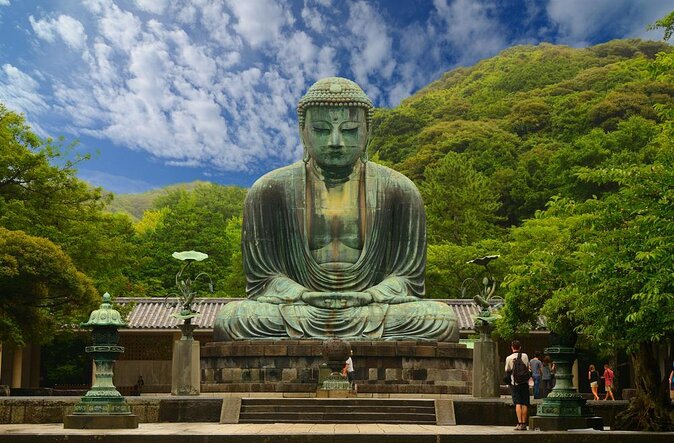
- Kotoku-in Great Buddha scale: 13.35 m tall, bronze dating to 1252, and a powerful stop even if you rush
- Hasedera sea views: ocean and Yuigahama Beach viewpoints, especially rewarding in good weather
- Yuigahama Beach finish: south-facing views where you can catch the sun over the water
Why this Kamakura day trip feels different from the usual checklist
Kamakura is often sold as a quick day trip from Tokyo, and yes, you can do it fast. But this tour nudges you toward the version of Kamakura that sits in hills and forests, where the temples feel tucked into the terrain instead of lined up like a theme park.
The big win is pacing. You’re not only going temple-to-temple. You’re also moving through trails and viewpoints, which makes the day feel like a short journey rather than a sprint.
And because it’s private, you can match the pace to your legs and your curiosity. In the kind of places you’re visiting, a guide also saves time by explaining what you’re looking at and why it matters, especially when signs in English are limited.
More temple and shrine tours in Kamakura:
- Tokyo: Kamakura & Enoshima Day Trip including Temple Tickets
★ 4.5 · 1,375 reviews - Kyoto: Fushimi Inari, Kinkakuji, Bamboo Grove 1 Day Bus Tour
★ 4.8 · 4,316 reviews - Kyoto: Tea Ceremony Ju-An at Jotokuji Temple
★ 4.9 · 3,207 reviews
Price and what you actually get for $98.44
At $98.44 per person for about 5 hours, this isn’t the cheapest option, but it’s also not overpriced for what’s included.
Here’s the value math in plain terms:
- Admissions included for Jochiji, Kotoku-in (Great Buddha), and Hasedera. Those entry fees add up fast if you DIY.
- An English-speaking guide who can interpret the stories behind the shrines and help you avoid common etiquette mistakes. (This matters in religious places.)
- All fees and taxes included, plus photos of tour participants after the tour.
What isn’t included is also clear, and you should plan for it:
- Food and drink are not included.
- You may pay small extra bus/train fare depending on the day’s route and what’s open.
- Hotel pickup and drop-off cost extra (8000 yen per person).
If you’d otherwise spend half the day reading maps, hunting ticket counters, and trying to figure out which trail actually connects, the guide time often becomes the real bargain.
Starting at Kita-Kamakura, ending at Hase, and the flow of the walk
You’ll meet at Kita-Kamakura Station (Yamanouchi, Kamakura) and finish at Hase Station. That matters because your route naturally trends south and ends near the beach.
Expect a day that includes:
- At least 5 km walking, including a mountain pass
- Moderate fitness required
- Shoes that handle uphill and uneven ground
In other words, bring footwear you’d trust on a longer hike, not slick city sneakers. One review-style theme that shows up again and again is simple: the sights are worth it, but you do not want to wing it with shoes that grip poorly.
Also, the tour duration is about 5 hours, and it can be extended for 1,000 yen per person per half hour if you want more time.
Jochiji Temple: Zen calm in the forest (and why it was built)
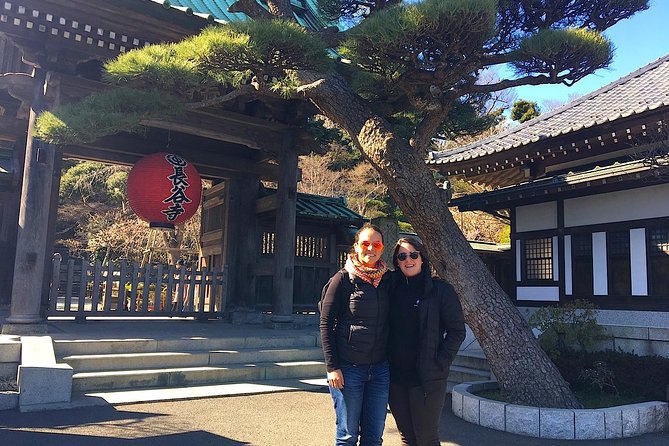
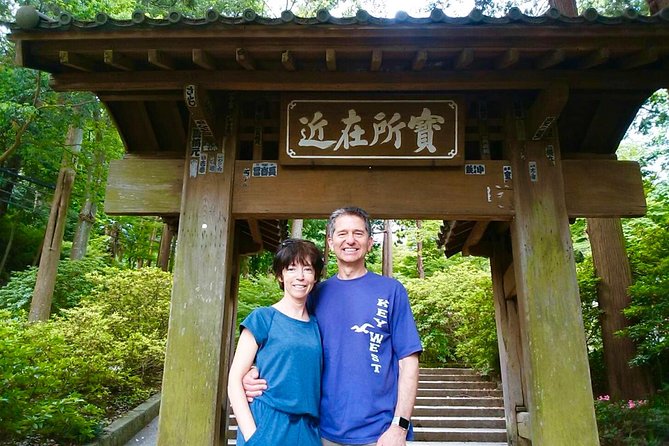
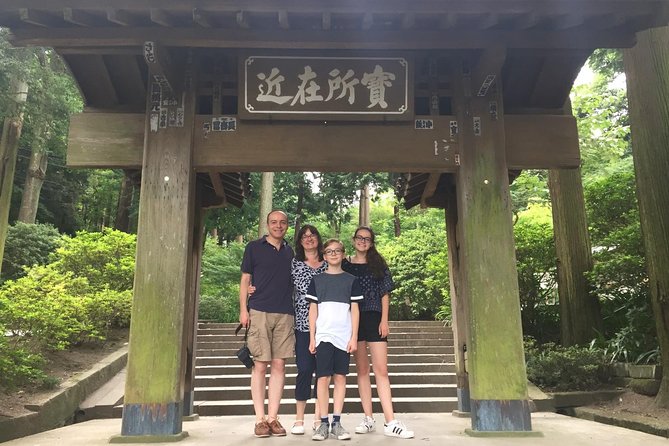
Your first stop is Jochiji Temple. It’s a serene Zen temple set in a wooded area, and it has a specific shogun-era origin story: it was built in 1281 by Hojo Tokoyori, a leader of the Kamakura Shogunate, to honor his son who died young.
This stop works well because it resets your energy. After getting off the train, you start with quiet and shade. You also get a sense of how Kamakura’s spiritual sites are tied to the region’s historical power structure, not just a vague “old temple” feeling.
Time-wise, plan for about 25 minutes here, plus a slow wander when the path gives you room.
Practical consideration: forests mean cool shade most of the time, but in rainy weather the ground can get slick. If it’s wet out, take your time.
A few more Kamakura days worth comparing
- From Tokyo: Kamakura & Enoshima 1-Day Bus Tour
★ 4.5 · 189 reviews - Kamakura Historical Walking Tour with the Great Buddha
★ 5.0 · 129 reviews - Kamakura Walking Tour – The City of Shogun
★ 5.0 · 100 reviews - Kamakura: Private Guided Walking Tour with Local Guide
★ 4.8 · 60 reviews
Mountain hiking trails and the Daibutsu approach mindset

Next comes the Kamakura Hiking Trails, and this is where the day stops being purely sightseeing and starts being active.
You’ll spend around 40 minutes on the trails, and the goal is not a single dramatic peak. It’s that in-between feeling: moving through mountain passes, seeing viewpoints, and reaching temples by the kind of routes locals would choose.
One of the reasons guides get praised for this tour is that they help you adjust. On hotter days, you take more breaks. On rainy days, the walk can be shortened with different routing. The theme from real tour feedback is simple: safety and comfort matter, and strong guides help you still see the best parts.
Zeniarai Benten Ugafuku Shrine: the hillside hole framed by torii
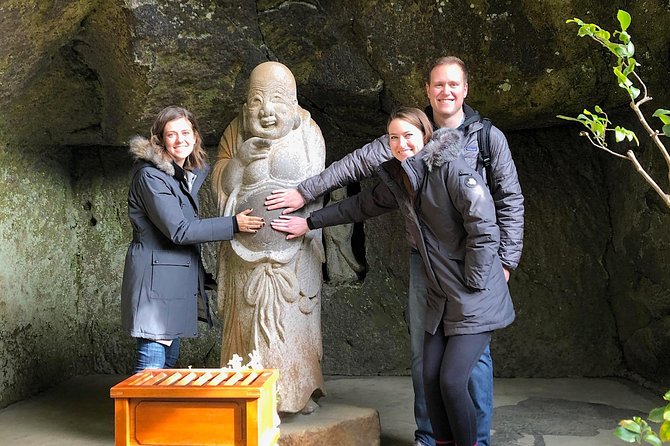
A standout stop is Zeniarai Benten Ugafuku Shrine. You’ll walk along the Daibutsu Hiking Course through the mountains until you reach a mysterious hole in the hillside, framed by a torii gate. Go through it, and you’ll find the shrine area dedicated to Benzaiten, known in this context as a form tied to Ugafuku.
This is the kind of place that works even if you’re not religious in the strict sense. It’s about symbolism and place. You’re standing in a spot that feels both natural and intentionally designed, and the story makes the hole more than a quirky photo stop.
In the schedule, this is around 25 minutes.
Practical note: because it’s a mountain approach, you’ll feel the climb. It’s not a casual level walk, so pace yourself.
Sasuke Inari Shrine: the white fox dream story
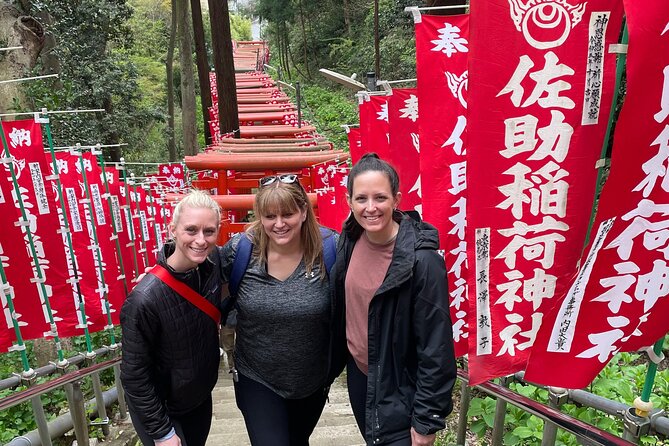
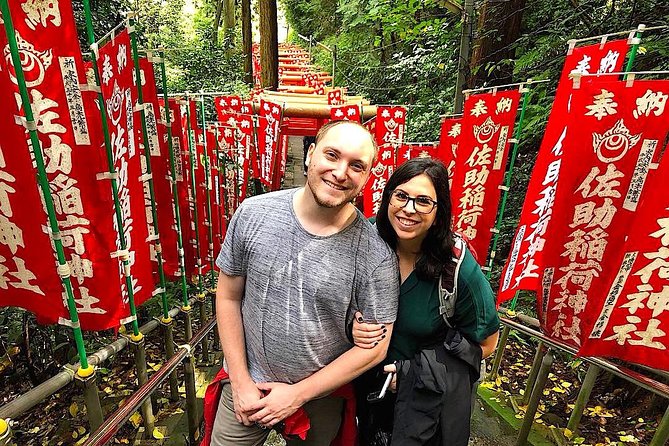
After that, you visit Sasuke Inari Shrine. The legend goes like this: the first shogun of Kamakura, Minamoto Yoritomo, was visited in a dream by a white fox called Inari, who advised him on how to win a battle against his enemies.
The point of this stop is context. You don’t just see a shrine, you learn how local belief systems intertwine with political history and local survival stories.
Plan for about 20 minutes here.
If you enjoy legends, this is one of the more memorable short stops. If you’re in a rush, it’s still worth it because the guide’s explanation is what turns it into a story you’ll remember later.
Kotoku-in Great Buddha: scale you can feel, not just read
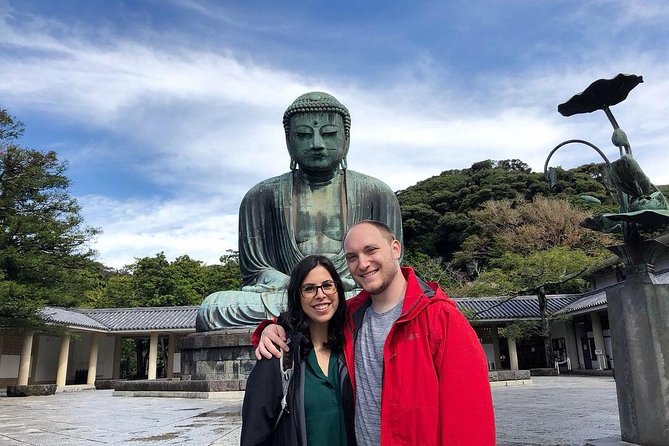
Then you hit Kotoku-in, home to the Great Buddha of Kamakura. This is the headline attraction, and it lives up to the billing.
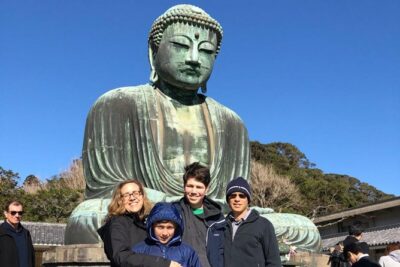
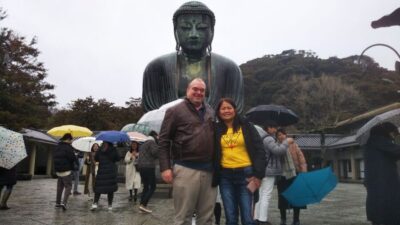
The statue is 13.35 m tall and about 121 tonnes. The construction of the bronze statue as it appears today dates to 1252. One of the best parts about this stop is that it’s dramatic even if you don’t spend lots of time inside. It’s built to overwhelm your sense of scale, and your photos will look good even with quick stops.
You’ll spend about 20 minutes here, including time to look closely.
What makes this stop feel extra worthwhile on this tour is placement. You arrive after walking through forest and hills, so when you see the Buddha, it feels like a powerful shift from nature to stone and bronze permanence.
Hasedera Temple: ocean views that justify the uphill
Next is Hasedera Temple, about halfway up Mount Kamakura. The big reason people love Hasedera is the view: south over the ocean and toward Yuigahama Beach.
This is where the tour balances effort with payoff. You worked your legs on the pass, and then the temple rewards you with a wider world view.
In summer, you can also catch ground hydrangeas, which is one of those seasonal bonuses worth keeping in mind if you’re traveling in June or July.
Expect about 30 minutes at Hasedera.
If it’s clear, you’ll feel the “right place at the right angle” effect here. If it’s foggy or rainy, the mood changes but you still get the temple experience and the sense of stepping into a viewpoint.
Yuigahama Beach: south-facing sun and a calmer finish
You finish with Yuigahama Beach, about 15 minutes on the schedule. The beach faces south, so you’re set up to see the sun over the ocean from this side.
In summer, there’s also an open air market called Umi-no-ie, which adds a casual local flavor if you’re visiting during warmer months.
This ending works well because it’s not another uphill push. It’s a chance to cool down, take in the sea air, and let the day’s history and walking sink in.
How the guides change the experience, with real examples of good service
This is where private tours win. A good guide doesn’t just explain. They read your day and adjust.
From the kind of guidance that shows up again and again with this tour, here are patterns you should expect:
- Teiko, Yu, Yumi, Noriko, Famiko, Yoko, Naho, Shijuko have all been praised for friendly, careful pacing and clear explanations at temple and shrine stops.
- Some guides help with more than sightseeing. For example, one guide arranged a tea ceremony when weather interfered with the original plan.
- If people in your group need less walking, Takeshi has been described as proactive, suggesting alternative routing and even assigning support so the group could move comfortably.
- In bad weather, guides can also help you adapt without ending the day early. Several tour experiences mention keeping things moving through rain with practical routing choices.
You should also pay attention to etiquette guidance. Religious sites in Japan are part sacred place, part public heritage site. A guide who reminds you how to act keeps the experience respectful and smoother for everyone.
What to watch out for, so you don’t end the day tired and annoyed
Here’s the honest trade-off: this tour is designed for walking, not for minimal effort.
Consider skipping or modifying your expectations if:
- You have knee issues or pain with uphill walking. One experience described that a family took taxi help and missed part of the route.
- You expect a mostly flat route. There’s at least a mountain pass, plus steep or uneven sections.
- Your travel day is a washout. The tour is described as weather dependent, and if it’s canceled due to poor weather, you’ll be offered a different date or a full refund. If rain hits during the tour, routing may change.
Also, because food is not included, you’ll want a plan for lunch. Some guides line up a restaurant, but the type of meal and timing depends on the day’s pacing.
Finally, remember the tour ends at Hase Station. You’re not looping back to where you started. That’s usually fine, just plan your train connections.
Should you book this Kamakura Private Tour?
Book it if you want a Kamakura day that feels like a guided walk through real places, not a quick transit crawl. It’s especially strong for:
- Couples, families, and small groups who can handle hills
- Anyone who wants admission included for Jochiji, Hasedera, and the Great Buddha
- Travelers who prefer local routing, sea views, and temple stories explained in English
Skip it or choose another option if you:
- Need a flat walking day
- Have limited mobility and can’t manage stairs, uneven ground, and uphill sections
- Can’t travel on a weather dependent itinerary
My simple decision rule: if you’re willing to work a little for temple views and forest quiet, this tour is a solid value. If you want effortless sightseeing, it may feel like too much effort for a half-day.
FAQ
How long is the Kamakura Private Tour?
The tour lasts about 5 hours.
What’s included in the price?
An English-speaking guide, all fees and taxes, photos of tour participants, and entrance fees for Jochiji Temple, Kotoku-in (Great Buddha of Kamakura), and Hasedera Temple are included.
Is food included?
No, food and drink are not included.
Where do I meet the guide, and where does the tour end?
The tour starts at Kita-Kamakura Station and ends at Hase Station.
How much walking should I expect?
You’ll walk at least 5 km, including a mountain pass, so shoes for walking are important and a moderate fitness level is recommended.
Is hotel pickup available?
Hotel pickup and drop-off are available for an extra fee of 8000 yen per person.
What if the weather is bad?
This experience requires good weather. If it’s canceled due to poor weather, you’ll be offered a different date or a full refund.
Can I cancel and get a full refund?
Yes. You can cancel up to 24 hours in advance for a full refund.
Fresh options around Kamakura
- Kamakura Half Day Tour with a Local Expert Guide★ 4.4 · 23 reviews
- Your Own HANKO Name Seal Activity in Kamakura.★ 5.0 · 24 reviews
- Buddha, Bamboo & Zen – Bespoke Kamakura Private Walking Tours★ 5.0 · 25 reviews
- Kamakura: A Journey Through Medieval Japan★ 4.9 · 32 reviews
- Exciting Kamakura – One Day Tour from Tokyo★ 5.0 · 40 reviews
- When Emperors Reigned and Shoguns Ruled★ 5.0 · 43 reviews
- Kamakura 4hr Private Trip with Government-Licensed Guide★ 5.0 · 58 reviews
- Kamakura: Private Guided Walking Tour with Local Guide★ 4.8 · 60 reviews
Kamakura Tours, compared.
Kamakura & Enoshima Day Trip including Temple Tickets
Read our review →
Kamakura Historical Walking Tour with the Great Buddha
Read our review →
Kamakura: Private Guided Walking Tour with Local Guide
Read our review →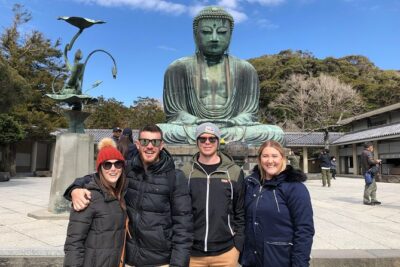
Kamakura 4hr Private Trip with Government-Licensed Guide
Read our review →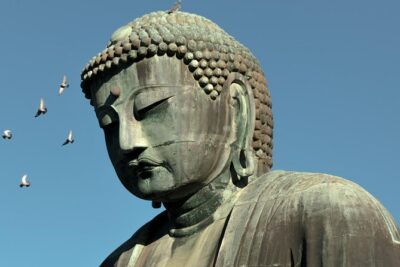
Kamakura Full Day Tour with a Local Expert Guide
Read our review →Browse the lists this tour appears in