
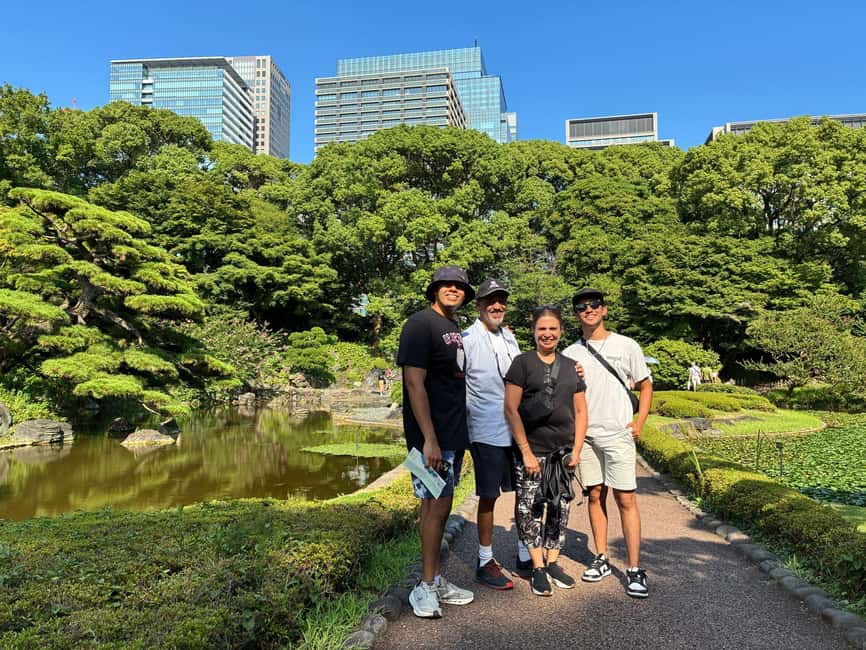
Reviewed · CASTLE TOURS IN TOKYO
Tokyo: Edo Castle Ruins & Imperial Palace East Garden Tour
Tokyo’s palace history is closer than you think. This tour strings together Edo Castle remnants and the Imperial Palace East Gardens in a tight 2-hour loop, so you get the big picture without losing the details. I especially like the way the guide connects shoguns and emperors to the actual spaces you are standing in, and I love the pause points like the Tenshu-dai views and the Ninomaru Garden koi pond. One possible drawback: it is not a long, wander-at-will stroll, so if you want lots of free time or you are expecting access to the palace buildings, you will feel boxed in.
You also get the kind of guiding that matters in Tokyo. Guides such as Mari san and Isao are described as thoughtful and patient, the kind of people who can answer follow-up questions instead of just racing ahead. If you like photo moments, the tour builds in a commemorative shot, plus you will naturally want your camera at the big gates and view stops.
Finally, this is a very specific route with some walking on grounds that are not set up for everyone. Wear comfortable shoes, and do not plan on wheelchairs or mobility aids being a good fit, since the tour is not suitable for wheelchair users or people with mobility impairments.
Key highlights you should care about
- Wadakura Fountain backstory: built to commemorate a royal wedding, explained right where you can see it
- Otemon Gate and gate ruins: you do not just look at stones, you learn what they meant for defense
- Doshin Bansho and Hyakunin Bansho: small locations with big meaning for samurai-era security
- Tenshu-dai panoramic views: the stop that helps you understand how the castle covered the city
- Ninomaru Garden koi pond: calm garden time after the more intense castle-and-defense story
- English small-group or private options: easier pacing and more chances to ask questions
Edo Castle and Imperial East Garden in 2 hours: what the tour really feels like
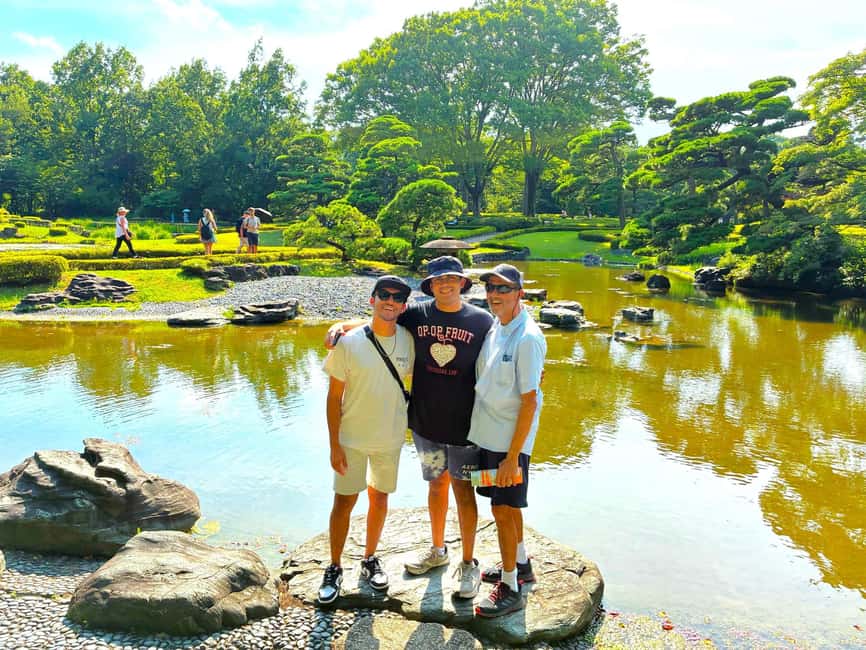
This is a compact, high-value tour built around transitions. You start with a modern meeting spot, then move into places that once had military purpose. Then you soften things with garden time, which is exactly what makes this combo work so well.
The tour follows a logical theme: first the structures and perimeter of Edo Castle, then the “main hall” area and the keep reconstruction concept, then the East Gardens within the Imperial Palace grounds. It is designed so you do not have to assemble the story yourself.
You should expect short guided stops at each point, not one long lecture. That matters because it keeps your energy up. It also means if you like deep, unhurried museum-style time, you might wish it were longer. But for most visitors, it is the right length to get oriented.
More Castle Tours in Tokyo
- Tokyo Castle & Imperial PalaceーShogun Walking Tour
★ 4.7 · 1,068 reviews - Tokyo Castle & Imperial PalaceーShogun Walking Tour
★ 5.0 · 724 reviews - Imperial Palace East Garden and Edo Castle Walking Tour in Tokyo
★ 5.0 · 510 reviews
Meeting point at Wadakura Free Rest Area, and how to start smoothly
Meet outside the Wadakura Free Rest Area, in front of the entrance. Your guide will be holding a yellow sign, which is a simple help when you are already dealing with Tokyo signage.
Plan to arrive a bit early. You will start promptly, and since the tour runs about 2 hours total, you do not want to waste time hunting for the right entrance.
What to bring is straightforward: comfortable shoes, a camera, and water. You will be outside for the walking and the garden stop, and Tokyo weather can switch moods fast. Also, flash photography is not allowed, so plan on normal camera settings rather than counting on a flash.
Wadakura Fountain and the moat area: the royal-wedding start that sets the tone
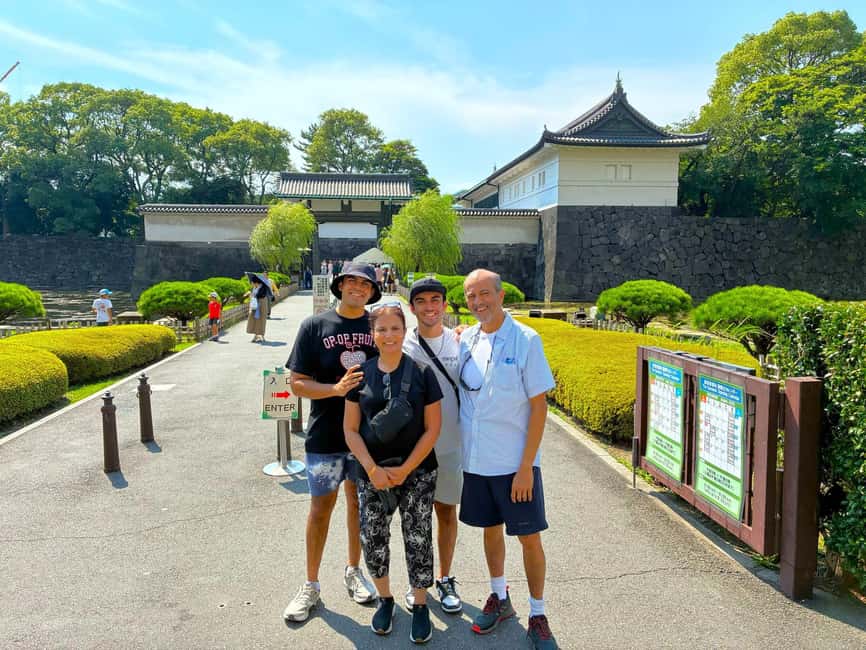
You begin with a guided visit to the Wadakura Fountain National Park area for about 10 minutes. This is not a random decorative stop. The fountain was built to commemorate a royal wedding, and the guide explains why that kind of landmark mattered in a world where ceremonies and power were closely linked.
Right after that, you move to the Wadakura Moat for about 5 minutes. Moats are one of those features that sound simple until you understand the job they were designed to do. In a castle setting, the moat is about control, distance, and slowing down anything that comes near.
Even though these segments are short, they do two important things for you. First, they give you an easy entry into the tour, so the later gate names make sense. Second, they establish the idea that Edo Castle was not just buildings, it was an engineered system.
A small consideration: if you are hoping for lots of sitting time at the start, you might find the pace quick. This tour is meant to keep moving.
Otemon Gate, Ote San-no-mon Gate Ruins, and the language of defense
Next you visit the Otemon Gate for about 10 minutes. The Otemon is a key threshold, the kind of gate that signals status and direction. Here, you are not just learning what a gate is. You are learning what it controlled: movement, access, and how people entered the castle’s critical areas.
Then the route goes to the Ote San-no-mon Gate Ruins for about 10 minutes. Ruins can feel like “leftover rocks” until someone explains the original layout and function. With a guide, the ruins become a puzzle piece. You start to see how defenders would manage pressure from the outside.
This is where you start hearing about samurai-era security thinking. In castle planning, it was not only about strength. It was about creating moments where timing and access mattered.
More castle tours near Tokyo:
- Tokyo Castle, Imperial Palace, Shogun & Garden Walking Tour
★ 5.0 · 211 reviews - Tokyo: Edo Castle & East Garden of the Imperial Palace Tour
★ 4.7 · 112 reviews - Tokyo Private Tour! Edo Castle & Imperial Palace East Gardens
★ 5.0 · 105 reviews - Tokyo: Pvt. Tour – Edo Castle & Imperial Palace East Gardens
★ 4.8 · 63 reviews
Hyakunin Bansho guardhouse: where the story turns human
The Hyakunin Bansho guardhouse stop is about 10 minutes. This site is a reminder that castle defense was carried out by people and procedures, not just walls.
You also visit Doshin Bansho and Hyakunin Bansho as part of the castle-remnant learning arc, which helps you understand how roles and systems were built into the space. The guide ties these locations to the broader idea of managing who could pass, and when.
One reason I like this stop is that it breaks the tour’s pattern. Gates and moats are big, but the guardhouse theme helps you picture day-to-day operations, the practical side of power.
If you are the type who likes to connect history to real routines, you will appreciate this part.
Edo Castle ruins and the Honmaru area: from remnants to the main hall idea
After the gate-and-guardhouse segment, the tour moves to Edo Castle Ruins for about 15 minutes. This longer chunk gives you time to absorb what you are actually seeing. It is not just one landmark, you are given the context to connect multiple remnants.
Then you go to the Site of Edo Castle Honmaru (Main Hall) for about 10 minutes. Honmaru is the center of gravity in your mental map. Even if the original buildings are not there, the guide’s framing helps you understand why this location carried so much weight.
You also see the Edo Castle keep restoration model for about 10 minutes. A model is useful here because it translates the space you are standing in into what the keep might have looked like. This is one of the best ways to avoid feeling like you are reading a list of place names. You get the “what might have been” in a tangible form.
There is another stop labeled 都道府県の木 for about 10 minutes. You are standing in a place connected to the concept of prefectural trees, which adds a modern layer to the castle grounds. It is a small moment, but it helps you see Tokyo as a living city, not a historical theme park.
諏訪の茶屋 and the castle-to-garden transition
Around mid-tour, you visit 諏訪の茶屋 for about 10 minutes. This kind of stop often acts like a mental reset. You have been focused on military structure and movement. Now you get something more human-scale.
After that, the route transitions into the Imperial Palace East Gardens, and that shift is the point. You go from systems of defense to spaces designed for calm.
If you prefer gardens and quiet views, you are in the right place for the second half of the experience.
Imperial Palace East Gardens: what you can see, and what you cannot
The Imperial Palace East Gardens segment is about 15 minutes. This is where the tour focuses on what is accessible and what is meaningful for the general public.
Important: you are unable to enter the inner grounds of the Imperial Palace. Also, entry to the Imperial Palace’s palace buildings is not included because those buildings are not open to the public. So think of this tour as a garden-and-ruins experience, not a full palace interior visit.
Even with those limits, the East Gardens are valuable because they show how the same area can carry ceremonial calm next to historic power. This contrast is part of why the tour works so well.
If you have high expectations about walking inside palace buildings, adjust those expectations now. You will get more out of the tour if you treat it as an exterior, historical, and garden-focused experience.
Tenshu-dai panoramic views: your best moment for understanding placement
One of the strongest parts of the itinerary is the Tenshu-dai panoramic viewing stop. It is where the tour stops being about individual points and starts being about the whole map.
You get panoramic views of the surrounding area, which helps you understand how the castle’s height and position would have mattered. When you can see the layout, all the earlier gate names and ruin descriptions become easier to keep straight.
This is also where good guiding earns its keep. A short, clear explanation at the view point turns the scenery into comprehension. You do not have to guess what direction something would have protected or watched.
Ninomaru Garden and koi fish: end on a calm note that feels earned
The tour finishes at Ninomaru Garden for about 15 minutes. This is serenity after structure. The pond with koi fish is part of what makes this stop feel different from the castle remnants.
The Ninomaru Garden stop gives you a chance to slow down and absorb the mood. For many visitors, this is the moment when the tour stops feeling like sightseeing and starts feeling like stepping into a place.
If you are traveling with someone who gets tired of ruins and gates, this koi-pond garden stop is often the payoff that keeps the experience balanced.
What’s included, what’s not, and how the $37 price makes sense
The price is $37 per person for a 2-hour guided experience. What you get is not just a guide. Admission to Edo Castle and the Imperial Palace East Gardens is included, plus there is a commemorative photo opportunity.
What is not included is also pretty clear. There is no hotel pickup or drop-off, no food or drinks, and you should plan on personal expenses separately.
For value, the key is that admission is bundled into the fee and the time is tight enough to fit a normal Tokyo day. You are paying for a guide who can connect place names to meaning, and that is hard to replicate if you wander on your own.
That said, if you love self-guided planning and you have the patience to look up gate history in advance, you might feel you could recreate parts of it independently. This tour is best when you want the story handed to you with minimal homework.
Pace, group size, and who this tour fits best
The tour runs about 2 hours and is offered in English with private or small groups available. That small-group style is a big deal here because the sites are spaced but not huge. With a smaller group, you can ask questions without the guide feeling rushed.
This experience is not suitable for children under 6, and it is not good for wheelchair users or people with mobility impairments. You should expect walking on outdoor paths and compact segments between stops.
You will probably enjoy this tour most if:
- you want a clear, guided path through Edo Castle remnants without building your own map
- you like mixing strong historical context with a garden ending
- you want panoramic context at Tenshu-dai, not just photos of ruins
Practical tips so you get the best photos and the best understanding
A few small choices will make the tour smoother.
- Wear comfortable shoes. Short stops add up to real walking.
- Bring water, since you are outside for the whole loop.
- Use a camera you can shoot without flash, since flash photography is not allowed.
- If you get a question chance, ask it. The guide is the difference maker on this kind of tour, because ruins and names mean little without context.
- At Tenshu-dai, take a slow moment and look first, then listen. It helps the explanation stick.
Should you book this Edo Castle ruins and East Gardens tour?
I would book it if you want the fastest way to understand how Edo Castle functioned, then cap it with calm garden time inside the Imperial Palace East Gardens. The $37 price feels fair because admission is included, the itinerary is short and structured, and the guide component matters a lot for places like gate ruins and reconstructed models.
I would skip it if you are specifically chasing palace building access, since you cannot enter the palace buildings and you cannot enter the inner grounds. I would also reconsider if mobility or long walking is an issue for you, because this is not listed as suitable for wheelchair users or people with mobility impairments.
If you want a clean, meaningful route through Tokyo’s layers of power and park calm, this one delivers.
FAQ
Where do I meet for the tour?
Please meet outside the Wadakura Free Rest Area, in front of the entrance. Your guide will be waiting there holding a yellow sign.
How long is the tour?
The tour duration is about 2 hours.
Is the tour guided in English?
Yes. The live tour guide is English.
What attractions are included during the tour?
You will visit places including the Wadakura Fountain area, the Wadakura Moat, Otemon Gate, Ote San-no-mon Gate Ruins, Hyakunin Bansho guardhouse, Edo Castle ruins, the Honmaru site, and then the Imperial Palace East Gardens, including Ninomaru Garden.
Can I enter the Imperial Palace palace buildings?
No. Entry to the Imperial Palace palace buildings is not open to the public, and this tour does not include palace building entry.
Can I enter the inner grounds of the Imperial Palace?
No. The tour says you are unable to enter the inner grounds of the Imperial Palace.
What does the ticket price include?
It includes a live tour guide, admission to Edo Castle and the Imperial Palace, and a commemorative photo opportunity.
What should I bring, and what is not allowed?
Bring comfortable shoes, a camera, and water. Smoking is not allowed, and flash photography is not allowed.
Fresh options around Tokyo
- Tokyo Akihabara Anime Manga Video Games and Maid Cafe Tour★ 5.0 · 13 reviews
- 30-Min Tokyo Central Private Heli Tour– Asakusa, Skytree, Shibuya★ 5.0 · 13 reviews
- Time Travel in Tokyo Explore Old Town Asakusa and Local Food★ 5.0 · 13 reviews
- Tokyo Full Day Tour with a Local Expert Guide★ 4.2 · 13 reviews
- Baseball Professional • Yomiuri Giants★ 4.5 · 13 reviews
- Super Sugamo Local Foodie Adventure★ 5.0 · 13 reviews
- [Narita Airport Terminals 1, 2] 40-60km Sawara Itako Historic Bike Tour★ 5.0 · 13 reviews
- Private Tokyo Custom Half-Day Tour by Chartered Vehicle★ 4.5 · 13 reviews
Castle Tours in Tokyo, compared.
Tokyo Castle & Imperial PalaceーShogun Walking Tour
Read our review →Tokyo Castle & Imperial PalaceーShogun Walking Tour
Read our review →
Imperial Palace East Garden and Edo Castle Walking Tour in Tokyo
Read our review →
Tokyo Castle, Imperial Palace, Shogun & Garden Walking Tour
Read our review →
Edo Castle & East Garden of the Imperial Palace Tour
Read our review →
Tokyo Private Tour! Edo Castle & Imperial Palace East Gardens
Read our review →
Pvt. Tour – Edo Castle & Imperial Palace East Gardens
Read our review →
Nijo Castle World Heritage Guided Tour with Admission
Read our review →Browse the lists this tour appears in