
Reviewed · NAGOYA TOURS
Nagoya: Grand Sumo Tournament Tour
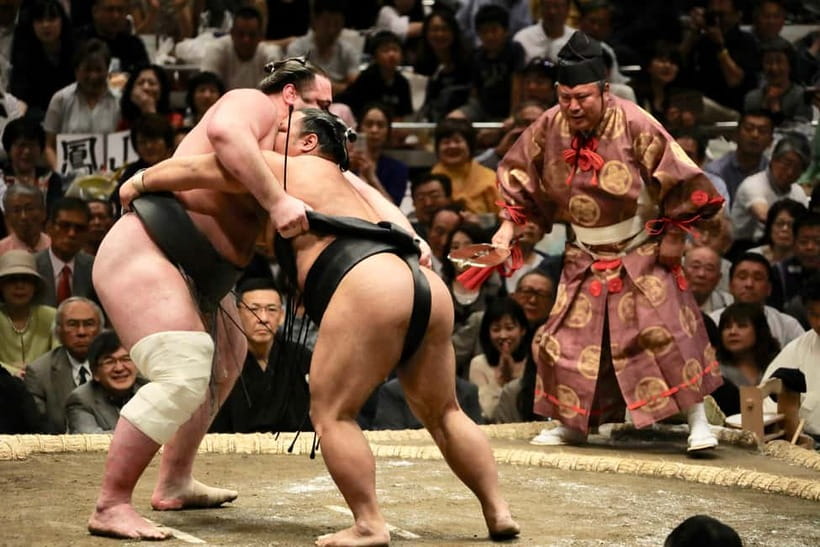
Sumo gets better when you know the why. This Nagoya tour pairs real-time earphone commentary with a simple, fun way to join in, including a cheering towel for one chosen wrestler. Add in an optional Nagoya Castle walk, and you get more than a ticket stub, you get context.
I love the wrestler pamphlet with English photos and profiles, because it turns each bout into something you can actually follow. I also like the optional Nagoya Castle visit, especially the Honmaru Palace details, like hinoki cypress wood and the decorative metal fittings.
At $225 per person, the price can feel steep if you’re mainly looking for the sumo seats and nothing else.
Key things that make this tour work
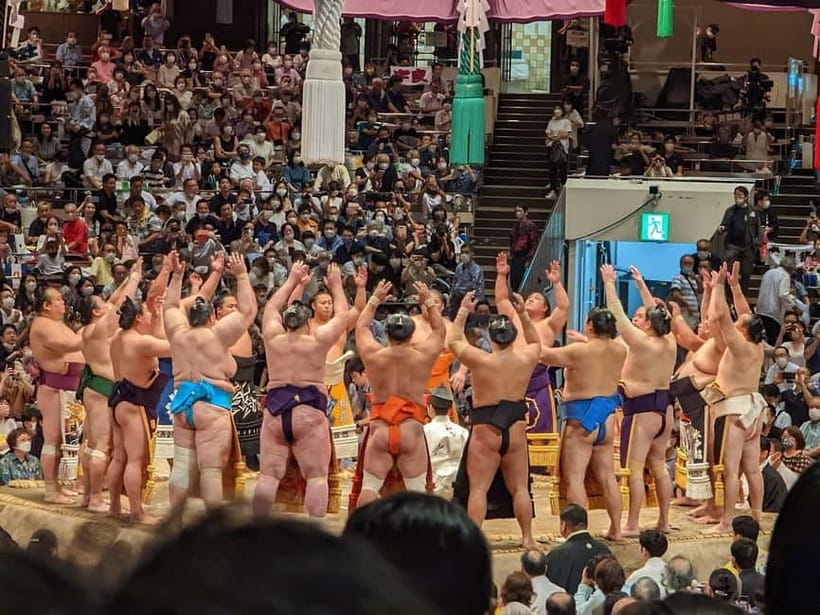
- Earphone guide system so you can hear the commentary even from farther seats
- English wrestler pamphlet that your guide walks through as matches unfold
- Cheering towel ritual for one wrestler, with clear timing from the guide
- Chair S or Chair A seating options for comfortable tournament viewing
- Optional Nagoya Castle walk tied to the same area and history as the sumo setting
Getting to Nagoya from Osaka or Kyoto without stress
Nagoya is easy to reach if you’re already basing yourself around Osaka or Kyoto. The train ride time is about 50 minutes from Osaka, and around 34 minutes from Kyoto, so this feels like a practical day trip rather than a big relocation.
You’ll meet at Meijo Line Nagoyajo Station (M07), Exit 7, on the ground. Look for the guide holding a recognizable signboard. Since there’s no hotel pick-up, plan on making it to the station on your own, then let the tour handle the rest.
This is one of those Japan logistics wins. You’re not hunting buses, lining up for unclear directions, or trying to translate the important bits at the last second.
More sumo experiences in Tokyo:
- Tokyo: Sumo Show Experience with Chicken Hot Pot and a Photo
★ 4.8 · 6,678 reviews - Tokyo: Sumo Show and Dining Experience
★ 4.8 · 2,742 reviews - the SUMO show
★ 5.0 · 1,960 reviews
The 15:00 sumo window, and why the start time matters
Your time in the arena is built around the top-division action. The plan is to watch bouts by top-division wrestlers for about 3 hours, starting at 15:00.
Here’s the reason I like how this tour thinks about pacing. Sumo is fascinating, but it’s also easy to get bored if you start too early and sit through a long stretch without context. This tour starts at the right moment, when you’re most likely to stay energized, understand what you’re seeing, and still enjoy the full arc of matches.
If you’ve never been to a tournament before, this structure helps a lot. You’re not just watching, you’re learning in real time as the day unfolds.
Earphones in the arena: clearer commentary where you’d normally miss everything
One of the biggest frustrations for first-time sumo fans is distance. Even if your seat is decent, arena noise and spacing can make it hard to catch what’s happening, or why a moment matters.
This tour solves that with an earphone guide system. Your guide gives real-time commentary through your headset, so you can follow the action even from a distance. It also helps you pick up the smaller signals, like the rhythm of the ritual moments, or the cues that explain why a bout is turning.
I especially like this setup because it changes your experience from passive to active. You’re not guessing. You’re tracking the match, even when you’re not right on top of the ring.
Your wrestler pamphlet and the cheering towel system
This is where the tour becomes genuinely fun, not just informative.
First, you receive a pamphlet with wrestler photos and profiles in English. Your guide walks you through it while you watch each bout. That means you can connect names to movements and styles instead of just seeing two bodies collide. You also get a sumo booklet that explains the sport in plain terms, so you’re not stuck decoding everything on your own.
Second, you get a cheering towel for a specific wrestler. The guide shows you how to use it when that wrestler is about to fight. It turns the tournament into a shared moment, not a quiet sit-and-watch event. When you know who you’re backing, and when to cheer, your energy rises with the match.
This is also a smart way to make sumo approachable. If you’re nervous that you won’t understand the sport, these tools shrink the learning curve fast.
A few more Nagoya days worth comparing
- From Nagoya: Gujo, Hida Takayama, and Shirakawa-go Day Tour
★ 4.4 · 398 reviews - Ghibli Park 1-Day Bus Tour from Nagoya
★ 4.5 · 277 reviews - From Nagoya: Hida Takayama & Shirakawa-go Tour w/Opt. Lunch
★ 4.5 · 256 reviews - Hiking the Historic Nakasendo Trail [1 Day Tour from Nagoya]
★ 5.0 · 104 reviews
Chair S or Chair A seats: comfort, but with realistic expectations
You get chair seating in either Chair S or Chair A. The listing does not promise a specific view angle, but chair seating is a practical choice because you can focus on the bouts instead of standing or shuffling for visibility.
What I like here is the balance. You’re not paying for VIP access just to sit far away. You’re getting seating designed for watching, then adding the earphone commentary and English materials to fix the typical first-timer gaps.
A quick practical thought: wear shoes that let you move without pain. Arena days can mean standing up for short moments, lining up, and shifting your attention between the ring and your guide’s instructions.
The optional Nagoya Castle walk that turns the day into history
Before sumo, you can add an optional walking tour in Nagoya Castle. The connection is part of what makes this tour feel bigger than the arena.
Nagoya Castle is tied to the Tokugawa clan, the rulers of Japan for nearly three centuries. The castle was built in the early 17th century, and your guide focuses on what made Japanese castles work as both power centers and fortresses.
During the walk, you’ll hear about:
- The historical backdrop for how and why it was constructed
- How the Tokugawa mobilized feudal lords who had once opposed them
- Architectural techniques used to build the castle
- How effective it was as a fortress and as a dungeon-like defensive space
Then there’s the Honmaru Palace, which is where beauty meets function. You’ll get pointed attention to the extensive use of hinoki cypress wood, decorative metal fittings, and the fine art on walls, ceilings, and sliding doors. Even if you’re not a hardcore architecture person, this kind of guided framing makes the details easier to notice.
One nice bonus from this structure: the castle visit gives your brain a story to hold before the action begins. When the tournament starts, you’re already in the mood for tradition.
How your guide makes rules, rituals, and team context click
Sumo can look simple at first, two wrestlers, a ring, a result. The magic is in the rules and rituals around the bout, plus the deeper context behind who the wrestlers are and how they match up.
Your guide explains what matters as it happens. Because you’re wearing earphones, you get the real-time talk while the action unfolds. Because you have the pamphlet, you can follow along with who is who.
From the guide descriptions, the overall vibe is consistent: the guides treat sumo like a story with characters, not just sport mechanics. People like Keiko, Yummi, Mari, Yuki, and Sunny Yoko are described as energetic and friendly, and several were praised for making the rules, small traditions, and tournament flow easy to understand.
That matters for you if you’re going for the first time. You don’t want to sit through matches only to realize you missed the meaning of key moments. You want to leave thinking, I get it now.
Small-group feel: you get help, not just a timetable
This is a small group tour, and that changes how the experience feels. Instead of a crowd that drifts, you get hands-on guidance while you’re seated and watching.
The guide also helps you keep up with the materials. You’re not stuck reading a pamphlet alone or trying to remember what you were supposed to notice. Your guide is right there, pointing out what to look for, and then tying it back to what’s happening in the ring.
There’s also a practical human factor that comes up in the way guides handle the day. One guide, Yuki, is specifically noted for waiting after someone got lost, which tells me the operation expects real-world travel hiccups and tries to make sure you’re not left behind.
That kind of calm support is worth something, especially in Japan where trains are smooth, but meeting points can still confuse people.
Price and logistics: is $225 worth it?
Let’s talk money in a straight way.
$225 per person is not a casual add-on. If you compare it to a do-it-yourself plan, it can feel expensive. One of the concerns mentioned is that the guided experience can seem costly.
So when does it feel worth it?
It makes sense when you value the full package, not just the arena seats:
- You’re buying translation help in real time, through earphones
- You’re buying structured learning, with an English pamphlet and sumo booklet
- You’re buying participation, via the cheering towel and guided timing
- You’re buying the castle context, if you add the optional walk
If you’re the type who likes to understand what you’re watching, and you want the day to feel like a guided story, this price can be justified. If you’re only there for the spectacle and don’t care about rules or background, you might feel the cost more sharply.
Also remember: there’s no hotel pick-up or drop-off. You’re responsible for getting to the station meeting point. That’s normal for many Japan tours, but it does affect the total ease.
Practical tips before you go
A few small things will help you enjoy the day more.
- Bring comfortable shoes, because the castle walk is on foot
- Arrive at Meijo Line Nagoyajo Station Exit 7 so you’re not rushing to find the guide signboard
- Plan around the tournament start at 15:00, since that’s when the tour is intentionally focused
- Use the pamphlet and listen to the earphones as a team. Don’t treat them as separate tasks, that’s when it all clicks
If you’re worried about understanding sumo, don’t. This is designed for first-timers. The whole point is that you get the tools and the guidance while you watch the matches.
Should you book this Nagoya Grand Sumo Tournament Tour?
Book it if you want a sumo day that teaches you as you go. The earphones, English wrestler materials, and cheering towel turn the tournament into an active experience, not a mysterious sit-down.
Skip it, or at least think twice, if you only want the tournament as a spectacle and you don’t want to spend extra for guided interpretation and castle context. At $225, your motivation matters.
If you’re coming from Osaka or Kyoto for a one-day change of pace, this tour is a strong fit. You get the arena energy, plus Nagoya Castle history, all in a format that’s built to keep you engaged from the 15:00 start.
FAQ
Where do we meet for the Nagoya sumo tournament tour?
You meet at Meijo Line Nagoyajo Station (M07), Exit 7 on the ground. The guide will be holding a recognizable signboard.
What time do the top-division matches start?
The tour focuses on bouts by top-division wrestlers for about 3 hours starting at 15:00.
Is the Nagoya Castle tour included?
The Nagoya Castle walking tour is optional. It is listed as an optional add-on within the tour experience.
What seating do you get at the sumo tournament?
You get Chair S or Chair A seats.
Is the tour available in English?
Yes. The tour language is English.
Does the tour include an earphone guide system?
Yes. You use an earphone guide system so you can hear the guide clearly even from a distance.
Do I get help understanding the wrestlers before and during the fights?
Yes. You receive a pamphlet with photos and profiles of each wrestler in English, and the guide walks you through it as you watch the bouts.
Do I get anything to cheer during the tournament?
Yes. You receive a cheering towel for a particular wrestler, and the guide shows you when and how to use it.
Is hotel pick-up or drop-off included?
No. Hotel pick-up and drop-off are not included.
What should I bring?
Bring comfortable shoes, especially if you choose the optional castle walk.
Fresh options around Nagoya
- From Nagoya: Eihoji, Enakyo, Magomejuku & Tsumagojuku Day Tour★ 4.0 · 13 reviews
- From Nagoya: Hida Takayama & Shirakawago Tour (Small Group)★ 5.0 · 13 reviews
- Walking Small-Group Nagoya City Tour★ 5.0 · 13 reviews
- Nagoya Private Tour with a Local: Highlights & Hidden Gems★ 5.0 · 13 reviews
- Nagoya: Traditional Japanese Sweets-Making Workshop★ 4.6 · 14 reviews
- Nagoya Private Custom Tour with Local Guide★ 5.0 · 15 reviews
- Nagoya: Customized Private Tour★ 4.6 · 15 reviews
- Pub Crawl in Nagoya★ 5.0 · 15 reviews
Nagoya Tours, compared.
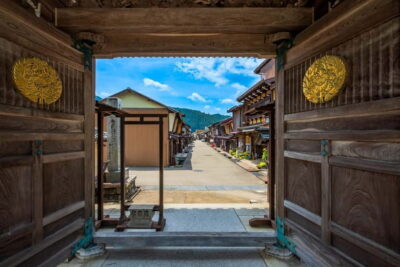

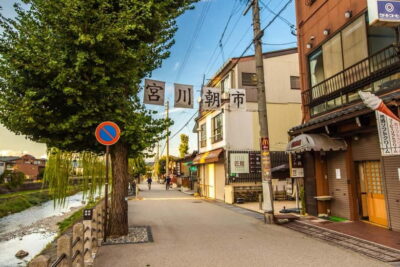
![Hiking the Historic Nakasendo Trail [1 Day Tour from Nagoya]](https://review-japan.com/wp-content/uploads/hiking-the-historic-nakasendo-trail-1-day-tour-from-nagoya-400x267.jpg)
Hiking the Historic Nakasendo Trail [1 Day Tour from Nagoya]
Read our review →
Nagoya Highlight Tour guided by a friendly local
Read our review →
Japanese Traditional Sweets making and Tea Ceremony
Read our review →
Magome-juku, Tsumago-juku & Ena-kyo 1d Bus Tour from Nagoya
Read our review →
Nagoya Full-day Private Custom Tour with National Licensed Guide
Read our review →Browse the lists this tour appears in