

Reviewed · COOKING CLASSES
Well-balanced BENTO (lunch box) Cooking Class
Bento lunch becomes real when you learn the rules. In this hands-on Osaka class at Sakura Cook, you cook dashi first, then make and pack a complete bento with classic home-style dishes. It’s a practical way to understand how Japanese food is built, bite by bite.
I especially like two things here: you learn the process behind dashi and how it supports the flavors in multiple dishes, and you finish by arranging your lunch box with an instructor’s packing advice, not just dumping food in containers. One possible drawback is time pressure, since you cover up to seven dishes plus two onigiri triangles in about 2.5 hours, so you follow the class plan rather than doing slow, detailed experimentation.
If you want a cooking class that’s equal parts food and culture, this one does the job without feeling like a lecture. Small group size also helps you stay hands-on instead of watching from the sidelines.
Key Things That Make This Bento Class Worth Your Lunch Break

- Dashi is first, so the rest of your lunch actually makes sense, flavor-wise
- You’ll cook and pack a full bento, not a few side dishes
- Onigiri triangle practice with plastic molds, then you finish two shaped rice balls
- Up to seven home-style dishes using ingredients like Wagyu, shrimp, salmon, egg, squash, mushroom, and green vegetables
- Miso soup is served with your meal at the end
- The class is limited to a maximum of 8 travelers, which keeps the pace learnable
Entering Sakura Cook: A Small-Group Lunch Workshop in Osaka

This class happens in Osaka, in a restaurant setting at Sakura Cook. The vibe is kitchen-focused and practical. You get a clear sequence, you get space to work, and you get an instructor who can steer you as you cook and then pack.
You start by choosing your favorite lunch box and putting on an apron. That sounds small, but it matters. In Japan, bento isn’t just food. It’s presentation, portioning, and planning for a real day. Starting with the box helps you think like the lunch maker, not like a tourist grabbing a meal.
The group stays tight, with a maximum of 8 travelers. In real terms, that usually means less waiting around. You’re more likely to be actively cooking, shaping, and packing during the full 2 hours 30 minutes.
More Cooking Classes in Osaka
- Osaka: Ramen and Gyoza Cooking Class in Dotonbori
★ 5.0 · 378 reviews - Osaka Cooking Class: Okonomiyaki &Japanese cuisines experience
★ 5.0 · 261 reviews - Ramen and Gyoza Cooking Class in Osaka
★ 5.0 · 202 reviews
Where You Meet in Osaka
You meet at Banix 北堀江 Japan (Nishi Ward, Kitahorie, 3-chōme), specifically at 550-0014 Osaka, in front of System Gallery at that address. It’s listed as near public transportation, which is a big plus in a city where train stations are close but not always walk-friendly after a long day of sightseeing. You’ll return to the same meeting point when the activity ends.
Dashi First: The Flavor Backbone of Your Bento
The class begins with making traditional Japanese broth, called dashi. Even if you’ve had dashi before, learning how it’s prepared changes how you understand the rest of the meal. Dashi is more than a soup base. It’s the kind of foundational flavor that supports seafood, eggs, mushrooms, and simple simmered dishes without tasting heavy.
This is one of the most praised parts of the experience. Your instructor explains the history and the process behind dashi, including how it’s used in dishes across a bento. If you want to bring one practical takeaway back to your own cooking, make it this: don’t treat each dish as separate. In Japanese cooking, flavors often connect through shared bases like dashi.
You’re not just watching. You’re participating in the steps that create that base, so you end up with a clearer sense of what to look for when you taste later.
Seven Home-Style Dishes, Plus the Onigiri Triangle Game
Once dashi is underway, the rest of the cooking turns into a workshop of classic techniques. You’ll work with ingredients that show up often in Japanese home meals, including Wagyu beef, shrimp, salmon, egg, squash, and mushroom, plus green vegetables.
Over the session, you make up to seven classic bento dishes. The class is built to cover multiple styles, so you practice a range of methods, like:
- frying
- grilling
- simmering
- marinating
That matters because bento is rarely one “cooking style.” It’s a mix of textures and tastes. You want something that’s savory, something that’s juicy, something that’s easy to eat at room temperature, and something that balances the rest.
Same corner of Japan, a different kind of day:
- Osaka Go Karting Tour with Funny Costume
★ 5.0 · 2,658 reviews - Osaka Castle: Museum and Tower Entry Ticket
★ 4.5 · 2,380 reviews - Osaka: Shinsekai Food Tour with 13-15 Dishes at 5 Eateries
★ 4.8 · 2,204 reviews - Osaka Food Tour: 13 Dishes at 5 Local Eateries
★ 5.0 · 2,149 reviews
The Onigiri Part: Shape Two Triangles
After you practice shaping using plastic molds, you complete two rice balls in a triangular style. Onigiri is one of the most iconic “packed lunch” foods in Japan, and the triangle isn’t just cute. The shape helps with handling, portion control, and the way rice holds together while you eat with chopsticks.
If you’ve only seen onigiri from the outside, you’ll probably be surprised how much of the job is technique and timing. The mold step helps you learn the form fast, then you apply it to finish your own triangles.
Packing Your Bento Like Someone Who Lives Here
Cooking is only half the skill. The other half is packing. When all the dishes are completed, you’re asked to pack them into your lunch box along with fresh vegetables.
This is where the class gets especially practical. Your instructor provides advice on an attractive pack way. That means you’re thinking about how compartments fit, how colors balance, and how foods sit so they look good and are easy to eat.
A lot of people travel to Japan and eat bento as a convenience. This flips it. You see how the person preparing lunch is planning for the day: portioning, stacking, and making the lunch feel intentional. It’s the kind of food lesson that sticks because it changes how you notice meals after you leave the restaurant.
The Lunch Box Is Part of the Lesson
You start by choosing your lunch box. That choice influences the packing strategy. In small ways, you learn what works in different layouts and how to make room for chopsticks and your finished dishes.
What You’ll Actually Cook: Ingredients and Techniques in Plain Terms

Here’s the ingredient mix the class is built around, so you know what you’ll be tasting and eating at the end:
- Wagyu beef
- shrimp
- salmon
- egg
- squash and mushroom
- green vegetable
- plus dashi as the broth base
- and miso soup served with your meal
You also practice multiple preparation styles through the class, including marinating and methods like frying, grilling, and simmering. The exact dishes can vary based on the class flow, but you should expect a full bento spread rather than one signature item.
This variety is a value point. For the price, you get a “skills buffet.” You’re not only learning recipes, you’re learning how different techniques create different textures. That matters if you want to repeat any of this at home.
Eating Your Bento: Miso Soup and the Payoff Moment

At the end, you sit down with your finished bento. Dishes are served with chopsticks, and you eat your creations with complimentary miso soup.
That end moment is more important than it sounds. It’s where you connect cooking technique to how food actually tastes when arranged as a lunch. If you’ve ever cooked one dish and eaten it right away, you’re used to freshness. Bento changes the context. Even if everything is still fresh from cooking, you’re experiencing how the meal is designed to be eaten as a set.
And yes, you’ll get the simple cultural rhythm of it, like starting your meal with the customary itadakimasu moment before you dig in.
Price and Value Check for a 2.5-Hour Hands-On Bento Class

At $92.24 per person, this is not the cheapest activity in Osaka. But it is also not “just a tasting.” You cook, you shape, you pack, and you eat what you make. You also practice multiple techniques over up to seven bento dishes plus dashi.
For value, I’d compare it to alternatives:
- If you’re spending similar money on a food tour, you usually get eating and maybe short stops, not full skill practice.
- If you’re buying ingredients and trying to recreate dashi plus onigiri plus multiple bento dishes on your own, you’ll spend time, and you might not get the instruction that helps flavors click.
The sweet spot here is for visitors who want a tangible souvenir in the form of technique. Learning dashi and packing strategy is the kind of knowledge that turns into better meals later, not just a one-time memory.
One more value note: the class is capped at 8 travelers. That smaller size often justifies the price because you get more direct instruction.
English-Friendly, Punctual, and Built for Participation
The experience runs professionally, with a punctual schedule and a clean teaching environment. In the feedback shared from past classes, the instructors are described as earnest, warm, and to the point in English. Names you may hear include Yumi and Fumi, and in the room the teaching style is careful, with clear step-by-step guidance.
You also don’t have to be a “serious home cook.” The class is designed so you can participate even with limited cooking background. One of the best signals is that it works well for kids when paired with an adult. The class is hands-on, so it’s not ideal to treat it like a passive activity.
A practical consideration: because it covers a lot in 2 hours 30 minutes, you’ll want to show up ready to work. If you’re starving from a late lunch or exhausted from nonstop walking, you might feel the pace more than you’d like.
Who Should Book This Bento Class in Osaka?
This is a great pick if you fall into one of these buckets:
- You love Japanese food and want to learn the “why,” not just the “what.”
- You want a hands-on class that ends with a real meal, dashi included.
- You’re traveling with a kid who can follow instructions with support.
- You’re the type who still thinks about food after the trip and would like to repeat it at home.
It’s also a smart choice if your Osaka plan includes markets, neighborhoods, and temples, but you want one activity that stays grounded in daily life.
It may not be the best match if you want a slow, deep, only-one-dish style class. This one is structured for a full bento outcome.
Should You Book This Bento Class?
If you want an Osaka experience that’s practical, delicious, and teachable, I’d book it. You’re paying for a complete lunch workflow: dashi, multiple home-style dishes, onigiri triangles, and then the packing skill that makes bento look like bento.
The strongest reason to choose this class is that it connects flavors and structure. You don’t just make items. You build a lunch the way locals do.
If you’re curious, go for a class date that fits your appetite and energy. Show up on time, wear the apron, and think like you’re preparing lunch for a normal day, not a special occasion meal.
FAQ
Where does the Bento Cooking Class start?
The class starts at Banix 北堀江 Japan, Osaka 550-0014, Nishi Ward, Kitahorie, 3-chōme62 (System Gallery). The activity ends back at the same meeting point.
How long is the experience?
It runs about 2 hours 30 minutes.
What is the group size?
This cooking class has a maximum of 8 travelers.
What will I cook during the class?
You’ll prepare dashi first, then make up to seven classic Japanese dishes for bento, using ingredients like Wagyu beef, shrimp, salmon, egg, squash and mushroom, and green vegetables. You will also make triangular rice balls using plastic molds.
What cooking skills are you taught?
You practice techniques such as frying, grilling, simmering, and marinating, and you learn how to shape onigiri into triangles.
Is miso soup included?
Yes. Miso soup is complimentary and served with the bento at the end of the class.
Are there any rules for kids or dietary requirements?
Children must be accompanied by an adult. If you have dietary requirements, you should advise them at the time of booking.
Fresh options around Osaka
- Osaka Winery Tour with Wine Tasting & Vineyard Walk★ 4.9 · 12 reviews
- Osaka: Early Morning Osaka Castle Guided Tour, Avoid Crowds★ 4.9 · 12 reviews
- Kyoto Day Trip from Osaka Port – Private Shore Excursion★ 5.0 · 13 reviews
- Osaka Private Pop Culture Tour: Historic Tenma to Dotonbori★ 4.5 · 13 reviews
- Osaka Castle Admission Ticket★ 4.0 · 13 reviews
- Hidden Osaka Foodie Tour: Nishinari Backstreets & Local Dining★ 5.0 · 13 reviews
- Discover Real Osaka: A Cultural Walk with Food & Drink★ 5.0 · 13 reviews
- Nara private tour (Shore excursion available from Osaka or Kobe port)★ 5.0 · 13 reviews
Cooking Classes, compared.
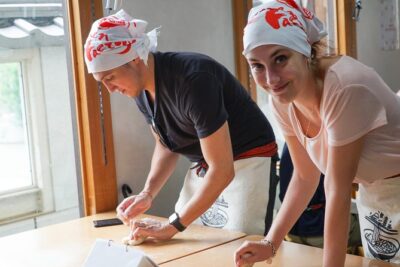
Ramen Cooking Class at Ramen Factory in Kyoto
Read our review →
Ramen & Gyoza Cooking Class in Tokyo with Local Supermarket Visit
Read our review →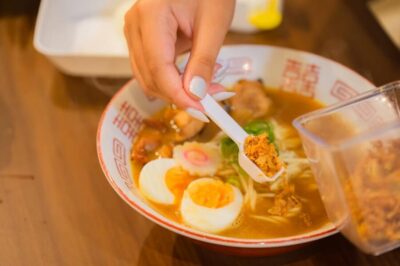
Ramen Cooking Class at a Ramen Factory with Souvenir
Read our review →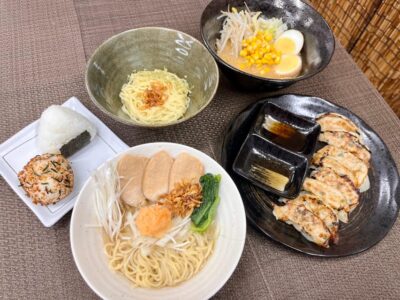
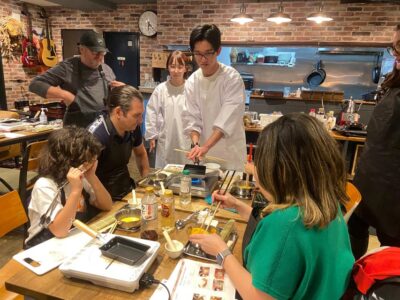
Japanese Washoku Bento Small Group Cooking Class
Read our review →
Easy Ramen Cooking Experience in Kabukicho, Shinjuku
Read our review →
Ramen and Sushi Cooking Class with Sake Pairing Set in Tokyo
Read our review →Browse the lists this tour appears in