
Reviewed · WORKSHOPS
Sushi Class in Osaka Dotonbori
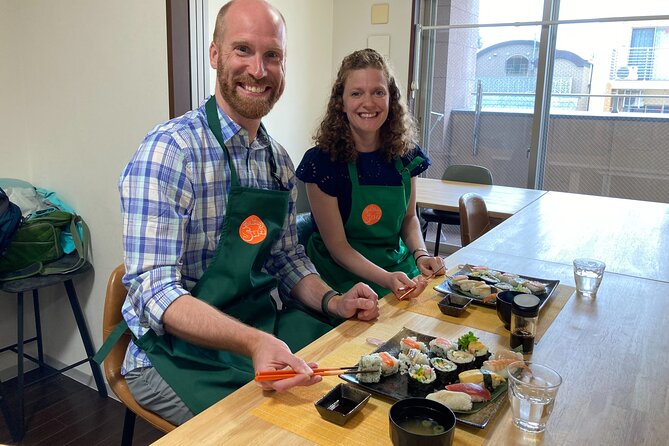
A sushi class in Dotonbori feels like a cheat code. You get to make three authentic Osaka-style sushi types in about 3 hours, guided by patient instructors, with ingredients prepped for you. The result is a meal you can actually be proud of, not just a hands-on snack.
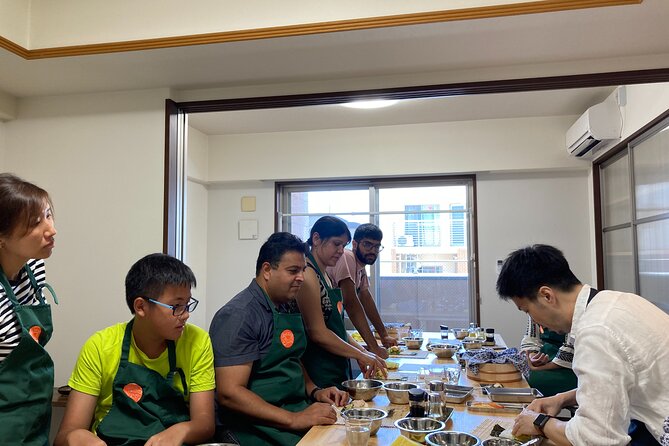
What I like most is the small group size (up to 8), so you get real coaching while you work. I also love that the class is built around three different styles, so beginners get quick wins and more experienced cooks learn specific technique. One possible drawback is location confusion, since the meeting address is inside a building that’s easy to miss if you rely only on Google Maps.
Key Highlights You Should Know Before You Go

- Up to 8 people, so the class doesn’t feel crowded and you can ask questions
- Three sushi styles made by you: salad roll, nigiri, and pressed box sushi (oshi-zushi)
- Ingredients are prepared and an apron is provided, which keeps the focus on technique
- Vegetarian choices are available (with eggs or no eggs) and you can request in advance
- Gluten-free option is available if you request when booking
- You eat what you make, plus miso soup, so the class ends with a real payoff
Why This 3-Hour Osaka Sushi Class Feels Worth It
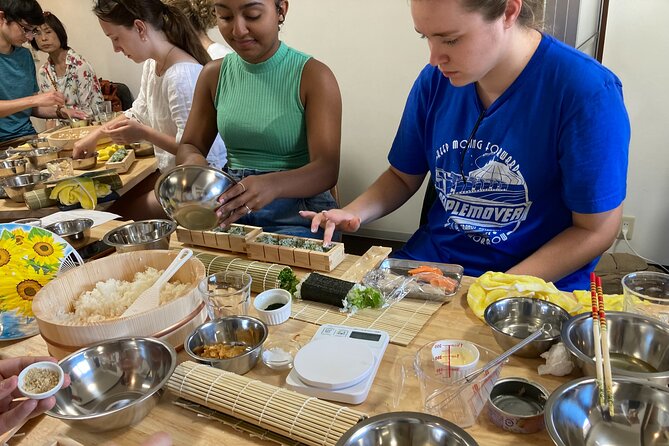
Osaka’s Dotonbori is famous for food, neon, and noise. This class offers a quieter win: a structured way to learn sushi technique without needing months of practice. You’re not doing a vague cooking experience where you chop some vegetables and watch. You assemble sushi yourself, with step-by-step guidance.
The class is also timed well. At roughly 3 hours, you’ll learn, make, and eat without feeling rushed or stuck waiting around. It works especially well if you want a food activity that’s both cultural and practical, the kind you can repeat at home.
Another value point is the way the setup is designed for success. The class provides an apron, and key ingredients are ready for you. That means your time goes to the parts that actually teach technique: building the roll, placing nigiri toppings on vinegared rice, and making oshi-zushi in the Osaka style.
One more thing I appreciate: the instructors can adapt. Vegetarian options exist, and there’s even a gluten-free option if you request ahead. That matters because sushi classes often assume everyone eats the standard fish-based lineup.
More Sushi Making Classes in Osaka
- Sushi Making Osaka Roll and Authentic Japanese Sushi Class
★ 5.0 · 1,220 reviews - Osaka Sushi Making Experience
★ 5.0 · 400 reviews - Osaka Sushi Making Class – Hands-On Nigiri & Rolls (Same-Day OK)
★ 5.0 · 352 reviews
Finding Cooking Sun and Room 807 Near Dotonbori
Check-in is simple, once you know what to look for. The meeting point is Cooking Sun at Shimanouchi in Osaka, and your exact room is Room 807 in a building called Masters Residence Dotonbori I.
Here’s the practical part: when you arrive, press 807 and the 呼出 (call) button to have the door opened for you. The class start time listed is 9:30 am.
A heads-up based on real-world trouble spots: Google Maps can sometimes land you at a nearby building that looks similar but is across the street. The correct building has a placard for Masters Residence Dotonburi I. If you want the day to stay calm, arrive a few minutes early so you can confirm the door and room number.
The Sushi Lineup: Salad Roll, Nigiri, and Oshizushi Box Sushi
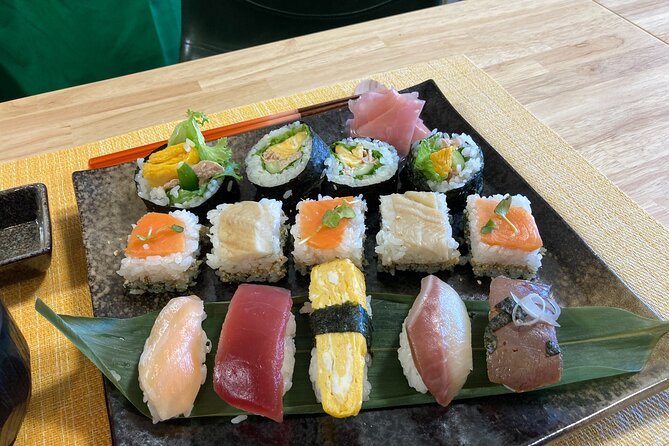
You’ll make three types of sushi, each with a different texture and method. That’s the real reason this class stands out. Most beginner classes focus on one style. Here you get a mini “sushi toolkit.”
The class teaches you what each style is, how it’s built, and what makes it taste like the real thing. Even if you’ve eaten sushi forever, there’s something satisfying about understanding why the shape matters.
1) Salad Roll: A Nori Roll With a Tamagoyaki Core
Your salad roll is a structured mix of crunchy, creamy, and savory. You’re working with items such as crab-flavored kamaboko, lettuce, cucumber, avocado, and tuna mixed with mayonnaise. All of it goes into a nori roll.
The signature detail is the core of tamagoyaki, the Japanese rolled omelet (often called an egg roll). You’re not just wrapping ingredients randomly. The class has you build a roll with that egg core, which helps you understand how sushi rolls keep their shape and bite.
What to expect in the process: guidance on how to assemble the layers so the roll holds together. You’ll also learn to think in “sections,” since a good roll has balance, not just quantity.
Same corner of Japan, a different kind of day:
- Osaka Go Karting Tour with Funny Costume
★ 5.0 · 2,658 reviews - Osaka Castle: Museum and Tower Entry Ticket
★ 4.5 · 2,380 reviews - Osaka: Shinsekai Food Tour with 13-15 Dishes at 5 Eateries
★ 4.8 · 2,204 reviews - Osaka Food Tour: 13 Dishes at 5 Local Eateries
★ 5.0 · 2,149 reviews
2) Nigiri: Vinegared Rice Plus Toppings
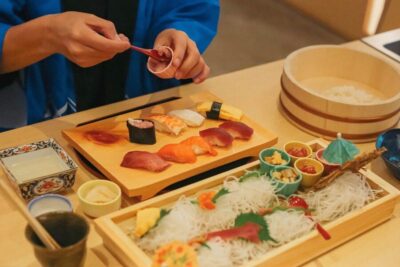
Nigiri is the classic: vinegared rice with toppings placed on top. Your instructor will walk you through the idea that nigiri is about proportion and placement, not complicated tooling.
The general concept given is simple and useful: ingredients like fish, shellfish, and omelet are placed over vinegared rice. In your class, you’ll focus on assembling your own nigiri in a way that looks right and eats well.
Even as a beginner, nigiri is a great choice for learning because it’s quick to understand. You get immediate feedback on how the topping sits and how the rice supports it.
3) Oshizushi: Pressed Box Sushi From Kansai
Oshizushi is where the class becomes distinctly “Kansai region” and very Osaka. In this style, rice and toppings go into a square wooden frame. Then you press so the rice sticks to the toppings.
Osaka also calls it box sushi, and it’s still popular locally. The finished product is a square, and the guidance you get is that you cut it into pieces just before eating. That timing helps keep it neat and prevents it from drying out or losing texture.
If you want a memorable souvenir skill, this is the one. Rolling sushi requires coordination, but pressed sushi is its own logic puzzle, and it’s fun to see how the box method changes the texture of the bite.
How the Instruction Actually Helps You Cook Better
A good sushi class teaches technique, but a great one teaches you how to correct yourself while you work. This class leans into that.
The instructors are described as patient with beginners. In some cases, instructors also speak at a pace that makes it easier to follow without panic. If you’ve ever tried to learn a new cooking method while feeling rushed, this teaching style matters.
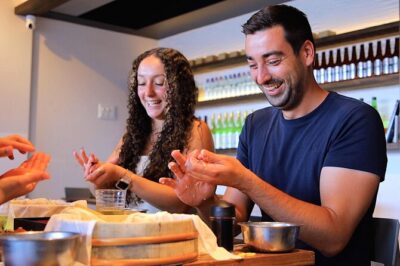
You’ll also see that the class is designed for participation, not observation. Multiple examples of student stories point to the same pattern: you do the steps, not just watch someone else do them. That’s a big deal for value. You’re paying for instruction you can apply immediately, not just a photo moment.
Guide names that come up in the teaching teams include Ami, Jaimi, Yoshi, and Sakura. You may meet one of them, or you may meet another instructor working with the same approach. Either way, the class has the same focus: clear explanation, step-by-step support, and help when questions pop up.
One more practical benefit: the class provides ingredients and an apron. That reduces decision-making and mess, so you can focus on learning. You’ll leave with skills, and you’ll also leave less overwhelmed than you would in a DIY sushi class where you have to source everything.
The Meal Part: What You Eat at the End
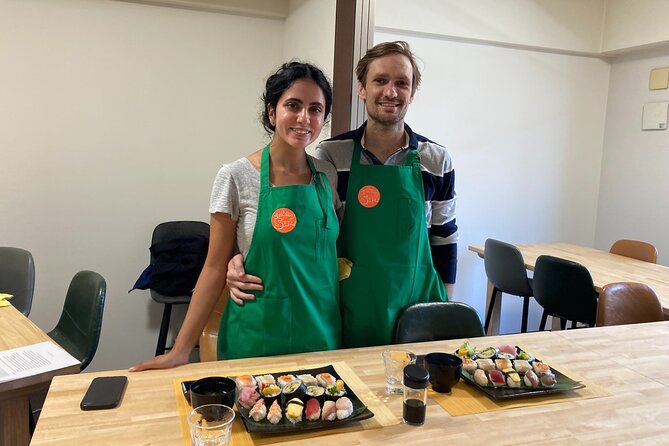
This isn’t a “snack and send you on your way” class. At the end, you eat the sushi you made alongside miso soup. It’s the kind of meal that turns learning into something real.
Because you’re making three different types, your plate ends up varied. You’ll get:
- something roll-shaped and fresh tasting (the salad roll)
- something clean and precise (nigiri)
- something structured and satisfying (pressed oshizushi)
That variety is exactly what makes the class enjoyable even if you’re not a die-hard sushi person. You can taste the differences in rice, toppings, and bite shape.
Also, because the class includes miso soup, you avoid the awkward “what do I eat after cooking” problem. You’re done, you sit, you eat what you produced, and you can enjoy the rest of your Osaka day without hunger fog.
Price and Value in Osaka: Is $71.16 Fair?
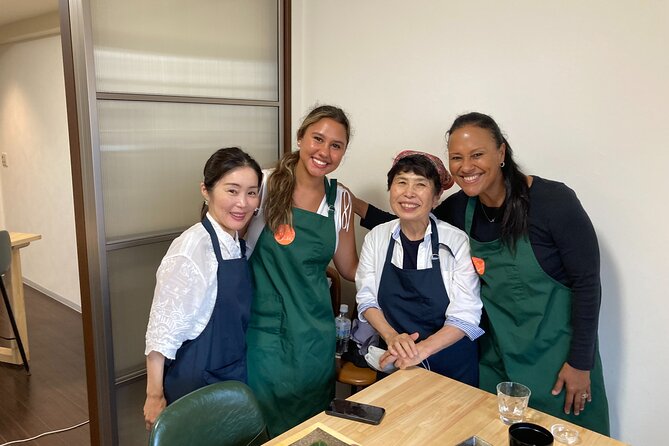
At $71.16 per person for roughly 3 hours, you’re paying for more than ingredients. You’re paying for guided practice, small-group attention, and a set menu that’s designed to teach sushi fundamentals.
Here’s where the value comes from:
- Three sushi types in one session, instead of one
- Small class size (up to 8), which typically means less waiting and more correction
- Prepped ingredients and apron, so you’re not wasting time on basic prep
- You eat your work, so you’re not just learning technique in a vacuum
If you compare it to the cost of dining, sushi can get expensive quickly in Osaka. This class is a way to turn that spending into skill building. You eat your meal, and you walk away with knowledge you can use later.
Demand is also shown by how far in advance it’s commonly booked, with an average booking window of 74 days. That’s a hint to treat it like a real plan, not a last-minute idea.
Who This Class Is Best For (and Who Might Want a Different Plan)
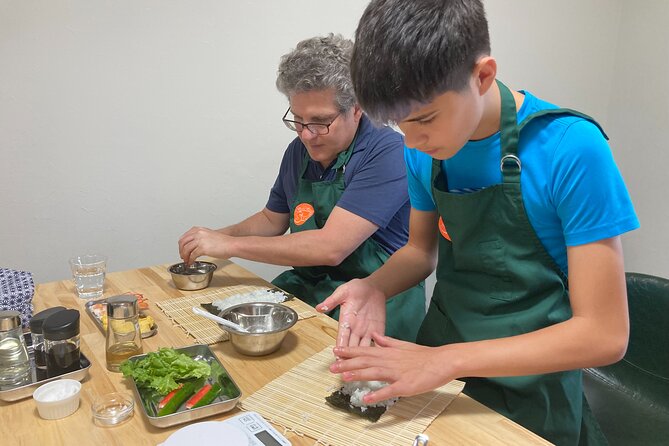
This works well for a lot of people:
- Beginners who want a guided intro to sushi styles, without needing specialized tools
- Food lovers in Osaka who want something more focused than a long walking tour
- Travelers who prefer small group activities, where questions are welcomed
- Couples and solo travelers, since the class is designed to be taught step-by-step
- Families, when kids can participate alongside parents (one family story included a daughter joining and participating)
It might be less ideal if you’re looking for a purely sightseeing-based morning and you hate structured schedules. Also, if you dislike finding buildings inside larger complexes, you’ll want to give yourself extra time for the Room 807 check-in, since that’s the main recurring friction point.
Should You Book This Sushi Class in Dotonbori?
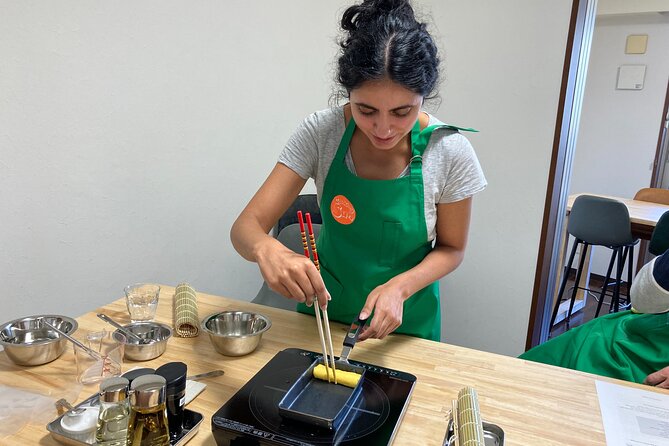
I’d book it if you want an Osaka food experience that’s hands-on, structured, and ends with a meal you made yourself. The best reasons are simple: small group coaching, three different sushi styles, and you eat immediately with miso soup. Add in vegetarian and gluten-free options by request, and it becomes a more flexible choice than many sushi workshops.
If you’re tight on time, it’s also a smart pick because the duration is set at about 3 hours. You can still enjoy Dotonbori after. Just plan your arrival time so you can find Room 807 without stress.
FAQ
How long is the sushi class?
The class runs for about 3 hours.
What time does it start?
The start time listed is 9:30 am.
Where exactly is the meeting point?
The meeting point is Cooking Sun in Osaka, Chuo Ward, Shimanouchi, and your room is Room 807 at Masters Residence Dotonbori I. Press 807 and the 呼出 (call) button to open the door.
How many people are in the class?
The class has a maximum of 8 travelers.
What sushi types will I make?
You’ll make three types: a salad roll, nigiri, and oshizushi (pressed box sushi).
Is there a vegetarian option?
Yes. Vegetarian options are available with eggs or with no eggs, and you need to request this upon booking.
Is there a gluten-free option?
Yes. A gluten-free option is available if you request it upon booking.
Is an apron or other materials included?
An apron is provided, and ingredients are prepared for you.
Does the class include a meal?
Yes. At the end, you eat the sushi you made along with miso soup.
What is the cancellation policy?
You can cancel for a full refund up to 24 hours before the experience’s start time. Changes inside that 24-hour window are not accepted.
Fresh options around Osaka
- Osaka Winery Tour with Wine Tasting & Vineyard Walk★ 4.9 · 12 reviews
- Osaka: Early Morning Osaka Castle Guided Tour, Avoid Crowds★ 4.9 · 12 reviews
- Kyoto Day Trip from Osaka Port – Private Shore Excursion★ 5.0 · 13 reviews
- Osaka Private Pop Culture Tour: Historic Tenma to Dotonbori★ 4.5 · 13 reviews
- Osaka Castle Admission Ticket★ 4.0 · 13 reviews
- Hidden Osaka Foodie Tour: Nishinari Backstreets & Local Dining★ 5.0 · 13 reviews
- Discover Real Osaka: A Cultural Walk with Food & Drink★ 5.0 · 13 reviews
- Nara private tour (Shore excursion available from Osaka or Kobe port)★ 5.0 · 13 reviews
Workshops, compared.
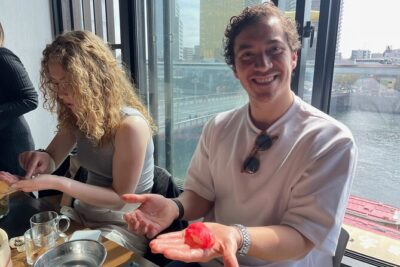
Sushi Making Tokyo Roll and Authentic Japanese Sushi Class
Read our review →
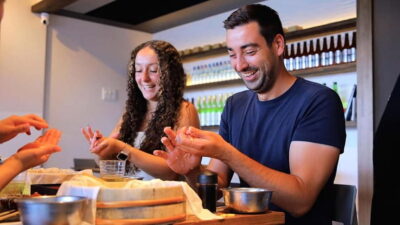
Roll and Authentic Sushi Making Class in Asakusa
Read our review →
Ramen Cooking Class at Ramen Factory in Kyoto
Read our review →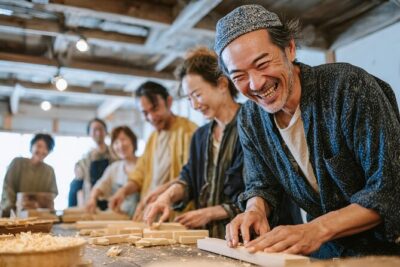
Sushi Making Class in a Happi Coat near a Famous Spot
Read our review →
Sushi Making Osaka Roll and Authentic Japanese Sushi Class
Read our review →Browse the lists this tour appears in