
Reviewed · SAMURAI & NINJA EXPERIENCES
Samurai School in Kyoto: Samurai for a Day
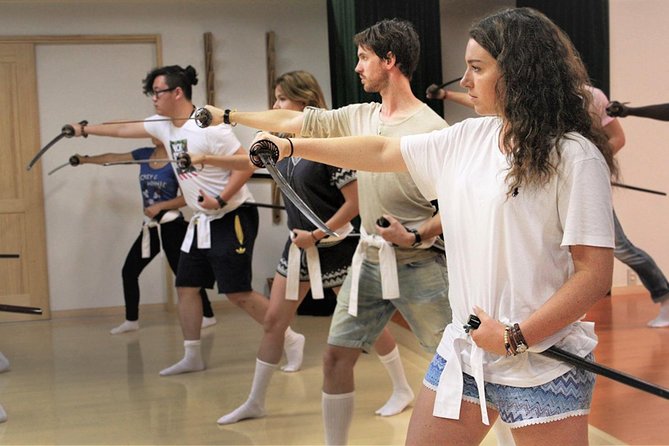
A sword lesson in Kyoto feels like time travel. This Samurai School in Kyoto, run through the Kembu Kyoto Dojo, turns a brief history moment into hands-on practice: bowing, drawing and resheathing a katana, and kenbu style choreography, with a costume photo session and a completion certificate.
I love that the class is practical, not just watching. You learn the bow and the sword sequence right away, then you work through striking and thrusting drills with an instructor in English. I also like the cultural structure, especially the short 3-minute film that sets the etiquette before you move into sword basics.
One consideration: the schedule may include a longer performance segment than you expect, and the photo time with your own camera can feel a bit rushed if the room is running on tight timing. Plan for that, and you will leave happy.
Key Things to Know Before You Go
- Katana draw and resheathing drills with step-by-step guidance
- Bow etiquette first, then basic striking and thrusting practice
- Samurai costume photos plus a completion certificate and tenugui towel
- Optional longer session with walking, folding fan, and staged kenbu choreography
- Small group size (max 10) for a more controlled, safer class pace
Entering the Kembu Kyoto Dojo and Getting Ready
You meet at the GOZAN building, in the first basement floor. The instructions are specific, and that helps: take the stairs, then look for the right side entrance, and check in there. If you get there early, you will have time to settle your nerves, ask quick questions, and get into the right mindset.
Timing is part of the experience. Your class time varies based on the option you choose, and the overall length is about 1 hour 30 minutes for the standard experience. Even though it is not a long commitment, it is a concentrated session, so I recommend arriving 10 to 3 minutes before start time so the group can start together.
Also, your outfit matters more than you might think. Wear clothes made for moving, because you will change into a uniform and socks for the costume portion. A single hoodie or tights can make costume changes harder, so bring something that layers and moves easily.
More Samurai & Ninja Experiences in Kyoto
- Kyoto Samurai Experience
★ 5.0 · 1,294 reviews - Kyoto: Kendo and Samurai Experience with Uniform and Gear
★ 4.9 · 815 reviews - Kyoto: Samurai Sword Class by Experts in Traditional Arts
★ 4.9 · 657 reviews
The Short Welcome Film, Then Samurai Bowing Basics
Right after you meet your instructor, the class starts with a short film, about 3 minutes, covering basic samurai practices. This is not a long lecture, but it gives you useful context for what you are about to do, especially the idea that discipline and respect come before anything flashy.
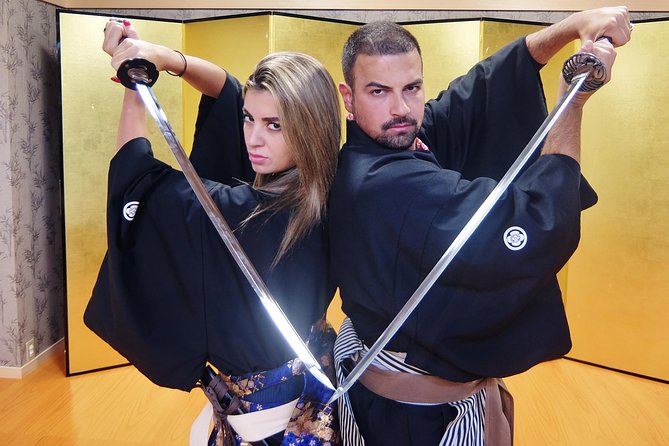
Then you suit up. The uniform includes a white belt and Japanese-style socks, and you handle the sword as you learn the right routine. The bowing practice is more than theater. You are learning how the movement connects to etiquette, timing, and control, and it sets the tone for the sword drills that follow.
If you like activities that feel like a real skill, this is one of the best parts. You are not guessing. You get correction and structure early, which makes the later katana work feel less intimidating.
Katana Work: Drawing, Resheathing, Striking, and Thrusting
This is the heart of the class. You start with drawing the katana and returning it to its protective scabbard. That may sound simple, but drawing a sword from a set position with clean form takes focus. The instructors guide you step by step, and you try the sequence yourself, building muscle memory.
As you practice, you also test different methods of striking the sword. You learn basic choreography movements and then incorporate them into controlled actions. You should expect to repeat parts of the drill until your form looks right and your timing matches the instructor’s cues.
Safety is practical here. The sword work depends on following instructions closely, so keep your attention on the demo and the corrections. I also suggest you mentally commit to being present, not multitasking. It is a hands-on class where small details matter.
The Costume Photo Session and Your Completion Extras
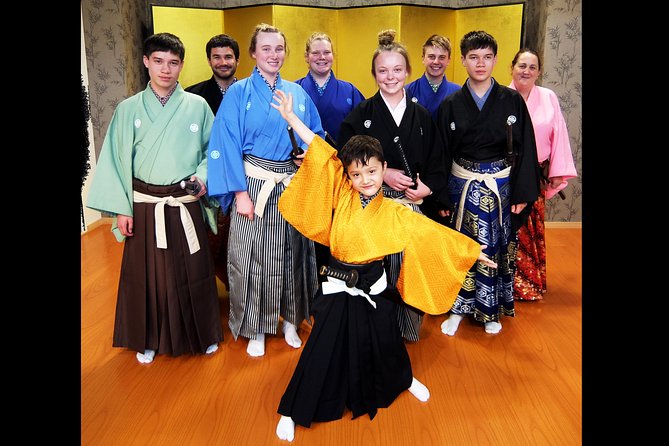
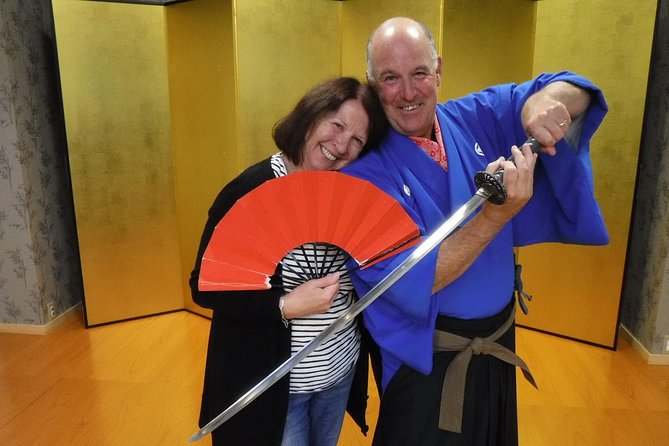
After you get through your main sword training, you transition into a traditional samurai costume for photos. This is one of those moments that is fun and also meaningful, because you will look like what you are practicing.
You are given time for the photo session, and you also receive a lesson completion certificate and a tenugui towel. Those are small items, but they make the experience feel official. The tenugui towel is the kind of souvenir you will actually use, and the certificate is a nice way to mark the skills you learned.
One note to manage expectations: if you are hoping for slow, perfectly posed photos with your own camera, timing can be tight. The class runs on schedule, and you will likely get photos, then move on. If you want the best results, come ready with simple shot ideas, like front-and-center portraits and a sword-only pose, and keep your camera settings ready.
More samurai and ninja experiences in Kyoto:
- Skip the lines Basic Ticket at SAMURAI NINJA MUSEUM KYOTO
★ 4.5 · 632 reviews - Ninja 1-hour Hands-on Lesson by Japanese master in Kyoto -Entry
★ 5.0 · 489 reviews - Kyoto: Ninja Weapon Forging Experience
★ 4.8 · 478 reviews - Kyoto: Samurai Kenbu Traditional Sword Dancing Show
★ 4.5 · 426 reviews
What the Optional Longer Session Adds: Kenbu, Folding Fan, and Stage Choreography
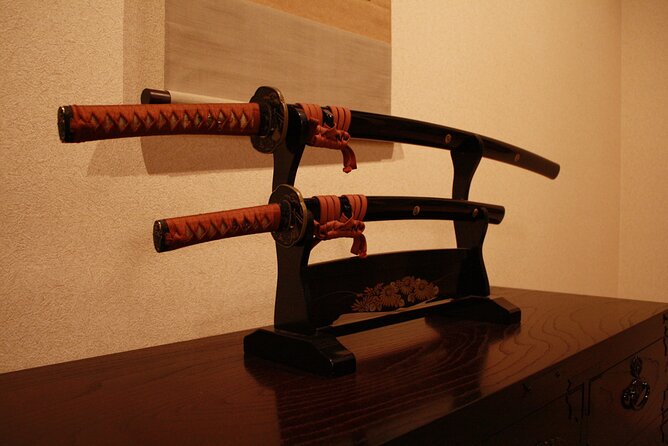
The standard class ends with the respectful bow to the instructor, photos, and your certificate. If you upgrade, you stay longer and build deeper into stylized movements.
In the longer practice, you continue with more samurai technique, including how to walk in the style, and how to use a folding fan. That fan work matters because it connects to the broader kenbu performance style, not just sword handling.
Then comes the challenging part: kenbu choreography. In this upgrade, you perform sword choreography on stage, with accompaniment by a poem and music. Even if you are not a performer, it is a memorable ending because you get to put the movements together in a structured routine, with an audience-style moment.
If you are the type who learns best by doing more rounds, the upgrade is usually worth considering. You get extra time to make the movements feel natural instead of finishing right at the point where your body is starting to understand the pattern.
Group Size and How It Affects Your Experience
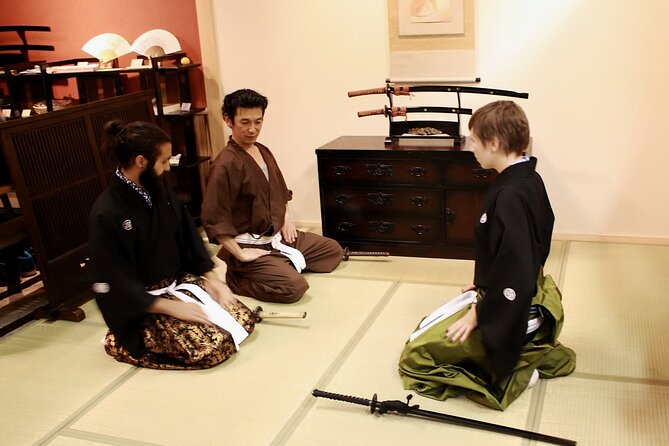
The class caps at 10 travelers. In practice, that usually means you are not swallowed by a huge crowd, and you can stay connected to the instructor. You also tend to get quicker feedback when something is off with your draw, stance, or timing.
Some people have experienced small groups at their time slots, and when the group is smaller, instructors can sometimes give extra attention. You should not count on a private course, but you can count on a more manageable pace than in big “show plus line-up” activities.
If you like clear structure and a calm room, this setup fits well. It is not a chaotic try-it-once demo. It is a classroom lesson with sword practice, plus costume photos and performance elements.
Planning Your Day in Kyoto Around a 90-Minute Sword Lesson
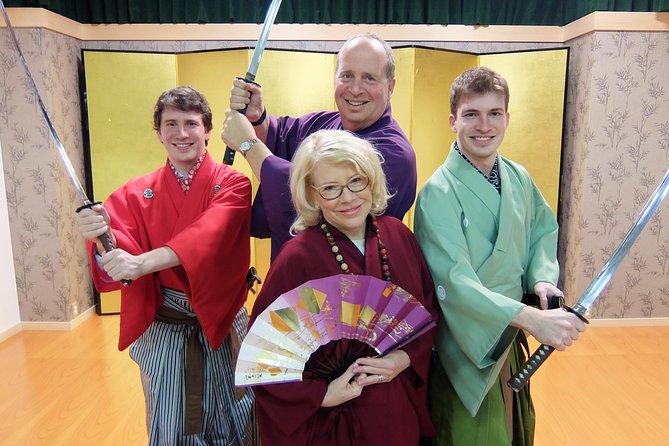
This is a great use of a tight window in Kyoto because it is short, active, and indoors. It also works well as a rainy day plan, because you are not dependent on outdoor sightseeing.
You should plan for the total time including transitions. You are moving through several stages: check-in, film, changing into uniform, bowing and sword drills, costume photos, then a performance segment. Some classes may feel like they run long at the performance portion, so do not schedule this right before a reservation that has a hard start time.
What I like about the pacing is that you get training, then a finish with a show. That show helps you connect what you practiced to what the performers actually do. If you are short on patience for long performances, you can still enjoy the training, but you should be mentally ready that the program includes a staged element.
Price and Value: Is $66.32 a Good Deal?
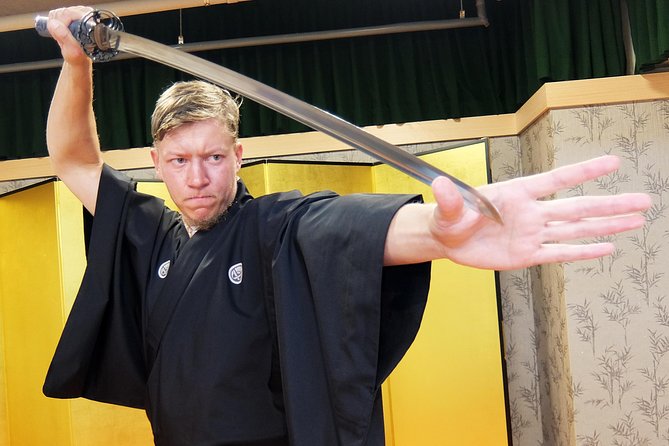
At $66.32 per person, the price is fair for what you get. You are not paying just for a photo. You are paying for an English-speaking instructor, hands-on sword etiquette and basic drills, costume photo time, and takeaways like the tenugui towel and completion certificate.
The main value driver is access. Getting to safely practice katana technique as part of a structured class is the rare part. Museums and walking tours give context, but this gives you the physical routine, even if it is basic. For martial arts fans, history lovers, and anyone who wants a hands-on Kyoto moment, this kind of access is usually worth the cost.
If you are on a budget and want only the costume photos, you may find cheaper experiences elsewhere. But if you want the actual discipline component, the training portion is the reason this holds its value.
Who This Samurai School Fits Best (and Who Might Skip It)
This is a strong match if you want active learning. If you enjoy martial arts, stage choreography, or Japanese cultural traditions where etiquette matters, you will probably have a great time.
It also fits mixed groups, including families with teens who want something more hands-on than a museum. One nice detail from the feedback is that people often come away surprised by how fun and professional the instructors are, even for first-timers.
On the other hand, it may not fit if you want a casual, low-structure experience. The sword practice requires focus and you should expect instructions to be followed closely. If you hate learning rules, or if you want a purely sightseeing activity with no changing, this might feel too “school-like.”
For kids ages 5 to 11, it is preferable if they attend some kind of class or martial arts school. That guidance helps because the sword work and etiquette are easier when kids are already used to structured instruction.
Should You Book Samurai for a Day in Kyoto?
Yes, if you want a hands-on Kyoto experience that is short, structured, and memorable. The combination of bowing etiquette, katana draw and resheathing practice, and costume photo time makes it feel like you did more than just visit.
I would especially book it if:
- You want a rainy day plan that is active indoors
- You like learning a physical skill with step-by-step coaching
- You want a souvenir that is more than a quick photo
Skip it or choose a different activity if:
- You strongly dislike any longer performance segment
- You need very unhurried, perfectly posed photography with your own camera
- You prefer passive sightseeing over skill practice
FAQ
How long is the Samurai School experience in Kyoto?
It runs about 1 hour 30 minutes approximately, and the exact class time can vary depending on the option you select.
What is included in the price?
You get an English-speaking local instructor, a photo shoot, a tenugui towel, and a lesson completion certificate.
What is not included?
Hotel pickup and drop-off are not included, and food and drinks are not included.
Where is the meeting point?
Meet at Japan, Kyoto, Higashiyama Ward, Sanchome, 35 (at the GOZAN building). On arrival, go to the first basement floor, and enter from the stairs on the right side.
Is there hotel pickup?
No, there is no hotel pickup or drop-off.
Is the class in English?
Yes, it includes an English-speaking local guide/instructor.
What should I wear?
Wear clothes suited for exercise and moving around. A single hoodie or tights is not suitable for costume changes.
Is the experience physically demanding?
You should have a moderate physical fitness level, since you will be moving and practicing.
How big is the group?
The experience has a maximum of 10 travelers.
Can I cancel for a refund?
Yes, free cancellation is available. You can cancel up to 24 hours in advance for a full refund, and if you cancel less than 24 hours before the start time, the amount paid is not refunded.
If you want, tell me your dates and whether you’re considering the longer upgrade, and I can help you decide the best fit for your Kyoto schedule.
Fresh options around Kyoto
- Kyoto Aquarium Admission Ticket★ 4.7 · 12 reviews
- Kyoto Gion Photoshoot – Private Session | Pro Photographer★ 5.0 · 12 reviews
- Gyoza Cooking Class in Kyoto: Traditional Japanese Dumplings★ 5.0 · 12 reviews
- Kyoto: Guided Food Tour with 12 Dishes & 3 Drinks★ 5.0 · 12 reviews
- Kyoto: Avoid the Crowds at the Hidden Gems of Arashiyama★ 4.9 · 13 reviews
- Kyoto Early Bird English Tour: Gion & Higashiyama(Private opt)★ 5.0 · 13 reviews
- Otsu-e Folk Art Workshop & Local Culture Walk Near Kyoto★ 5.0 · 13 reviews
- Kyoto, Osaka, Nara Full Day tour by Car English speaking Driver★ 3.5 · 13 reviews
Samurai & Ninja Experiences, compared.

Samurai Ninja Museum Guided tour and Experience
Read our review →
Kendo and Samurai Experience with Uniform and Gear
Read our review →
Samurai Sword Class by Experts in Traditional Arts
Read our review →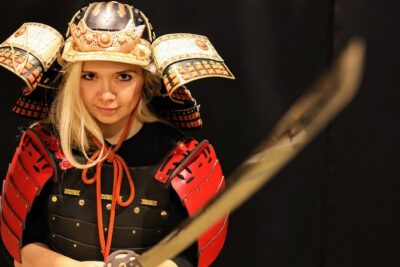
Skip the lines Basic Ticket at SAMURAI NINJA MUSEUM KYOTO
Read our review →
Samurai Sword & Archery Class from Samurai Descendant
Read our review →
Browse the lists this tour appears in