
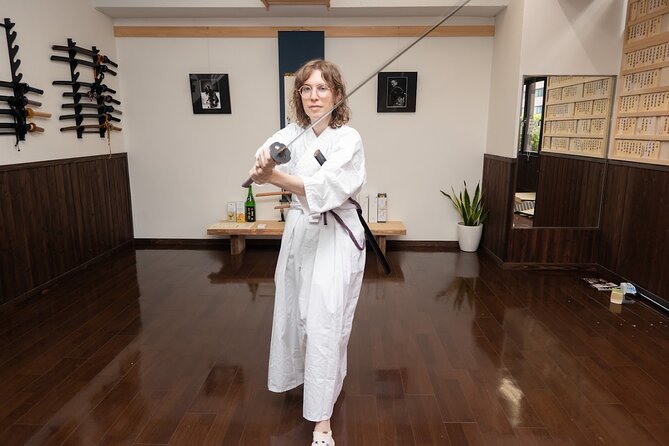
Reviewed · SAMURAI & NINJA EXPERIENCES
Samurai experience: art and soul of the sword
A sword lesson with real discipline. This Tokyo experience focuses less on dressing up and more on understanding the values behind samurai training, through Iaido and bushido in a dojo setting. You meet near Kuramae Station, plan for about 1 hour 30 minutes, and keep it small, with a maximum group size of 10.
Two things I really like are the start of the lesson, which begins with proper etiquette toward the sword, and the way the training reshapes your idea of what strength looks like. Instead of glamor and bravado, you learn that drawing a blade is treated as a last resort, and that real skill supports resolving problems through discipline and discussion.
One consideration: parts of the experience are age and waiver sensitive. If you want the real-sword option with a rolled tatami mat, you must be 18 or older and sign a waiver first. If you are not doing the real-sword cut, the minimum age drops to 5, but you still need to follow the master’s instructions closely.
Key highlights you will feel in your first minute
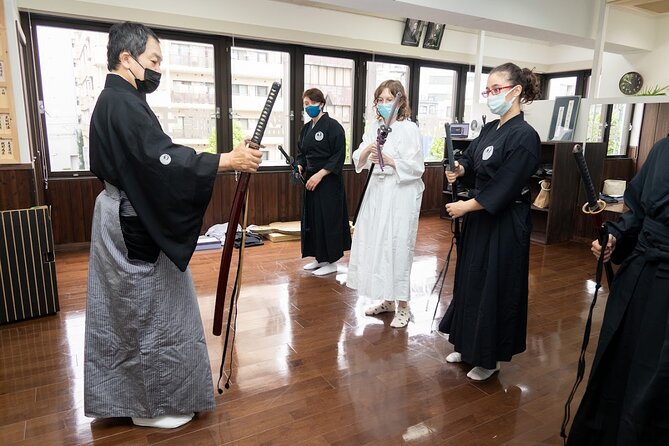
- Sword etiquette first: you begin with respect, not sword tricks
- Bushido mindset: discipline and courtesy shape how you move and think
- Hands-on Iaido practice: you learn the flow and cut a man-shaped cardboard target
- Optional real sword tatami cut: a chance to try the cut many people imagine
- Close master demonstration: skill at close range after your practice
- Small group class: up to 10 people, so you are not lost in a crowd
Why This Samurai Iaido And Bushido Lesson Feels Different Than Costume Fun
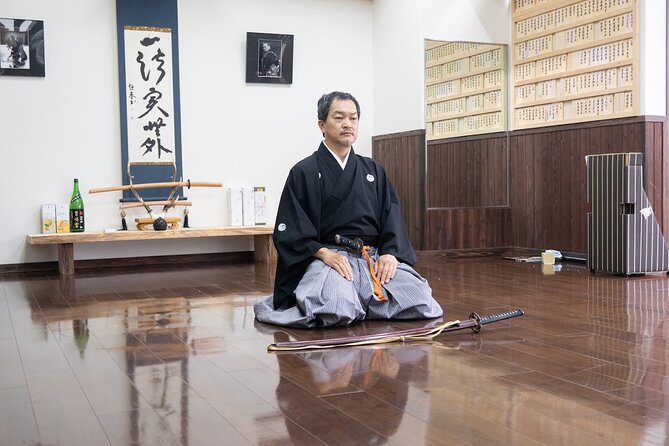
Tokyo has plenty of samurai-themed experiences. This one has a different goal. You are not here to play around with samurai gear or chase photos. You are here to sense and understand what was prized by samurai, especially the idea that the sword was never just entertainment.
The lesson starts with etiquette toward the sword and the fundamentals of bushido. That matters because it changes your posture, your attention, and how seriously you take the whole class. You quickly learn that the sword is treated with care and restraint, not excitement.
This experience also nudges you toward a more realistic picture of samurai strength. It is tempting to think of samurai as unstoppable fighters. But the training stresses that a truly strong samurai would not rush into violence. In the first part of the lesson, you learn the mindset that violence is a last resort, and that skilled restraint and courtesy are part of the power.
If you like cultural activities that teach a specific skill plus the meaning behind it, this is a strong fit. The format is direct, guided, and focused on learning what the practice represents.
More Samurai & Ninja Experiences in Tokyo
- Tokyo: Samurai Restaurant Show Ticket with 2 Drinks
★ 4.5 · 1,307 reviews - Tokyo: Samurai Ninja Museum Guided tour and Experience
★ 4.6 · 1,010 reviews - Tokyo: Samurai Sword & Archery Class from Samurai Descendant
★ 5.0 · 603 reviews
Meeting Near Kuramae Station, Then Getting Into Samurai Attire
The day begins at a clear, practical meeting point: Kuramae Station (2-chōme-3-1 Kuramae, Taito City). It is close to public transportation, so you are not wasting your morning getting there.
The start time is 9:00 am, and the whole session runs about 1 hour 30 minutes. That short window is a plus if you want something memorable without stealing a whole day from other Tokyo plans. The class also has a mobile ticket, which usually means you can keep things simple on your phone.
Once you arrive, you change into samurai attire and you are given a sword. Getting dressed like this is not just for atmosphere. It helps you understand that this is a formal training context, where behavior matters as much as technique.
Your physical demand is described as moderate fitness. Plan to be able to stand and move while you follow instruction, but you are not signing up for an all-day workout. The key is attention and obedience to the master, not athletic heroics.
Sword Etiquette And Bushido: The Mindset Part You Actually Remember
The most praised element here is how the class begins. You are not sent straight to cutting. You start with how to handle the sword respectfully, and you learn the basics of bushido as a way of life.
This part is valuable because it gives you a framework. If you only practice movements, you might think of Iaido as a mechanical sport. But with etiquette and values included, you understand why the practice is structured the way it is. You are trained to behave properly while holding something sharp and powerful.
You also learn an important contrast. Many people walk in with the idea of samurai as aggressive warriors. But early in the experience, the lesson points out that drawing a sword or attacking an enemy is not treated as a casual decision. It is framed as the final step, after other options have been exhausted.
That mindset lands in a very practical way. When you follow etiquette rules, you naturally slow down. You pay attention. You stop treating the lesson like a show. Even if you are not a sword person, you leave with a clearer understanding of discipline and courtesy, two ideas you can carry outside the dojo.
How Iaido Training Works In This Lesson, Step By Step
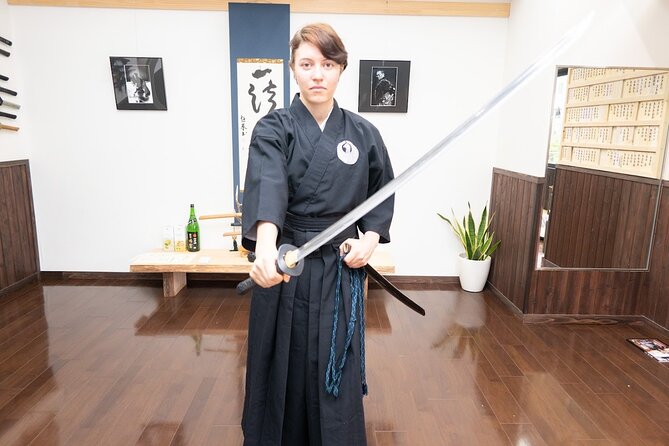
After the etiquette and mindset portion, you move into the actual training flow. The experience is built around Iaido, described as a dominant form of swordsmanship practiced by samurai.
Here is what the session looks like in practical terms:
- You arrive at the Iaido dojo and change into attire with a sword
- A master explains what Iaido is about and the flow of the experience
- You practice by slashing a man-shaped cardboard target with the sword
The cardboard target is an important detail. It gives you a real sense of action without the risk of a live-target scenario. And because it is clearly defined, it helps the instruction stay organized. You can focus on doing what you are told, rather than improvising.
The class also includes a solo demonstration by the master. You watch up close, which is one reason this experience earns such high marks. Watching someone skilled is one thing. Watching them up close, right after you tried it, turns the demo into a real lesson, not just a performance.
You also get a completion touch at the end, with a certificate of completion. That may sound small, but for a cultural skill class, a certificate helps you feel the experience was structured and finished, not just a one-time photo stop.
More samurai and ninja experiences in Tokyo:
- Best Samurai Experience in Tokyo
★ 5.0 · 458 reviews - Ninja Experience (Family Friendly) at Samurai Ninja Museum TOKYO
★ 5.0 · 441 reviews - Tokyo: Samurai Entertainment Night Show in Kanda Shrine
★ 4.6 · 417 reviews - Tokyo Sword Experience – includes Museum Ticket/Ninja Experience
★ 5.0 · 314 reviews
Your Hands-On Moment: Cardboard Cutting And What To Expect
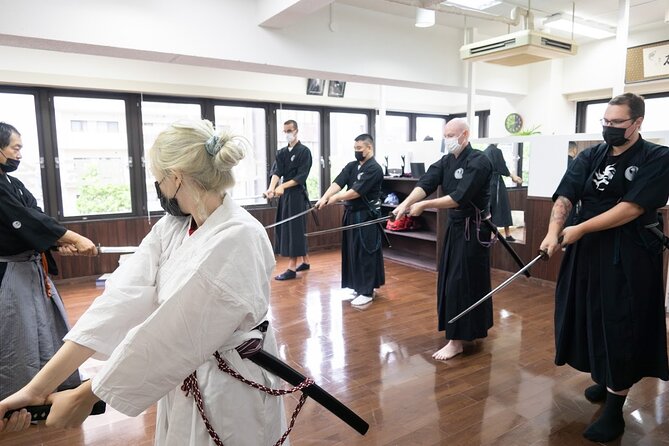
Your main practice involves cutting a man-shaped cardboard target. The experience is built around learning a flow, getting instruction, and then practicing under supervision.
Because the class emphasizes etiquette, you will likely spend time getting your stance, timing, and focus right before you make any cuts. That is normal, and it is actually the point. This is not a workshop where the goal is to get you swinging fast. The goal is to train you to behave correctly while performing controlled sword technique.
You should expect the session to feel structured, with clear guidance from the dojo master. And because the group is kept to a maximum of 10 people, you should not feel ignored. In a small class, corrections are easier to deliver, and you are more likely to notice what you need to fix.
If you are the type who wants a “try it and see” experience, this is still hands-on. If you are the type who prefers safety-focused learning, the cardboard target plus the etiquette-first approach is reassuring. Either way, you end up learning more than a single trick.
Optional Rolled Tatami Mat Cut With A Real Sword: Is It Worth Choosing?
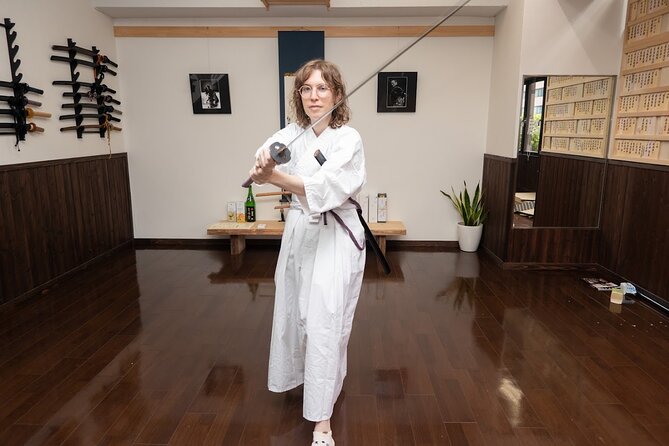
The optional upgrade is the part many people picture first. You can try cutting a rolled tatami mat with a real sword. It is available as an enhancement, and it is presented as a way to deepen your experience by bringing the practice closer to the classic cutting imagery people associate with Iaido.
If you want this option, note the restrictions:
- You must be 18 or older on the date of your experience
- You must sign a waiver
- You must follow the master’s instructions
If you do not take the real-sword option, the minimum age is 5, and the overall lesson still includes the core Iaido training and the man-shaped cardboard cutting.
Is it worth it? For most people who want real value from a skills-focused experience, choosing the option can make the lesson feel complete. But only if you are comfortable with the waiver and the seriousness of the training environment. The lesson already teaches restraint and discipline, and the real sword choice reinforces that this is not a casual activity.
Practical tip: if you are unsure, choose the option only if you can commit to following instructions exactly. This is one of those moments where calm focus beats bravado.
Watching The Master Up Close: Why The Demo Matters
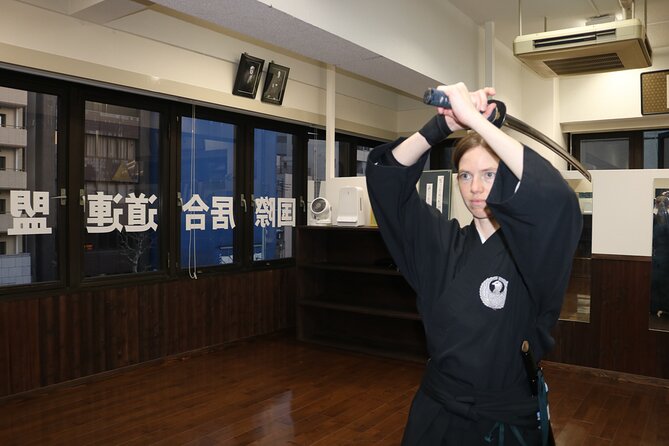
The master’s solo demonstration comes after your practice. That timing is smart because you understand the basics by then. You are not watching a sword legend from another planet. You are watching a trained practitioner while your brain is already processing the same movements you just attempted.
Close-up viewing makes a difference. You can pay attention to spacing, rhythm, and how much control is involved. And because the class puts etiquette and bushido into the conversation, the demo reinforces the values, not just the technique.
This is also where you can see what separates real discipline from showy performance. The lesson’s emphasis on restraint and “last resort” thinking becomes more believable when you see skill delivered with control rather than chaos.
If you like training sessions that leave you with real understanding instead of a quick spectacle, this demo is a major reason to book.
The Value Of The Certificate And A Short, Focused 90 Minutes
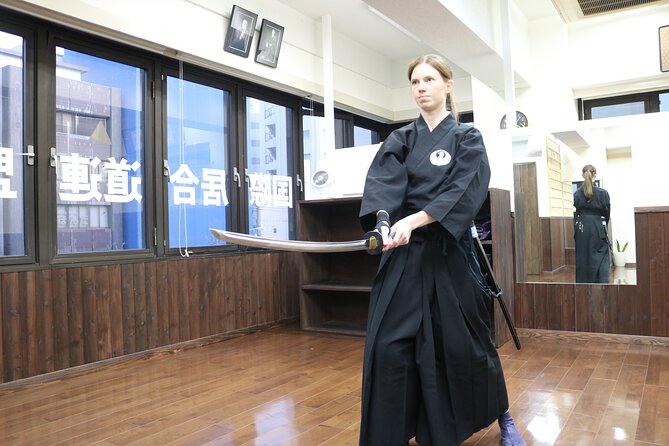
You finish with a certificate of completion. It is a small piece of paper, but it is also a signal that you completed a structured practice session with real instruction. In a city full of tours that feel like quick stops, a skill session that ends cleanly feels satisfying.
The total time also makes planning easier. At about 1 hour 30 minutes, this is a compact cultural experience that can slot into your Tokyo day. It is short enough that you can pair it with nearby sights in the broader Tokyo area without worrying about late-day exhaustion.
And because the class is capped at 10 people, the learning environment stays personal. You are more likely to remember what you were taught, especially the etiquette and bushido mindset, because you are not getting washed out by a big crowd.
Price And Value: How $216.86 Makes Sense For A Serious Practice
The price is $216.86 per person. That is not cheap, especially if you compare it to walking tours or museum tickets.
But the value comes from what you are actually buying:
- A guided Iaido lesson, not just a lecture
- Hands-on sword practice with a man-shaped cardboard target
- Optional upgrade for a real-sword rolled tatami cut (when eligible)
- Close master demonstration
- Limited group size, which supports individualized attention
- A completion certificate
In other words, you are paying for instruction time, safe training setup, and a focused, small-group experience. If you want a meaningful skill lesson tied to culture and values, the price feels more reasonable. If you only want a quick samurai photo moment, it will likely feel steep.
One more practical note: experiences like this often need some lead time, and the average booking window is about 23 days in advance. If you want a specific date, plan ahead.
Who Should Book This Samurai Experience, And Who Might Skip It
This is a great fit if you:
- Like cultural experiences where meaning matters, not costumes
- Want a hands-on skill element, even if it is focused and controlled
- Enjoy small-group instruction
- Are curious about the mindset behind samurai practice, especially bushido and sword etiquette
You might skip or choose a different type of activity if:
- You want a purely visual show, with no etiquette or waiver involved
- You are not comfortable following detailed instructions around a sword setup
- You are only looking for general history without any structured training
Age-wise, you have options. The real-sword tatami upgrade is for adults 18+. If you skip that option, the minimum age is 5. The core lesson still includes structured practice and a master demonstration.
If you are generally active and open-minded, the moderate fitness requirement should be manageable. The real requirement is respect for safety and discipline.
Should You Book Samurai Experience: Art And Soul Of The Sword?
If you want a Tokyo activity that takes samurai culture seriously, this is an easy yes. The class is built around etiquette, bushido, and hands-on Iaido practice, with a close master demonstration that turns the session into real learning. The small group size is a quiet advantage, because it helps you stay connected to the instruction.
Book it especially if you are tired of experiences that feel like props and pictures. This one treats the sword as something serious, and it gives you a chance to understand why that mindset mattered. If you are eligible and comfortable with the rules, the optional real-sword tatami cut can be the cherry on top, but only if you are ready to follow the master’s instructions without improvising.
FAQ
What is the duration of the experience?
It runs for about 1 hour 30 minutes.
Where do I meet for the class?
You meet at Kuramae Station, 2-chōme-3-1 Kuramae, Taito City, Tokyo 111-0051, Japan. The activity ends back at the meeting point.
What time does it start?
The start time is 9:00 am.
Is there a real-sword option?
Yes. There is an optional real-sword experience where you can try cutting a rolled tatami mat. A waiver is required, and specific age rules apply.
What are the age requirements?
For the real-sword tatami mat option, you need to be 18 or older. If you do not choose the real-sword option, the minimum age is 5.
Do I need to sign a waiver?
Yes, you need to sign a waiver before the experience.
How big is the group?
The experience has a maximum of 10 travelers.
Do I need a ticket on my phone?
It uses a mobile ticket.
Can I cancel for a full refund?
Yes. Free cancellation is available if you cancel at least 24 hours before the experience start time. If you cancel later than that, the amount paid is not refunded.
Fresh options around Tokyo
- Shimbashi Tastes & Stories A Culinary Foodie Tour By Local Guide★ 4.5 · 13 reviews
- Mt Fuji : Private 10-Hour Luxury Tour by Exclusive Car★ 3.8 · 13 reviews
- Tokyo: Private Customizable Tour with a Local Guide★ 4.8 · 13 reviews
- Tokyo Drift Experience Private Ride Along at Local Car Meet★ 4.9 · 13 reviews
- Shinjuku Food and Drink Walking Tour★ 5.0 · 13 reviews
- From Tokyo: Mount Fuji Private Tour With English Guide★ 5.0 · 13 reviews
- Tokyo: Private City Highlights Tour★ 4.9 · 13 reviews
- Kawagoe 4hr Private Tour with Licensed Guide (Kawagoe Dep)★ 5.0 · 13 reviews
Samurai & Ninja Experiences, compared.

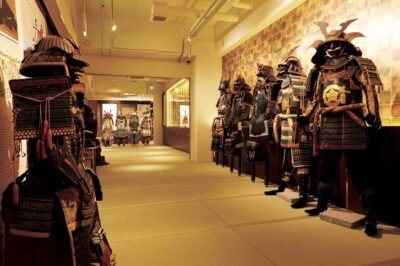
Samurai Ninja Museum Guided tour and Experience
Read our review →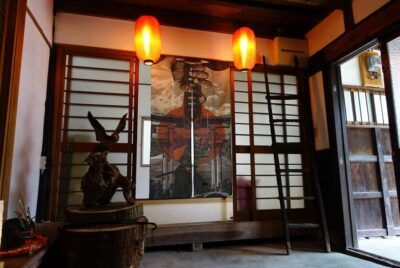
Kendo and Samurai Experience with Uniform and Gear
Read our review →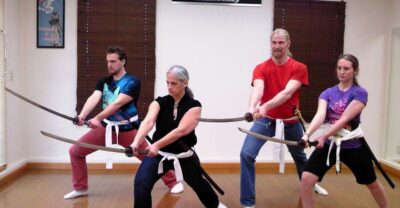
Samurai Sword Class by Experts in Traditional Arts
Read our review →
Skip the lines Basic Ticket at SAMURAI NINJA MUSEUM KYOTO
Read our review →
Samurai Sword & Archery Class from Samurai Descendant
Read our review →
Browse the lists this tour appears in