
Reviewed · OKINAWA & ISLANDS TOURS
Naha: Journey into Okinawa’s WWII Navy Underground HQ
Tunnels tell stories in Okinawa. This guided visit pairs a museum briefing with a walk through a reconstructed navy command bunker. I especially like how the tour explains the Battle of Okinawa’s impact on Okinawa and its people, then shows you communication facilities and command offices you can stand inside and picture in wartime.
If you get the right guide, the whole thing clicks. In recent tours, guides like Kumiko and Kay have brought a calm, respectful tone and kept the pace easy to follow, with time for questions when you want them.
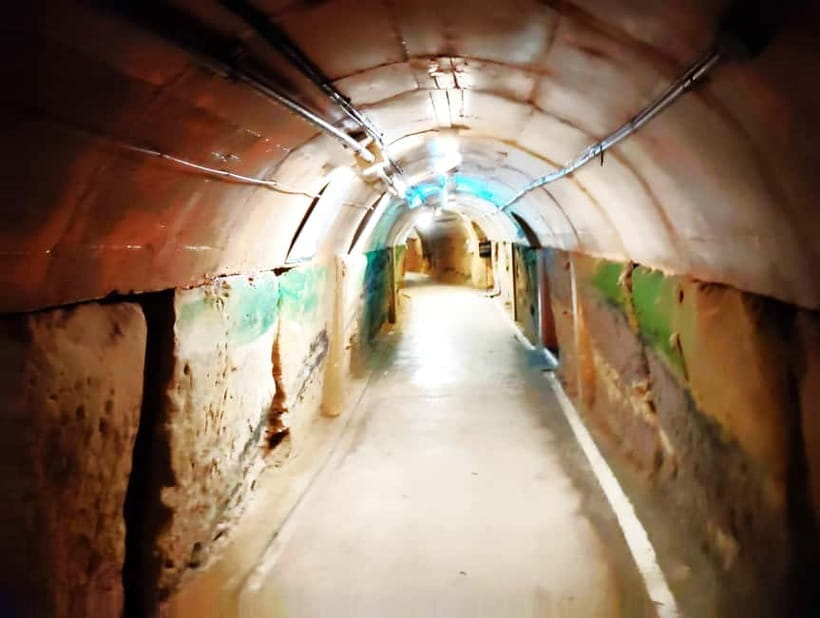
One consideration: you will walk through dimly lit corridors underground. If you dislike enclosed, low light spaces or you need a very light, upbeat experience, this one may feel heavy.
Key things you will notice on this Okinawa WWII underground tour
- Museum first, then the tunnels, so you understand what you are seeing before you go underground
- Reconstructed rooms and facilities, including command and communications areas
- A guided narrative in English, with space to ask questions
- A somber walk through wartime shelter corridors, including details about extreme last-ditch measures
- Private group feel, which helps the guide tailor explanations to your questions
Getting Oriented at 海軍戦没者慰霊之塔, then stepping into the story
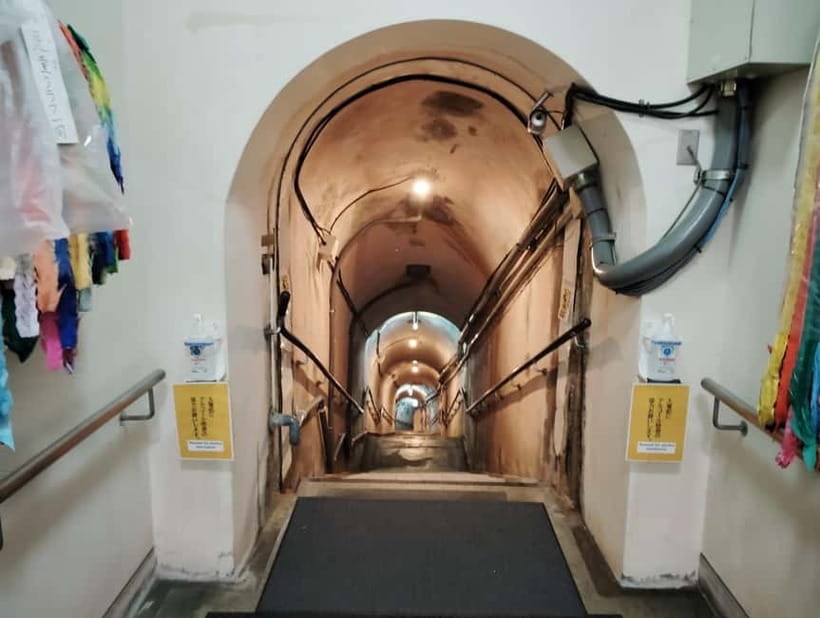
You start at 海軍戦没者慰霊之塔, right near the entrance of the Former Japanese Navy Headquarters Cave. This matters because it frames the visit as more than an attraction. You are not just touring rooms, you are arriving at a place meant to remember.
The guide meets you in front of the memorial tower near the cave entrance, holding a yellow sign that says DeepExperience. That little visual detail helps you find your group quickly, which is useful in Okinawa where many sites are spread out and signage can be a mix of languages.
Before you go underground, the tour sets expectations clearly: museum first, then you walk through the underground complex. I like that order. It keeps the dim corridors from feeling like random “dark hallways,” and instead turns them into part of a bigger wartime map in your head.
A few more Naha days worth comparing
- Official Street Go-Kart Tour – Okinawa Shop
★ 5.0 · 699 reviews - Naha: North Okinawa Sightseeing Tour & Churaumi Aquarium
★ 4.4 · 472 reviews - Okinawa: From Naha: Kerama Islands 1-day snorkeling tour
★ 4.4 · 423 reviews
Why the museum visit is more than a warm-up
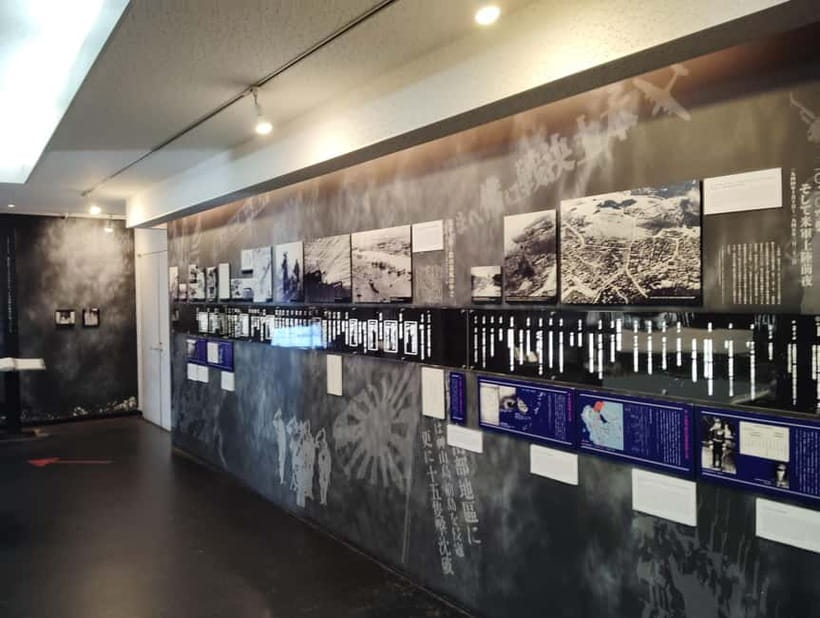
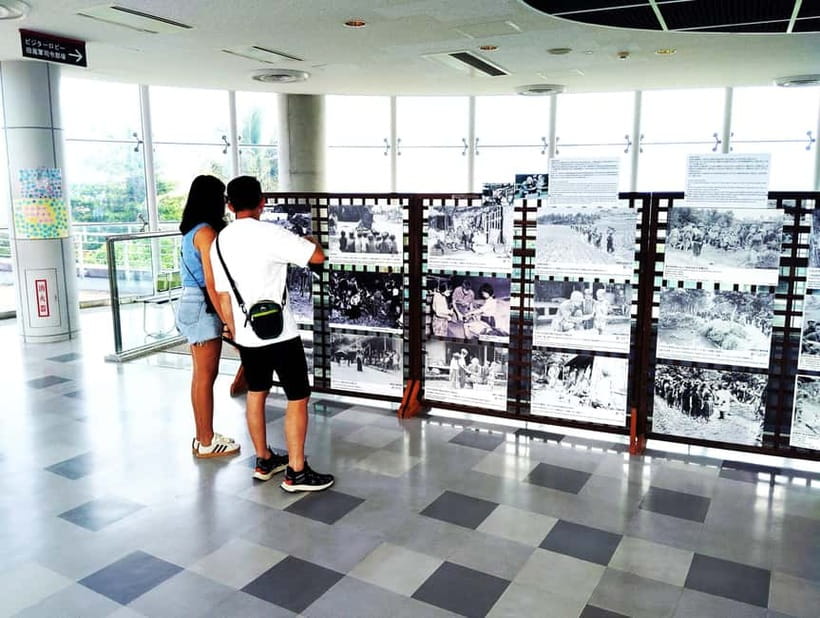
The tour begins with a museum visit, and that stop is doing a lot of heavy lifting. It gives you the big picture of the Pacific War, and then zooms in on the Battle of Okinawa and why this island became such a focus of the conflict.
What I like here is that you get context before the body-level experience of the bunker. The museum includes artifacts and exhibits tied to the battle, so the reconstructed spaces below do not float in isolation. You can link objects and explanations to the rooms you will later walk through.
You also learn the human side of the battle’s consequences for Okinawa. The tour emphasizes the impact on island residents and the broader meaning of the fighting, not just military tactics. That balance is what makes the visit educational, not just cinematic.
One practical note: because the museum comes first, you are better able to follow the guide’s route underground. When your guide points out an operations area or communication space later, you already know what those terms mean in real wartime decisions.
Inside the Former Japanese Navy Underground Headquarters: what you will see
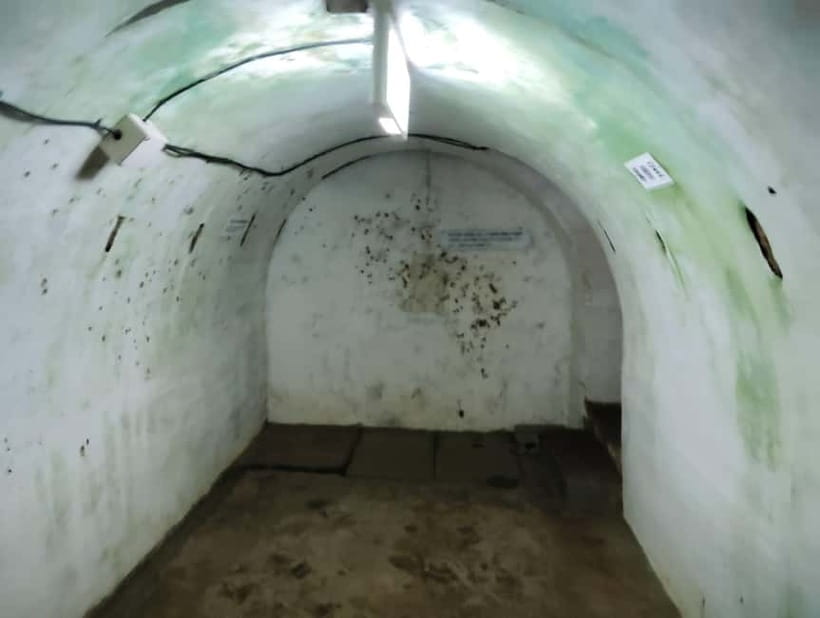
Once the museum part ends, you enter the underground bunker complex. This is where the “you are there” feeling starts. The corridors are dim, and the tour leans into that atmosphere so you can sense how shelter and command worked under pressure.
The headquarters was dug as a central command base by the Japanese Navy in preparation for the American invasion. The tour focuses on how the underground layout supported decisions, messaging, and coordination, not just hiding from danger.
As you walk, you see reconstructed elements such as:
- Operations rooms
- Communication facilities
- Command offices
Because these areas are reconstructed to preserve the original wartime atmosphere, you are not just looking at ruins. You are walking through spaces designed to help you imagine what daily life and command activity could have looked like underground during the Battle of Okinawa.
This is also where a guide matters. Even if you are good at reading signs on your own, a live guide can connect the layout to the story: who used the rooms, what kinds of information would have flowed, and why the command system had to function even under extreme stress. In guides like Kumiko and Kay, I’ve seen this kind of careful explanation described as thoughtful and engaging, and that matches what the site needs for visitors to really get it.
The dim corridors and the last-ditch reality of war
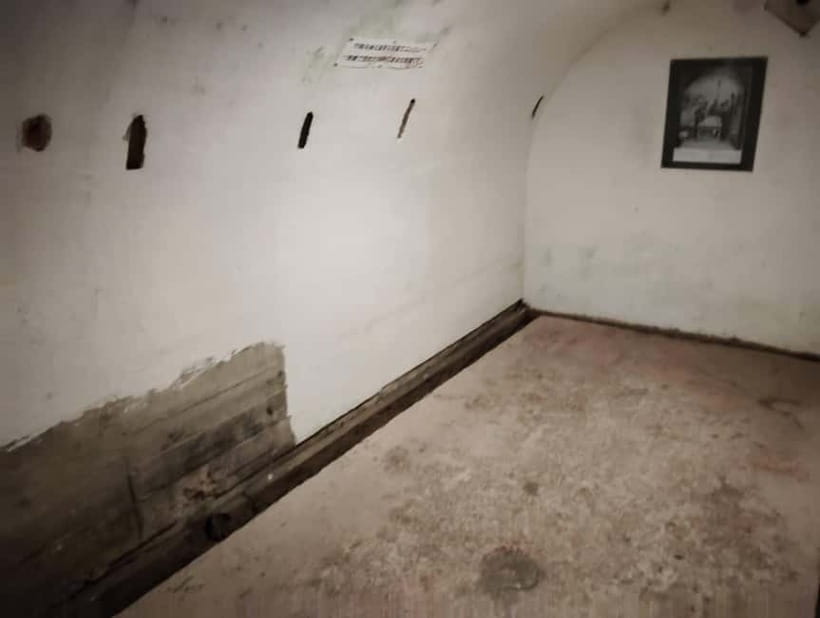
The underground complex is not a cheerful walk. The tour moves through corridors where thousands of Japanese soldiers once took shelter. That phrasing is important because it keeps your mind on people, not just architecture.
A key part of the tour narrative is what happens when resources run out. The guide explains that, with ammunition low, some soldiers resorted to desperate measures, including handmade spears, in fighting against the enemy. You do not need extra graphic detail to understand the desperation this implies. The site uses its setting and reconstructed spaces to communicate that feeling.
I appreciate that the tour does not treat these moments as trivia. It uses the underground context to make the Battle of Okinawa feel immediate and personal, which is often the difference between learning dates and understanding human impact.
If you are the type who likes to see history with a clear emotional tone, this fits. If you prefer lighter commentary that keeps things distant, you might find the tour intense, especially because you are walking through tunnels that are meant to preserve wartime atmosphere.
Same corner of Japan, a different kind of day:
- From Naha: Tokashiki Island Day Trip by Boat
★ 4.3 · 385 reviews - Naha, Okinawa: Keramas Island Snorkeling Day Trip with Lunch
★ 4.7 · 370 reviews - Naha, Okinawa: Kerama Islands Half-Day Whale Watching Tour
★ 4.4 · 241 reviews - Naha, Okinawa: Kerama Islands Full-Day Intro-Diving Trip
★ 4.6 · 203 reviews
How much the guide changes the experience in practice
This kind of tour can go two ways. You either feel like you got a quick pass to a museum plus some tunnels, or you feel like the visit has a thread tying it together. The difference is almost always the guide.
On English-language tours, the standout theme in feedback is how well the guides communicate, answer questions, and stay respectful. Kumiko is specifically described as exceptional, knowledgeable in a grounded way, kind, and deeply respectful, with explanations that helped visitors understand the significance of each site. Kay is also described as wonderful and knowledgeable, making the visit memorable.
That is not just praise for being friendly. It signals something practical: a good guide gives you the “what am I looking at and why does it matter” layer. In a place full of reconstructed rooms, that layer helps you avoid the feeling of wandering through labeled spaces without understanding their purpose.
There are also mixed experiences to keep in mind. If a guide’s English is hard to follow, or if the tour feels like it repeats what you could read on your own, you might wonder whether paying for the guide was worth it. So, if you want the guide to be a major part of your experience, choose your timing and expectations accordingly: go in planning to ask questions and to listen closely.
Price and value for a 90-minute, English private tour
The price is $77 per person, for about 90 minutes of guided time, with a private group and a live English guide. On paper, it can look steep if you think of it as “museum plus tunnels.”
But here is where the math gets more interesting. The tour is not only entry into the museum and the underground complex. It includes a guided narrative that connects Pacific War context, the Battle of Okinawa, reconstructed command spaces, and the human story of what people faced. You are paying for interpretation, not just access.
So when does it feel like good value?
- When you want the story threaded together across museum and bunker
- When you care about understanding the purpose of operations and communications spaces
- When you like being able to ask questions in real time
- When you prefer a private-group pace rather than a larger, less interactive tour
When might you question the value?
If you mainly want to walk around at your own speed and you are comfortable reading exhibit info without much interpretation, you might feel you could do a similar visit with less guided time. One important takeaway for you: decide what you are buying. If you want a guided explanation that turns rooms into meaning, the price is easier to justify.
Also, the duration matters. Ninety minutes is long enough to cover museum orientation and the underground walk, but short enough that you do not feel trapped underground for hours. It is a tight, focused experience.
Timing, comfort, and what to wear for a low-light walk
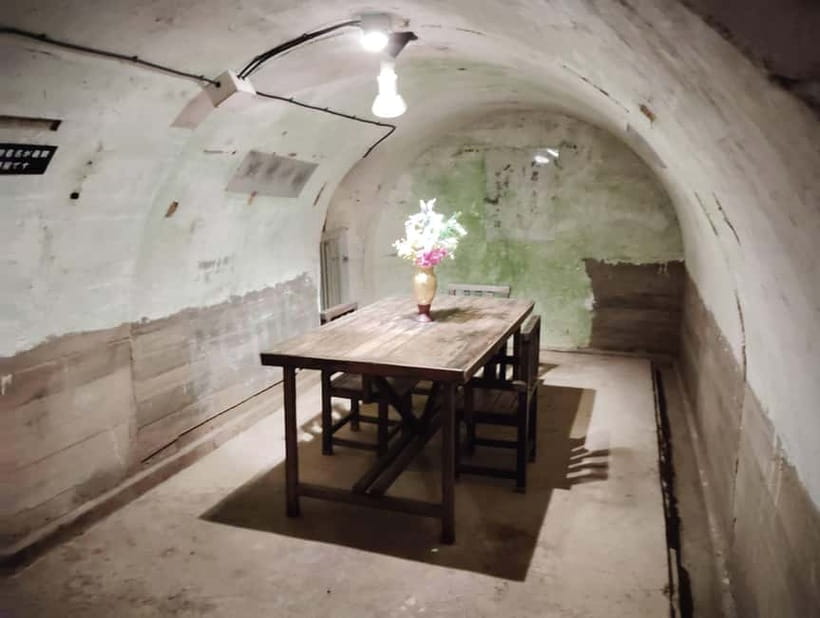
This tour includes walking through dimly lit corridors, after the museum visit. That means comfort is not optional, and it is not about fashion.
Plan for:
- Comfortable walking shoes, because you will be moving through the complex
- A mindset that the experience is intentionally somber and atmospheric, not a casual stroll
- Patience with the pace, since the guide is explaining and you will want time to look and listen
Also note the experience includes both museum time and underground time. On a hot day, having a guide who keeps the group comfortable and organized can matter more than you might expect. In one account, a guide was praised for taking great care throughout a hot day, which is a sign that the human side of pacing is considered, not ignored.
Tour flow you should expect, from start to finish
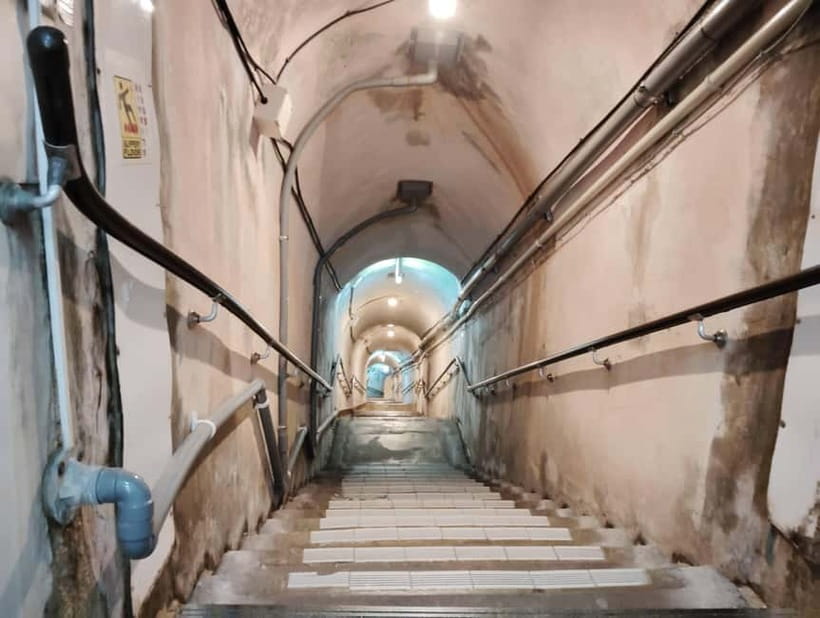
You begin at the memorial tower area near the cave entrance, 海軍戦没者慰霊之塔. From there, you visit the museum, then you go into the reconstructed underground HQ complex. The visit includes the museum exhibits and a guided walk through operations, communication, and command spaces, in dim corridor settings.
You finish at 海軍壕売店 OFICCIAL SHOP. That ending point is handy if you want to grab a snack or browse related items after the emotional intensity of the underground walk.
The overall flow is structured, which is helpful in a site like this. The biggest benefit is that you do not go underground “cold.” You learn the battle context first, so the bunker layout becomes meaningful rather than just atmospheric.
Should you book this Underground HQ tour?
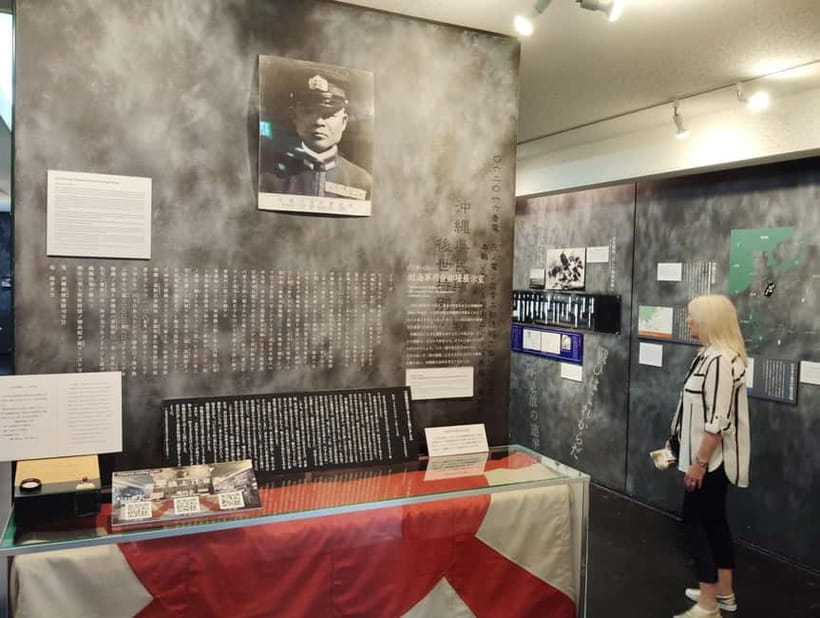
Book it if you want history explained with sensitivity, and you care about understanding what you are seeing inside reconstructed command and communications spaces. The private group format and English live guide make it easier to ask questions, and the standout feedback centers on guides who stay respectful and engaging, including Kumiko and Kay.
Skip or reconsider if you mainly want a self-guided museum experience and you do not want to pay for interpretation. Also, if you dislike enclosed, dimly lit tunnels, be honest with yourself about how you handle that kind of setting, since the tour includes that underground walk.
If your goal is meaning, not just markers on a map, this tour is a strong choice for Okinawa’s WWII story.
FAQ
How long is the tour?
The tour lasts 90 minutes.
Is the tour guided in English?
Yes, it includes a live tour guide in English.
Is this a private group experience?
Yes, it is listed as a private group.
Does the tour include the museum before going underground?
Yes. The museum visit happens before you enter the underground complex.
Will we walk through the underground corridors?
Yes. The tour includes walking through dimly lit corridors in the bunker complex.
Where do we meet for the tour?
You meet in front of the memorial tower near the entrance of the Former Navy Headquarters Cave. The guide will be waiting with a yellow sign that says DeepExperience.
Where does the tour end?
The tour finishes at 海軍壕売店 OFICCIAL SHOP.
What is included in the $77 per person price?
The included items are a visit to the Former Japanese Navy Underground Headquarters, a museum visit, and a guided tour.
Is free cancellation available?
Yes. You can cancel up to 24 hours in advance for a full refund.
Fresh options around Naha
- Naha: “Orca” Spotting Glass Bottom Boat & Sam’s Famous Steak★ 3.8 · 12 reviews
- Walking around town in a kimono, you can choose your favorite kimono from the traditional Okinawan costumes “Ryuso”, “Kimono”, “Yukata” 《Hairset & Lipstick & Kimono & Rental Fee》All Comic Book★ 4.5 · 14 reviews
- Tokashiki Island Day Trip from Naha★ 4.0 · 15 reviews
- Port Pick-Up: Naha Private Tour Licensed Guide& Vehicle★ 4.5 · 16 reviews
- Okinawa:Kerama Islands experience Diving/Snorkeling/WhaleWatching★ 4.5 · 16 reviews
- Traditional Japanese Costumes “Kimono”, “Yukata”, “Ryuso”, “Photograph Course “Hair Set & Lipstick & Kimono & Photography”★ 5.0 · 17 reviews
- Okinawa Full Tour: Castle, Manza, Kouri, Aquarium & American★ 5.0 · 17 reviews
- Gorilla Kart Tour-Plenty of Time Slots|Many Great Views★ 3.9 · 20 reviews
Okinawa & Islands Tours, compared.


Naha: North Okinawa Sightseeing Tour & Churaumi Aquarium
Read our review →
Okinawa: From Naha: Kerama Islands 1-day snorkeling tour
Read our review →

Naha, Okinawa: Keramas Island Snorkeling Day Trip with Lunch
Read our review →


Snorkeling in the Blue Cave area【Okinawa Prefecture: Free feeding & photo images!English and Chinese speaking guide available!
Read our review →Browse the lists this tour appears in