Reviewed · PRIVATE
Mochi Making at a Private Studio in Tokyo
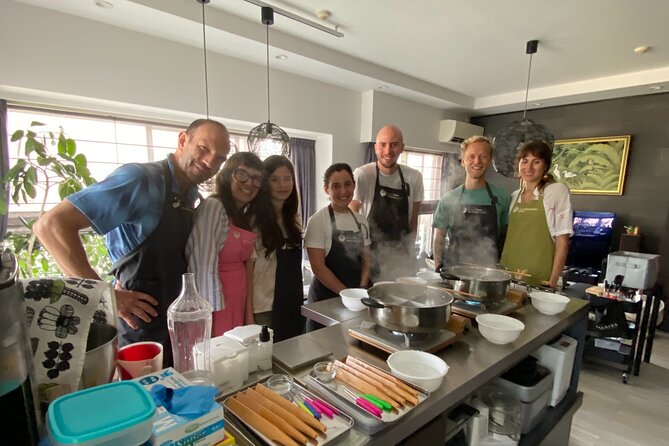
Mochi gets messy fast, and that is part of the fun. In a small-group class (max six at the table) you get hands-on with several mochi styles, then sit down to taste your results with tea. The main thing to plan for is the 2-hour pace, plus the fact that you are working with sticky dough.
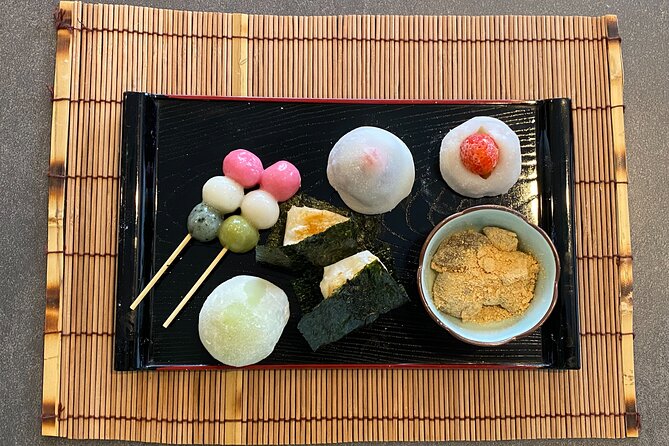
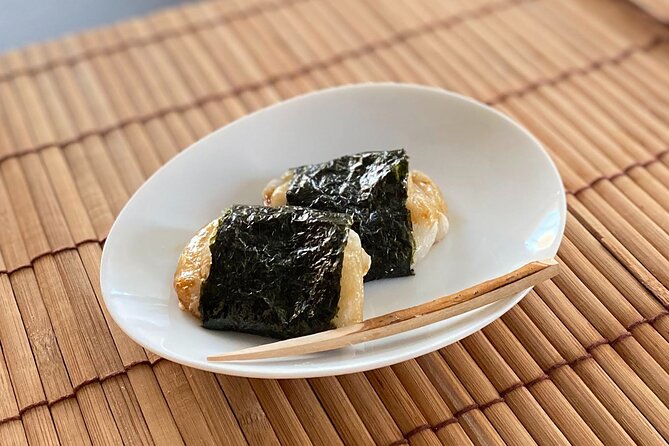
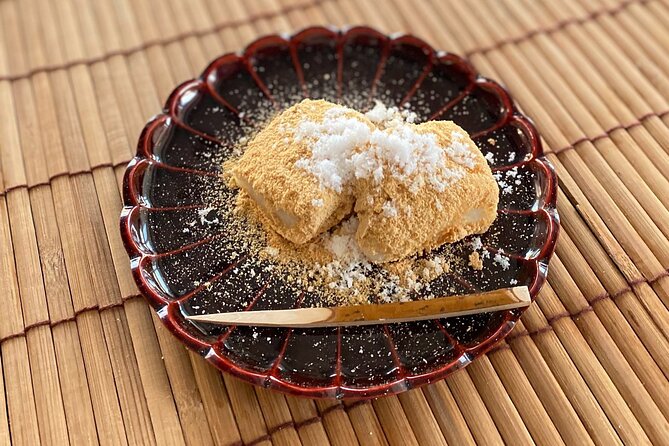
What I really like here is how local it feels, taught in the instructor’s own studio, and how much variety you get for the price. You’ll make strawberry daifuku mochi, three-color dango, and warabi mochi, plus you’ll watch an ice cream mochi step and also get savory grilled mochi with soy sauce and nori.
Key Things I’d Put on Your Tokyo Shortlist
- Meguro Station access: walkable to the private studio near JR Yamanote and metro lines
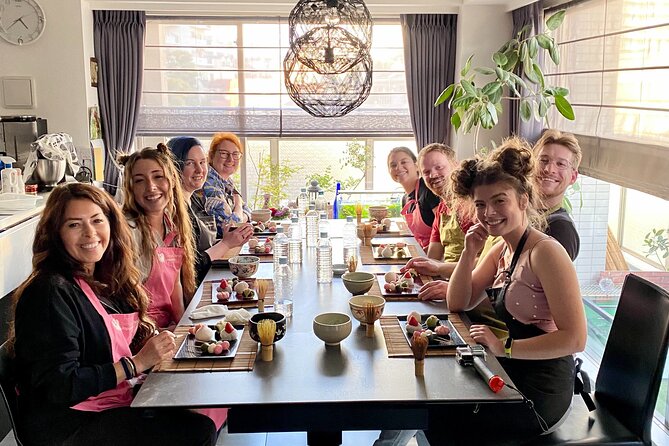
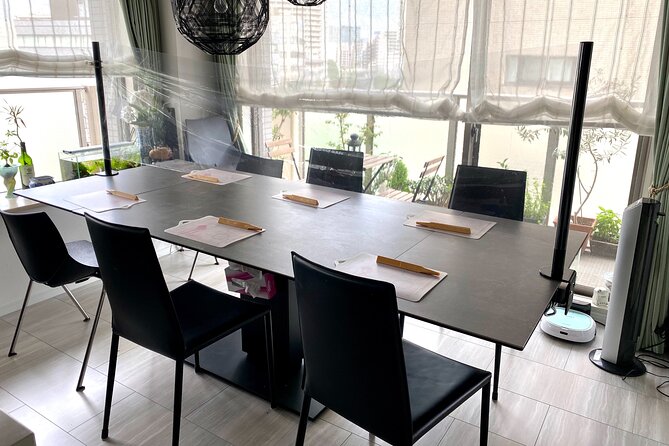
- Max six per hands-on group: calmer, easier instruction while you make your own mochi
- Sweet and savory training: daifuku, dango, warabi, plus grilled mochi with nori and soy sauce
- Wagashi expertise in English: the instructor is a certified Wagashi Instructor and fluent in English
- Tea tasting included: green tea, hojicha, or coffee, with your mochi creations
Mochi in a Private Studio Near Meguro Station
Tokyo cooking classes can fall into two buckets: loud group tours that feel like production, or smaller experiences where you actually slow down. This one sits firmly in the second bucket. The class happens in a private studio reached on foot from Meguro Station on the JR Yamanote Line or the metro, so you avoid the time sink of long transfers.
You meet the instructor at the studio and start with a short, friendly intro. Expect conversation, plus some cultural context about mochi and the traditions and festivals where it shows up. That matters more than it sounds, because mochi is not just a dessert. It is tied to seasonal moments and Japanese food rituals, which is why the class is careful to connect technique to meaning.
Also, it helps that the group size is intentionally small. One thing I appreciate about small classes is that you do not feel rushed. You have a chance to ask questions and correct your technique before it becomes a sticky mess you cannot fix.
A few more Tokyo days worth comparing
- Mt Fuji and Hakone 1-Day Bus Tour Return by Bullet Train
★ 5.0 · 26,383 reviews - 1-Day Tokyo Bus Tour
★ 5.0 · 14,250 reviews - Tokyo: TOKYO SKYTREE® Admission ticket
★ 4.5 · 11,192 reviews
What You Actually Make: Daifuku, Dango, Warabi, and Ice Cream Mochi
This class is built around variety, so you leave with skills and ideas you can use later. Here is the lineup you can expect:
Strawberry daifuku mochi
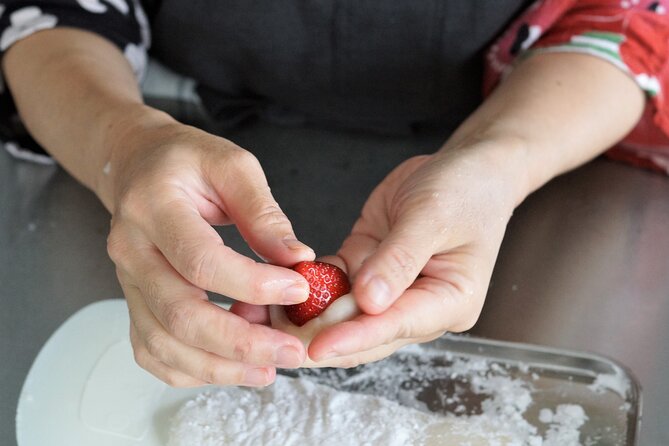
You’ll make strawberry daifuku mochi first. Daifuku is a classic format, which makes it a great starting point if you want something you can picture easily back home. You also get a front-row seat to how texture and handling change depending on the style.
Three-color dango (skewered mochi)
Next comes three-color dango on skewers. Dango is a “slow snack” style in Japan, often linked to seasonal treats and casual festival culture. Making it in class is useful because it teaches you how mochi behaves once it is shaped and portioned into a very different form than daifuku.
You are not just learning one recipe. You’re learning how the same ingredient family can become totally different eating experiences.
Same corner of Japan, a different kind of day:
- Tokyo: teamLab Planets TOKYO Digital Art Museum Entry Ticket
★ 4.6 · 9,779 reviews - Mt Fuji & Hakone Cruise, Drum Show Bullet Train 1 Day from Tokyo
★ 4.0 · 7,413 reviews - Tokyo: Sumo Show Experience with Chicken Hot Pot and a Photo
★ 4.8 · 6,678 reviews - Tokyo: Shinjuku Food Tour (13 Dishes at 4 Local Eateries)
★ 5.0 · 6,603 reviews
Warabi mochi
Then you’ll make warabi mochi. This is another strong choice for learners because it is distinct from the more familiar stuffed mochi formats. It also helps you understand how Japanese sweet makers think about contrast, texture, and how a simple ingredient can create a different mouthfeel.
Grilled mochi with soy sauce and nori
Here is a detail I love: you get savory mochi too. You’ll be served grilled mochi with soy sauce and nori seaweed. If your idea of mochi is only sweet desserts, this part is a reality check in the best way.
Savory mochi is a reminder that mochi is a tool, not just a flavor. That broadens what you can do with it later, even if you only copy the general “grill and sauce” idea.
Mochi ice cream, shown as a demonstration
You’ll get a demonstration on how to make mochi ice cream. You’re watching this step rather than building it fully yourself, but demonstrations still teach a lot because you can compare the process to what you already practiced with the mochi dough.
If you love the idea of turning mochi into a dessert mashup, this portion is the bridge between traditional sweets and modern cravings.
The Class Flow: Slides, Hands-On Steps, and a Calm Tasting Finish
A good class has rhythm. This one is structured to keep you moving without feeling chaotic.
Start with mochi context, not just recipes
The instructor begins with a short presentation about mochi traditions and festivals, and why mochi matters in Japanese culture. It is not a lecture marathon. It is more like getting your bearings fast, then getting your hands involved.
Make, shape, adjust, then taste
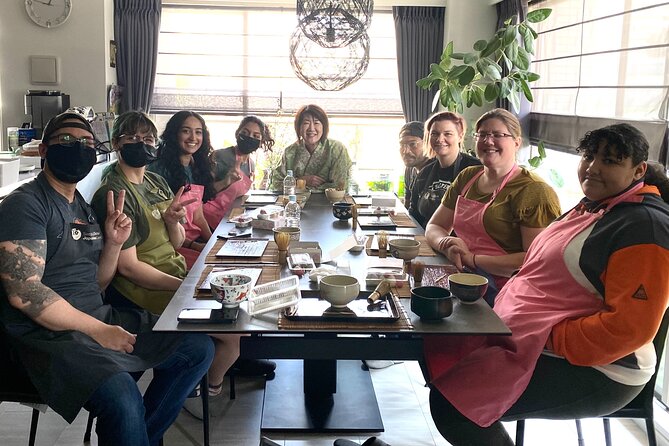
After the intro, you shift into making multiple mochi types. You’ll be guided step by step through the different styles, and the experience is designed for a range of skill levels. Several people in past sessions highlighted how patient and helpful the instructors are, and that shows up as a real teaching style, not just a nice personality.
Also, you’ll have an apron. That small detail makes a difference because you are working with something sticky, and you want to feel comfortable instead of precious.
Expect a final tasting with tea
The class ends with tasting. You’ll sample your creations with green tea or coffee (you may also be offered hojicha, since it is listed as an option). This is where the class becomes more than a cooking project. You can compare sweet vs savory, soft vs shaped, and each mochi style side by side.
One practical bonus: you get an English recipe sheet. That is the difference between taking photos and actually being able to repeat what you learned at home.
Price and Value: Is $79.26 Worth It?
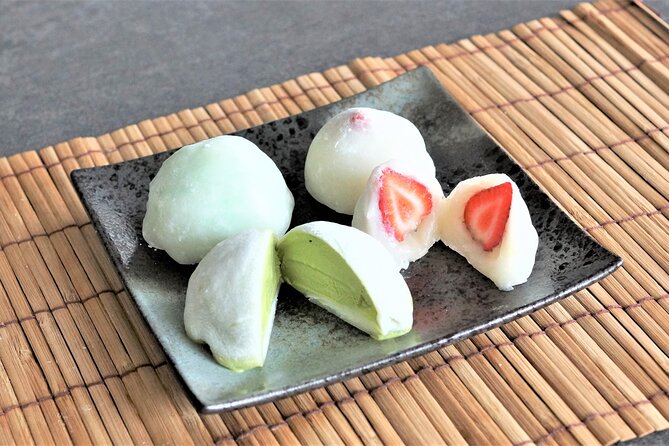
At $79.26 per person for about 2 hours, you are paying for more than “a snack-making activity.” You are paying for ingredients, tools, an English-speaking certified instructor, and the time it takes to teach multiple mochi styles in a small studio setting.
Here is how the value shakes out:
- You learn several formats (daifuku, dango, warabi, plus mochi ice cream via demo). That is more coverage than many single-recipe classes.
- You get both sweet and savory: grilled mochi with soy sauce and nori is not always included in dessert-only workshops.
- You leave with documentation: an English recipe sheet, plus the tasting helps you remember what success should taste like.
- Tea is included: green tea, hojicha, or coffee. Small, but it rounds out the experience.
If you like cooking classes that actually change what you can make, this is the kind of class that feels worth the money.
Timing, Group Size, and the Studio Experience
You can choose morning or afternoon departure, which is helpful in Tokyo because your energy levels and touring plans vary. If you come in after a hot day outside, this type of indoor activity can feel like relief. If you do it in the morning, it can be a calm start before your day gets loud.
The class is limited. It’s small at your workstations (max six people), and the overall activity listing has a maximum of twelve travelers, so you are not packed into a big room. That also makes it easier to get attention when your mochi is doing its own unpredictable thing.
Two more details that matter:
- Minimum age to attend is 4 years old.
- It is non-smoking, which is nice for comfort in a smaller studio.
If you have dietary needs, there is one specific note: dairy-free ice cream can be prepared upon request. That is relevant since mochi ice cream is part of the experience.
Who Should Book This Mochi Class (and Who Might Skip It)
This is a great fit if you:
- want a hands-on food experience that feels local, not touristy
- like learning why food traditions exist, not just how to copy a recipe
- travel with kids or family who enjoy making something together and then eating it immediately
- care about English instruction and clear steps
It might be less ideal if you:
- want a long, sightseeing-heavy day with lots of stops
- dislike sticky cooking projects and prefer purely watch-and-eat activities
But if you are open to getting a little dough on your sleeves, you will probably enjoy the “make it, shape it, and taste it” loop.
Should You Book This Mochi Making Class?
Yes, if you want a small-group, practical Tokyo food experience with real cultural context and multiple mochi styles. The best reason to book is the structure: you make a range of mochi, you get savory too, and you finish with tea tasting and an English recipe sheet so the fun can follow you home.
If your schedule allows, I’d book the time slot that matches your energy. Morning tends to feel cleaner and more alert, afternoon can feel like a cool reset after touring. Either way, go in expecting sticky hands, and come out with ideas you can actually reproduce.
FAQ
Where does the mochi class take place?
It takes place in a private studio within walking distance of Meguro Station on the JR Yamanote Line or a metro station. The meeting point address is Meguro City, Meguro, 1-chōme3-16 プレジデント目黒ハイツ.
How long is the cooking class?
The class runs for about 2 hours.
What mochi and related items are included?
You’ll learn how to make strawberry daifuku mochi, three-color dango, and warabi mochi. You’ll also be served savory grilled mochi with soy sauce and nori, and you’ll see a demonstration for mochi ice cream. The class ends with a tasting.
Do I get recipes or instructions in English?
Yes. You receive an English recipe sheet, and the instructor is fluent in English.
Are drinks included?
Yes. The tasting includes green tea, hojicha, or coffee.
Is there an age limit for the class?
Yes. The minimum age to attend is 4 years old, and children under 4 are not allowed due to safety reasons.
Can I cancel for a full refund?
You can cancel for a full refund if you cancel up to 24 hours in advance of the experience’s start time. If you cancel less than 24 hours before, the amount paid is not refunded.
Fresh options around Tokyo
- Tokyo: Nikko Kegon Falls Lake Chuzenji Toshogu Temple & More★ 4.9 · 12 reviews
- Tokyo: Samurai History Walking Tour★ 5.0 · 12 reviews
- Harajuku: Kawaii Fashion and Pop-Culture Tour★ 4.7 · 12 reviews
- Tokyo: Mt. Fuji & Lake Kawaguchi Instagram Full Day Trip★ 4.1 · 12 reviews
- Shibuya Tokyo: Modern Kintsugi Workshop in Shibuya★ 5.0 · 12 reviews
- Tokyo: GTR Guided Daikoku Experience at Night★ 5.0 · 12 reviews
- Tokyo: Daikoku JDM Car Culture Tour★ 4.6 · 12 reviews
- Mt Fuji Private Day Trip from Tokyo with English speaking driver★ 5.0 · 13 reviews
Private, compared.

Tokyo 6hr Private Tour with Government-Licensed Guide
Read our review →
Private Tour to Mt. Fuji and Hakone (Fully Licenced Operator)
Read our review →
Fushimi Inari Hidden Hiking Tour (Private Option Available)
Read our review →
Private Kyoto Tour with a Local, Highlights & Hidden Gems, Personalised
Read our review →
Tokyo Customized Private Tour (Must See Places in 1 Day)
Read our review →
Mount Fuji Full-Day Private Tour from Tokyo (Customizable)
Read our review →
Private City Highlights Tour with Local Guide
Read our review →