Reviewed · TOURS
Fukushima Daiichi Nuclear Power Plant visit 2 day tour
The Fukushima Daiichi visit is not a casual sightseeing stop. This 2-day tour pairs inside access to Fukushima Daiichi with Geiger-counter radiation checks, plus time to meet people who lived through March 11, 2011. One drawback to weigh up front: it is emotionally heavy, with clear rules about photos, private property, and sensitive conversation topics.
You get a structured, adult-paced day in Fukushima Prefecture, starting at Koriyama Station and using an air-conditioned vehicle for getting around. I like that the guides are English and Japanese speaking, and that the plant portion comes with safety guidance rather than a vague, hands-off approach. Also, the schedule can flex, including whether the Daiichi visit happens on Day 1 or Day 2, so you should expect a full itinerary.
The price is high at $579.82 per person, but the value case is the combination of rare access, a small group, and overnight comfort with breakfast and dinner included. If you want pure relaxation, you might feel the days are busy.
Key highlights worth your attention
- Inside the Fukushima Daiichi plant area, guided with a Geiger counter and strict filming rules
- Small-group feel (up to 20 travelers) with time to ask questions
- Local resident conversations focused on lived experience and long-term impact
- Estimated radiation exposure during the plant portion is about 0.02mSv
- Practical dress requirements for the plant visit, including long sleeves, long pants, and flat shoes
- All meals except lunch plus accommodation included, which matters for real cost
Two Days In Fukushima: the real purpose behind the trip
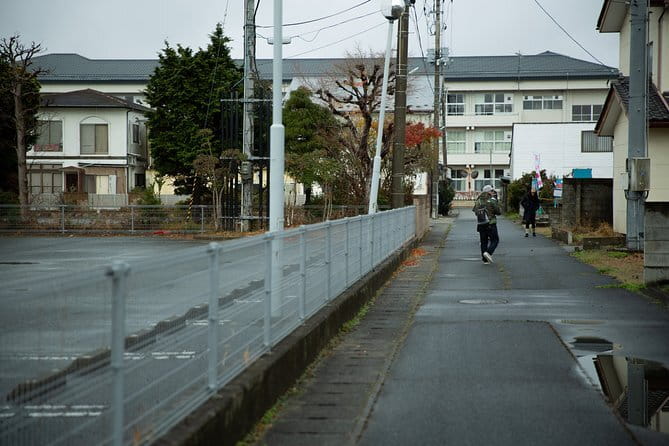
This tour is designed for people who want more than headlines. You come to Fukushima Prefecture to understand what happened on March 11, 2011, and what followed in daily life for the region. The strongest part is the mix of first-hand human stories and a guided look at the nuclear site, which turns an abstract news event into something you can actually picture.
What makes it practical is the way it is structured. You have a guide, you have clear safety procedures, and you have a defined meeting point at Koriyama Station. And because the guide carries a Geiger counter for the plant visit, the experience has a measured, on-the-ground feel. That said, you are also stepping into a place that still carries emotion. Plan your mindset for respect, quiet focus, and careful words.
Koriyama Station start and the coast-area orientation
You start in the morning at 10:00 am at Koriyama Station, specifically the Hiuchida area in Koriyama, Fukushima (meeting point listed at Hiuchida, Koriyama, Fukushima 963-8003). The tour ends back at Koriyama Station, at the East Exit Plaza.
From there, you will spend time exploring the Fukushima coast area, with the schedule allowing the Fukushima Daiichi visit on either Day 1 or Day 2. That flexibility is helpful, because it means the operator can adjust around access, timing, and facility availability. The trade-off is that you should not treat your days like a rigid checklist.
A lot of the value here is how the early portion sets context. Even if you mainly care about the nuclear site, you benefit from first getting your bearings in the region. It is easier to understand what you are seeing later when you have already been oriented to how the coastline and surrounding areas fit into the story.
Entering Fukushima Daiichi: rules, ID, clothing, and Geiger counter guidance
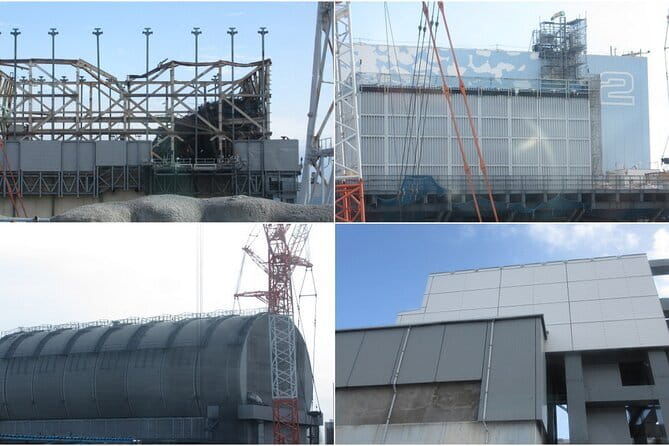
This is the main event, and it has the tightest rules. Your access is limited to the Fukushima Daiichi Nuclear Power Plant visit portion, and you do not have general permission to enter other restricted areas.
What you must bring
You will need to show your actual ID upon entering. A copy is not enough at the gate. After booking, you will be asked to send a copy of your ID as well. The accepted ID list includes items like a passport, driver’s license, and My Number card with photo, among other Japan residence cards.
What you wear
For the plant visit, long sleeves and full coverage matter:
- long sleeved tops
- long pants that cover your skin
- socks that cover your ankles
- flat shoes such as sneakers
Sandals and high-heeled shoes are prohibited for the plant visit. If you are traveling light, check your packing early. This is one of those details that can make or break a smooth day.
How radiation monitoring works here
Your guide is equipped with a Geiger counter to measure radiation dose. The tour estimates that you will be exposed to about 0.02mSv during this part of the trip. That number is given so you know the level they are planning around, not because you should treat it like trivia.
Also, filming around Fukushima Daiichi and in restricted areas is prohibited. Plan to focus with your eyes and memory rather than trying to document everything.
The practical value of the plant visit
I like that this is not framed as shock tourism. The guide is there to explain what you are looking at and help you interpret what it means. If you ask good questions about systems, safety, and long-term impact, this is where you get the most useful answers.
Meeting local residents: the part that makes the story stick
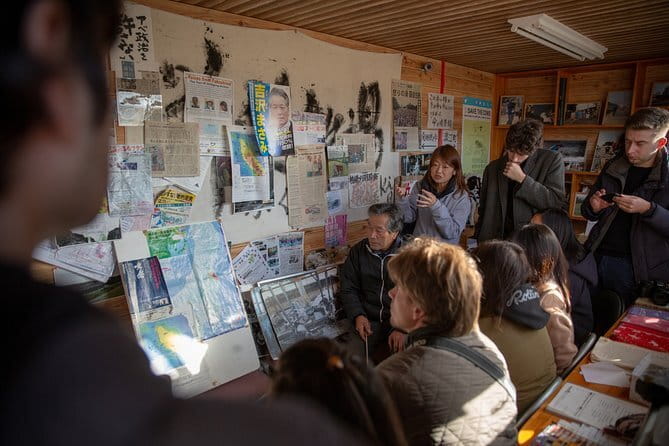
The tour includes time to meet local residents and hear their experiences. That is the part that tends to stay with you, because you are not only learning what happened. You are learning what it became.
You will also be asked to show respect throughout the visit:
- avoid taking photos or videos of people or private properties without explicit permission
- be sensitive when discussing the disaster and its aftermath
- support local businesses and services when you can
That may sound like standard cultural etiquette, but here it is essential. People have lived through displacement, uncertainty, and the slow work of recovery. If you treat the area like a theme park, the experience will feel wrong fast.
From the tour design and past participant feedback, I would expect the conversations to go beyond facts. The guides do a lot of translating between official narratives and what daily life felt like. And that balance is key. You get both the technical side and the human side, not just one.
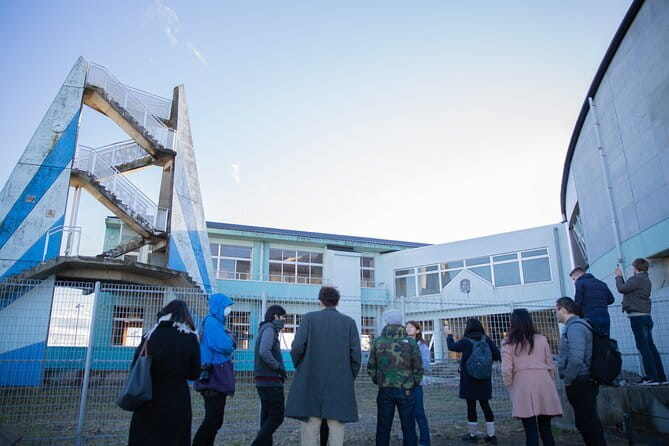
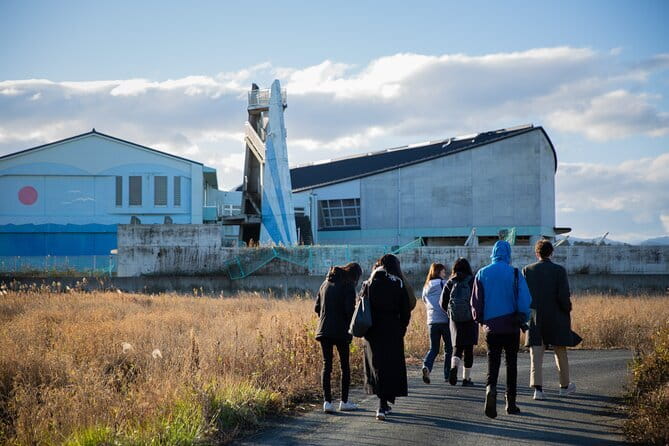
Some departures have also been scheduled around recovery and memory-focused places, such as Ukedo Elementary School, a disaster-related memorial, J-Village, and community projects like flower initiatives. Those details may vary by date since the program notes itinerary changes based on availability, but the overall aim stays the same: help you understand impact and revitalization together.
Day 1 vs Day 2: what stays consistent and what can change
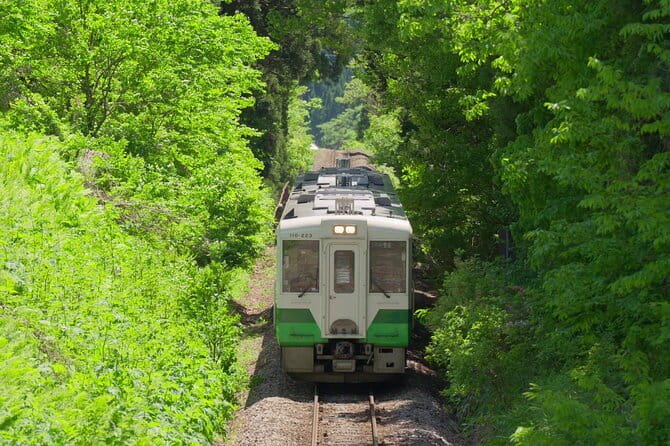
Day 1 begins at Koriyama Station, then you explore the Fukushima coast area. The Fukushima Daiichi plant visit might happen on Day 1 or Day 2 depending on schedule.
Day 2 includes more coastline exploration and then again the plant visit timing depends on the plan for your specific departure. The tour ends back at Koriyama Station.
What stays consistent is the structure:
- you have an air-conditioned vehicle for transfers
- you travel with an English and Japanese speaking guide
- you have a Geiger-counter component for the plant visit
- you are not doing this as a self-guided scavenger hunt
What changes is mostly “when” and “which sites.” That flexibility can feel odd at first, especially if you are the kind of planner who hates uncertainty. But given the nature of the access and the fact that facilities and routes can vary, schedule flexibility is actually a smart safety and operations approach.
Food, comfort, and the overnight that makes the learning feel real
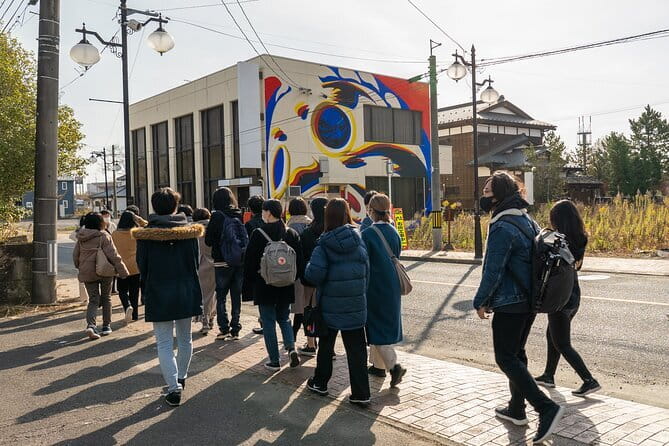
This is a true overnight tour, which matters. Breakfast and dinner are included, and you also get accommodation. Lunch is not included, so you will want to plan on buying lunch on your own.
Why I think the included meals are a plus for value: when a tour includes a plant visit with strict rules, you want fewer decision points. Fewer meals to organize means less stress. It also helps keep the day moving, because the guide does not have to constantly reroute around meal timing.
Your transport is also covered by an air-conditioned vehicle. That might sound basic, but in a long two-day itinerary, comfortable transit helps you stay focused instead of tired and annoyed.
Guides, communication, and how to get the most from Q&A
The guides in this program have been praised for being able to answer questions clearly and for handling the topic with care. Past guide names you may encounter include Yoko, Noriko, Fumi, and Fumie. Not every departure will have the same person, but the pattern is that your guide should help you interpret what you see and hear.
I recommend you show up with a few question themes, so you get more out of every stop:
- What changed after the accident, and what remains difficult to resolve?
- How do safety rules and daily routines differ from before 3/11?
- What does revitalization look like from the community perspective?
- How does TEPCO-related information get discussed locally, if at all?
You will likely get answers that connect official explanations to lived experience. That is where the tour earns its cost.
Price and value: why $579.82 can be fair for this access level
$579.82 per person is not cheap. But when you break down what is actually included, the logic becomes clearer.
You are paying for:
- a 2-day guided program with a dedicated English and Japanese speaking guide
- rare access connected to Fukushima Daiichi with restricted-area rules
- Geiger counter monitoring during the plant portion
- accommodation
- breakfast and dinner
- air-conditioned vehicle transport within the tour area
What is not included is transportation from Tokyo to Koriyama and back, plus lunch. So your true total cost depends on your Tokyo logistics.
Still, if you tried to build this yourself, you would run into two big barriers: access and safety structure. The program is set up to manage ID checks, clothing requirements, and the limited nature of where visitors can go. That is the kind of operational complexity that often costs more than expected when you try DIY.
One last value point: group size is capped at 20 travelers. Smaller groups usually mean more interaction time, better pacing, and fewer “herding cats” moments.
Who should book this tour, and who should think twice
This tour fits best if you want responsible, educational travel. It is especially suitable for adults who:
- want to understand the lasting impact of March 11, 2011
- value direct guidance and structured safety procedures
- feel comfortable with emotional subject matter and respectful on-site etiquette
- prefer a tour over DIY when access is limited
You might think twice if:
- you want a light, purely recreational itinerary
- you are not willing to follow strict clothing rules and ID requirements
- you prefer not to engage with sensitive stories from affected communities
Also, you must be at least 20 years old to participate. If you are traveling with someone under that age, this specific option will not work.
Should you book this Fukushima Daiichi Nuclear Power Plant 2-day tour?
If your goal is to understand Fukushima in a grounded way, I think this is a strong option. The rare access to the Fukushima Daiichi area, paired with a guide’s Geiger-counter monitoring and local conversations, is the kind of combination you cannot easily replicate on your own.
Book it if you can handle a serious topic with respect, and if you are willing to pack for the plant visit rules. Skip it or choose another format if you are looking for a relaxed getaway or if strict procedures and emotional context would drain you.
Bottom line: this is not just about seeing a site. It is about seeing how a region rebuilds, what information means on the ground, and why careful travel etiquette matters in places that still carry scars.
FAQ
How long is the Fukushima Daiichi Nuclear Power Plant 2-day tour?
The tour is listed as about 2 days.
Where does the tour start and end?
It starts at Koriyama Station and ends back at Koriyama Station (East Exit Plaza). The start time is 10:00 am.
What is included in the tour price?
Included are breakfast, dinner, an air-conditioned vehicle, an English and Japanese speaking guide, a Geiger counter to measure radiation dose, and accommodation.
What should I wear for the Fukushima Daiichi Nuclear Power Plant visit?
You must bring long sleeved tops and long pants that cover your skin, plus socks that cover your ankles. Flat shoes like sneakers are required. Sandals and high-heeled shoes are prohibited.
Do I need an ID for the visit?
Yes. You must show your actual ID when entering, and you will also be asked to send a copy after booking. The tour provides an accepted ID list such as passport and driver’s license.
Are photos or filming allowed at the plant and restricted areas?
No. Filming around the Fukushima Daiichi Nuclear Power Plant and in restricted areas is prohibited.
Tours, compared.
Mt Fuji and Hakone 1-Day Bus Tour Return by Bullet Train
Read our review →
Shinjuku Food Tour (13 Dishes at 4 Local Eateries)
Read our review →
Peaceful Hiroshima & Miyajima UNESCO 1 Day Bus Tour
Read our review →
Tokyo Mt Fuji 5th St & Hakone Cruise Bus Tour w/Bullet Train
Read our review →
Flagship 2-Hours Official Street Go-Kart Tour – Tokyo Bay Shop
Read our review →