
Reviewed · WORKSHOPS
Authentic Pure Gold Kintsugi Workshop with Master Taku in Tokyo
Pure gold repairs, no sightseeing required. This kintsugi workshop with Master Taku turns a broken plate into a mindful, creative project, guided step by step with real materials. I like that you are not just watching a demo, you’re actively restoring your own piece. I also like that the session centers on wabi-sabi thinking, not fancy showmanship. One possible downside, the studio is a bit tricky to find, so give yourself a few extra minutes.
This is also a great value for the hands-on result. You get a plate you will use during the lesson and then bring home, plus the equipment and instruction. The group is small, up to 5 people, so you can ask questions when your hands freeze up.
Key Things To Know Before You Go
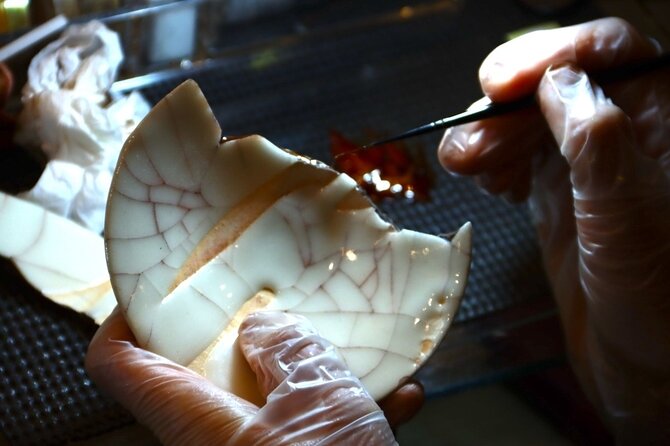
- Master Taku leads the technique, with clear, patient guidance during the gold and lacquer steps
- You take home your repaired plate the same day, so the project becomes a real souvenir, not a memory photo
- Options change the look and the method, from Shuurushi kannyuzome kintsugi (pure gold, natural lacquer) to Black and Gold and even Yobitugi
- You work with authentic urushi lacquer and pure gold powder, not a simplified craft substitute
- Expect a small-group pace, max 5 travelers, designed for personal attention
Why Kintsugi in Tokyo Feels Like a Break from Everything Else
Kintsugi is the art of fixing the break, with visible gold. In a city built for fast plans and busy days, that shift matters. You stop sprinting between shrines, markets, and photo stops, and do one focused task with your hands.
I like the mindset here. The class frames the work as wabi-sabi, accepting imperfection, then making it beautiful anyway. You also get the eco-friendly angle: instead of replacing a broken object, you give it new life.
The pace is also set up for calm. The workshop is designed to be doable within about 2 hours, and the instruction is slow enough for first-timers to keep up. If you love ceramics, design, or slow crafts, this is your kind of Tokyo moment.
A few more Tokyo days worth comparing
- Mt Fuji and Hakone 1-Day Bus Tour Return by Bullet Train
★ 5.0 · 26,383 reviews - 1-Day Tokyo Bus Tour
★ 5.0 · 14,250 reviews - Tokyo: TOKYO SKYTREE® Admission ticket
★ 4.5 · 11,192 reviews
Meet Master Taku in Omotesando, Minami-Aoyama
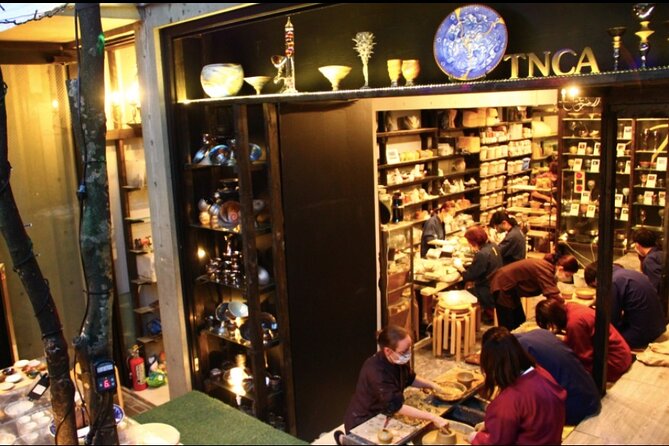
The workshop meets at TNCA Minami-Aoyama Studio, in Minato City, near Omotesando. Omotesando is known as a fashion hotspot, so the neighborhood has that sleek Tokyo energy. Still, inside the studio, it’s all about craft time.
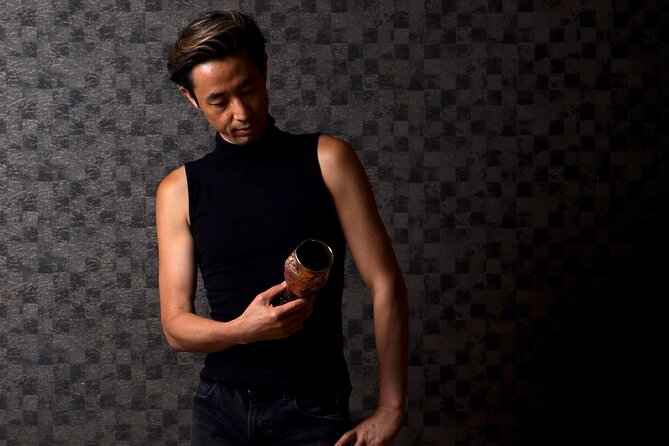
Master Taku runs the pottery studio and works under a motto: even more beautiful and more robust than before it broke. That idea is not just a slogan, it is the logic of how you repair the piece.
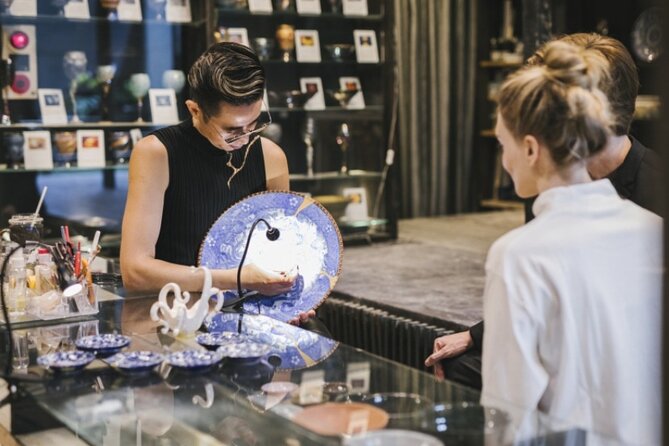
Your session happens in a small group, max 5 travelers. In practice, that means less waiting around and more chances to get your questions answered while you’re working. One helpful detail from the experience format is that an assistant named Junko may assist alongside Master Taku, so there are usually extra eyes on the process.
Price and Value: What $142.60 Covers (and Why It’s Not Just a Souvenir)
At $142.60 per person, you might compare this to other Tokyo workshops that feel like a quick hands-on stop. This one is different because the costs go into real, authentic materials and a guided repair.
Your price includes:
- All taxes, fees, and handling charges
- All necessary equipment
- A plate you use in the lesson and bring home after
- The lesson fee
You also use real urushi lacquer and pure gold powder for the authentic kintsugi technique. Real lacquer and gold materials cost more than the typical “craft kit” approach. Add in a master artist teaching it, and the value starts to make sense.
You should also think about what you’re buying. You’re not buying a ready-made object. You’re paying for the specific technique, the philosophy context, and the chance to take a finished piece home that you shaped with your own hands.
Options at a Glance: Shuurushi, Black and Gold, or Yobitugi
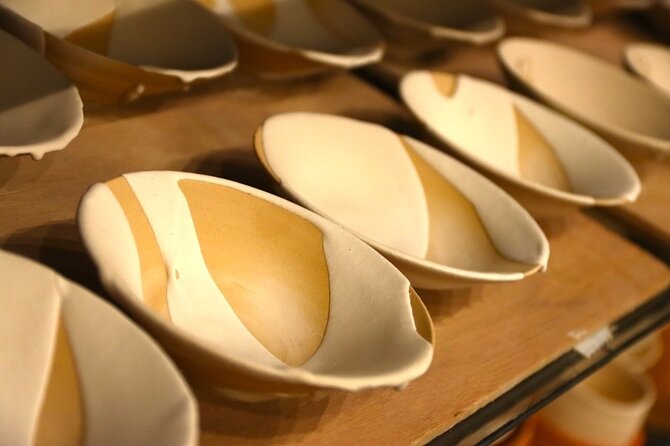
The workshop gives you three project options. The method is the same core idea, but the look changes based on how you treat the repaired areas and what you add to them.
Same corner of Japan, a different kind of day:
- Tokyo: teamLab Planets TOKYO Digital Art Museum Entry Ticket
★ 4.6 · 9,779 reviews - Mt Fuji & Hakone Cruise, Drum Show Bullet Train 1 Day from Tokyo
★ 4.0 · 7,413 reviews - Tokyo: Sumo Show Experience with Chicken Hot Pot and a Photo
★ 4.8 · 6,678 reviews - Tokyo: Shinjuku Food Tour (13 Dishes at 4 Local Eateries)
★ 5.0 · 6,603 reviews
Option A: Shuurushi kannyuzome kintsugi (about 110 minutes)
This is the full classic approach: kintsugi with real natural lacquer and pure gold. You get a plate you will use for the lesson and bring home. If you want the most “pure gold kintsugi” version, this is the one.
Option B: Black and Gold Shikkokurai (about 90 minutes)
If you want a more dramatic, sophisticated style, you repair a black plate with kintsugi. The instruction method is the same as Option A, but the background color changes the entire mood of the finished piece.
Option C: Yobitugi experience (about 90 minutes)
Yobitugi is the highest technique among kintsugi techniques in this workshop’s options. Instead of only joining the missing parts, you attach different decorations and materials to the gaps.
That last part is key. If you enjoy designing and want your repaired piece to show a bit more personality and flair, this can feel more playful than strictly “repair only.”
What You’re Actually Doing in the Workshop (Step by Step, Without the Rush)
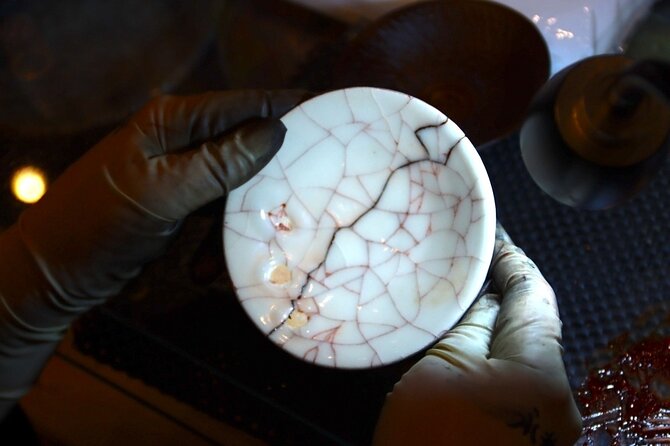
The heart of kintsugi is lacquer plus gold. Here, you use authentic urushi lacquer and pure gold powder, under the guidance of Master Taku. You learn the process and then complete your own plate during the session.
Before you begin your hands-on work, you get the philosophy piece. The class is framed around wabi-sabi: imperfect beauty. The vessel you work with is prepped with a rustic lacquer so it has that sabi-feeling, meaning the material already carries the grounded, aged quality the art looks for.
Then the technique takes over. You follow instruction for:
- the repair mindset, treating breaks as part of the object’s story
- applying the lacquer used in authentic kintsugi
- adding pure gold powder to highlight the join
- finishing the piece so it can be taken home the same day
One pattern that shows up in the way the class is described is the teaching style. The instructor explains the steps clearly, works at a pace that lets you finish within the time, and stays patient when your hands are slow or your first attempt looks messier than you hoped.
If you like process, you’ll enjoy the way the class connects origin and technique. Even the craft’s background is part of the experience, so it doesn’t feel like a one-off activity with no meaning.
The Philosophy Part: Wabi-Sabi Turns a Crack into a Design Choice
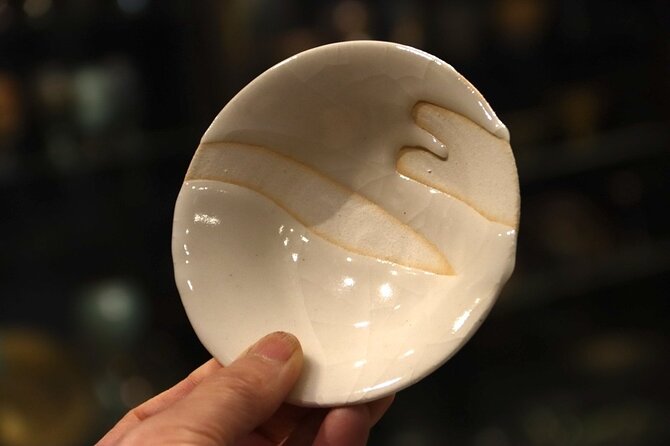
This is not just “gold lines on pottery.” The class treats the repair like a lesson in how to see imperfection differently.
Wabi means the beauty of understated simplicity and imperfection. Sabi is the feel of time, wear, and the quiet character of things that are not new. In this workshop, you are guided to create that imperfect beauty using kintsugi.
That framing changes how you look at your own work as it develops. Instead of trying to hide what broke, you learn to treat the break as the highlight. The gold shows the structure of the repair, so your plate starts to look intentional.
And that is why this type of workshop often hits harder than expected. Repairing something broken can feel cathartic, especially when someone helps you understand the “why,” not just the “how.”
Studio Reality Check: Timing, Getting There, and How Long It Feels
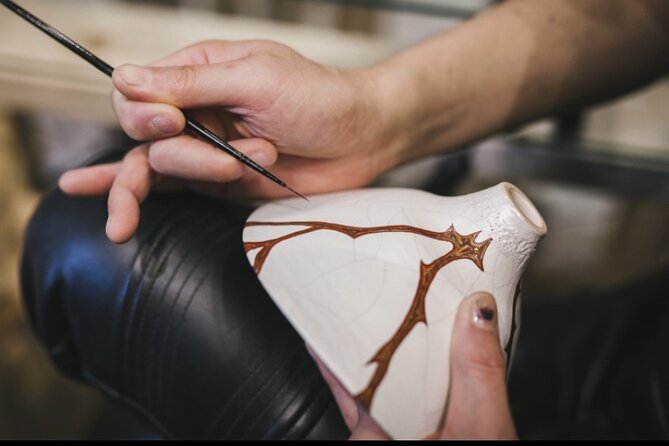
The workshop duration is about 2 hours. Option A runs about 110 minutes, while Options B and C are about 90 minutes. So, your exact time on-site depends on which look you pick.
It ends back at the meeting point. There is no hotel pickup or drop-off, so you’ll want to plan your own transit.
The studio is near public transportation. Still, one practical note from the experience details: it can be a bit hard to find, so build in extra time to locate TNCA Minami-Aoyama Studio. In a city like Tokyo, that extra buffer is time well spent.
Group size matters here. With a max of 5 travelers, the workshop avoids the big-class problem where you feel invisible. You get enough attention to keep your work moving.
What You Bring Home: A Unique Plate, Not a “Workshop Ticket”
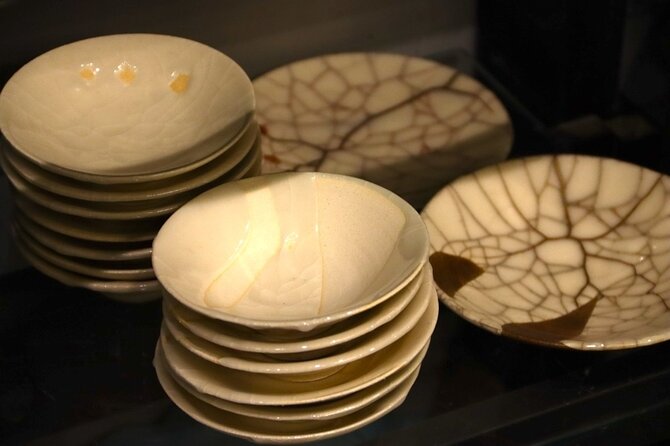
The plate is the whole point. You’ll use a plate for the lesson, then bring it home that same day. That makes this one of those Tokyo activities where the souvenir is both personal and visible.
It’s also unique by nature. Even with the same technique, cracks and missing parts lead to different results. Your choices, your pace, and the way the lacquer and gold behave on the surface all influence the final look.
If you pick Option C, you bring a higher-variation element into the work. Yobitugi means you add decorations and materials to missing areas, so the final piece can feel more expressive and less strictly formal.
Either way, you end up with something you assembled yourself. That difference matters if you like craft, design, or home objects you actually care about.
Who This Workshop Is Best For (and Who Might Skip It)
This is a great fit if you want a break from sightseeing. You get a mindful task, a clear craft process, and a meaningful takeaway.
It’s also ideal for:
- first-time kintsugi learners
- people who enjoy ceramics or materials
- anyone who likes small-group teaching
- couples or parent-child pairs, since the class supports hands-on completion
You might skip it if you prefer purely passive activities or if you have very limited time and can only do the shortest possible stops. Options B and C are about 90 minutes, but the overall session is still a real commitment in one block.
A Few Practical Tips Before You Book
Here’s how to set yourself up for a smooth session:
- Choose your option based on the vibe you want, classic pure-gold repair (A), high-contrast black background (B), or decorative Yobitugi (C).
- Wear clothes you don’t mind getting near workshops materials. The class includes equipment, but you’re still working closely with lacquer and gold powder steps.
- Plan to arrive early enough to find the studio. The meeting point is in Minami-Aoyama, and the area is easy to move through once you’re oriented.
- Since food and drinks are not included, eat beforehand. You’ll focus better during the work time.
- Bring a curious mindset. Even if you just want the craft result, understanding wabi-sabi helps you “get” what you’re making.
Should You Book This Authentic Pure Gold Kintsugi Workshop?
Book it if you want a Tokyo souvenir with real meaning, not a generic item from a shop. The price makes sense because you’re paying for authentic materials, a plate you take home, and master-led instruction in a small group.
If you care about learning the craft and the philosophy behind kintsugi, Master Taku’s approach is the main draw. The workshop is built for clarity and calm progress, and that matters for first-timers.
Skip it only if you truly dislike hands-on crafts or you need a very quick activity. Otherwise, this is one of the more thoughtful ways to experience Japan through restoration, patience, and visible beauty.
FAQ
How long is the kintsugi workshop?
The workshop is about 2 hours. Option A (Shuurushi kannyuzome kintsugi) is listed at about 110 minutes, while Options B and C are listed at about 90 minutes each.
How many people are in the group?
The workshop has a maximum of 5 travelers, for small-group, personalized attention.
Where is the meeting point?
The start meeting point is TNCA Minami-Aoyama Studio, 3-chōme-8-2 Minamiaoyama, Minato City, Tokyo 107-0062, Japan. The activity ends back at the meeting point.
What do I take home after the workshop?
You take home the plate you use during the lesson. The plate is included, and you can take it home on the day.
Are food and drinks included?
No. Food and drinks are not included.
Can I get a refund if I cancel?
No. This experience is non-refundable and cannot be changed for any reason. If you cancel or ask for an amendment, the amount you paid is not refunded.
Fresh options around Tokyo
- Tokyo: Nikko Kegon Falls Lake Chuzenji Toshogu Temple & More★ 4.9 · 12 reviews
- Tokyo: Samurai History Walking Tour★ 5.0 · 12 reviews
- Harajuku: Kawaii Fashion and Pop-Culture Tour★ 4.7 · 12 reviews
- Tokyo: Mt. Fuji & Lake Kawaguchi Instagram Full Day Trip★ 4.1 · 12 reviews
- Shibuya Tokyo: Modern Kintsugi Workshop in Shibuya★ 5.0 · 12 reviews
- Tokyo: GTR Guided Daikoku Experience at Night★ 5.0 · 12 reviews
- Tokyo: Daikoku JDM Car Culture Tour★ 4.6 · 12 reviews
- Mt Fuji Private Day Trip from Tokyo with English speaking driver★ 5.0 · 13 reviews
Workshops, compared.
Sushi Making Tokyo Roll and Authentic Japanese Sushi Class
Read our review →
Roll and Authentic Sushi Making Class in Asakusa
Read our review →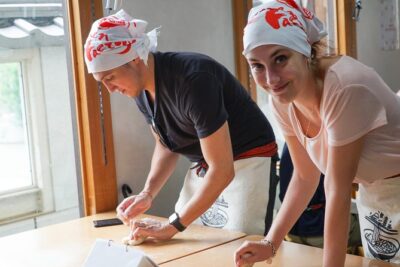
Ramen Cooking Class at Ramen Factory in Kyoto
Read our review →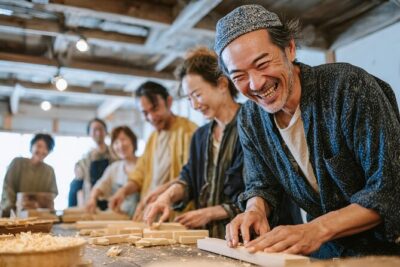
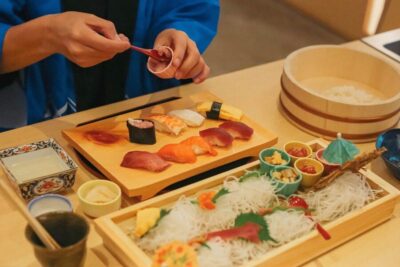
Sushi Making Class in a Happi Coat near a Famous Spot
Read our review →
Sushi Making Osaka Roll and Authentic Japanese Sushi Class
Read our review →Browse the lists this tour appears in