
Reviewed · KAGOSHIMA TOURS
Kagoshima Private & Custom Tour with Licensed Guide and Vehicle
A private Kagoshima day beats racing the clock. This is a custom tour for just your group, with an English-speaking licensed guide and government-licensed vehicle handling the driving, timing, and meeting you at ports, hotels, or train stations. I especially like how it’s built around your pace, not a rigid checklist, and how you can shape the day around Satsuma history, volcano views, and hands-on culture.
One watch-out: you should plan for extra costs such as admission fees and, if you pick Sakurajima, the ferry and some vehicle fares are not included. In other words, the tour is great value for your time, but the total day budget depends on which stops you choose.
Key highlights and what makes them work
- Private, not shared: your group only, so you never get stuck waiting on strangers.
- 2-3 stop customization: you choose the themes and the energy level.
- Licensed guide coverage: clear context on the places you visit, including history and what you are looking at.
- Name-sign meet-up: staff wait for you at the meeting point with your name, even in busy areas.
- Sakurajima options: visitor center, hot footbath, and Yunohira Observatory are all built into the mix.
- Real culture, not only viewpoints: glass cutting, Satsuma pottery kilns, armor workshops, and a whisky distillery.
A private Kagoshima day beats the guesswork
Kagoshima is the kind of place where a “quick hop between spots” can turn into hours of logistics. This tour cuts that pain. You get an air-conditioned vehicle, and you do not have to figure out routing, parking, or how to line up time at museums, viewpoints, and craft stops.
The most practical part is the meeting flow. Pick-up and drop-off can be set for places like ports, hotels, or train stations, and you will meet the staff who wait with a sign showing your name. That sounds small, until you are standing in a crowded terminal with a phone battery at 12 percent.
I also like the communication. You can message the team before and during the tour through Viator messages or WhatsApp, which helps when plans shift or the group moves at different speeds.
A few more Kagoshima days worth comparing
- Port Pick-Up: Kagoshima Private Tour Licensed Guide & Vehicle
★ 4.5 · 22 reviews - Kagoshima Full-Day Private Tour with Government-Licensed Guide
★ 5.0 · 21 reviews - Kagoshima Highlights Private Tour, Sakurajima Volcano and more
★ 5.0 · 20 reviews
Price and value for 6 hours of custom touring
At $625.94 per group (up to 1), this is not a budget tour. But for a private, guide-led day in Kagoshima, it can be strong value if you care about efficiency and quality explanations.
Here is why: you are paying for a licensed guide plus a dedicated vehicle for about six hours, and the itinerary is meant to match your interests and pace. That means fewer “we rushed and missed it” moments, and more time at the places you actually want.
One more value angle: admissions and some transport add-ons are not included. So your cost total will depend on whether you pick museum-heavy stops, and whether you include Sakurajima ferry time. If you select a smart mix, you can keep the day balanced between paid attractions and free viewpoints.
Included basics you should use to plan your day:
- air-conditioned vehicle
- bottled mineral water
- domestic travel accident insurance
- private transportation
Not included (common add-ons):
- meal expenses
- all admission fees
- Sakurajima ferry boarding fee and vehicle fare
- fuel, toll, and parking fees
How the itinerary really works: pick 2 to 3 themes
The itinerary list is your menu, not a forced route. The tour is designed as a private customization where you select 2-3 sites that fit what you want to see, how long you want to walk, and whether you prefer history, crafts, nature, or a mix.
That matters because the full list covers a lot of ground: coastal gardens, Western-style modernization sites, glass and pottery workshops, samurai-era neighborhoods, Sakurajima volcano viewing, hot sand baths, peace history in Chiran, Kirishima shrine and art, plus a whisky distillery.
So here is the best way to think about it:
- If you want city + volcano, you can lean toward Sengan-en, Shiroyama, and Sakurajima stops.
- If you want crafts, you can stack Satsuma Kiriko, pottery kilns, and armor or glass-making.
- If your group wants meaning and reflection, you can prioritize Chiran Peace Museum plus samurai residences.
Your guide will help the day feel fluid, which is the key difference between a custom private route and a fixed group bus tour.
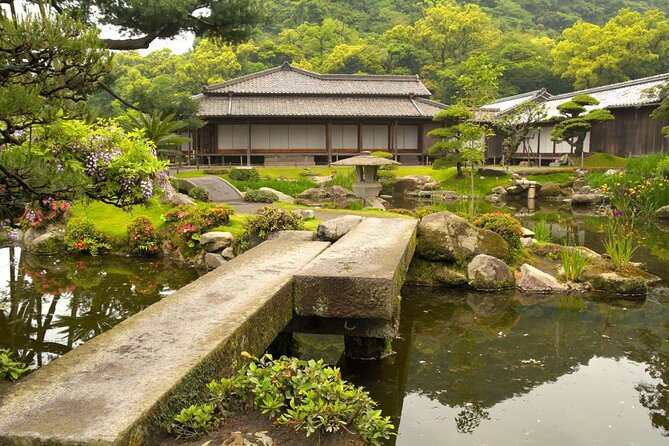
Entering Sengan-en, Shimadzu-era coast and garden calm
Sengan-en is a stately Japanese-style residence and coastal garden area north of downtown Kagoshima. It was built in 1658 as part of the Shimadzu clan’s residences. If you like places that feel lived-in by history, this stop has that slow, old-world rhythm.
What I like about Sengan-en on a private tour: you can do it at a walking pace that fits your group. You are not stuck doing a speed-run through photos. If someone needs a break, you can pause without disrupting the whole schedule.
Practical consideration: it is listed as about 1 hour 10 minutes, and admission is not included. If your group is tight on budget, you might still pick it for the setting and then balance the day with more free viewpoints afterward.
Same corner of Japan, a different kind of day:
- Sakurajima Century Lava Climb Journey with E-bike
★ 5.0 · 54 reviews - Discover the Wonders of Sakurajima Half Day Tour in Kagoshima
★ 5.0 · 34 reviews - Sakurajima Century Lava Climb Journey with E-bike
★ 4.9 · 27 reviews - Discover the Wonder of Sakurajima Half Day Tour in Kagoshima
★ 4.8 · 24 reviews
Western modernization to Satsuma craft: glass, factories, and the Ijinkan
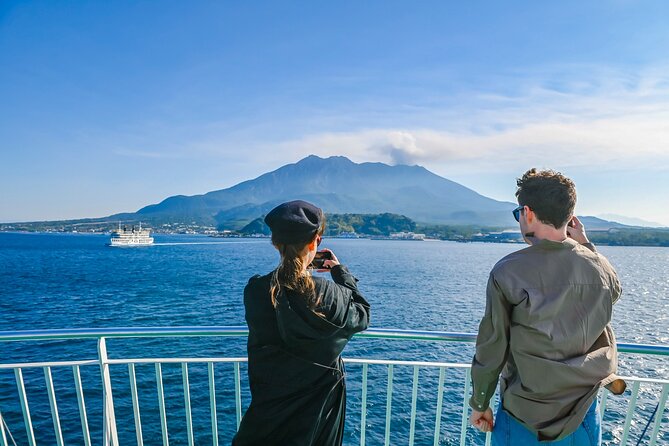
A big part of Kagoshima’s story is how the Satsuma domain modernized quickly, often blending Western techniques with local craftsmanship. This tour’s selection hits that theme from several angles.
Shoko Shuseikan Museum and the Western-style factory building
Shoko Shuseikan Museum is centered on an extant old Western-style factory building, described as the oldest of its type in Japan. The museum exhibits focus on Satsuma domain modernization projects tied to the Kikai Kojo era.
This works well with a guide because you are not just walking through rooms. You are learning what changed and why the architecture and equipment mattered.
Satsuma Kiriko Glassworks and Iso Kogei-kan
At Satsuma Kiriko glassworks, you can watch the manufacturing process of Satsuma Kiriko cut-glass and buy pieces at the neighboring Iso Kogei-kan.
This is the kind of stop where a private guide helps you shop better. You can ask what to look for, how cut-glass is typically different, and how to choose souvenirs that will survive travel.
Time note: the itinerary list does not give a set duration here, so expect it to fit your chosen pace and what you want to purchase.
Foreign Engineer’s Residence (Ijinkan)
The Foreign Engineer’s Residence is tied to the foreign engineers who worked on operations like the first Western-style spinning mill in Japan. There are films and exhibits in the facility presenting the features of that early modernization.
I like this combo because it connects the dots. You see the factory story, then the glass craft, then you understand the people and living spaces behind the early industrial push.
Shiroyama, the restored Satsuma gate, and a break for Tenmonkan energy
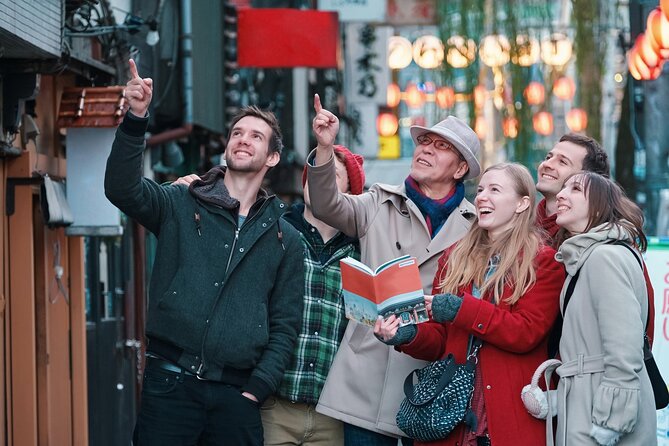
Shiroyama, or Castle Mountain, is a 107-meter hill in the center of Kagoshima city. The name comes from the fact it was once a castle site. You access the observatory via a promenade roughly 2 kilometers, and the route is filled, described as packed with attractions along the way.
If your group likes viewpoint time without rushing, this works well. The guide can shape your stop length, and you can decide how much of the promenade to walk.
The promenade and observatory rhythm
Because the promenade is about 2 kilometers, pace matters. If you want a lighter day, you can shorten the walk and focus on the observatory point. If your group enjoys strolling, you can treat it as a slow warm-up for later city stops.
Satsuma domain gate restored in 2020
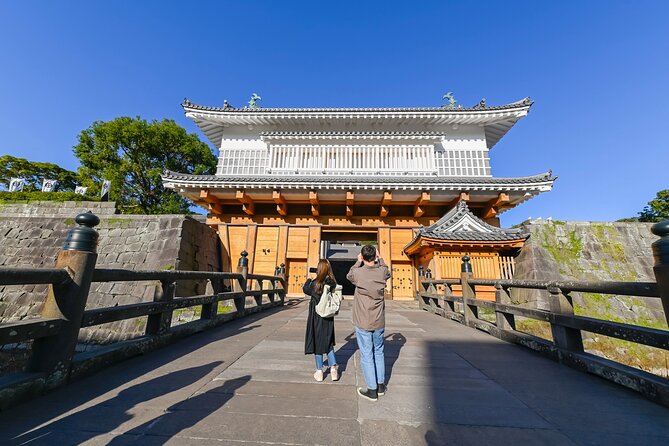
There is also a restored castle gate from the Satsuma domain, described as the largest one of this kind in Japan by height and width (20 meters), and restored in 2020 for the first time in about 150 years.
On a private tour, this is a strong “short but meaningful” stop. You get the scale and history without turning it into a long museum day.
Tenmonkan, shopping district time
Tenmonkan is Kagoshima’s central shopping district, and it is a good place to regroup. Think of it like a flexible slot in your schedule: snack, coffee, browse, and then head to the next attraction.
Admission-free option included nearby in the list:
- a Kagoshima shrine with a huge torii gate, where admission is free
Also possible within the same city day theme:
- an aquarium area with exhibitions related to the Kuroshio Current and Sea of Nansei Islands, with Sakurajima visible in front
- Museum of the Meiji Restoration, with displays and movies reproducing the past
Tip for you: if you pick more than one indoor site, ask your guide to time it so you are not running from air conditioning to open sun back-to-back. It makes a big difference in how the day feels.
Sakurajima day parts: volcano learning, a hot footbath, and Yunohira views
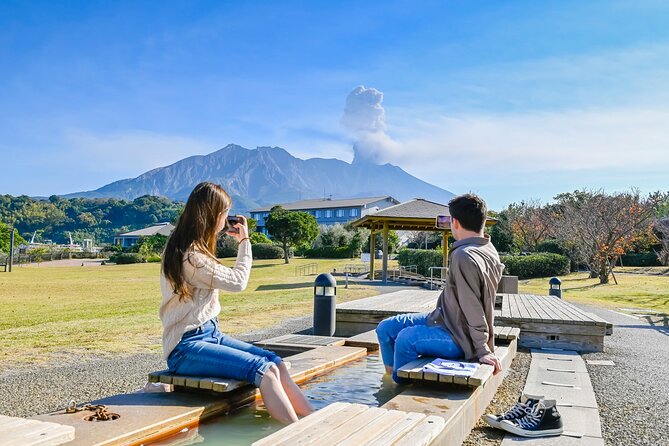
Sakurajima is the headline act for many visitors, and the good news is this tour treats it as more than one viewpoint.
Sakurajima Visitor Center
The Sakurajima Visitor Center teaches the history of volcanic eruptions through films and dioramas. It is a base facility of a geopark, and it also has specialty goods and souvenirs.
This is an excellent first Sakurajima step because it sets context. If you do it before the viewpoints, the lava landscapes make more sense.
Yougan Nagisa Park Public Footbath
Then you can go to the Sakurajima Yougan Nagisa Park Public Footbath, described as a 100-meter-long footbath, one of the biggest in Japan. The idea is simple: all-natural hot spring water while you look toward Sakurajima.
Practical thought: you are outside for at least part of the experience. If you are choosing your day based on weather, this is one you will feel most.
Yunohira Observatory
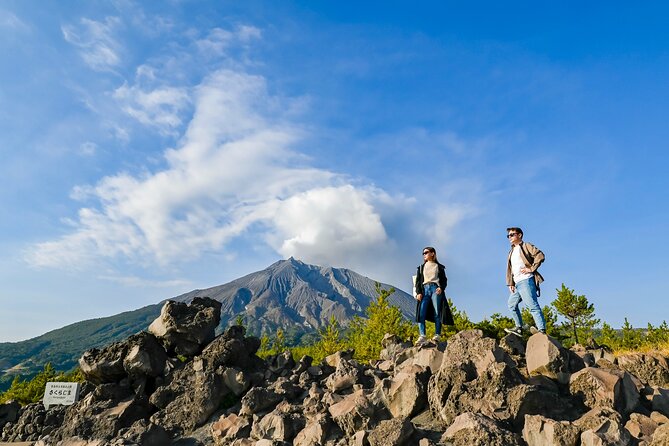
Yunohira Observatory is described as the highest public point on Mt. Sakurajima. From there you can see rough lava fields and, at times, rising volcanic smoke plumes.
This is the payoff stage. Even on a private tour, expect some walking and some waiting for visibility. Volcano days can be magical or just cloudy. Your guide can help decide how long to spend based on conditions.
Important cost note for you: the Sakurajima ferry boarding fee and vehicle fare are not included. Budget for them if Sakurajima is part of your plan.
Saraku hot sand baths: unique wellness time with real safety rules
Saraku Sand Bath Hall is one of the more unusual stops on the menu. The hot sand bath center describes a natural health and beauty treatment loved by locals for over 350 years.
On a private tour, this can be a great “reset” stop between heavier sightseeing. It also makes sense to do it in the middle of your day, so you are not rushing right after it.
Safety notes you should take seriously
The tour information lists clear limits. You should not bathe if you have symptoms of high blood pressure (180/100 mmHG or more), heart disease, arrhythmia, angina pectoris, lung disease, pregnancy, inflammation, or fever. The guidance also says to refrain from drinking alcohol before bathing.
If any of that applies to your group, you can still choose different stops. But if it does not, it is one of the rare experiences in Kagoshima that feels different from the usual museum-and-temple rhythm.
Admission is not included, and the stop is listed at about 1 hour.
Chiran Peace Museum and samurai residence gardens
If you want Kagoshima to include reflection, Chiran is one of the most important parts of the prefecture’s story. The tour list includes two Chiran stops.
Chiran Peace Museum
The Chiran Peace Museum is focused on kamikaze pilots and is described as a testament to worldwide peace. Expect a serious tone. If your group prefers lighter content, you might pair this with an easier adjacent stop and keep the rest of the day flexible.
A private guide helps here because context matters. You can ask questions, and you can decide how long you want to sit with what you see.
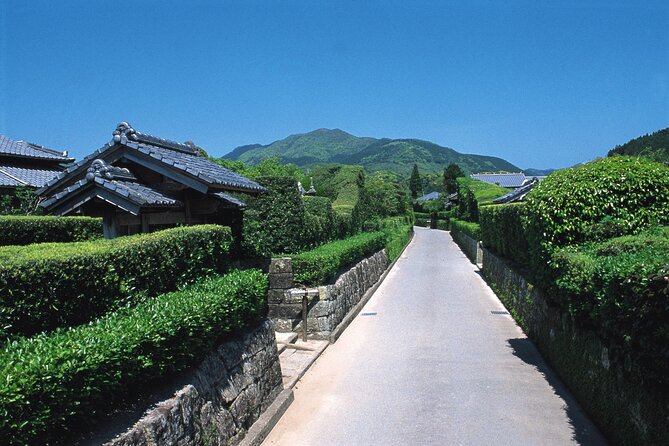
Chiran Samurai Residence Complex, nicknamed Little Kyoto of Satsuma
Chiran’s samurai residence complex is described as home to more than 500 samurai residences during the late Edo period, and it has a nickname of Little Kyoto of Satsuma.
This stop is shorter in the list at about 30 minutes, so it often works as the gentle contrast after the museum.
Admission is not included for both stops, so if you are budget-conscious, you can choose which one you most want to prioritize.
Kirishima Jingu plus art, armor, pottery, and a whisky distillery
Kirishima is a “culture and nature” cluster in the tour menu, with stops that range from sacred heritage to modern art and craft production.
Kirishima Jingu shrine halls, national treasures in 2022
The tour list highlights Kirishima Jingu’s main hall, shinden hall, and worship hall, which were designated national treasures on February 9, 2022.
This is a stop worth choosing if your group likes architecture and spiritual spaces. A private guide can help you interpret what you are seeing without you needing to research every symbol on your own.
Kirishima Art Forest
The Kirishima Art Forest is described as a modern art museum surrounded by nature. It is another way to break up the day, especially if your itinerary includes heavier history stops.
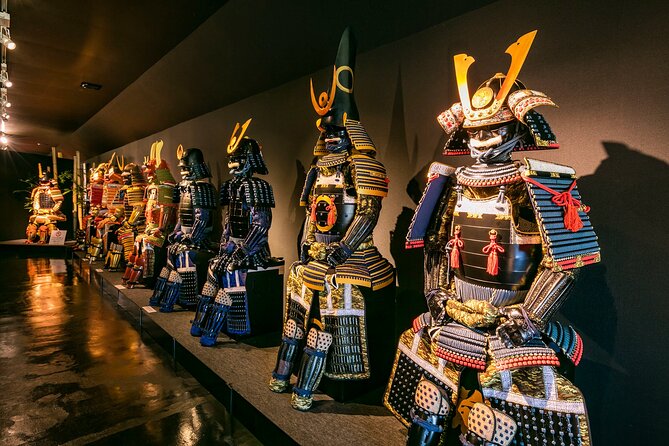
Marutake Armor Factory
Marutake Armor Factory is described as renovated and reopened in 2018. It is set in a large Japanese castle and garden, and inside you can see armor and helmets used in Japanese battles.
This is a great “hands-on imagination” stop. Even if you are not a serious history buff, seeing armor shapes and materials in a workshop setting tends to click.
Kiln of the 15th Chin Jukan
The kiln of the 15th Chin Jukan is part of Satsuma ware tradition. It describes a continuous line from the 1st Chin Jukan to the current 15th, with the kiln producing Shiro Satsuma and other distinctive traditional styles.
If you like ceramics, this is one of the better stops on the list because it connects the craft to continuity, not just product shopping.
Mars Tsunuki Distillery
To end on something different, the list includes Mars Tsunuki Distillery, described as the southern most whisky distillery on the main Japanese islands. You can see old still tower buildings, a stone barrel warehouse, and take a tour of production processes. Admission is listed as free.
This stop is a nice way to cap a full day because it feels like a modern sensory experience after temples, museums, and workshops.
Timing, walking, and meals: the stuff that makes or breaks a private day
Even with a private guide, comfort depends on how you plan your energy.
A few practical points based on the tour details:
- Some stops include outdoor walking, like the Shiroyama promenade (about 2 kilometers).
- Some stops involve bathing or touching experiences, like the hot sand baths at Saraku.
- Admission fees are not included, so indoor and ticketed stops can stack up cost fast.
- Meals for you, and meals for the guide and driver, are not included, so you will likely build in a restaurant break you pay for directly.
From the feedback on guides, one theme is how well the team adapts. Names that show up in the guide experience include Cozy, Tada, Mio, Ted, Shiho, and Shohi. People appreciated guides being prompt, flexible, and good at handling families, kids, and even wheelchair needs. One small caution: if your guide’s voice is hard to hear outside the vehicle, choose a seating position that faces the guide, and ask the guide to speak up if needed.
You can also reduce stress by thinking of your day as 3 parts:
1) one anchor site (a museum, a garden, or a volcano learning stop),
2) one sensory or craft site (glass, pottery, armor, distillery),
3) one flexible slot (shopping district, a free shrine, or a viewpoint).
That structure makes it easier to adjust if someone gets tired, rain starts, or you want more time at a shop.
Should you book this Kagoshima private custom tour?
Book it if:
- you want 2-3 must-see stops instead of trying to cram everything,
- you care about explanations, not only photos,
- you are traveling with family, seniors, or mixed mobility and want smoother pacing,
- you like the idea of customizing themes, coast history, Sakurajima volcano, samurai culture, crafts, and whisky.
Skip it or reconsider if:
- you are traveling on a tight admission budget, because paid sites and ferry add-ons can increase your total day cost,
- you dislike planning a day around walking and weather. The tour requires good weather, and it can be rescheduled or refunded if it is canceled for poor conditions.
If you are the type of traveler who likes your itinerary shaped to your interests, this tour is a smart, efficient way to see Kagoshima without feeling rushed. The real win is the private format, and the fact the guide can keep the day coherent even when you choose unusual combinations.
FAQ
How long is the Kagoshima private custom tour?
It runs about 6 hours (approx.).
Is this tour private or will I share with other groups?
It is private. Only your group participates, and you are not combined with other groups.
Where can pick-up and drop-off happen?
Pick-up and drop-off locations are flexible, including ports, hotels, and train stations.
Are meals included?
No. Meal expenses for yourself and for the guide and driver are not included.
Do admission fees and ferry costs come with the tour price?
No. Admission fees are not included, and Sakurajima ferry boarding fee and vehicle fare are also not included.
What is included besides the guide and vehicle?
The tour includes domestic travel accident insurance and bottled mineral water, plus an air-conditioned private vehicle.
Fresh options around Kagoshima
- Kayaking in Anbo River★ 5.0 · 19 reviews
- Kagoshima Highlights Private Tour, Sakurajima Volcano and more★ 5.0 · 20 reviews
- Kagoshima Full-Day Private Tour with Government-Licensed Guide★ 5.0 · 21 reviews
- Port Pick-Up: Kagoshima Private Tour Licensed Guide & Vehicle★ 4.5 · 22 reviews
- Experience the blessings of volcanoes in Kagoshima, Kyushu★ 4.9 · 13 reviews
- Discover the Wonder of Sakurajima Half Day Tour in Kagoshima★ 4.8 · 24 reviews
- Sakurajima Century Lava Climb Journey with E-bike★ 4.9 · 27 reviews
- Sakurajima Century Lava Climb Journey with E-bike★ 5.0 · 54 reviews
Kagoshima Tours, compared.
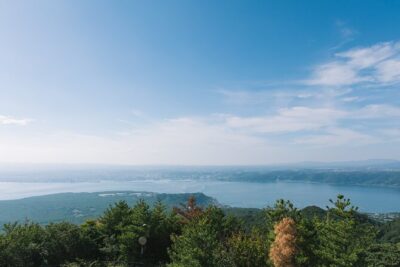
Sakurajima Century Lava Climb Journey with E-bike
Read our review →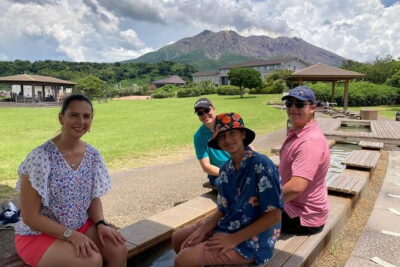
Discover the Wonders of Sakurajima Half Day Tour in Kagoshima
Read our review →Sakurajima Century Lava Climb Journey with E-bike
Read our review →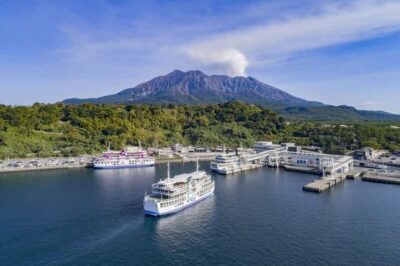
Discover the Wonder of Sakurajima Half Day Tour in Kagoshima
Read our review →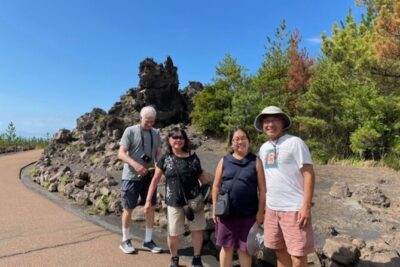
Port Pick-Up: Kagoshima Private Tour Licensed Guide & Vehicle
Read our review →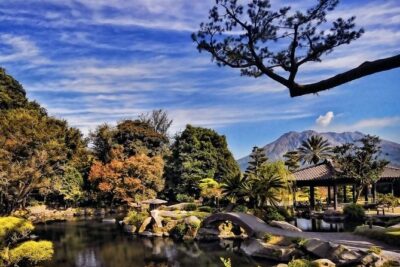
Kagoshima Full-Day Private Tour with Government-Licensed Guide
Read our review →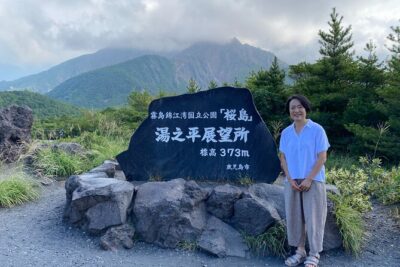
Kagoshima Highlights Private Tour, Sakurajima Volcano and more
Read our review →
Browse the lists this tour appears in