
Reviewed · CANOES & KAYAKS
Okinawa Iriomote Mangrove SUP or Canoe Tour
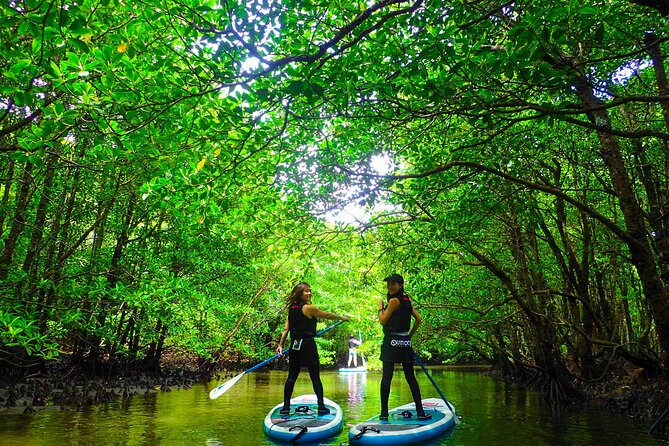
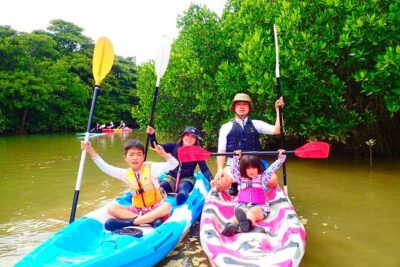
Mangroves have a quiet way of slowing you down. This Iriomote-jima SUP or canoe tour is set on mangrove river water where the wind has little influence, so the experience stays relaxed even if you have never paddled before. I also like that you get free photo data taken with a special waterproof camera, so you leave with memories you did not have to worry about capturing yourself.
The tour runs for about 2 hours and keeps things focused: paddle, pause, look closely at the mangroves, and learn what makes the area special. One small drawback to plan for is practical, not scary: you need clothes that can get wet, there are no toilets on the course, and you will want a towel afterward because you will likely head to the next stop with damp gear.
If you want a peaceful eco-style outing without lots of fuss, this is a strong pick. Just remember the tour is not for everyone: SUP is ages 12 to 59, canoe is ages 3 to 65, and it is not suitable for pregnant guests or people with certain health issues.
Key things to know before you go
- Calm mangrove river conditions: wind influence is low, which helps beginners feel steady
- Free waterproof photo data: your guide takes pictures during the tour and gives you the files
- Two distinct paddling areas: Urauchi River first, then time on the Iriomote-jima side
- Short, doable 2-hour format: enough time for a real outing without burning your day
- Eco-minded approach: designed as a sustainability-focused eco-tour
- Language depends on the day: Japanese or English, sometimes Japanese-only
A calm mangrove river is the real secret to a beginner-friendly paddle
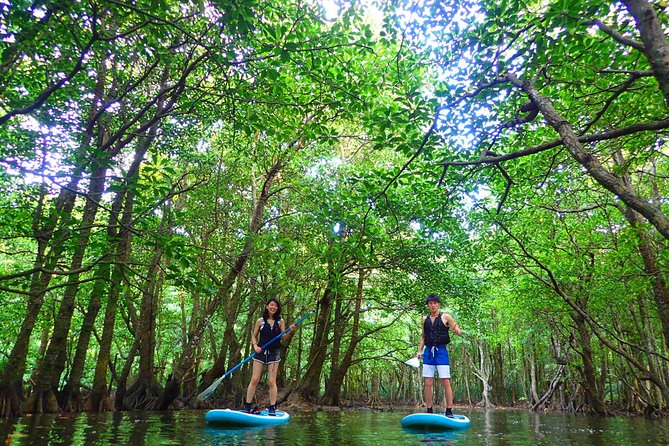
When you picture a paddle tour, you might imagine chop, waves, or a struggle just to keep control. Here, the setting does you a favor. The route is on a mangrove river where the wind has little influence, so you spend less time fighting conditions and more time learning the rhythm of paddling and watching the mangrove ecosystem up close.
That matters because mangrove waterways are close-in environments. You are not just moving across open water where you can relax. You are gliding through areas where the plants are part of the scenery, and you want a pace that lets you actually notice things. A calmer river gives you that breathing space.
I also like that the tour is described as easy even for beginners. That is not just marketing. It usually means you will get clear instructions and a route designed to be manageable, especially for first-time paddlers.
A few more Okinawa & Islands days worth comparing
- Okinawa Ishigaki Mangrove SUP or Canoe Tour
★ 5.0 · 147 reviews - Okinawa Iriomote SUP or Canoe and Sightseeing in Yubujima Island
★ 5.0 · 124 reviews - Iriomote Island 1-Day Snorkeling & Mangrove SUP or Canoe
★ 5.0 · 119 reviews
SUP vs canoe in Iriomote: choose based on comfort, not hype
You get two options: SUP (ages 12 to 59) or canoe (ages 3 to 65). Both are designed around the same mangrove experience, but your comfort needs can differ.
SUP tends to feel more active. You stand, balance, and paddle with your core. If you are confident on your feet and want a more hands-on workout, SUP can feel satisfying. The age limit for SUP also suggests the operator expects participants to handle basic balance and a bit of physical effort.
Canoe is more flexible for families and younger kids. With the lower age limit (3+) and the broader range up to 65, it is a good match if you want the mangrove scenery with less balance demand. Just note that the canoe still has rules and safety gear, so you are not just sitting and watching. You will be part of the experience.
One more key point: the tour is not for pregnant guests, children under 3, or people with health issues. If you are unsure about your ability level, you should contact the operator in advance rather than guessing. Better to get an honest fit early than to wonder once you are already in wetsuit-ready clothes.
The 2-hour plan, from Densa Terminal Japan to the mangroves
This is a short, focused outing, about 2 hours total, and it ends back at the meeting point. The meeting point is Densa TerminalJapan, 907-1541 Okinawa, Yaeyama District, Taketomi, Uehara, 竹富町上原553-1.
Pickup is offered. Times can vary, so you confirm the pickup window the day before. If you like having your schedule simplified, pickup can take away the stress of getting to the dock on your own.
You will also get a final confirmation message from the operator the day before by phone or email (reachable in Japan). If you do not hear back by 6:00 PM, you are directed to contact IRIOMOTE ADVENTURE PiPi using your ticket.
The order of the experience is straightforward:
- Stop 1 at Urauchi River
- Stop 2 that ties back into the Iriomote-jima paddling area
Short tours like this are great if you are building a tight itinerary on Iriomote. Two hours gives you real time on the water without making you feel trapped there all day.
Stop 1 on Urauchi River: quiet water and close mangrove watching
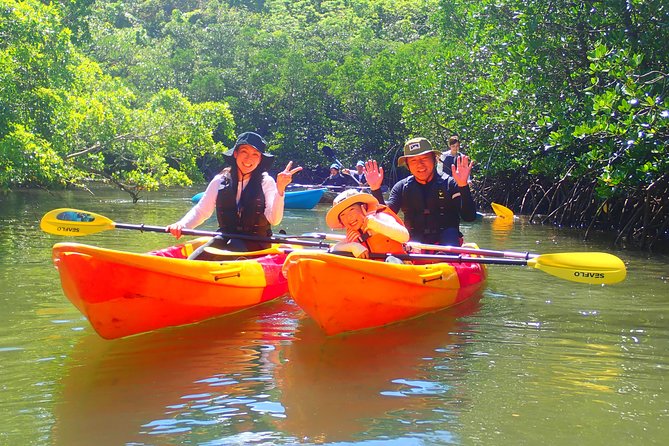
Urauchi River is where the tour starts, and it is the perfect opening act. This is the part where you settle into the paddle basics and get your eyes onto what the guide wants you to notice.
Mangroves are not just “trees by water.” They are coastal plants with special roots that shape the whole shoreline. On a river like this, those roots are near enough that you do not have to imagine what is happening. You can see how the mangrove structure affects the water movement and the feel of the channel.
The route is set up so the wind does not dominate, which helps you keep your attention on the environment rather than your balance. If you tend to get anxious around water, this matters. Calm conditions can turn a tense first paddle into something you can actually enjoy.
A practical note: because the scenery is close, you are likely to get wet. That is normal for mangrove rivers. Plan your clothes around it, not around staying dry and comfortable.
Same corner of Japan, a different kind of day:
- Official Street Go-Kart Tour – Okinawa Shop
★ 5.0 · 699 reviews - Naha: North Okinawa Sightseeing Tour & Churaumi Aquarium
★ 4.4 · 472 reviews - Okinawa: From Naha: Kerama Islands 1-day snorkeling tour
★ 4.4 · 423 reviews - From Naha: Tokashiki Island Day Trip by Boat
★ 4.3 · 385 reviews
Stop 2 on Iriomote-jima: narrow channels and hands-on guide time
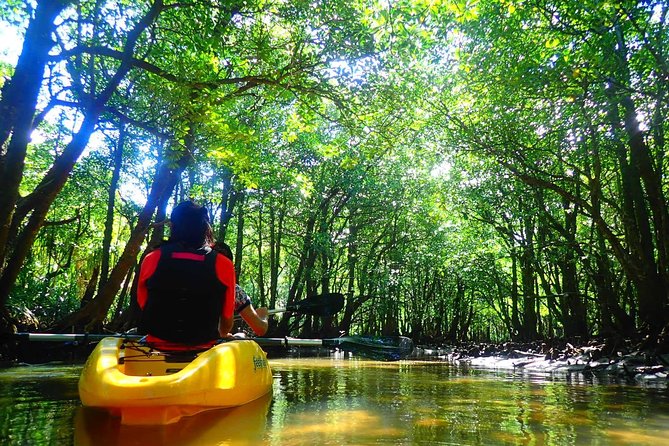
After Urauchi River, you continue into the Iriomote-jima section of the experience. This is often where the tour starts to feel more like a true “through-the-landscape” adventure, because mangrove regions tend to form natural corridors.
One of the best parts of this tour style is how you move from broad views to tight passages. Canoe in particular can help you feel like you are threading through the mangrove world, guided by the pace of the water and the channel shape.
This is also where the guide’s explanations matter. The tour includes sharing details about mangroves and Iriomote nature. If you end up with Ayuka as your instructor, you can expect a lot of focus on mangrove features and what you are seeing in front of you. That turns the tour from “cool scenery” into a place where you come away understanding a little more about how the system works.
There is also a nice practical rhythm to the tour. You get time to paddle, then you pause for look-and-learn moments. Those pauses are valuable because mangrove tours can otherwise feel like you are just moving the whole time. A pause lets the experience sink in.
Free waterproof photo data: the easiest souvenir you will actually use
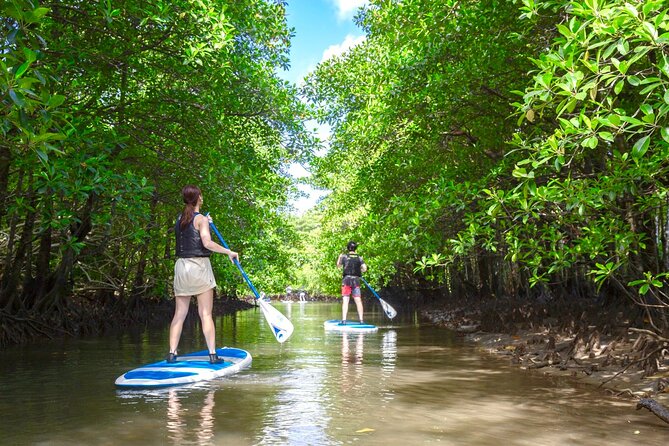
This tour includes something I truly appreciate: free photo data. The guide uses a special waterproof camera during the tour, then provides the images for free.
Why that is good value:
- You do not have to keep risking your phone for every shot.
- You can focus on paddling and on the mangroves instead of filming constantly.
- You can get action-style pictures that are hard to capture while you are standing on a board or coordinating a paddle.
If you are the type who often forgets to take photos until it is too late, this setup solves that. It also means your “souvenir” is not just a blurry group shot.
And if rain shows up? You still get pictures. The tour is designed to run in light rain, so you are not automatically forced to lose the photo moment to weather.
What to wear, what to bring, and why damp clothes matter
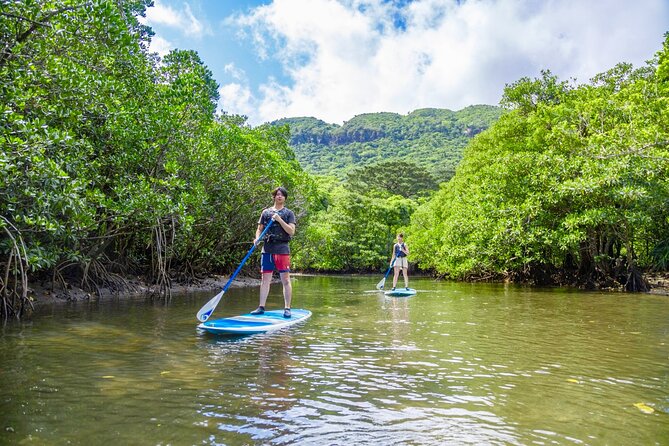
This is a water activity. That means your clothing plan matters more than your outfit plan.
Wear clothes that can get wet. Think quick-dry basics rather than something you will regret. You will also want to avoid delicate fabrics that absorb water and stay heavy.
The tour has a strict practical rule: there are no toilets on the course. Use the restroom before you go. It sounds simple, but it is the kind of detail that can ruin a trip if you skip it.
After the tour, there are showers at the office. Bring a towel and dry clothes. Wet clothes can also prevent ferry boarding, so it helps to plan what you will do right after paddling. If you are catching another boat later the same day, bring spare clothes you can actually wear.
No alcohol before or during the tour. That is standard for water safety, but it is still worth calling out. Keeping your attention sharp is part of having a good experience.
Safety basics: life jackets, light rain, and following the guide
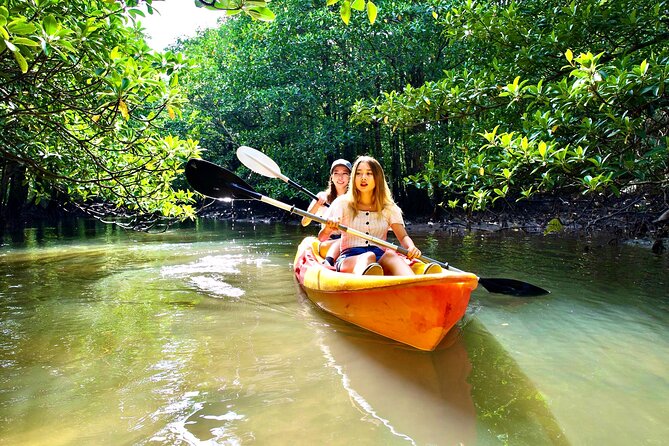
You must wear life jackets. No safety gear means you do not participate.
That is the core safety promise, and it is the right approach for mangrove rivers where you might not have easy footing if you get off balance. Even if conditions are calm, you should treat the activity as real water travel, not a stroll.
Tours run in light rain, which is great if you are traveling through unpredictable weather. At the same time, the operator may cancel if conditions become unsafe. If that happens, you are offered a different date or a full refund, depending on how the situation is handled.
The other safety ingredient is behavior. You will need to follow the guide’s instructions. In a mangrove channel, small actions like where you paddle, how you move, and when you pause can matter. You will get directions, so listen closely and you will be fine.
Languages on Iriomote: expect Japanese or English
The tour is in Japanese or English, but it can be Japanese-only depending on the day.
This affects how much you will catch during explanations. You can still enjoy the paddling part without language help, but the mangrove education moments will be more satisfying if you are comfortable with Japanese or English. If language is a deal-breaker for you, it is worth asking how the operator typically assigns guides on the day you plan to go.
Group size and feel: up to 100 people, but it stays personal on the water
The tour has a maximum of 100 travelers. That sounds large on paper, but water activities often feel smaller because you are grouped, briefed, and move as a guided unit on the route.
The vibe from the experience descriptions is strongly peaceful and quiet. People talk about an unforgettable sense of being surrounded by mangrove trees, and a calm moment on the water. That matches the idea of a sheltered river with low wind.
If you want loud parties, this is not that. If you want an eco-style nature outing where you can hear your own breath and the sounds of water moving, this is the right style.
Eco-friendly adventure and why it feels different in mangroves
This tour is described as an eco-tour designed with sustainability in mind. You do not need to lecture yourself about environmental impact to benefit from this.
How it translates in real life:
- The route and pace tend to encourage respectful viewing.
- The guide’s focus on mangrove details pushes you to see the ecosystem as something alive, not just scenery.
- The low-wind river setting reduces the chaos you might associate with bigger water sports.
Mangroves are sensitive environments. Close-up experiences can create better understanding, and understanding often leads to better care. That is the value of doing this kind of tour with a guide rather than doing a random rental and heading in blind.
Price and value: is $52.40 a fair deal?
At $52.40 per person for about 2 hours, the value is strong if you care about three things: calm conditions, guided interpretation, and the photo package.
Here is how I judge it:
- Guided river experience reduces anxiety and makes the tour easier for beginners.
- Free photo data cuts down on your own costs and effort. If you ever buy tours and then spend extra time trying to capture decent images, this can balance the cost.
- Eco-focused mangrove route means you are not just moving for movement’s sake. You are learning something while you paddle.
If your priority is pure speed or thrill, you might feel like the price is high compared with more chaotic outdoor activities. But if your priority is a quiet nature moment with real guide time, this pricing fits the experience style.
Should you book this Okinawa Iriomote mangrove SUP or canoe tour?
I think you should book it if you want:
- a beginner-friendly paddle where wind is not the enemy
- a peaceful mangrove setting, not a crowded sightseeing sprint
- free waterproof photos that save you from juggling a camera on the water
- a short, practical outing that still feels meaningful
I would skip or reconsider if:
- you fall into the restriction categories, like pregnant guests or people with certain health issues
- you need guaranteed dry clothes, because you should expect to get wet
- you are uncomfortable managing a no-toilet outing, even though the fix is simple (go before)
If you are planning a day on Iriomote and you want one activity that feels calm, scenic, and genuinely easy to enjoy, this one is a smart bet.
FAQ
How long is the Okinawa Iriomote mangrove SUP or canoe tour?
The tour lasts about 2 hours.
Where does the tour start and end?
The tour starts at Densa TerminalJapan, 907-1541 Okinawa, Yaeyama District, Taketomi, Uehara, 竹富町上原553-1 and ends back at the same meeting point.
Is hotel pickup available?
Yes, pickup is offered, and pickup times may vary. You confirm the time the day before.
Is this tour easy for beginners?
Yes. It is held on a mangrove river where the wind has little influence, which makes it easier even for beginners.
What are the age limits for SUP and canoe?
SUP is for ages 12 to 59. Canoe is for ages 3 to 65.
Are there restrictions like pregnancy or health issues?
Yes. The tour is not for pregnant guests, kids under 3, or those with health issues. If you are unsure, contact the operator in advance.
What should I wear, and are there toilets?
Wear clothes that can get wet. There are no toilets on the course, so please go beforehand.
What languages are used during the tour?
Tours are in Japanese or English, and they may be Japanese-only depending on the day.
Is there free photo data and shower access?
Yes. The guide takes photos with a special waterproof camera and provides the data for free. Showers are available at the office, so bring a towel and dry clothes.
Fresh options around Okinawa & Islands
- Okinawa: Discover SCUBA Diving 2 Dives at Minna, Sesoko or Motobu★ 5.0 · 19 reviews
- Okinawa Ishigaki Phantom Island and Blue Cave Snorkeling★ 4.5 · 19 reviews
- Okinawa: Tropical Dream , Ryukyu Mura, Banta Cafe Bus Tour★ 4.3 · 19 reviews
- Private snorkeling tour Ishigaki island★ 5.0 · 20 reviews
- Gorilla Kart Tour-Plenty of Time Slots|Many Great Views★ 3.9 · 20 reviews
- Okinawa: Naha: 1 day Kerama Islands diving‣ license required★ 3.9 · 20 reviews
- Ishigaki Phantom Island Snorkeling Taketomi Island Sightseeing★ 4.5 · 20 reviews
- Gorilla Kart Naha – 90 min of Street Fun! Plenty Of Slots★ 4.5 · 20 reviews
Canoes & Kayaks, compared.
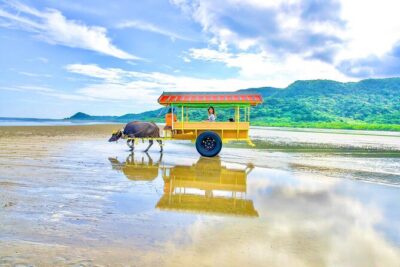
Okinawa Iriomote SUP or Canoe and Sightseeing in Yubujima Island
Read our review →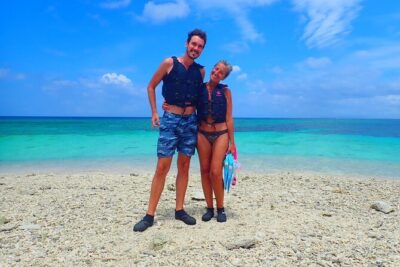
Iriomote Island 1-Day Snorkeling & Mangrove SUP or Canoe
Read our review →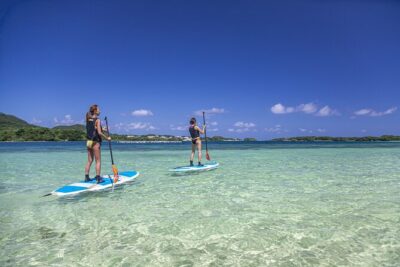
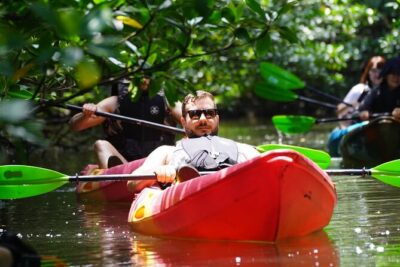
Okinawa Iriomote Mangrove SUP or Canoe and Splash Canyoning Tour
Read our review →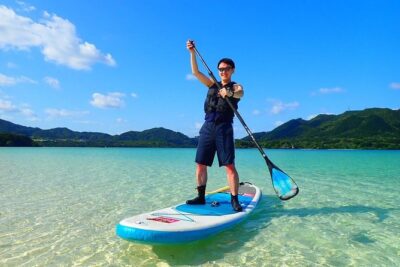
Okinawa Ishigaki Kabira Bay SUP or Canoe and Blue Cave Snorkeling
Read our review →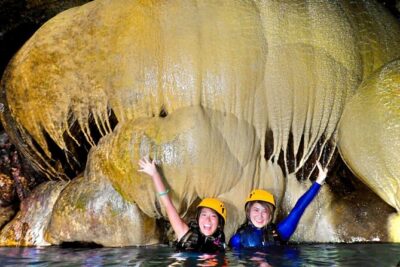
Okinawa Miyakojima 1 day Sea Turtle Snorkeling & Pumpkin Cave & Sea Kayak
Read our review →![[Ishigaki]Mangrove SUP/Canoe + Blue Cave Snorkeling](https://review-japan.com/wp-content/uploads/ishigaki-mangrove-sup-canoe-blue-cave-snorkeling-400x267.jpg)
[Ishigaki]Mangrove SUP/Canoe + Blue Cave Snorkeling
Read our review →Browse the lists this tour appears in