
Reviewed · COOKING CLASSES
Osaka Okonomiyaki Cooking Experience!
Cooking okonomiyaki in a hostel is a treat.
This small Osaka class gets you out of the usual restaurant loop and into a local, chat-friendly kitchen, where you learn how to make Osaka-style okonomiyaki (savory pancakes) the simplest way and then eat what you make.
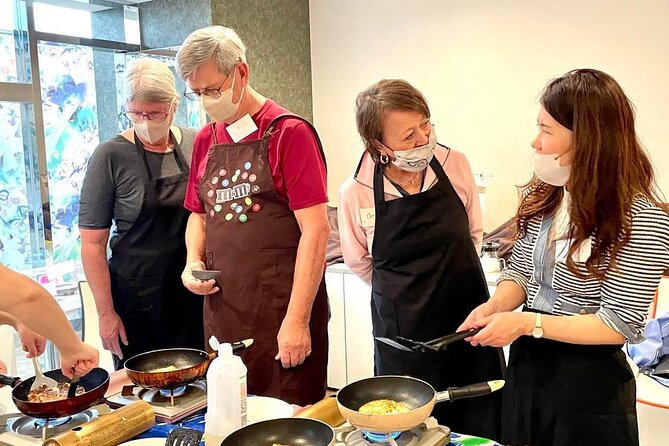
Two things I really like: you cook hands-on with personal attention in a group limited to 6, and you get more than just food, you also get the local context behind the dish from your host, Keiko, with extra help from her mother, Sachiko. One thing to consider first is that ingredient restrictions are not a closed system, since there’s a possibility of cross-contamination in group lessons and some ingredients may contain refined sugar.
Key things to know before you go
- Small group, max 6 travelers, so you actually get guidance while you cook
- Osaka-style menu focus, miso soup and okonomiyaki, plus conversation with locals
- Keiko and Sachiko teach together, with English support and lots of Q and A
- Dietary requests can be accommodated (vegan, vegetarian, halal), but cross-contact is possible
- You leave with written help, and some classes include an extra sweet like mochi
Why this Osaka okonomiyaki class feels more local than a restaurant
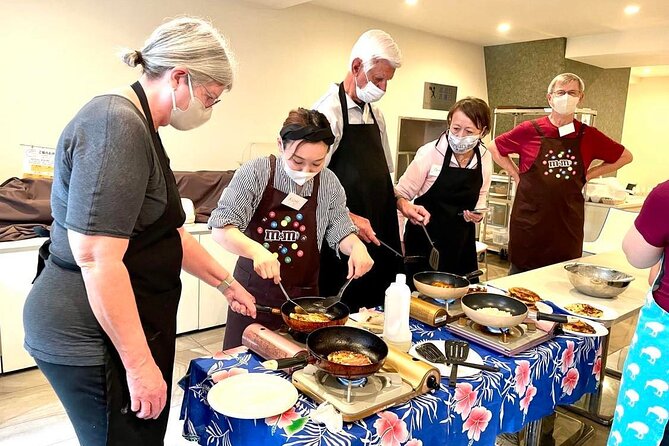
Osaka has its share of food stops, but this is different. Instead of ordering and walking on, you spend about 2 hours learning a comfort-food skill that lives in everyday Japanese homes.
The setting is also a big part of the charm. You meet at a hostel near Nagahoribashi subway station, then cook as a group with locals invited in. If you like practical travel, this scratches that itch. You are not just sightseeing Osaka cuisine, you are learning how to reproduce it.
And the “host-family” vibe shows up in the details people praise most: Keiko is patient and clear, and her mother, Sachiko, helps keep things warm, organized, and friendly. The group stays relaxed, and the conversation part is not forced.
More Cooking Classes in Osaka
- Osaka: Ramen and Gyoza Cooking Class in Dotonbori
★ 5.0 · 378 reviews - Osaka Cooking Class: Okonomiyaki &Japanese cuisines experience
★ 5.0 · 261 reviews - Ramen and Gyoza Cooking Class in Osaka
★ 5.0 · 202 reviews
Meeting in Higashishinsaibashi, near Nagahoribashi
The meeting point is 1-chōme-1-3 Higashishinsaibashi, Chuo Ward, Osaka, 542-0083, Japan. It starts at 4:00 pm, and the class ends back at the meeting point.
This is a smart choice for timing. A 4:00 pm start works well if you want an early dinner that is not rushed, and it also gives you room afterward to wander. You are not stuck with the whole night, but you also do not have to hunt for dinner right away.
Because it’s near public transportation, you are less likely to lose time figuring out transit. Plus, the maximum of 6 travelers helps the experience stay calm, so you can arrive, settle, cook, and eat without chaos.
Your 2 hours: miso soup, Osaka okonomiyaki, and lots of Q and A
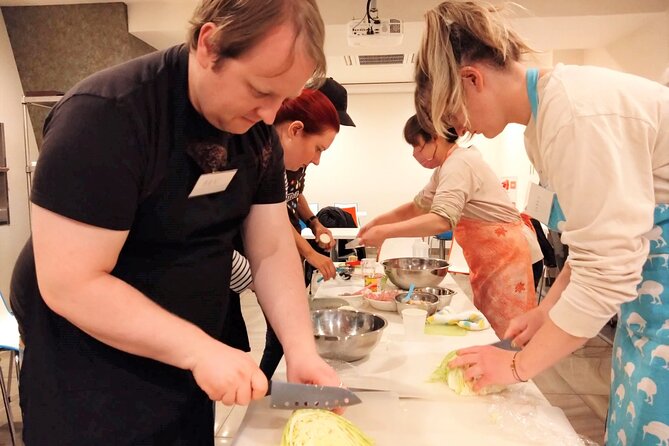
This class is built around cooking miso soup and okonomiyaki. You learn the simplest approach first, then you cook as a group so you can see each step go from bowl to finished pancake.
The host teaches you what you need to make okonomiyaki at home. That matters more than people expect. Many cooking classes teach technique, but here the goal is repetition. You should be able to make this again later without needing a pro kitchen.
What you might notice during the session is how much time is spent answering questions. That’s one of the biggest reasons this class earns 5-star scores again and again. People ask about ingredients, how Osaka differs from other regions, and how to adjust for their own taste.
Also, you may get more than just savory. Some sessions include a sweet finish like mochi dessert, so you get that full “snack-to-meal” arc without having to find another stop.
Osaka-style okonomiyaki, taught in a way you can repeat
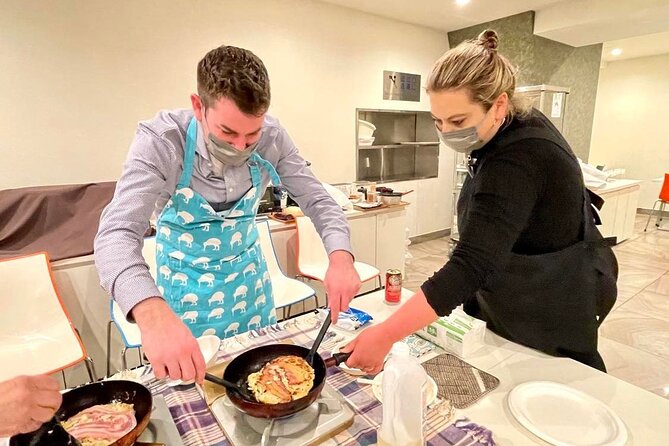
Okonomiyaki gets called Japanese pizza, but it behaves more like a savory pancake you build and cook in layers. The Osaka style is its own thing, and you get that regional context instead of just a generic recipe.
Keiko shares not only how to cook it, but also the history and the idea that the dish changes by region. If you’ve heard of Hiroshima-style okonomiyaki and Osaka-style differences, this is the kind of class that helps those names stop being trivia and start making sense.
The practical part is the pacing and instruction. Reviews consistently highlight that the directions are easy to follow and that the class is well organized. You are not left guessing. You cook with your group, and the host and assistant keep things moving.
Two other real-world benefits:
- You get the rhythm for cooking something that can be adjusted, depending on what you find at local stores later.
- People point out that you do not need special equipment to make it back home. So you can plan to recreate it with normal kitchen tools.
Same corner of Japan, a different kind of day:
- Osaka Go Karting Tour with Funny Costume
★ 5.0 · 2,658 reviews - Osaka Castle: Museum and Tower Entry Ticket
★ 4.5 · 2,380 reviews - Osaka: Shinsekai Food Tour with 13-15 Dishes at 5 Eateries
★ 4.8 · 2,204 reviews - Osaka Food Tour: 13 Dishes at 5 Local Eateries
★ 5.0 · 2,149 reviews
The local conversation element, with Keiko and Sachiko
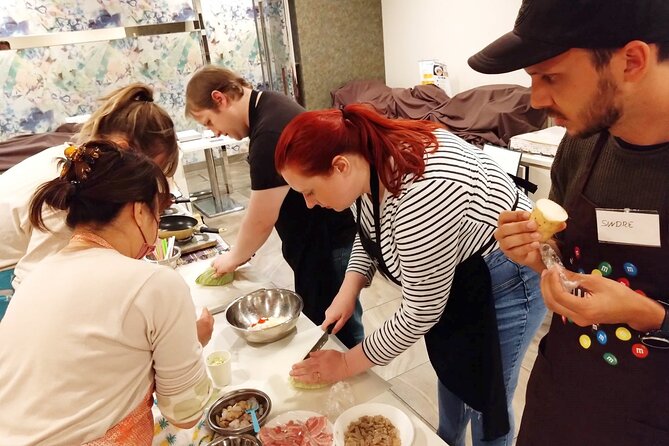
This is a cooking class, but it’s also a social meeting point. Keiko usually invites Osaka friends so the group can talk, not just eat. That’s one reason people describe it as a cultural exchange rather than a scripted demo.
If you like practicing Japanese in a safe environment, this is one of those places where conversation happens naturally. You can chat about ingredients, daily life, and what you use in your home cooking. The best part is that the local side is not on display as a performance. It’s just real conversation happening while you cook.
And the family touch matters. Reviews mention aprons made from kimono material, plus small souvenir bags made from used kimonos. Even if you do not care about souvenirs much, it signals that the host put care into the experience, not just the meal.
Dietary requests: vegan, vegetarian, halal, with honest ingredient notes
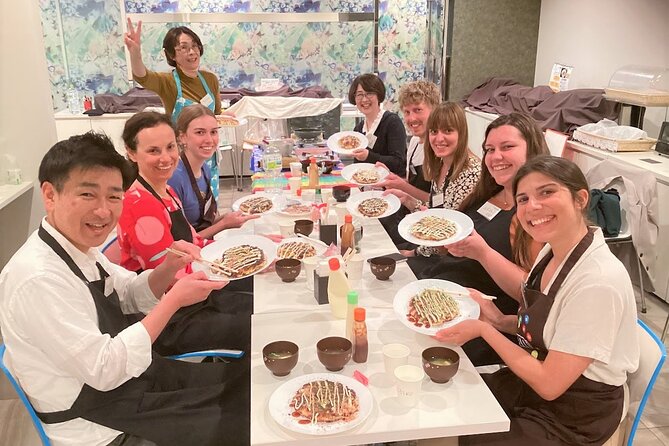
Good news first: the host can accommodate requests like vegan, vegetarian, and halal, if you specify ahead of time. That’s a huge value add in Japan, where you sometimes have to translate your needs at every stop.
Now the important caveat. Ingredients may contain refined sugar, and there is a possibility of cross-contamination because it’s a group class with shared cooking space.
So this is best for:
- People who need adjustments, not people who require zero cross-contact for medical reasons.
- Diners who communicate clearly about their preferences and are flexible around minor ingredient details.
If refined sugar is a deal breaker for you, message the provider before booking and ask what can be swapped. The class can likely adapt, but the data you have clearly warns that sugar may show up.
What you get to eat, and why the meal feels satisfying
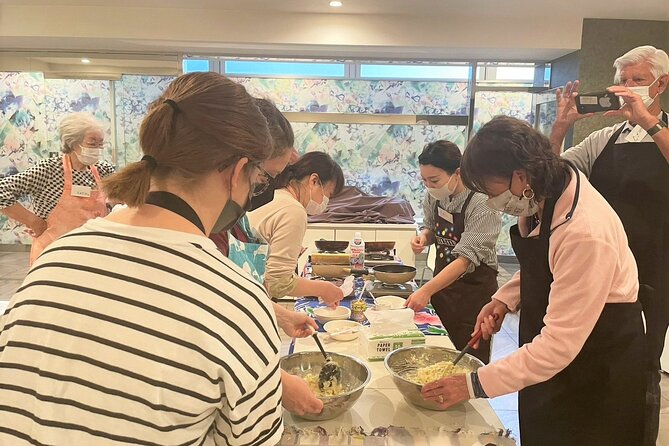
You cook and then sit down to eat the results of your work. That “make it, then enjoy it together” rhythm is one of the most praised parts of the experience. It turns the class into a true meal rather than a quick snack you rush through.
You also get miso soup as part of the learning and the meal itself. That helps balance the plate. Okonomiyaki is filling, and miso soup adds warmth and comfort, which is very on-brand for Osaka.
If you’re the type who wants food that also becomes a skill, you’ll like this format. The meal outcome is tied to your effort, not just what someone sets in front of you.
Price and value: is $49.55 worth it?
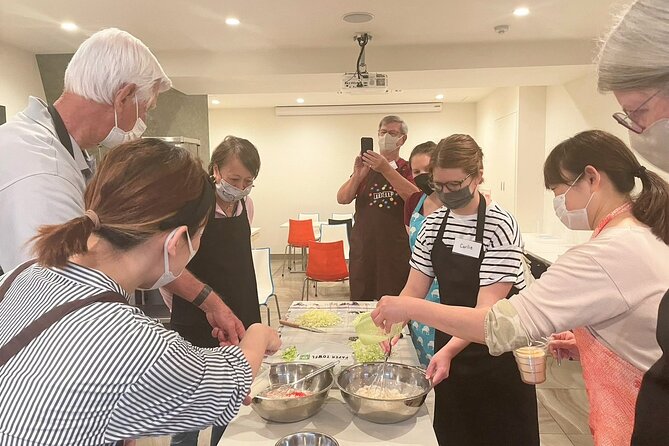
At $49.55 per person for about 2 hours, this is not the cheapest food activity, but it is also not a high-end chef workshop price. What makes it feel like good value is how much you get for the time.
You’re paying for:
- Hands-on instruction (not just watching)
- A small group size (max 6)
- A local teaching team with Keiko and Sachiko
- Food included, at least miso soup and okonomiyaki you cook yourself
- Cultural context, plus conversation with locals
In other words, you’re not just buying dinner. You’re buying a repeatable home-cooking skill with a social component. If you plan to make okonomiyaki once or twice after the trip, the price starts looking more reasonable.
Timing tips and how to make it an easy win on your Osaka itinerary
Because the class runs at 4:00 pm, I’d treat it like an early dinner anchor. After you finish, you can still walk around without worrying about a late reservation.
A few practical tips that come straight from how people describe the experience:
- Come with questions ready, especially if you care about the regional style or ingredient swaps.
- If you want a vegan or halal version, confirm your needs clearly when booking.
- Bring an open mind about the cross-contact note. It’s listed for a reason, and you’ll feel better if you plan accordingly.
- Wear comfortable clothes. You may be cooking in a hands-on way and you might wear an apron during the class.
Who should book this class
This is ideal if you:
- Want an Osaka experience that feels local and social, not just a food tour with stops
- Like learning how to cook, not just eating
- Prefer small groups for better interaction
- Want a class with English support and lots of Q and A
- Are traveling with a partner, friends, or even solo, since the class can still feel friendly and welcoming
It also fits families, since reviews mention guests making the dish with children involved. If you’re bringing kids, the relaxed pace and step-by-step guidance are the kind of structure that often works well.
Should you book? My take
Book this class if you want something that actually changes how you travel. You leave with a recipe you can use, plus a better understanding of what makes Osaka okonomiyaki its own thing. The small group size and Keiko and Sachiko’s teaching style are the reasons this works so well.
Skip it only if your dietary needs require strict zero cross-contact, or if you simply want to eat quickly and move on. For a hands-on, social, practical Osaka food experience, this one is a strong pick.
FAQ
How long is the Osaka okonomiyaki cooking class?
It runs for about 2 hours.
Where do I meet for the class?
The meeting point is 1-chōme-1-3 Higashishinsaibashi, Chuo Ward, Osaka, 542-0083, Japan, near Nagahoribashi subway station. The activity ends back at the meeting point.
What time does it start?
The start time listed is 4:00 pm.
How many people are in the group?
The class has a maximum of 6 travelers.
Can I request vegan, vegetarian, or halal options?
Yes, the host says they can accommodate requests like vegan, vegetarian, and halal. Note that ingredients may contain refined sugar.
Is there an option to do the class at night?
Yes, the provider says they can sometimes do this activity at night depending on the days.
What food is included?
The class includes learning to cook miso soup and okonomiyaki. Some participants also mention a mochi dessert.
What is the cancellation policy?
Free cancellation is available. You can cancel up to 24 hours in advance for a full refund, and changes less than 24 hours before the start time are not accepted.
Fresh options around Osaka
- Osaka Winery Tour with Wine Tasting & Vineyard Walk★ 4.9 · 12 reviews
- Osaka: Early Morning Osaka Castle Guided Tour, Avoid Crowds★ 4.9 · 12 reviews
- Kyoto Day Trip from Osaka Port – Private Shore Excursion★ 5.0 · 13 reviews
- Osaka Private Pop Culture Tour: Historic Tenma to Dotonbori★ 4.5 · 13 reviews
- Osaka Castle Admission Ticket★ 4.0 · 13 reviews
- Hidden Osaka Foodie Tour: Nishinari Backstreets & Local Dining★ 5.0 · 13 reviews
- Discover Real Osaka: A Cultural Walk with Food & Drink★ 5.0 · 13 reviews
- Nara private tour (Shore excursion available from Osaka or Kobe port)★ 5.0 · 13 reviews
Cooking Classes, compared.
Ramen Cooking Class at Ramen Factory in Kyoto
Read our review →
Ramen & Gyoza Cooking Class in Tokyo with Local Supermarket Visit
Read our review →
Ramen Cooking Class at a Ramen Factory with Souvenir
Read our review →
Japanese Washoku Bento Small Group Cooking Class
Read our review →
Easy Ramen Cooking Experience in Kabukicho, Shinjuku
Read our review →
Ramen and Sushi Cooking Class with Sake Pairing Set in Tokyo
Read our review →Browse the lists this tour appears in